Advanced Regenerative Thermal Oxidation (RTO) Strategies for the Dutch Manufacturing Landscape.
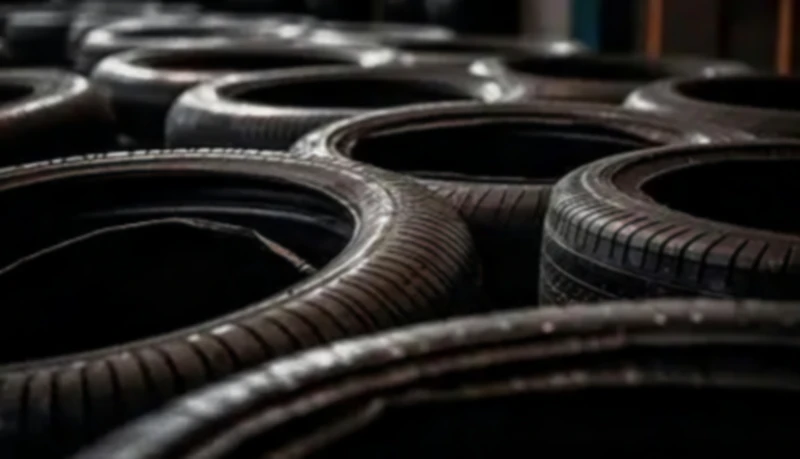
In the high-performance world of rubber and tire manufacturing, environmental compliance is no longer a peripheral concern—it is a critical pillar of operational license. Facilities located in industrial hubs like Moerdijk, Rotterdam, or Geleen face some of the most stringent emission standards in the world. The manufacturing process, characterized by Banbury mixing, extrusion, and high-temperature vulcanization, releases a volatile cocktail of hazardous air pollutants (HAPs), heavy oil mists, and sulfur-bearing compounds. For these complex streams, the Regenerative Thermal Oxidizer (RTO) stands as the definitive technology, provided it is engineered with the specific chemistry of rubber in mind.
The Dutch Regulatory Context: Navigating NeR and Activiteitenbesluit
Local SEO Focus: In the Netherlands, the Activiteitenbesluit Milieubeheer and the Nederlandse Emissierichtlijn (NeR) dictate the strict limits for VOCs and odor. For rubber facilities, total organic carbon (TOC) levels are often capped at 20 mg/Nm³, with even stricter limits for carcinogenic substances like benzene. CMN Industry Inc. specializes in designing RTO systems that not only meet these limits but anticipate the “zero-emission” trajectory of the Dutch Green Deal. Our systems focus on Best Available Techniques (BAT), ensuring that your facility remains compliant as provincial environmental agencies (Omgevingsdiensten) tighten their oversight.
Engineering Challenges: The “Sticky” Reality of Rubber Exhaust
While a standard RTO is efficient for solvent-based vapors, rubber exhaust presents a “sticky” dilemma. Fumes from the curing and compounding stages contain paraffinic oils, plasticizers, and carbon black. These particulates have a high propensity to condense in ductwork or “glaze” onto ceramic heat-exchange media. If left untreated, this leads to a rapid increase in pressure drop, localized “hot spots” in the ceramic bed, and frequent unplanned shutdowns.
At CMN Industry Inc., we don’t just sell an oxidizer; we engineer a Pre-treatment Ecosystem. This often includes high-efficiency oil mist separators or Dry Electrostatic Precipitators (ESP) upstream. By stripping out the viscous aerosols before they reach the 850°C combustion chamber, we extend the service life of our ceramic media by up to 300% compared to non-specialized competitors.
Technical Benchmarks for Rubber Industry RTOs
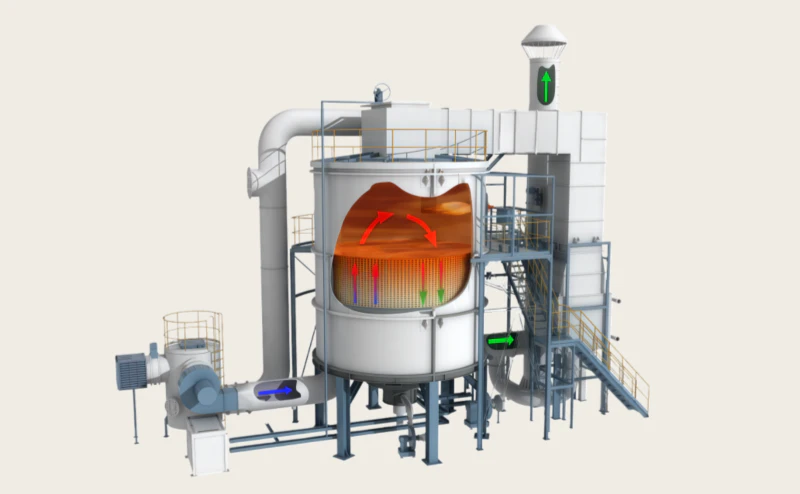
Success in rubber VOC abatement is measured by kinetic completion and thermal stability. Below are the engineering benchmarks we set for a typical Dutch tire plant integration:
| Engineering Metric | Target Specification | Operational Impact |
|---|---|---|
| Combustion Temperature | 850°C – 980°C | Guarantees 高温热氧化器VOC处理效率 (DRE > 99.5%) for complex aromatics. |
| Gas Residence Time | ≥ 1.2 Seconds | Ensures complete dissociation of long-chain polymers and malodorous sulfur compounds. |
| Thermal Recovery Efficiency (TER) | 95% – 97% | Maximizes RTO废气处理设备热回收效率; allows for autothermal operation at low concentrations. |
| Pressure Drop Control | < 30 mbar (Clean) | Minimizes electrical consumption of the primary ID fan. |
| Material Selection | Acid-Resistant 316L / Enamel | Protects against SOx and HCl byproducts generated during vulcanization fume oxidation. |
Operational Merits: Beyond Simple Compliance
Why choose a CMN RTO for a Dutch rubber facility? The benefits extend into the balance sheet:
- Autothermal Capability: Rubber vapors often possess high caloric values. Once at operating temperature, our systems frequently require zero natural gas injection, effectively using the waste gas as its own fuel.
- Odor Annihilation: The distinct “burnt rubber” smell is a leading cause of community friction. Our RTOs oxidize mercaptans and amines to ppb (parts per billion) levels, effectively becoming an “invisible neighbor.”
- Energy Export: Through a secondary heat exchanger, we can harvest post-stack heat to generate hot water for your Banbury mixers or space heating for the warehouse, aligning with EED (Energy Efficiency Directive) audits.
FAQ: 10 Critical Questions for Rubber Waste Gas Abatement
1. How does the Dutch “Activiteitenbesluit” affect my choice of RTO?
It mandates that you use the “Best Available Technique” (BAT). For the rubber industry, this usually means a high-efficiency RTO combined with effective pre-filtration to ensure continuous compliance with TOC limits of <20 mg/m³.
2. Why does our RTO bed clog with “sticky” residue?
3. Can we recover heat from the RTO to use in our Dutch facility?
4. Is an RTO safe for handling sulfur-containing vulcanization gases?
5. What is the “Bake-out” cycle, and why is it needed in tire plants?
6. How does CMN handle the intermittent nature of batch mixing?
7. Are there subsidies for installing high-efficiency RTOs in the Netherlands?
Yes. Projects that significantly reduce energy consumption or CO2 can often qualify for the EIA (Energie-investeringsaftrek) or MIA/Vamil environmental tax credits.
8. How do you prevent fire risks in the ductwork?
9. What is the typical maintenance interval for a rubber-sector RTO?
10. Can we integrate the RTO with an existing Zeolite Concentrator?
For low-concentration curing areas, yes. A Zeolite Concentrator can “pre-sort” the VOCs, allowing a much smaller RTO to handle the concentrated stream, drastically reducing CAPEX and OPEX.
Professional Field Experience: A Note on “Cold-Face” Condensation
In our years of commissioning systems across Noord-Brabant and Overijssel, we’ve found that the “cold-face” of the RTO is where rubber-industry projects succeed or fail. If the inlet temperature of the waste gas drops below the dew point of the specific oils used in the rubber compound, liquid buildup occurs instantly. CMN Industry Inc. utilizes trace-heated ducting and high-temp poppet valves to ensure the gas remains in its vapor phase until it hits the thermal oxidation zone. This level of detail is why our uptime benchmarks consistently lead the industry.
Destruction Efficiency
Thermal Energy Recovery
Fuel (Autothermal)
Remote Monitoring
Conclusion: Future-Proofing Your Rubber Facility
The transition to a sustainable, low-carbon industrial future in the Netherlands is accelerating. For rubber and tire manufacturers, the RTO is not just a regulatory necessity; it is a thermal asset. By choosing a CMN Industry RTO, you are investing in a system that respects the chemistry of your process, the strictness of Dutch law, and the efficiency of your bottom line.