
In the industrial landscape of food production and animal feed processing—rendering plants, pet food manufacturing, and coffee roasting—the most formidable challenge is not just “emissions,” but persistent, highly-detectable odors. These malodorous streams are often a volatile mixture of hydrogen sulfide, amines, organic acids, and fatty acid vapors. To the surrounding community, even trace amounts can be perceived as a major environmental nuisance. The Regenerative Thermal Oxidizer (RTO) has established itself as the ultimate solution for these sectors, offering complete molecular destruction of odor-causing compounds where biological scrubbers or chemical washes often fall short.
The operational logic of an RTO involves incinerating organic particulates and gases at temperatures between 800°C and 850°C. By passing the exhaust through high-surface-area ceramic beds, the system recovers up to 97% of the thermal energy, allowing for nearly autothermal operation. For food and feed processors, this means achieving Zero-Odor stack emissions while maintaining lower operational costs than traditional thermal incinerators. However, the high moisture and fat content in these industries necessitate specialized engineering to prevent duct-clogging and maintain heat-exchanger integrity.
At CMN Industry Inc., we emphasize that odor control is as much about capture efficiency as it is about destruction. A well-designed RTO system must be integrated with a robust pre-treatment train—utilizing grease traps, high-efficiency cyclones, and mist eliminators—to ensure the thermal oxidizer remains free of particulate buildup, thereby extending the service life of the ceramic media.
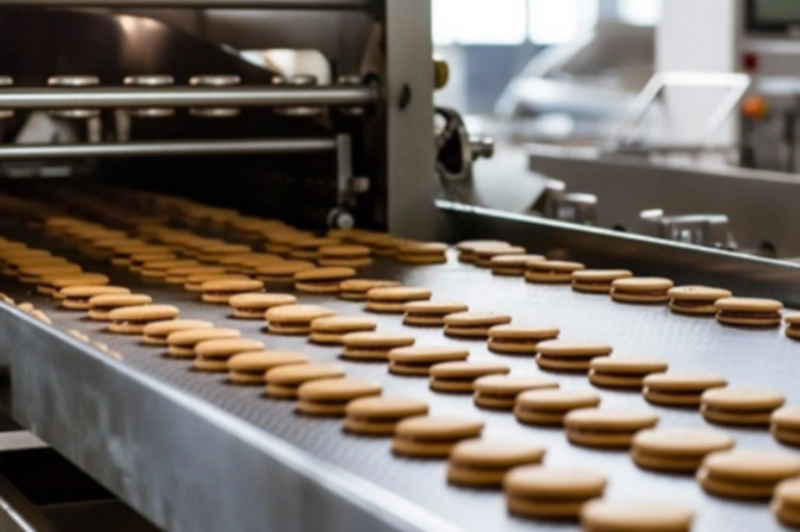
RTO Core Technical Parameters for the Food & Feed Sector
In the feed processing industry, the “purity” of the burn is paramount. Any residual unburnt hydrocarbons will carry the distinct “rendering smell” into the atmosphere, leading to regulatory scrutiny.
| Technical Parameter | Standard Specification | Relevance to Food/Feed Processing |
|---|---|---|
| Combustion Temperature | 815°C – 870°C | Critical for the total thermal cracking of long-chain fatty acids and sulfuric compounds. |
| Retention Time | 1.0 – 1.5 Seconds | Essential to ensure kinetic completion of odor destruction (Destruction Removal Efficiency > 99%). |
| Thermal Recovery Efficiency | 95% – 97% | Maximizes RTO exhaust gas treatment equipment heat recovery efficiency; critical for the high-volume/low-concentration air typical of food halls. |
| Pre-filtration Requirements | G4 + F7 + Grease Trap | Prevents fouling of ceramic beds by animal fats and fine protein powders. |
| Safety Configuration | LEL Monitoring + Flame Arrestor | Protects against fire risks associated with dust-laden or flammable oil-vapor streams. |
| Material of Construction | 316L SS or Corten Steel | Selected for corrosion resistance against organic acids (e.g., acetic, butyric acids). |
Meeting the High-temperature thermal oxidizer VOC treatment efficiency (DRE) is only half the battle. Our systems are engineered to handle the high humidity typical of steam-jacketed rendering vessels, employing automatic bake-out cycles to clear any moisture or VOC accumulation within the RTO beds during off-peak hours.
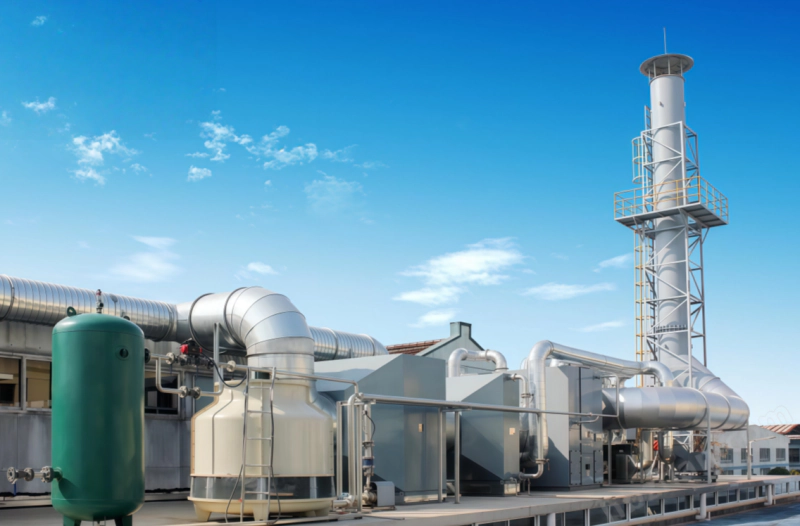
The “Food/Feed” Scenario: Engineering Challenges & Merits
Unlike chemical plants, food and feed facilities deal with bio-active exhaust. The primary merit of RTO technology here is its ability to handle “wet” airflows while providing a permanent solution to odor, unlike carbon filters which saturate rapidly in high-humidity environments.
Key Advantages
- Unrivaled Odor Removal: High-temperature oxidation is the only technology capable of breaking down complex amines and mercaptans to ppb levels.
- Low Consumables: Unlike bio-filters that require nutrient management and media replacement, an RTO relies on thermal physics, offering a predictable maintenance cycle.
- Sustainability: Recovered heat can be redirected via a secondary heat exchanger to pre-heat drying air or boiler feed water.
Constraints & Pro-Active Mitigation
The “fatty” nature of the exhaust is a significant constraint. If grease enters the RTO, it can cause “hot spots” or even bed fires. CMN Industry Inc. implements a multi-stage de-greasing unit and a vertical-flow RTO design that allows for easier cleaning and particulate discharge.
System Components: The CMN Precision Ecosystem
For the food industry, every component must withstand high moisture and potential organic acid corrosion:
- Ceramic Honeycomb: High-porosity media that allows for high airflow with minimal pressure drop.
- Poppet Valves: Precision-timed valves with specialized seals that remain effective even in the presence of trace sticky residues.
- Auxiliary Burner: Low-NOx modulated burners that adjust in real-time to the caloric value of the incoming waste gas.
- PLC Dashboard: Real-time tracking of inlet/outlet temperatures and pressure differentials for environmental reporting.
Global Brand Comparison for Odor Control
| Brand | Primary Strength | Suitability for Feed/Rendering | Maintenance Complexity |
|---|---|---|---|
| Dürr (Ecopure) | Ultra-large scale integration. | Excellent for large pet-food plants. | High (requires specialist) |
| CMN Industry | Bespoke pre-treatment & grease handling. | Highly specialized for SMEs and Rendering. | Moderate (Self-cleaning logic) |
| Ship & Shore | Energy-efficient small-to-mid units. | Coffee roasting & Bakeries. | Low-Moderate |
Regulatory Compliance & Market Local SEO
China (National Standard): Strict adherence to GB 14554-93 (Odor Pollutant Emission Standards) is the baseline. In urban areas like Shanghai and Shenzhen, local standards for odor concentration (dimensionless) are becoming even more punitive.
USA & EU: In the USA, EPA Method 25A is the standard for testing. In Europe, the BREF for Food, Drink and Milk (FDM) highlights thermal oxidation as a BAT (Best Available Technique) for high-intensity odor sources.
Engineering Case Studies: Field Performance Reports
From a field engineer’s perspective, the biggest mistake in food-sector RTO design is underestimating ductwork condensation. I’ve seen projects where uninsulated ducts turned into “grease traps,” causing massive pressure drops. Proper slope, insulation, and drain points are non-negotiable.
Case Study 1: Large Rendering Plant (Tianjin, China)
The plant processed animal by-products for feed, emitting extreme levels of trimethylamine and hydrogen sulfide. Neighboring residents had filed hundreds of complaints.
- Tech: Chemical Spray Towers
- Odor Threshold: > 5000 (Dimensionless)
- Complaint Frequency: Daily
- Tech: CMN 3-Tower RTO (High-Temp)
- Odor Threshold: < 20 (Virtually undetectable)
- Complaint Frequency: Zero
By installing a three-tower RTO with a 1.2s residence time and a specialized pre-scrubber for ammonia removal, the facility achieved 100% compliance. The thermal energy from the RTO was harnessed to pre-heat the plant’s rendering steam-jacket.
Case Study 2: Pet Food Extrusion Line (Noord-Brabant, Netherlands)
A pet food manufacturer in a high-density industrial park needed to eliminate the distinctive “cereal and meat” odor from their extrusion and drying lines.
- High Humidity: 30% Volumetric
- Airflow: 35,000 Nm³/h
- Odor Type: Savory/Fatty
- System: Integrated Mist Eliminator + RTO
- DRE: 99.4%
- Energy Balance: Autothermal above 1.5g/m³
The addition of an automatic bake-out cycle once per week ensured that any fat residues on the ceramic beds were safely incinerated, preventing long-term pressure buildup.
Case Study 3: Coffee Roasting Facility (Seattle, USA)
Roasting coffee produces chaff and VOCs (mainly furans and phenols). The facility was located in an urban area where white smoke and roasted smells were regulated as nuisances.
- High-Efficiency Cyclone for chaff removal
- Compact RTO for VOC destruction
- Visible Smoke: Eliminated
Case Study 4: Fish Meal Processing (Callao, Peru)
Extreme corrosive environments due to sea air and high sulfur content in the exhaust gas.
- Material: 316L Stainless Steel Housing
- Pre-treatment: Dual Acid/Alkali Scrubbers
- Compliance: International IFC Standards
Innovative Trends: The Future of Odor Governance
The industry is moving toward Smart-LEL management, where the RTO sensors predict concentration spikes based on the production cycle (e.g., when the cooker is discharged). Furthermore, Hybrid Bio-RTO systems are being developed, where bio-filters handle the bulk of the ammonia, and the RTO performs the final “polishing” for complex organics. At CMN Industry Inc., we are also exploring Heat-to-Power integration, utilizing ORC (Organic Rankine Cycle) to turn RTO waste heat into electricity for the factory grid.