
RTO Systems in Automotive Painting: Complete VOC Abatement & Energy Recovery Guide
🚀 Executive Summary
Regenerative Thermal Oxidizers (RTOs) have become the industry-standard solution for automotive painting VOC abatement, offering unparalleled combination of destruction efficiency (95-99%), thermal energy recovery (up to 95%), and operational reliability. This comprehensive guide explores the technical, economic, and regulatory aspects of implementing RTO technology in modern automotive manufacturing facilities, drawing on real-world case studies and 15+ years of industry expertise.
✓ 2-4 Year Typical ROI
✓ EPA & Global Compliance
✓ Energy Recovery up to 95%
1The Automotive Painting Challenge: Regulatory Imperatives & Environmental Responsibility
Automotive painting operations represent one of the most significant sources of industrial VOC emissions globally. A typical automotive manufacturing facility can emit 200-500 tons of VOCs annually from painting operations alone, comprising solvents like xylene, toluene, ethylbenzene, and various ketones and esters. These emissions not only contribute to ground-level ozone formation and smog but also pose direct health risks to workers and surrounding communities.
Global Regulatory Landscape
The regulatory environment for automotive VOC emissions has intensified significantly over the past decade. In the United States, the EPA’s Clean Air Act and specifically the National Emission Standards for Hazardous Air Pollutants (NESHAP) for surface coating of automobiles and light-duty trucks (40 CFR Part 63, Subpart IIII) set stringent limits. The European Union’s Industrial Emissions Directive (IED 2010/75/EU) and Best Available Techniques (BAT) Reference Document for Surface Treatment Using Organic Solvents establish comparable standards. Meanwhile, China’s Blue Sky Protection Campaign and Emission Standard of Air Pollutants for Automobile Manufacturing (GB 27632-2011) have created one of the world’s most rapidly evolving regulatory frameworks.

📈 The Business Case for RTO Investment
Beyond compliance, RTO systems deliver compelling financial returns through energy recovery. By capturing and reusing thermal energy from the oxidation process, facilities typically recover 85-95% of heat, which can be redirected to paint curing ovens, space heating, or process water heating. This creates a virtuous cycle where environmental compliance investments generate direct operational savings, with typical payback periods of 2-4 years even before considering potential regulatory penalties avoided.
2RTO Technology Deep Dive: How Regenerative Thermal Oxidation Works
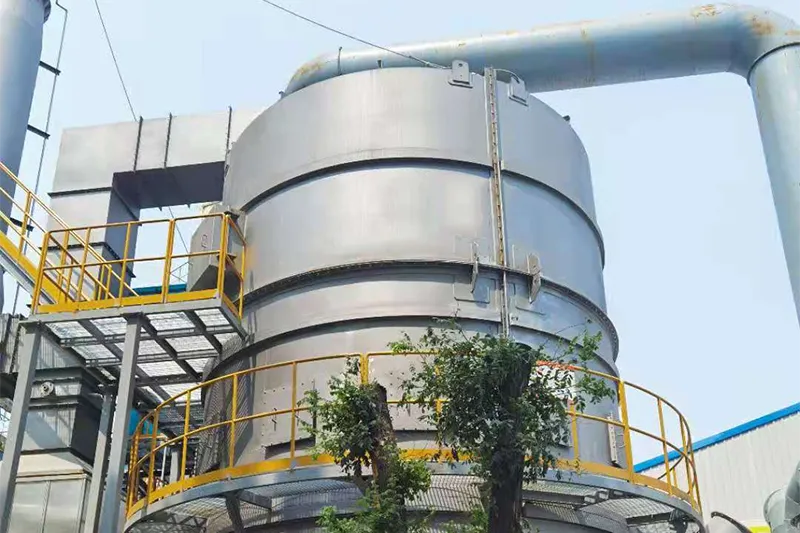
At its core, an RTO system operates on a deceptively simple principle: thermal oxidation with heat recovery. VOC-laden exhaust air enters one of multiple heat exchange chambers filled with ceramic media, which has been preheated by previous oxidation cycles. As the air passes through this hot media (typically 760-850°C), its temperature rises to the oxidation point. The heated air then enters the combustion chamber, where VOCs are oxidized to carbon dioxide and water vapor in the presence of excess oxygen.
🔄 The Regenerative Cycle Explained
What distinguishes RTO from conventional thermal oxidizers is the regenerative heat exchange process. After leaving the combustion chamber, the cleaned hot air passes through another ceramic media bed in the opposite direction, transferring its thermal energy to the ceramics. This stored heat will then preheat the next cycle of incoming contaminated air. Through alternating valve systems (either switching valves or rotating distributors), the system continuously cycles between heating and cooling phases, achieving exceptional thermal efficiencies of 85-95%.
Modern RTO systems for automotive applications typically feature three or more ceramic chambers to ensure continuous operation. While one chamber is in the inlet (heating) phase and another in the outlet (cooling) phase, additional chambers may be purging or in standby mode. This multi-chamber design, combined with advanced ceramic media with high heat capacity and low pressure drop characteristics, enables the treatment of large air volumes (typically 10,000-200,000 SCFM in automotive applications) with minimal supplemental fuel requirements.
Key Components of Automotive RTO Systems
- Ceramic Heat Exchange Media: Specially designed high-density ceramics with maximized surface area and thermal mass, resistant to chemical attack from paint solvents and byproducts
- Valve System: High-temperature valves (butterfly, poppet, or rotary) that direct airflow between chambers with minimal leakage (<1%)
- Combustion Chamber: Insulated refractory-lined chamber maintaining 760-850°C with natural gas or propane burners for temperature maintenance
- Control System: PLC-based controls with HMI interface, integrated with plant DCS, featuring LEL monitoring, temperature profiling, and predictive maintenance algorithms
- Emission Monitoring: Continuous emissions monitoring systems (CEMS) for VOC, CO, NOx, and opacity to ensure regulatory compliance
3Technical Specifications: RTO vs Alternative Technologies
Selecting the appropriate VOC abatement technology requires careful consideration of multiple technical and economic factors. The following comprehensive comparison highlights why RTO systems have become the preferred solution for automotive painting applications, particularly for facilities with high air volumes (>20,000 SCFM) and moderate VOC concentrations (100-1,500 ppmv) typical of modern waterborne and high-solids paint systems.
| Parameter / Technology | Regenerative Thermal Oxidizer (RTO) | Catalytic Oxidizer (CATOX) | Adsorption + Recovery (Carbon/Zeolite) | Direct-Fired Thermal Oxidizer (DFTO) |
|---|---|---|---|---|
| Optimal VOC Concentration Range | 100-1,500 ppmv (Ideal for automotive painting) |
200-2,000 ppmv (Higher concentration preferred) |
<500 ppmv (Very low concentration) |
>1,500 ppmv (High concentration) |
| Typical Destruction Efficiency | 95-99% (Consistently exceeds requirements) |
90-95% (Catalyst degradation over time) |
85-92% (Breakthrough occurs) |
98-99% (High fuel consumption) |
| Thermal Energy Recovery Rate | 85-95% (Industry-leading efficiency) |
50-70% (Limited heat exchange) |
N/A (Separate recovery system) |
0-50% (With secondary heat recovery) |
| Operating Temperature Range | 760-850°C (Thermal oxidation) |
300-400°C (Catalytic oxidation) |
Ambient-150°C (Adsorption/desorption) |
850-1,100°C (Direct flame) |
| Catalyst/Sorbent Poisoning Risk | ● Low Risk (No catalyst, high temp) |
● High Risk (Silicon, phosphorus, halogens) |
● Medium Risk (High humidity affects) |
● Low Risk (No catalyst) |
| Typical Fuel Consumption | Lowest (During startup only) |
Low-Medium (Continuous heating) |
Low (Desorption heating only) |
Highest (Continuous flame) |
💡 Technology Selection Insight
For automotive painting applications with typical exhaust characteristics (20,000-100,000 SCFM, 100-800 ppmv VOCs, containing potential catalyst poisons like silicone from sealants), RTO systems offer the optimal balance of destruction efficiency, operating cost, and reliability. Their ability to handle fluctuations in VOC loading and airflow without performance degradation makes them particularly suitable for batch painting operations common in automotive manufacturing.