Case Study · Industrial Emission Control
How a lithium carbonate smelter in Nanjing serving global EV battery supply chains achieved zero visible white plume and full GB 31573−2015 compliance — using a graphene composite Magnetic Plume Abatement unit treating 50,000 Nm³/h of kiln off-gas with pH≈2 condensate and extreme particle adhesion challenges.
Lithium Carbonate Kiln Off-Gas Treatment
Magnetic Fume Purification
Non-Thermal Plume Suppression
EV Battery Materials Off-Gas Abatement
01 — Industry Background
Lithium Carbonate Smelting and the Growing Pressure for White Plume Compliance
Lithium carbonate is the foundational material for electronic information industry supply chains and a critical input for the steel and battery sectors. Often called the “flavor of industry,” it is also widely applied in chemical processing, military equipment, lightweight engineering, ceramics, and specialty glass. The global lithium carbonate market has grown steadily: according to industry research data, global revenues rose year-on-year from 2020 to 2022, reaching 2.8 billion USD by 2022, and the market is projected to maintain a compound annual growth rate of 2.5%, approaching 3.3 billion USD by 2029.
The industrial lithium carbonate smelting process — which calcines spodumene ore at high temperature in rotary kilns and then converts it through acid leaching and precipitation — generates flue gas from the kiln that presents an unusually challenging combination of treatment requirements: high-temperature exhaust cooled to near-dew-point by a multi-stage treatment train, strongly acidic condensate (pH≈2), highly adhesive particulates including fine dust and crystalline salt residues, and a high-humidity environment that drives visible white plume formation regardless of pollutant concentration reduction.
The facility in this case study is located in the Qinhuai River headwater zone in Nanjing, Jiangsu Province, with direct access to the Nanjing Ring Road and expressway connections to Shanghai, Hangzhou, Suzhou, Wuxi, Changzhou, Zhenjiang, Wuhu, Maanshan, and other major cities. The company operates a super-large spodumene resource mine and has developed an integrated enterprise spanning mining, ore processing, and lithium carbonate smelting. Its flagship “Honghe” brand lithium carbonate has been designated a “Key Product” and “Quality-Certified Product” by the Nanjing municipal government and is well-regarded by domestic users.
“Lithium carbonate kiln off-gas is deceptive — its pollutant concentrations after scrubbing appear modest, but the combination of pH≈2 condensate, extremely adhesive fine particulates, and high ambient humidity creates a treatment environment that defeats conventional absorber materials within months. Material selection is the decisive engineering choice in this application.”
— Engineering Technical Summary, Lithium Carbonate Smelting Magnetic Plume Abatement Project
02 — Pollution Profile
Flue Gas Characterization: Lithium Carbonate Rotary Kiln Off-Gas with Extreme Corrosion and Adhesion Properties
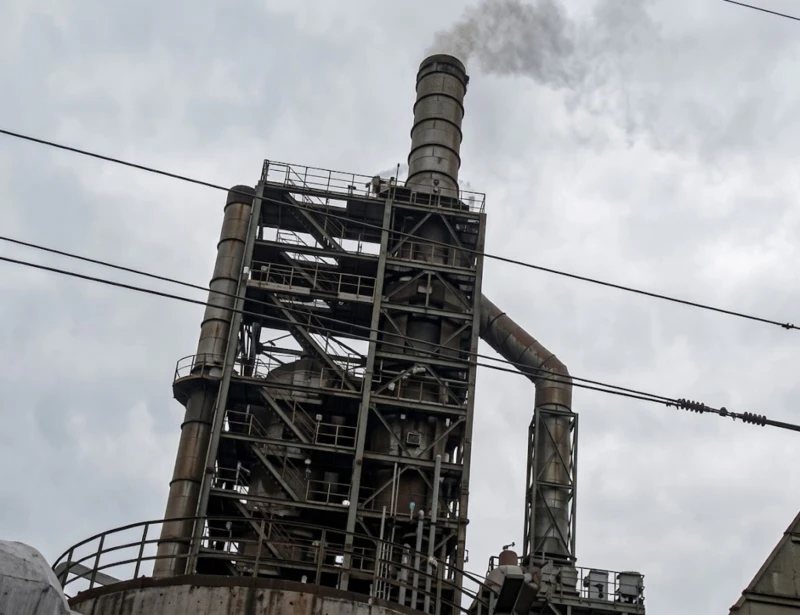
The kiln off-gas treatment train begins with a gravity dust collection chamber, followed by a waste heat boiler, an electrostatic precipitator, a desulfurization scrubber, and a stack. The engineering upgrade introduced two new pieces of equipment — a flue gas cooler and the magnetic plume abatement unit — to improve the overall purification efficiency and eliminate visible white plume.
After passing through the desulfurization scrubber, the pre-treated flue gas is directed to the flue gas cooler, where condensation technology reduces the gas temperature to approximately 40°C, lowering water molecule activity and preparing the gas for entry to the magnetic plume abatement unit. The cooled gas then enters the MPA unit, where the magnetic field removes residual fine particulates and acid mist, further reducing white plume formation. The clean gas is finally discharged through the existing stack.
- NOx: Initial 50 mg/Nm³; outlet limit 50 mg/Nm³ under GB 31573−2015.
- SO₂: Initial 100 mg/Nm³; outlet target ≤30 mg/Nm³. Addressed by the upstream wet desulfurization stage.
- Particulate matter (PM): Initial 50 mg/Nm³; outlet target ≤10 mg/Nm³. Fine lithium-bearing dust and crystalline salt residues are highly adhesive, particularly problematic for conventional absorber media.
- Carbon monoxide (CO): Present from kiln carbon reduction chemistry; monitored upstream for safety. Not a primary compliance pollutant at post-scrubber stage.
- Strongly acidic condensate (pH≈2): The flue gas condensate from lithium carbonate kiln off-gas carries dissolved acid at pH≈2. This is the primary corrosion driver for all downstream equipment and specifies graphene composite absorber media over any standard metallic or fibrous alternative.
- Crystalline salt and fine dust adhesion: Lithium carbonate smelting generates fine crystalline salt residues that are extremely adhesive at sub-dew-point temperatures. These deposits accumulate rapidly on absorber surfaces and backwash nozzles, requiring dedicated backwash pressure and filtration design significantly above standard industrial specifications.
- High ambient humidity (humidity at MPA inlet: 50%): The post-scrubber / post-cooler gas enters the MPA unit at approximately 40°C with 50% inlet humidity, producing visible white plume under all ambient conditions without active aerosol removal.
| Parameter | Initiële concentratie | Outlet (Design) | Regulatory Limit |
|---|---|---|---|
| NOx | 50 mg/Nm³ | ≤50 mg/Nm³ | 50 mg/Nm³ |
| SO₂ | 100 mg/Nm³ | ≤30 mg/Nm³ | 30 mg/Nm³ |
| Particulate matter (PM) | 50 mg/Nm³ | ≤10 mg/Nm³ | 10 mg/Nm³ |
| Mixed inlet pollutant density (MPA unit inlet) | 50 mg/Nm³ | ≤10 mg/Nm³ | 10 mg/Nm³ |
| Visible white plume | Present (persistent) | None (invisible) | No visible white plume |
| Flue gas volume (rated) | 46,500 Nm³/h | — | — |
| Flue gas temperature (kiln exit) | 50°C | — | — |
| Inlet temperature (MPA unit, post-cooler) | ≈40°C | — | — |
| Inlet humidity (at MPA unit) | 50% | — | — |
| Condensate pH | ≈2 (strongly acidic) | — | — |
03 — Engineering Requirements
Design Criteria for Magnetic Plume Abatement in Lithium Carbonate Smelting Applications
Before selecting the abatement technology, the engineering team established the following binding design requirements, reflecting the specific corrosion, adhesion, humidity, and climate conditions of this lithium carbonate smelting application.
Commercially Proven Technology
Only field-proven, commercially mature technologies are acceptable. All equipment and ancillary materials must meet applicable national manufacturing standards. The system must demonstrate a 30%–50% improvement over existing baseline purification performance using verified technology.
Wide Load Tolerance
The system must maintain purification performance and plume suppression when flue gas volume varies between 10% and 110% of rated design capacity, accommodating load changes driven by kiln cycling and feed material quality variation throughout production campaigns.
pH≈2 Corrosion Resistance
All components contacting the strongly acidic condensate must be fabricated in or coated with materials rated for continuous service in pH≈2 acidic environments. The graphene composite absorber layer provides both the required acid resistance and the thermal stability needed for periodic regenerative hot-water purging of accumulated adhesive deposits.
Geen secundaire vervuiling
No new wastewater streams, spent chemical reagent, or hazardous solid waste may result from the abatement process. System raw materials must have a stable and reliable domestic supply chain. All major equipment must be sourced from nationally certified quality manufacturers.
Energie-efficiëntie
Equipment selection must minimize both capital expenditure and operating running costs. Design must incorporate energy-saving technologies and devices to reduce investment and operational expenses, targeting the lowest feasible specific energy consumption for the required purification throughput.
Noise Compliance
All rotating equipment must not exceed 85 dB(A) at 1 m, meeting GB 12348−2008 Class II industrial limits. Equipment layout must accommodate existing site constraints and available space within the existing treatment train footprint.
Modular and Future-Proof
Modular design must accommodate regulatory tightening over 3–5 years without core system replacement. Advanced technology must simultaneously address residual gaseous pollutant co-emissions to position the facility for ultra-low emission classification under future permit revisions.
Ambient Climate Adaptation
The MPA unit design must fully account for local ambient temperature and humidity conditions, including sub-freezing winter temperatures in the Nanjing region. Equipment, instrumentation, and condensate handling systems must be protected against freeze damage during cold-weather operation.
04 — Treatment Solution
How the Magnetic Plume Abatement System Was Configured for Lithium Carbonate Kiln Off-Gas
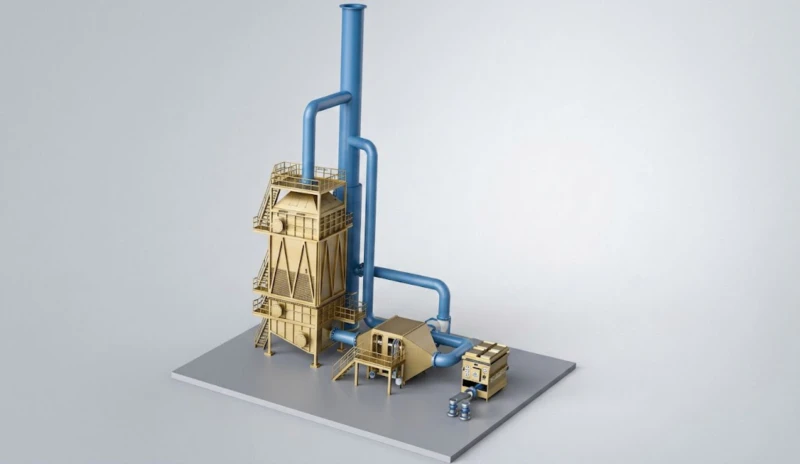
Magnetic Plume Abatement (MPA) — also known as magnetic fume purification, dry-phase acid mist capture, non-thermal white smoke elimination, or magnetic field exhaust gas polishing — eliminates visible white plume by removing the three physical drivers simultaneously: fine particulate matter, acid mist aerosols, and saturated water vapor. The BLEMG-1KS magnetic energy generator creates a controlled field gradient that causes paramagnetic molecules and charged aerosol particles to migrate toward the graphene composite absorber layer, leaving the exiting gas stream depleted of the aerosol fraction that generates visible plume.
The engineering upgrade introduced two new process stages into the existing treatment train: a flue gas cooler positioned between the desulfurization scrubber and the MPA unit, and the MPA unit itself. The cooler reduces gas temperature from approximately 50°C to 40°C using condensation technology, reducing water molecule kinetic energy and improving the MPA unit’s capture efficiency for the fine aerosol phase. The complete upgraded process flow is as follows:
Upgraded Process Flow: Rotary Kiln to Clean Stack
Kiln
Dust Chamber
Boiler + ESP
Scrubber
Cooler ★
(BLCNXB-5W)
Stack
★ New equipment added in this upgrade ⭐ New equipment added in this upgrade
.webp)
System Configuration and Key Technical Parameters
The MPA unit specified for this project uses a tower-external, bottom-entry / top-exhaust configuration, installed as a standalone module adjacent to the existing desulfurization tower. Its compact footprint of 6.1×4.2×13.5 m is well-suited to the constrained site available within the existing treatment train envelope.
| Parameter | Specificatie |
|---|---|
| Unit Model | BLCNXB-5W |
| Layout Type | Tower-external, stand-alone module |
| Air Flow Orientation | Bottom-entry, top-exhaust |
| Zuiveringsefficiëntie | ≥97% |
| Inlet Mixed Pollutant Concentration | 50 mg/Nm³ |
| Outlet Mixed Pollutant Concentration | ≤10 mg/Nm³ |
| System Resistance | 250 Pa |
| Treated Flue Gas Volume | 50.000 Nm³/h |
| Inlet Flue Gas Temperature (MPA unit) | ≈40°C (post-cooler) |
| Absorber Layer Material | Graphene composite |
| Equipment Dimensions (L×W×H) | 6.1 m × 4.2 m × 13.5 m |
| Magnetic Energy Generator Model | BLEMG-1KS |
| Running Power | 57 kW |
| Annual Operating Days | 330 days/year |
| Annual Electricity Cost | Approx. 207,700 RMB/year |
05 — Core Advantages
Why Magnetic Plume Abatement Outperforms Alternatives for Lithium Carbonate Kiln Off-Gas
- ✓
Graphene Composite Absorber Survives pH≈2 Service Where All Alternatives Fail: Standard fibrous absorber pads, polymer meshes, and carbon steel components fail rapidly in continuous contact with pH≈2 condensate from lithium carbonate kiln off-gas. The graphene composite layer maintains structural integrity and absorption efficiency under sustained acidic condensate exposure. Its thermal stability also enables periodic hot-water regenerative purging to remove accumulated adhesive crystalline salt deposits, restoring performance without media replacement. - ✓
Flue Gas Cooler Integration Optimizes MPA Capture Efficiency: By inserting a flue gas cooler between the desulfurization scrubber and the MPA unit, this project reduced gas temperature from 50°C to 40°C before MPA entry. This pre-cooling step reduces the kinetic energy of water vapor molecules and fine aerosol particles, significantly improving the MPA absorber layer’s capture efficiency without any change to the core magnetic purification mechanism. Pre-cooling is a deployable retrofit step for facilities where post-scrubber gas temperature is above 45°C. - ✓
Compact 6.1×4.2×13.5 m Footprint Fits Within Constrained Existing Treatment Train: The BLCNXB-5W module occupies a footprint of approximately 25.6 m² — smaller than a standard parking space row — making it installable in the space-constrained equipment corridors typical of established lithium carbonate smelting facilities. No new foundations or structural modifications to the existing treatment train are required. - ✓
Low Specific Energy — 57 kW for 50,000 Nm³/h: The BLCNXB-5W draws 57 kW at full rated throughput, producing a specific energy consumption of 1.14 W per Nm³/h — well below the 3–5 W per Nm³/h typical of wet reheat plume suppression systems. At 330 operating days per year and 0.46 RMB/kWh, the annual electricity cost is approximately 207,700 RMB, a highly competitive OPEX position for the scale of compliance benefit delivered. - ✓
Zero Secondary Pollution — Dry Process Eliminates Wastewater and Reagent Costs: The MPA process introduces no liquid reagents into the gas stream and generates no wastewater discharge continuously. In a facility already managing multiple acidic and alkaline process streams, eliminating a new wastewater category from the emission control upgrade substantially simplifies the site’s environmental management system and wastewater discharge permit obligations. - ✓
First-Time Commissioning Success Validates Technology Reliability: The MPA unit achieved complete success on first-time commissioning, with all operating data and plume elimination performance meeting design targets from start-up. This outcome — consistent across multiple MPA installations in the chemical and smelting sectors — reflects the maturity and field-proven reliability of the underlying technology rather than a project-specific outcome.
Technology Comparison: MPA vs. Conventional Alternatives for Lithium Carbonate Smelting
| Criterion | Magnetic Plume Abatement | Alkali Wet Scrubbing | GGH Gas Reheating |
|---|---|---|---|
| White plume elimination | Complete (invisible stack) | No (haze persists) | Partial (temp-dependent) |
| pH≈2 acid resistance | High (graphene composite) | Gematigd | Low (HX corrosion risk) |
| Secondary wastewater | Geen | High volume | Geen |
| Purification efficiency | ≥97% | ≈80–85% | N/A (no removal) |
| Reagent cost | Nul | Ongoing | Nul |
| Cold-weather adaptability | Yes (design-integrated) | Risk (freeze in pipes) | Yes (dry system) |
| Equipment footprint | Compact (25.6 m²) | Large (pump station, basin) | Medium |
06 — Operational Results
First-Time Commissioning Success and Verified Performance Data
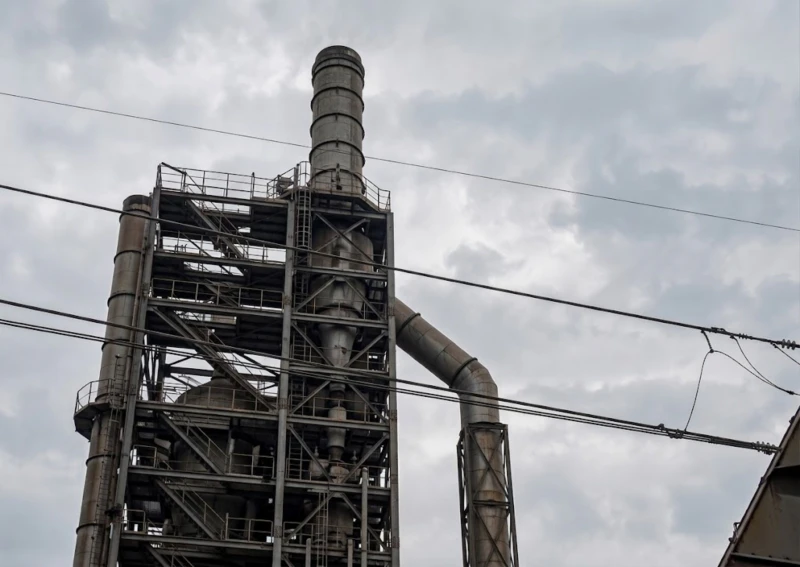
The magnetic plume abatement unit completed first-time commissioning successfully. All operating data and plume elimination performance met design targets from initial start-up. The before-and-after field photographs confirm a complete transformation: with the system in standby, a dense white plume is visible above the kiln stack; with the system fully operational under identical production conditions, the stack exhaust is genuinely invisible.
07 — Implementation Cautions
Critical Engineering Considerations for Lithium Carbonate Smelting Off-Gas Applications
- ⚠️
Strongly corrosive condensate (pH≈2) requires system-wide anti-corrosion specification: Lithium carbonate kiln off-gas condensate at pH≈2 is not a trace contaminant — it is the primary liquid phase throughout the MPA unit and all downstream condensate handling. Every component that may contact this condensate — pipework, vessel walls, pump casings, sensor housings, structural supports — must be specified for continuous service at pH 2. Downgrading material specification to reduce procurement cost is the single most common cause of early equipment failure in this application. Use of under-rated materials also voids the system performance warranty. - ⚠️
Crystalline salt and fine dust adhesion demand increased backwash pressure and flow volume: Lithium carbonate smelting generates crystalline salt residues that are among the most adhesive fine particulates encountered in industrial flue gas treatment. The backwash recirculation system must be designed with substantially higher pump head and flow volume than would be specified for equivalent-loading non-adhesive dust applications. Quantify the adhesion characteristics of the specific waste stream in the detailed design phase and size the backwash system accordingly, rather than applying a generic adhesive dust multiplier. - ⚠️
Local ambient temperature and humidity parameters must be incorporated at the design stage: The Nanjing climate includes sub-freezing winter temperatures. If the MPA design is prepared based on average ambient conditions without reference to the coldest operating scenario, condensate handling pipework, sump heating, and instrument protection will be under-specified for winter service. Specify trace heating on all condensate lines with exposed outdoor runs, heat-traced sumps with low-temperature thermostatic control, and frost-protected instrument enclosures. These are standard additions in cold-climate MPA installations and add marginally to capital cost while preventing unplanned shutdown events. - ⚠️
Flue gas cooler performance must be validated at minimum ambient temperature: The new flue gas cooler inserted between the desulfurization scrubber and the MPA unit reduces gas temperature from 50°C to 40°C using the temperature differential between the gas stream and ambient air. In very cold winter conditions, the cooler will achieve higher temperature reduction than in summer, potentially driving the gas below the dew point within the cooler itself and creating condensate handling challenges inside the cooler body. Verify cooler performance across the full annual temperature range and ensure the cooler sump and drain have adequate capacity for maximum condensate generation. - ⚠️
CEMS location must be confirmed post-retrofit before acceptance inspection: Adding the flue gas cooler and MPA unit between the desulfurization scrubber outlet and the main stack changes the location of the actual discharge point for monitoring purposes. Before submitting for acceptance inspection, confirm with the competent ecological environment bureau that the CEMS installation position is correctly re-designated to the MPA unit outlet (which is now the stack base), and that all monitoring port dimensions, access platforms, and isokinetic sampling positions comply with the applicable monitoring technical standard. - ⚠️
Scheduled absorber purge timing must account for both seasonal adhesion rates and kiln maintenance windows: Crystalline salt adhesion rates are not constant across the year — higher ambient humidity in summer and lower gas temperature differentials in autumn change the rate at which deposits build on the absorber layer. Establish the purge schedule based on first-year operating data from your specific site rather than applying a generic interval, and align purge windows with planned kiln maintenance shutdowns to minimize production impact.
08 — Engineering Takeaways
Four Transferable Lessons from This Lithium Carbonate Smelting Project
- 1
Inserting a flue gas cooler upstream of the MPA unit is a low-cost efficiency multiplier. The decision to add a flue gas cooler between the desulfurization scrubber outlet and the MPA inlet required modest additional capital outlay but meaningfully improved the MPA unit’s ability to capture fine aerosols by reducing gas temperature and water molecule kinetic energy before they enter the magnetic field zone. This two-stage approach — cooler then MPA — is the recommended configuration for any application where post-scrubber gas temperature exceeds 45°C. It also creates a natural condensate collection point in the cooler that can be separately managed, reducing the liquid load presented to the MPA absorber layer. - 2
Material specification for pH≈2 service is non-negotiable and non-substitutable. This project’s experience summary explicitly identifies pH≈2 condensate corrosivity as the primary material challenge. The lesson for procurement and project management teams is that corrosion-resistant material specifications in acidic service are not a cost reduction target — they are a performance precondition. Facilities that substitute under-rated materials to reduce initial cost typically experience first corrosion failures within 12–18 months, at which point the remediation cost significantly exceeds the initial saving. - 3
Cold-climate MPA installations require a dedicated winter operating protocol. Many MPA projects are designed, commissioned, and initially operated during mild-weather seasons. When the first winter arrives, facilities without cold-climate protection in the condensate handling system (trace heating, frost-protected instruments, heated sumps) experience unplanned shutdowns from freeze events. The additional cost of incorporating cold-climate protection at the design stage is a small fraction of the cost of a winter emergency remediation when kiln production is at stake. - 4
Adhesion characterization before backwash system sizing prevents the most common post-commissioning performance failure. Crystalline salt adhesion from lithium carbonate kiln off-gas is significantly more aggressive than the coal fly ash or industrial dust adhesion that backwash systems in other sectors are sized for. Using generic sizing multiples without application-specific adhesion data routinely produces undersized backwash systems that lose efficiency within 2–3 months. Commission a bench-scale adhesion test on a representative condensate sample before finalizing backwash pump and nozzle specifications.
09 — Frequently Asked Questions
Magnetic Plume Abatement for Lithium Carbonate Smelters: Ten Questions Answered
Questions from environmental compliance engineers, plant managers, and technical procurement teams in the lithium carbonate and battery materials sector.
Ready to Eliminate Your White Plume?
Explore the Full Range of Industrial Emission Control Solutions
From magnetic plume abatement in lithium carbonate smelting and battery materials manufacturing to regenerative thermal oxidation systems for high-concentration VOC abatement, our engineering team delivers field-verified solutions for the most demanding industrial emission control challenges.