SCR
RTO-SCR samenwerkingssysteem voor de gezamenlijke beheersing van VOC's en NOx in de industrie
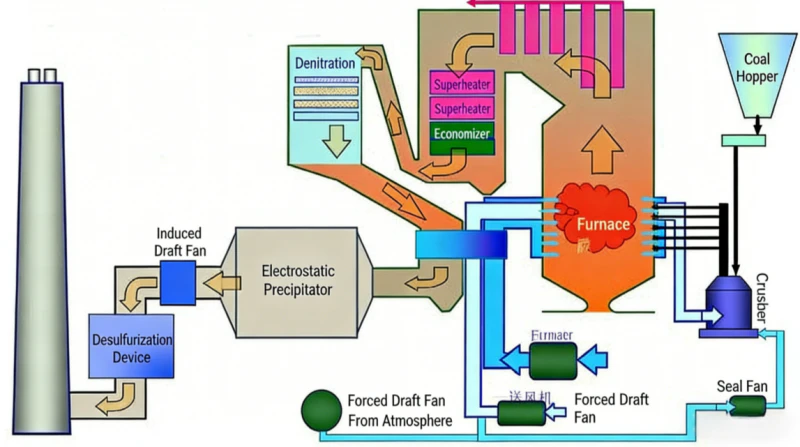
Definitie van selectieve katalytische reductie
Het SCR-denitrificatiesysteem bestaat hoofdzakelijk uit een SCR-reactor, een rookgasverwarmings- en mengsysteem, een ammoniakopslag- en injectiesysteem, een pulsroetblaas- en regelsysteem, enzovoort. De SCR-reactor is de kern van het rookgasdenitrificatiesysteem. Deze is verticaal geplaatst, waardoor de rookgassen verticaal naar beneden stromen. Een luchtstroomverdeler en een schot zijn bij de ingang geïnstalleerd om een gelijkmatige rookgasstroom en een uniforme luchtstroomverdeling te garanderen, wat de voorwaarden schept voor een soepel verloop van de denitrificatiereactie. In de reactor is een vierlaags gelast stalen frame geplaatst om de katalysator te dragen die de denitrificatiereactie versnelt en voldoende ruimte biedt voor de reactie.
De noodzaak van samenwerking tussen RTO en SCR op het gebied van bestuur.
Gecombineerde vervuiling: De meeste industriële processen stoten tegelijkertijd VOC's en NOx uit.
Het beleid wordt steeds strenger: de EU-richtlijn inzake geïmproviseerde explosieven en de Chinese normen voor ultralage emissies vereisen gelijktijdige controle.
Temperatuurafstemming: De uitlaattemperatuur van de RTO (300-500℃) komt zeer goed overeen met de optimale reactietemperatuur van de SCR (280-400℃).
Kostenbesparing: gedeeld rookkanaal en besturingssysteem, waardoor de totale investering met meer dan 301 TP3T wordt verlaagd.
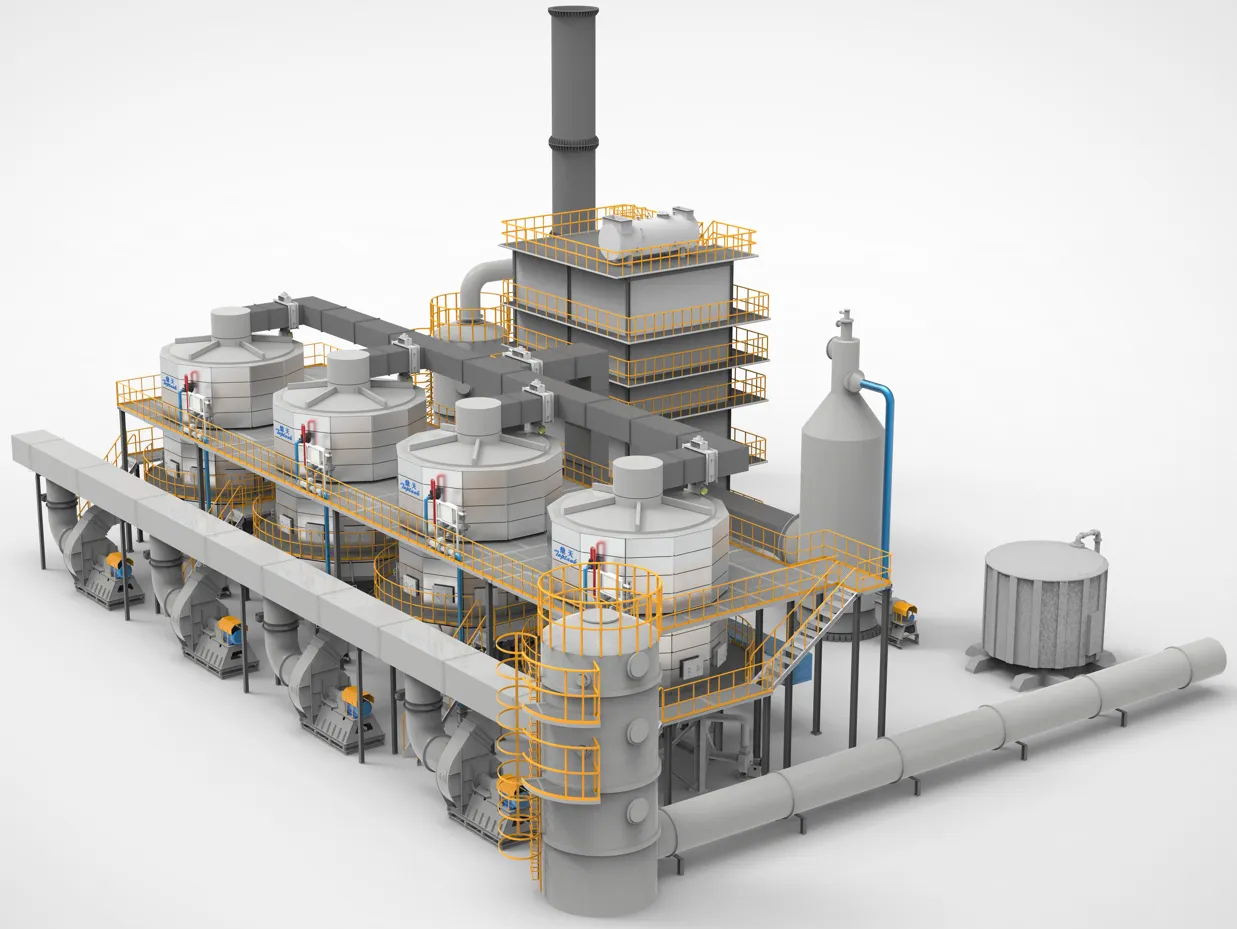
Vergelijking van de synergetische voordelen van RTO en SCR
Kerntechnologieën van het RTO-SCR-systeem
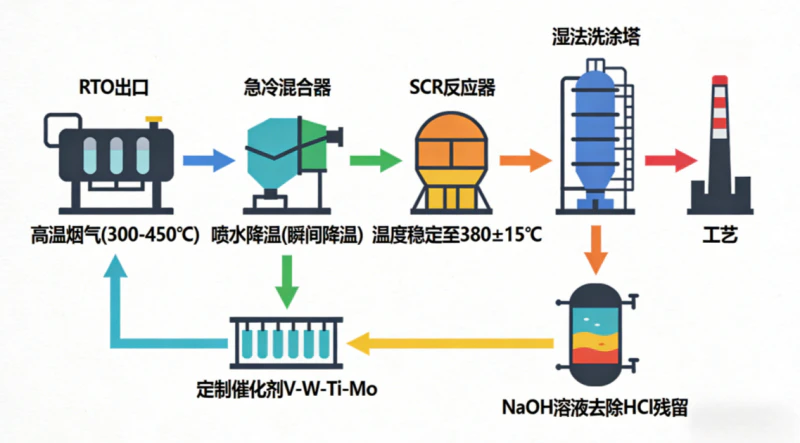
Aanbevolen oplossing: Aangepaste V-Ti-katalysator (vanadiumgehalte: 2-3%, WO₃-gehalte: 8-10%), afgestemd op de kenmerken van RTO-rookgassen.
Toepassingsvoorbeeld
Neem de chemische industrie als voorbeeld.
Projectachtergrond
• Aard van de onderneming: jaarlijkse productie van 8.000 ton pesticiden tussenproducten (bevatten chloorbenzenen en pyridineverbindingen)
• Oorspronkelijk behandelingsproces: drietoren RTO (verwerkt luchtvolume 150.000 Nm³/h)
• Bedrijfsstatus: 24 uur per dag continue productie, 8.000 bedrijfsuren per jaar
• Geografische locatie: Economische en technologische ontwikkelingszone Shangyu, Shaoxing, Zhejiang
kernproblemen waarmee men te maken kreeg
NOx-uitstoot overschrijdt de norm: de NOx-uitstoot na alleen gebruik van de RTO bedraagt 220-280 mg/Nm³.
Nieuwe normen invoeren: NOx ≤ 100 mg/Nm³ (speciale emissiegrens) vereist vanaf 2022.
Risico op boetes voor overtreding van de milieuwetgeving: dagelijkse boetes van 100.000 tot 1 miljoen yuan.
Hoe los ik dit op?
1. Ontwerp voor procesrouteoptimalisatie
2. Te gebruiken met een SCR-reactor
U kunt ons ook problemen met uw producten melden, waarna wij u oplossingen zullen aanreiken.
Vergelijking van de bedrijfskosten
Veelgestelde vragen
Wat is de typische efficiëntie van EVER-POWER RTO's bij de vernietiging van Vluchtige Organische Stoffen (VOS)?
99% DRE voor waterlopen met een concentratie <10.000 ppm, geverifieerd volgens EPA-methode 25A.
Hoe verhoudt RTO zich tot SCR voor emissiebeheersing?
RTO richt zich op VOC's/HAP's (thermische oxidatie); SCR reduceert NOx (katalytisch, 90%-rendement). Hybride systemen bereiken een totale reductie van 95%.
Welke onderhoudscyclus wordt aanbevolen voor keramische media?
Jaarlijkse inspectie; vervanging om de 10-15 jaar (20.000 cycli) volgens ISO 14001.
Hoeveel warmteterugwinning kan ik verwachten bij agrarische toepassingen in Brazilië?
97% bij 50.000 Nm³/h, waarbij 600 kW wordt teruggewonnen voor de voorverwarming van de droger volgens CONAMA 436.
Welk koppel is nodig voor roterende klepaandrijvingen?
2000-4500 Nm, met een verhouding van 1:25 voor ingangen van 1500 RPM
Voldoet uw RTO aan de Chinese norm GB 37822-2019?
Ja, <50 mg/Nm³ VOC's; gecertificeerd voor 20%-marktgroei in 2025.
Kunnen RTO's de hoeveelheid mijnstof aan?
IP65-classificatie; voorfilters voor PM10 >500 μg/m³, 98%-uptime.
Wat is de terugverdientijd voor een installatie met een capaciteit van 100.000 Nm³/h?
18-24 maanden via 65% brandstofbesparing ($200.000/jaar).
Hoe integreer ik met bestaande versnellingsbakken?
Directe SAE-flens; 95%-match rate, geen aanpassingen nodig.
Welke garanties dekken media en kleppen?
5 jaar/50.000 uur; naar rato berekend op basis van de omstandigheden op de locatie.