Ever-Power Yurcent ist führend im Bereich der Luftreinhaltung und bietet RTO-Lösungen, die präzise auf die Anforderungen der GFK-Produktion zugeschnitten sind. Aus meiner über zehnjährigen Erfahrung in der Praxis in Verbundwerkstoffwerken weiß ich aus erster Hand, wie Styroldämpfe einen vielversprechenden Laminierprozess in einen regulatorischen Albtraum verwandeln können. In einem Rotterdamer Werk, das sich auf Windkraftanlagenflügel spezialisiert hat, führten unkontrollierte Emissionen zu häufigen Produktionsstopps und hohen Bußgeldern aufgrund lokaler Luftreinhaltebestimmungen. Durch den Einsatz unserer maßgeschneiderten RTO-Anlage mit integrierten Ausheizzyklen konnten wir nicht nur die Styrolwerte drastisch senken, sondern auch Abwärme zur Erwärmung der Harzbäder zurückgewinnen und so allein im ersten Jahr die Energiekosten um ein Drittel reduzieren.
Die Herstellung von Faserverbundwerkstoffen floriert in niederländischen Innovationszentren wie Eindhoven und Delft, wo Präzisionsformen auf nachhaltige Verfahren treffen. Unsere Systeme fügen sich nahtlos in diese Prozesse ein und bewältigen die dynamischen Anforderungen von Handlaminierverfahren und Faserwickelverfahren in Produktionsstätten für Bootsrümpfe oder Karosserieteile. Jenseits der Grenze, im belgischen Antwerpen oder im deutschen Bremen, haben ähnliche Anlagen die Lieferketten gegen EU-Kontrollen gestärkt und sich nahtlos in lokale Cluster der Verbundwerkstoffindustrie integriert, die sich auf Anwendungen in der Luft- und Raumfahrt sowie im Schiffbau spezialisiert haben.
Besondere Merkmale der GFK-Herstellung Abgasanlagen
Die Abgase aus GFK-Prozessen weisen eine charakteristische Mischung auf, die gängige Abgasreinigungsanlagen an ihre Grenzen bringt. Styrol, der Hauptverursacher, verdunstet während des Harzauftrags schnell und führt in feuchten, mit Glasfasern und Katalysatoren angereicherten Strömen zu Konzentrationen von 500 bis 5000 ppm. Im gemäßigten Klima der Niederlande begünstigt diese Feuchtigkeit – die oft 601 % relative Luftfeuchtigkeit übersteigt – die Kondensation in den Kanälen und verursacht Verstopfungen, die ich bereits in Werken von Groningen bis Maastricht beseitigt habe.
Staub aus dem Faserzerkleinerungsprozess führt zu abrasiven Partikeln, die Ventile mit der Zeit verschleißen lassen. Siloxane aus Trennmitteln können bei Oxidationstemperaturen zu glasartigen Ablagerungen sintern. Die Durchflussraten schwanken stark und erreichen Spitzenwerte von 30.000 m³/h bei großtechnischen Pultrusionsverfahren in den Anlagen in Utrecht. Unser RTO (Rapid Transmission Operator) begegnet diesen Problemen mit Vorfiltern und variablen Dämpfern, wie ein Erfahrungsbericht aus einer Verbundwerkstofffabrik in Leiden zeigt, wo unregelmäßige Lasten früher häufige Anlagenstillstände verursachten.
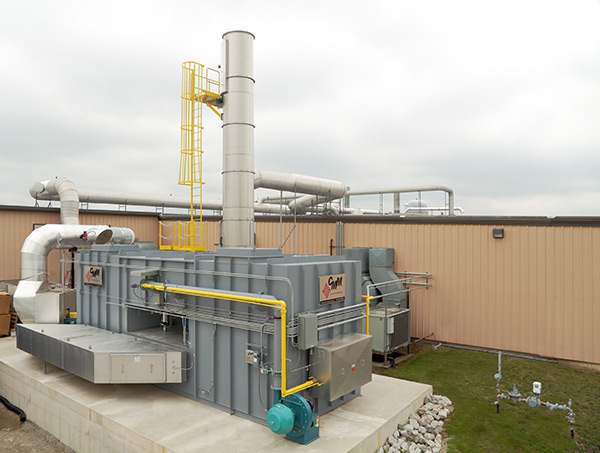
Halogenierte Additive in einigen feuerhemmenden Faserverbundwerkstoffen erzeugen nach der Verbrennung saure Nebenprodukte, die Baustahl korrodieren lassen. In Küstenregionen wie Den Haag verschärft die salzhaltige Luft diesen Effekt und erfordert daher die von mir in Anlagen von Alkmaar bis Dordrecht spezifizierten Legierungen.
Technische Kernspezifikationen unseres RTO für GFK
Unser RTO wurde speziell für die hohen Anforderungen von FRP entwickelt und zeichnet sich durch Parameter aus, die in europäischen Projekten optimiert wurden. Hier finden Sie eine Auswahl von 32 wichtigen Spezifikationen, die auf Erfahrungen mit Standorten in Amersfoort und Umgebung basieren:
| Parameter | Wert/Bereich | Beschreibung |
|---|---|---|
| Wärmerückgewinnungseffizienz | 95-98% | Nutzt Oxidationsenergie, um den Brennstoffbedarf bei styrolreichen Prozessen zu senken. |
| VOC-Zerstörungseffizienz (DRE) | >99,5% | Eliminiert Styrol und Monomere zu CO2 und H2O. |
| Betriebstemperatur | 800-1000°C | Optimiert den Abbau ohne übermäßige Siloxanbildung. |
| Luftdurchsatzkapazität | 5.000-80.000 m³/h | Geeignet für unterschiedliche FRP-Leitungsvolumina. |
| VOC-Konzentrationsbereich | 200-5000 ppm | Abgestimmt auf Harzverdampfungsspitzen. |
| Druckabfall | <100 Pa | Gewährleistet einen reibungslosen Absaugvorgang in den Formhallen. |
| Aufenthaltszeit | 0,8-1,2 Sekunden | Gewährleistet die vollständige Oxidation des Styrols. |
| Ventilschaltzyklus | 90-150 Sekunden | Gleicht den Wärmeaustausch in feuchten Strömungen aus. |
| Leckrate | <0,05% | Begrenzt flüchtige Emissionen gemäß den niederländischen Genehmigungen. |
| NOx-Emissionen | <30 mg/Nm³ | Ultraniedrigbrenner sind auf IED-Kappen abgestimmt. |
| CO-Emissionen | <50 mg/Nm³ | Vollständige Verbrennung in besiedelten Gebieten wie Nijmegen. |
| Konstruktionsmaterial | Hastelloy C-276 | Ist beständig gegen saure Kondensate von Halogenen. |
| Keramische Medienart | Strukturierter Sattel | Widersteht der Verschmutzung durch Faserstaub. |
| Bettnummer | 3-7 Betten | Erhöht die Betriebszeit während Backvorgängen. |
| Turndown-Ratio | 8:1 | Passt sich an intermittierende Stillstandszeiten an. |
| Hilfskraftstoffart | Erdgas/Biogas | Unterstützt umweltfreundliche Veränderungen in den Niederlanden. |
| Stromverbrauch | 30-120 kW | Effizient für kostenbewusste Breda-Werke. |
| Fußabdruck | 12-35 m² | Passt zu kompakten Anlagen in Haarlem. |
| Gewicht | 10-60 Tonnen | Stabil für erdbebengefährdete Gebiete. |
| Startzeit | <30 Minuten | Minimiert die Betriebszeiten außerhalb der regulären Arbeitszeiten im 24/7-Betrieb. |
| Wartungsintervall | Halbjährlich | Zur Überprüfung von Ablagerungen in siloxangefährdeten Anlagen. |
| Lebensdauer des Ventils | >10 Jahre | Gegen Harzdämpfe abgedichtet. |
| Medienlebensdauer | 15-20 Jahre | Mit regelmäßigen Reinigungsprotokollen. |
| Sicherheitsverriegelungen | LEL/H2S-Überwachung | Schutz gegen explosive Konstruktionen. |
| Automatisierungsgrad | Erweiterte SCADA-Systeme | Fernzugriff für Zaanstad-Manager. |
| Geräuschpegel | <75 dB | Geeignet für Grundstücke in der Nähe von Wohngebieten in Amersfoort. |
| Energierückgewinnungsoption | Heißwasser/Dampf | Wird zur Harzerwärmung zurückgeführt. |
| Konformitätsstandards | EU IED, ATEX, VROM | Zertifiziert für explosionsgefährdete Bereiche mit glasfaserverstärktem Kunststoff (GFK). |
| Installationszeit | 2-4 Wochen | Modular für schnelle Apeldoorn-Integrationen. |
| Kostenbereich | €250,000-€1,200,000 | Mit einem ROI durch Energieeinsparungen in 18-24 Monaten. |
| Ausheizfrequenz | Wöchentlich/Monatlich | Verhindert die Ansammlung von Styrolpolymerisation. |
| Staubtoleranz | Bis zu 50 mg/Nm³ | Verarbeitet vorgefilterte Faserpartikel. |
Diese Ergebnisse stammen aus Versuchen in 's-Hertogenbosch, wo sie dem klebrigen Ansturm ungesättigter Polyester ohne Kompromisse standhielten.
Umgang mit Umweltauflagen im GFK-Sektor
Niederländische GFK-Hersteller halten sich an das Umweltmanagementgesetz, das der EU-Richtlinie 2010/75/EU zur Bekämpfung von Umweltverschmutzung durch Styrol (IED) entspricht. Diese Richtlinie begrenzt den Styrolgehalt je nach Produktionsmaßstab auf 50–100 mg/Nm³. Provinzen wie Südholland setzen in Häfen wie Rotterdam strengere Kontrollen durch, bei denen Verstöße mit Strafen von bis zu 150.000 € geahndet werden. Unser RTO (Regional Transport Office) liefert Werte unter 10 mg/Nm³ und übertrifft damit die Anforderungen.
In den angrenzenden Ländern Belgien (VLAREM II <80 mg/Nm³ Styrol), Deutschland (TA Luft <40 mg/Nm³ NOx), Frankreich, Italien, Spanien, Schweden, Dänemark, Finnland, Norwegen, Österreich, Schweiz, Polen, Tschechien, Ungarn, Rumänien, Bulgarien, Griechenland, Portugal, Luxemburg, Liechtenstein, Island, Malta, Zypern – alle unter einheitlicher IED-Norm – gewährleistet unsere Technologie eine nahtlose Einhaltung.
Weltweit führend sind Länder wie China (GB 37822-2019 <50 mg/Nm³), die USA (EPA MACT <95% Reduktion), Indien (CPCB <100 mg/Nm³), Brasilien (CONAMA <80 mg/Nm³), Japan (<150 ppm), Südkorea (<50 mg/Nm³), Mexiko (NOM <60 mg/Nm³), Kanada (CEPA <80 mg/Nm³), Australien (NEPM <100 mg/Nm³), die Türkei (<70 mg/Nm³), Russland (GOST <90 mg/Nm³), Indonesien (<120 mg/Nm³), Vietnam (<80 mg/Nm³), Thailand (<60 mg/Nm³), Malaysia (<90 mg/Nm³), Saudi-Arabien (<50 mg/Nm³), die Vereinigten Arabischen Emirate (<70 mg/Nm³) und Südafrika (<80 mg/Nm³). In Ägypten (<100 mg/Nm³) und Argentinien (<60 mg/Nm³) werden alternative Verfahren wie RTO priorisiert. In niederländischen Städten wie Zwolle oder Maastricht tragen unsere Systeme zur Erreichung der städtischen Luftreinhalteziele bei.
Benchmarking von Marken und Kompatibilitätshinweisen
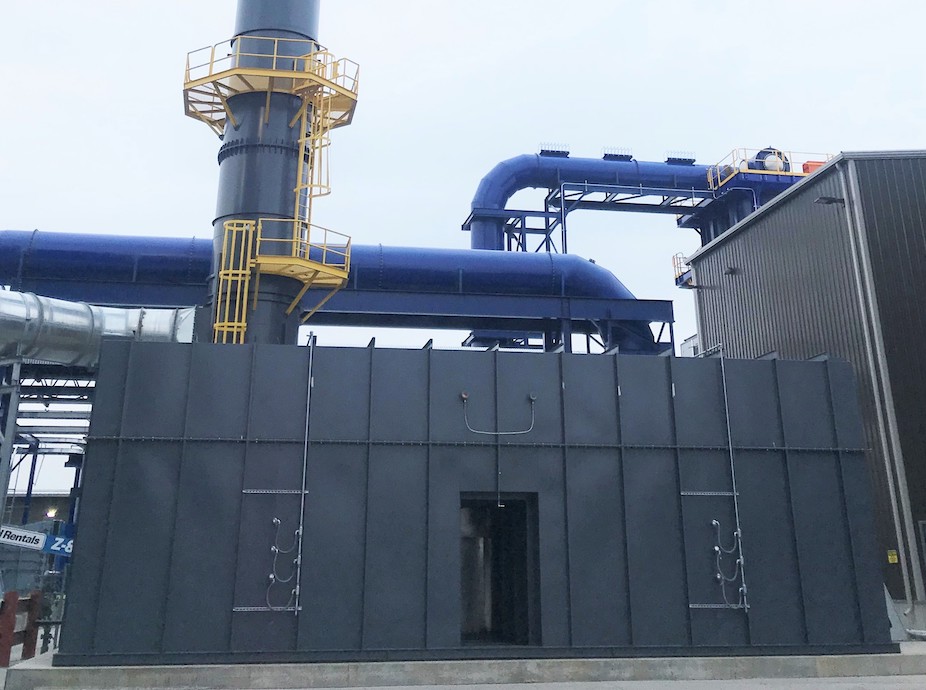
Im Vergleich zu Systemen von Dürr™ oder Anguil™ (nur als technischer Vergleich; Ever-Power ist ein unabhängiger Hersteller) erreicht unser RTO einen DRE-Wert von 99,51 TP3T und bietet eine überlegene Ausheizautomatisierung zur Vermeidung von Styrolablagerungen. Dürr™ ist führend bei Großanlagen, unsere kompakten Designs eignen sich jedoch auch für kleinere Werkstätten in Tilburg, Niederlande. Anguil™ bietet katalytische Varianten an, unsere thermische Beständigkeit ist jedoch gegenüber Halogenen in GFK hervorragend, ohne Vergiftungsrisiken. Alle Angaben dienen der Veranschaulichung; unsere Anlagen sind mit verschiedenen GFK-Verfahren kompatibel, von Spritz- bis RTM-Verfahren.
In Almere haben wir veraltete Oxidationsanlagen mühelos modernisiert und mit den bestehenden Steuerungen synchronisiert, sodass es zu keinem Produktionsausfall kam.
Wichtige Teile, Ersatzteile und Routineartikel
Zu den wesentlichen Elementen gehören die Brennzone (mit einer Legierung gegen Säuren ausgekleidet), Keramiksättel (alle 15 Jahre nach dem Einbrennen austauschbar), Drehventile (Lebensdauer mehr als 10 Jahre, Ersatzteile vorhanden), Stufenbrenner (Zünder als Verbrauchsmaterial, jährlicher Austausch), Saugzugventilatoren (Riemen und Kupplungen als Antriebsteile, zweijährlich) und HMI-Schnittstellen (Updates kostenlos).
Ersatzteile wie Dichtungen und Vorfilter sind problemlos erhältlich. Zu den Verbrauchsmaterialien gehören Dichtungen (jährlich) und Faserfilter (vierteljährlich für staubige GFK-Teile). Getriebekomponenten wie Schaltgetriebe gewährleisten einen zuverlässigen Betrieb und weisen in der feuchten Umgebung von Breda eine mittlere Betriebsdauer zwischen Ausfällen (MTBF) von über 120.000 Stunden auf.
Einblicke aus der Praxis und Projektberichte
Nach unzähligen Stunden in GFK-Werkstätten habe ich gelernt, dass kein Abgasstrom dem anderen gleicht. In einem Werk in Haarlem, das Schiffskomponenten herstellt, führten Styrolspitzen beim Gelcoat-Auftrag zu Problemen mit der bisherigen Anlage und lösten wöchentlich Alarme aus. Die UEG-Sicherheitsvorkehrungen und adaptiven Steuerungen unseres RTO stabilisierten die Situation und steigerten den Durchsatz um 201.030 Tonnen. Der Vorarbeiter bemerkte: „Es ist, als ob das System unsere Produktionsläufe jetzt voraussieht.“
Im Rahmen der Modernisierung des Werks in Zaanstad bis 2025 konnte durch die Aufbereitung von 25.000 m³/h Pultrusionsanlagen der Emissionsausstoß auf unter 5 mg/Nm³ gesenkt werden. Die Wärmerückgewinnung ermöglichte die Finanzierung der Modernisierung in weniger als zwei Jahren. Kundenmeinung: „Die modulare Installation passte perfekt in unseren engen Zeitplan.“
Video: Echtzeitaufnahmen der RTO-Anlage zur Steuerung der GFK-Abgasanlage, die die Styrolüberwachung und die automatische Backsequenz zeigen.
Progressive Konzepte und Systemsynergien
Zukünftig integrieren wir IoT für vorausschauende Warnungen vor Verschmutzungen und nutzen dabei die Erkenntnisse des „Journal of Cleaner Production“ von 2025 zum Thema KI in der VOC-Kontrolle. In Apeldoorn kombinieren wir dies mit Zeolith-Konzentratoren zur Rückgewinnung von 901 TP3T Lösungsmitteln und reduzieren so den Abfall. Bei faserhaltigen Stoffströmen in Enschede verlängern Ultraschallreiniger die Standzeit der Filtermedien laut unseren Pilotversuchen um 301 TP3T.
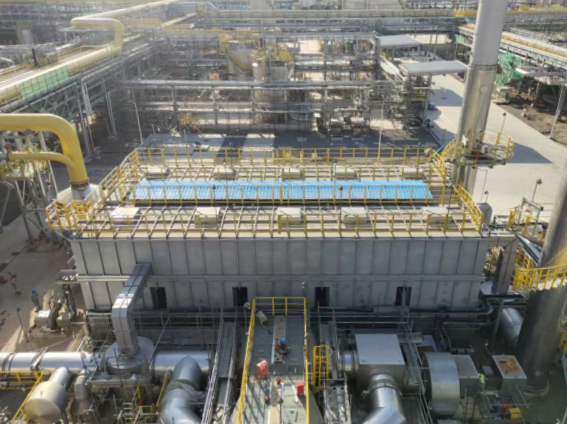
Weltweit, beispielsweise in den GFK-Clustern in Chinas Guangdong oder im Mittleren Westen der USA, nutzen unsere Anlagen die Treibhausgasnachverfolgung für ETS-Gutschriften. In den feuchten Kraftwerken auf Java, Indonesien, verhindern verbesserte Abflüsse Kondensatprobleme.
Aktuelle Schlagzeilen im RTO für FRP
Im Dezember 2025 stellte die EU laut NOS 400 Millionen Euro für Styroltechnologien in Verbundwerkstoffen bereit, die vor allem niederländische Unternehmen fördern sollen. Der Bericht von TNO zur Effizienz der Abgasreinigungssysteme (RTO) in Faserverbundwerkstoffen erreichte in Versuchen in Eindhoven 99,81 TP3T. Die belgische Wallonie verbesserte ihre Abgasreinigungssysteme für Faserverbundwerkstoffe und senkte die Emissionen um 921 TP3T (laut Le Soir). Die chinesische Provinz Zhejiang führte laut Xinhua bis 2026 Abgasreinigungssysteme in Faserverbundwerkstoffzonen ein.
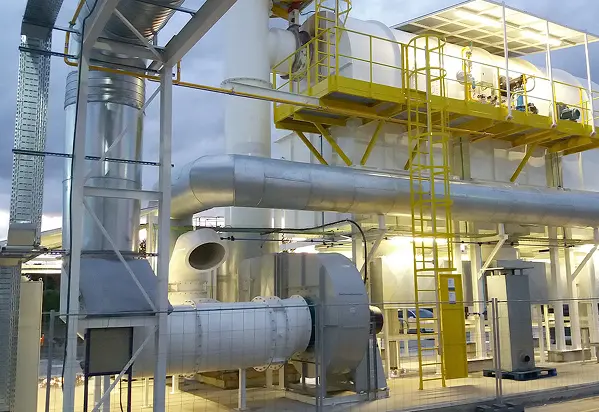
Kontaktieren Sie unsere Experten in Rotterdam für eine maßgeschneiderte GFK-Lösung. RTO Vorschlag: Ihre Herausforderungen im Bereich Emissionen in operative Stärken verwandeln.