
A medida que la industria de semiconductores entra en la "Era Angstrom" de los nodos de 3 nm y 2 nm, todos los sistemas de soporte de las instalaciones se enfrentan a desafíos sin precedentes. Los módulos de fotolitografía y desarrollo en el Front-End of Line (FEOL) representan las áreas de la fábrica que requieren mayor inversión de capital y mayor sensibilidad ambiental.
En este entorno de alto riesgo, la gestión de compuestos orgánicos volátiles (COV) como PGMEA y HMDS es más que un simple mandato ambiental. Si un sistema de oxidación térmica regenerativa (RTO) genera incluso una cantidad mínima fluctuaciones de presión o vibracionesPuede causar desenfoque en el escáner, lo que resulta en una pérdida catastrófica de rendimiento para lotes completos de obleas. ¿Cómo logramos emisiones de "cero interferencias" y, al mismo tiempo, cumplir con los estándares ESG globales?

Principales desafíos: ¿Por qué los RTO convencionales tienen dificultades con la litografía? (Preguntas y respuestas)
1. ¿Qué es un “pulso de presión” inducido por RTO?
Los RTO tradicionales de 2 o 3 torres utilizan válvulas de asiento neumáticas para la conmutación. En el momento de la conmutación, se produce un aumento repentino de presión (normalmente entre ±50 Pa y ±200 Pa) en el conducto de escape. En un escáner de precisión, este pulso altera el equilibrio microambiental dentro de la pista (recubridor/revelador), activando alarmas de interbloqueo y tiempos de inactividad.
2. ¿Por qué un RTO rotatorio es la opción preferida por las fábricas?
RTO rotarios Utiliza una válvula de distribución de rotación continua en lugar de válvulas de asiento reciprocantes. Esto proporciona un flujo de aire extremadamente suave y continuo, eliminando los pulsos de presión. Garantiza que las fluctuaciones de la presión estática en el sistema de escape se mantengan dentro de los límites establecidos. ±10 Pa, logrando la verdadera Pulso cero™ actuación.
3. ¿Cómo prevenir la “contaminación secundaria” en los gases de escape de los semiconductores?
Los gases de escape de la litografía a menudo contienen siloxanos (de la descomposición del HMDS), que forman Dióxido de silicio ($SiO_2$) Polvo dentro del RTO. Sin una filtración y un control de flujo adecuados, este polvo puede regresar a las instalaciones o salir por la chimenea, lo que compromete la clasificación de la sala limpia.
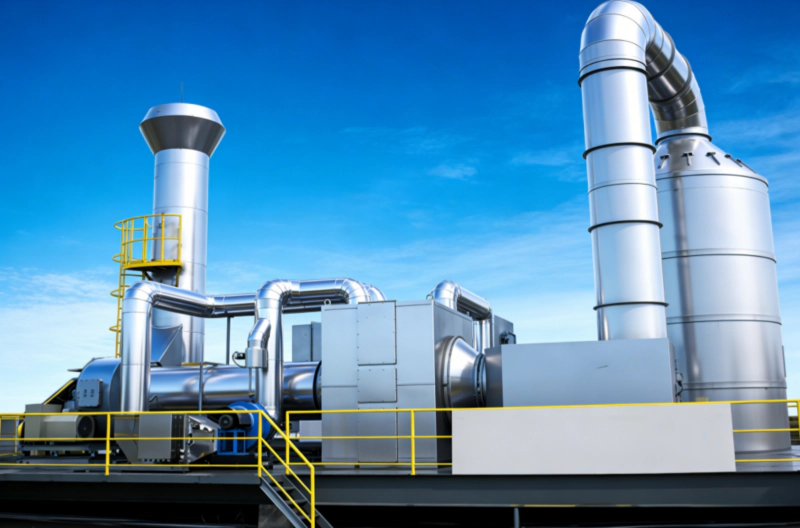
Especificaciones técnicas: un punto de referencia orientado al rendimiento
Para los procesos de semiconductores FEOL, las métricas de rendimiento de RTO han cambiado de "Eficiencia de destrucción" a "Parámetros de estabilidad":
Tabla de parámetros técnicos clave
| Métrica técnica | Rango de parámetros | Impacto en el rendimiento de las obleas | Referencia de la industria |
|---|---|---|---|
| Fluctuación de presión | ≤ ±10 Pa | Métrica central; evita la inestabilidad del entorno del escáner. | Semi-estándar F15 |
| Nivel de vibración (VC) | VC-A / VC-B | Evita la resonancia mecánica en componentes ópticos. | Estándares de sala limpia IEST |
| Destrucción de COV (DRE) | ≥ 99,5% | Garantiza que las emisiones de PGMEA/disolventes superen las regulaciones mundiales. | Leyes ambientales |
| Eficiencia térmica (TER) | 95% – 97% | Reduce los gastos operativos de las gigafábricas y se alinea con los objetivos ESG. | Estándares de fábrica verde |
| Concentración de partículas | < 1 mg/m³ | Previene la contaminación secundaria por polvo en salas limpias. | Clase ISO 1-5 |
| Tiempo de conmutación de válvula | Rotación continua | Elimina el efecto “Golpe de ariete” en la corriente de aire. | Cálculo de dinámica de fluidos |
Análisis técnico profundo:
- Ingeniería de válvulas rotativasEl RTO rotatorio utiliza una sola válvula de distribución mecanizada con precisión. Esto elimina el vacío de "tiempo muerto" que se crea durante la conmutación de la torre en unidades de asiento, protegiendo así los delicados puntos de ajuste de presión del escáner.
- Diseño de baja vibración:Debido a que no hay válvulas de asiento pesadas que golpeen los asientos, la vibración mecánica se elimina virtualmente, un factor crítico para los equipos ubicados cerca de la “Bahía de litoterapia de sala limpia” sensible a la vibración.
Escenarios de aplicación: fortalezas y limitaciones
Análisis de escenarios: Litografía y vías (alto volumen, alta estabilidad)
- Características: Composición de COV relativamente consistente (principalmente PGMEA/disolventes) pero requiere un funcionamiento ininterrumpido las 24 horas del día, los 365 días del año.
- Ventajas:
- Protección de rendimiento:Las características de pulso cero garantizan la estabilidad de la ventana del proceso de litografía.
- Alta confiabilidad:El diseño de válvula única reduce cientos de puntos de falla potenciales asociados con los actuadores y sensores de válvulas.
- Limitaciones:
- Deposición de sílice:Si se trata HMDS, se requieren ciclos regulares de “horneado” o mantenimiento para evitar la acumulación de $SiO_2$ en los medios cerámicos.
- Inversión de capitalLas válvulas rotativas de alto rendimiento requieren un mecanizado de precisión, lo que resulta en un costo inicial más alto en comparación con los RTO básicos.
Componentes críticos y recomendaciones del sistema
- Válvula rotativa de alta precisión:Fabricado con aleaciones especializadas con sellado avanzado para garantizar cero fugas y longevidad.
- Prefiltración multietapa (HEPA):Para los procesos FEOL, los gases de escape deben filtrarse estrictamente antes de ingresar al RTO para proteger los medios cerámicos de una formación inesperada de vidriado de siloxano.
- Redundancia de doble inversor (VFD):La configuración maestro/esclavo del VFD permite una conmutación a nivel de milisegundos en caso de una falla del módulo, lo que garantiza cero tiempo de inactividad para el sistema de escape.
- Recuperación de calor secundaria:Recuperación del calor de la combustión para los sistemas de deshumidificación o recalentamiento de la sala limpia para cerrar el ciclo energético.
Comparación de marcas de RTO convencionales (perspectiva de semiconductores)
| Marca | Fuerza central | Control de presión | Lógica de decisión |
|---|---|---|---|
| Dürr (Ecopure) | Pionero en RTO rotatorio; base de instalación masiva en fábricas de nivel 1 (TSMC, Intel). | Extremo (±5 Pa) | Ideal para fabricantes de televisores de 12 pulgadas de alto presupuesto que buscan el “estándar de oro” mundial. |
| Poder eterno (Yurcent) | Tecnología patentada Zero-Pulse™; respuesta ágil a los aumentos repentinos de PGMEA. | Excelente (±10 Pa) | Mejor para Costo-Rendimiento y soporte de ingeniería localizado. |
| Taikisha | Expertos en simulación de flujo de aire; dominantes en las cadenas de equipos japonesas. | Excelente | Ideal para una integración profunda con líneas Litho de fabricación japonesa. |
Fusionando el Cumplimiento Global con la Gestión del Rendimiento
Las empresas de semiconductores que se expanden globalmente deben satisfacer tanto los estándares medioambientales más estrictos como los objetivos de rendimiento más exigentes.
- Marco regulatorio:
- Taiwán/China continental:Estándares estrictos específicos para semiconductores, que a menudo requieren DRE >95% (las fábricas de nivel 1 se autorregulan a >99,5%).
- EE.UU./UE:Estándares NESHAP para la industria electrónica.
- ESG y resilienciaInvertir en RTO rotativos de alta eficiencia contribuye al puntaje ESG de una empresa y al mismo tiempo actúa como una medida de “resiliencia de las instalaciones” para evitar costosas paradas de línea.
Experiencia de campo y estudios de casos
Perspectiva de expertos: No permita que el RTO se convierta en una “fuente sísmica”
En un proyecto reciente de chip lógico avanzado, el cliente intentó inicialmente utilizar un RTO de válvula de asiento estándar.
- El punto de dolor:Cada vez que el RTO cambiaba las válvulas, los micromanómetros en el compartimento de litografía fluctuaban enormemente, lo que hacía que los escáneres se dispararan y entraran en modo seguro.
- La solución:Reemplazamos la unidad con una RTO rotativo Ever-Power e implementó amortiguación activa de vibraciones en los patines del ventilador.
- El resultadoLos pulsos de presión se eliminaron por completo. Las tasas de desperdicio por defectos de desenfoque se redujeron en 1,51 TP3T, lo que generó una recuperación económica anual de millones de dólares.
Tendencias futuras: Gestión de COV en fábricas inteligentes
- Equilibrio dinámico del flujo de aireLos futuros RTO se comunicarán directamente con el escáner, prediciendo la demanda de escape y ajustando las velocidades del ventilador en tiempo real para mantener una presión constante.
- Monitoreo de emisiones durante todo el ciclo de vidaLa espectrometría de masas en línea integrada monitoreará la oxidación de PGMEA en tiempo real, logrando una verdadera transparencia operativa “Net Zero”.
ConclusiónEn la fabricación de semiconductores, los equipos ambientales ya no son un simple complemento, sino un eslabón fundamental en el ecosistema de rendimiento. Rotary RTO, con su enfoque en “La estabilidad primero”, se está convirtiendo en el pasaporte verde para las empresas de fabricación que navegan por la Era Angstrom.