For Netherlands Lithium Battery Enterprises: When fluorinated waste gas emits from battery factories in Eindhoven, when VOCs and fluoride monitoring data exceed standards in Rotterdam High-Tech Park, when penalty notices from EU Industrial Emissions Directive (IED) arrive — environmental compliance is no longer optional but a survival necessity for Dutch lithium battery companies.
The Waste Gas Dilemma of Netherlands Lithium Battery Industry
- Stringent Compliance Pressure: RIVM sets VOCs emission limit below 50mg/m³ for lithium battery industry, with “near-zero emission” requirement for fluorides. Non-compliant enterprises face fines up to €250,000 or production suspension.
- Neighborhood & Brand Risks: Most Dutch lithium battery factories are near residential areas. Odor complaints can lead to media exposure and supply chain disruptions.
- Inefficient Traditional Solutions: Adsorption methods achieve only 60% fluoride removal rate; catalytic combustion is prone to fluoride poisoning and secondary pollution.
RTO System: Core Advantages for Netherlands Enterprises
✅ 99%+ Treatment Efficiency: Fully compliant with RIVM “near-zero emission” standards (emission <10mg/m³).
✅ 95% Heat Recovery: Save up to €100,000/year on energy costs for medium-sized Dutch lithium battery enterprises.
✅ Odor Elimination: Resolve neighborhood complaints and enhance brand reputation.
RTO Technical Parameters
| Modelo | Airflow (m³/h) | Gas Concentration (mg/m³) | Oxidation Temp (℃) | Fluoride Resistance | Floor Area (㎡) |
|---|---|---|---|---|---|
| RTO-Li-1000 | 500-1000 | 500-5000 | 800-850 | Basic Fluoride Coating | 8 |
| RTO-Li-5000 | 1000-5000 | 800-8000 | 820-880 | Enhanced Fluoride Material | 15 |
| RTO-Li-10000 | 5000-10000 | 1000-12000 | 850-920 | Special Fluoride Alloy | 25 |
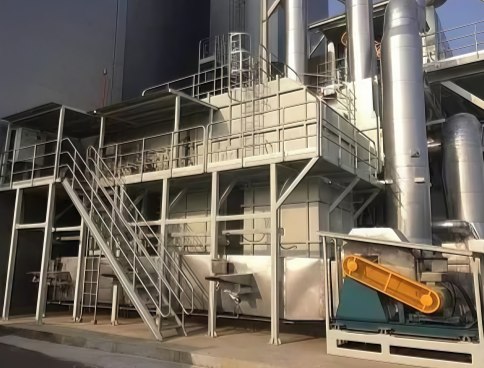
How RTO Works for Fluoride Waste Gas
- Three-stage Preprocessing: Remove dust, fluoride ions and viscous substances to prevent equipment corrosion.
- Heat Storage & Heating: Waste gas is heated to 800℃+ by ceramic heat accumulators (energy-saving operation).
- Oxidation Decomposition: Fluorides and VOCs are fully oxidized into harmless CO₂ and H₂O.
- Heat Recovery: Recover 95% of heat for workshop heating or electrode drying.
- Netherlands Customization: Low-temperature insulation module for stable operation at -5℃.
RTO Selection Guide for Netherlands Market
| Comparison Dimension | Imported Brands (e.g. German) | Local Small Factory Products | Our Customized RTO |
|---|---|---|---|
| Inversión inicial | High (+50% vs market average) | Low (hidden maintenance risks) | Medium (best cost-performance) |
| RIVM Compliance | EU standard (extra debugging needed) | Partial non-compliance | Native RIVM integration |
| Local Service Response | 48+ hours (engineers from Germany) | Fast but low technical capability | 2-hour emergency response (Rotterdam/Eindhoven) |
| Annual Operating Cost | High (imported spare parts) | Unstable (high failure rate) | Stable (local spare parts + heat recovery) |
Case Study: Rotterdam Lithium Battery Enterprise RTO Transformation
Enterprise Background: Positive electrode material manufacturer in Rotterdam High-Tech Park, 80 employees, 20 tons/month output, waste gas flow 4000m³/h, initial concentration 4500mg/m³.
Before Transformation: Adsorption method with €10,000/month material cost, 65% fluoride removal rate, facing €200,000 RIVM fine risk.
Solution: Customized RTO-Li-5000 system (installed May 2024).
Results: Emission reduced to 7mg/m³, zero complaints, €204,000 annual cost saving, 30% order growth.
Netherlands Exclusive After-sales Service
- Local installation & RIVM acceptance assistance
- 24/7 emergency response (2-hour on-site service)
- Quarterly professional inspection (fluoride-resistant parts focus)
- Rotterdam bonded warehouse for local spare parts
- Dutch/Chinese bilingual operation training
FAQ (Netherlands Localized)
1. Is RTO suitable for small lithium battery accessory factories in Groningen (600m³/h airflow)?
Yes. Our RTO-Li-1000 model is designed for small enterprises (8㎡ floor area), with adjustable power to avoid energy waste. 3 small factories in Groningen have successfully passed RIVM acceptance.
2. Will fluctuating Dutch natural gas prices affect RTO operating costs?
Minimal impact. 95% heat recovery rate means only small gas consumption during startup. For RTO-Li-5000, 20% gas price increase adds only €300/month.
3. Can RTO handle high fluoride concentration with corrosive substances?
Yes. Special fluoride-resistant alloy material and preprocessing system ensure stable operation (99%+ efficiency). A Utrecht electrolyte factory has used it for 1.5 years with zero failures.
4. How to connect RTO to RIVM online monitoring system?
Native RIVM-approved data interface, fully configured by our engineers during installation (real-time data upload without extra operation).
5. Does RTO meet Eindhoven High-Tech Park noise standards?
Yes. Dutch imported low-noise fans ensure operation noise below 70dB (well below 85dB park limit).
6. What is the service life of RTO? Do fluoride-resistant parts need replacement?
15+ years for whole machine, 8-10 years for core fluoride-resistant parts. Consumables (filter cotton) are replaced every 3-6 months (local supply available).
7. Can RTO help apply for Dutch “Green Energy Subsidy”?
Yes. Our RTO qualifies for 30%-40% investment subsidy under Dutch Energy & Climate Agreement. We assist with application documentation (3 enterprises in Rotterdam/The Hague have successfully applied).
8. Does low winter temperature extend RTO startup time?
No. Intelligent preheating module ensures stable startup within 30 minutes at -5℃ (same as normal temperature).
9. What’s the advantage of RTO over catalytic combustion for fluoride waste gas?
Catalytic combustion suffers from fluoride poisoning (efficiency drops to 50% after 6 months); RTO maintains 99%+ efficiency with no secondary pollution.
10. Can RTO be installed vertically for space-limited Amsterdam factories?
Yes. Vertical installation reduces floor area by 40% (successfully installed in a 12㎡ Amsterdam electrode factory).
11. Will complex lithium battery waste gas cause RTO blockage?
No. Three-stage preprocessing prevents dust/viscous substance blockage (15 Dutch enterprises using it for up to 2 years with zero blockage).
Contact Us for Free On-site Survey!
Our technicians will recommend a suitable RTO for you.
Email: [email protected]
| Phone:+31 (0) 315 230 002