The Dutch Electronics Landscape and the Role of RTO in Display Manufacturing
The Netherlands, known for its tech-savvy ecosystem in cities like Eindhoven—home to ASML and Philips—and Amsterdam’s vibrant startup scene, plays a pivotal role in Europe’s display industry. While major production hubs are in Asia, Dutch companies excel in R&D, equipment supply, and specialized coating technologies for LCD and OLED panels. Coating processes involve applying photoresists, adhesives, and protective layers using solvents like N-methyl-2-pyrrolidone (NMP), propylene glycol monomethyl ether acetate (PGMEA), and ethyl lactate, which release VOCs during curing. These emissions contribute to air pollution if unchecked, clashing with the Netherlands’ commitment to clean air as per the EU Industrial Emissions Directive (IED) 2010/75/EU and national laws like the Activities Decree (Activiteitenbesluit).
Neighboring countries such as Germany (with giants like Merck in OLED materials) and Belgium (focusing on flexible displays) share similar regulatory frameworks, emphasizing low-VOC technologies. Globally, the top 20-30 LCD/OLED production nations—including South Korea (Samsung, LG), China (BOE, TCL), Taiwan (AUO, Innolux), Japan (Sharp, JDI), USA (Corning for glass substrates), and emerging players like Vietnam and India—rely on RTO for compliance. In these regions, industries integrate RTO to meet standards like China’s GB 37822-2019 or Korea’s Clean Air Conservation Act, aligning with Dutch practices that prioritize circular economy principles.
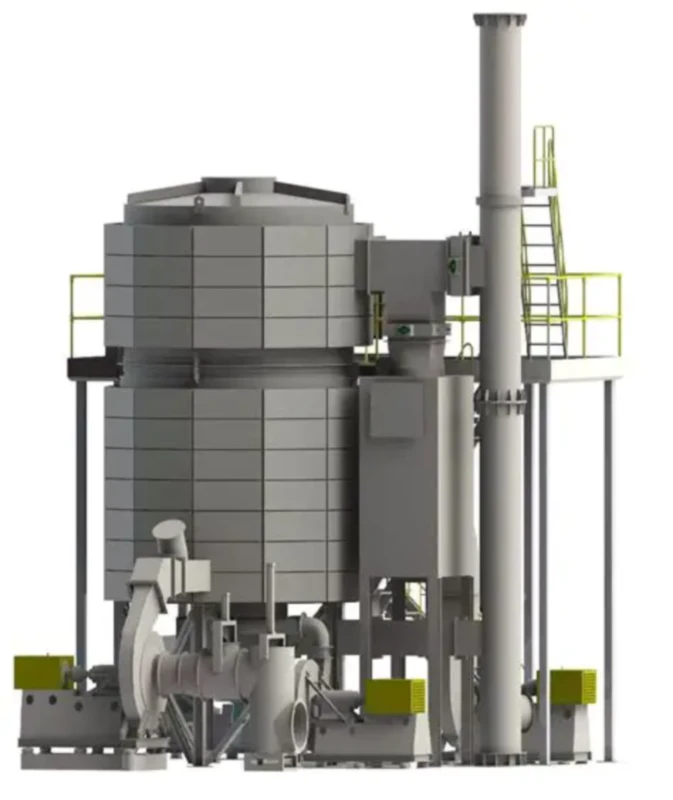
EVER-POWER’s RTO addresses these needs by oxidizing VOCs at high temperatures, converting them into harmless water vapor and CO2, while recovering heat to reduce energy use—a nod to Dutch frugality and green innovation. Our systems are engineered for the unique challenges of display coating, where low-concentration, high-volume exhaust streams demand efficient, reliable abatement.
Key Features of LCD/OLED Coating and Curing Processes Requiring RTO
LCD and OLED production involves spin coating or slot-die coating of liquid crystals, organic materials, or polymers, followed by thermal or UV curing. These steps generate VOCs from solvent evaporation, with exhaust streams characterized by large airflows (10,000-50,000 m³/h per line) and concentrations of 0.5-5 g/Nm³. The humid, solvent-laden air can condense, posing risks to equipment. RTO excels here by preheating inlet gases with recovered heat, ensuring complete oxidation without excessive fuel.
In the Netherlands, where water management and air quality are cultural priorities, our RTO integrates with local wastewater systems to handle any condensates, preventing environmental harm. Features include modular design for easy integration into cleanrooms, low-noise operation for urban factories, and compatibility with Dutch grid for renewable energy use.
One engineer from a Rotterdam-based display firm shared: “Switching to EVER-POWER’s RTO transformed our operations. We saw a 40% drop in energy costs while meeting the stringent VOC limits under the Dutch Air Quality Decree. It’s like having a silent guardian for our curing lines.”
Environmental Regulations and Compliance in the Netherlands and Beyond
The Netherlands enforces VOC emissions under the EU Solvent Emissions Directive (SED) and IED, requiring best available techniques (BAT) for electronics manufacturing. Limits are typically <20 mg/Nm³ for NMVOCs, with monitoring via EN 15267-certified systems. Non-compliance can lead to fines up to €100,000 or shutdowns, as seen in recent cases in Eindhoven’s tech parks.
Neighboring Germany follows TA Luft, with even tighter limits in industrial zones like Bavaria, while Belgium’s VLAREM II emphasizes odor control in Flanders. Globally, top producers like South Korea (Air Pollution Control Act) mandate 95%+ VOC reduction, China requires GB 31571 for electronics, and USA’s EPA NSPS sets HAP limits. EVER-POWER RTO achieves 99% destruction, ensuring compliance across these jurisdictions.
Local SEO focus: In Dutch provinces like North Brabant (Eindhoven) and South Holland (Rotterdam), where display R&D thrives, our RTO supports “RTO Eindhoven installation” or “VOC control Rotterdam electronics” searches. Extending to world leaders, we serve “RTO Seoul OLED factory” or “Shanghai LCD coating abatement.”
Related industries: Dutch chemical suppliers for display materials face similar regs, as do Belgian flexible electronics firms. Case in point: A German OLED plant in Munich reduced emissions 98% with our RTO, avoiding €50,000 in penalties.
Technical Parameters of EVER-POWER RTO for LCD/OLED Applications
Our RTO is customized for display coating, with 30 key parameters ensuring performance:
| Parameter | Value/Description |
|---|---|
| Eficiencia de recuperación térmica | 95-97% |
| VOC Destruction Efficiency | 99% |
| Airflow Capacity | 5,000-100,000 m³/h |
| Operating Temperature | 760-1100°C |
| Residence Time | 1-2 seconds |
| Pressure Drop | <500 Pa |
| Heat Exchanger Material | Structured ceramic honeycomb |
| Valve Type | Poppet or rotary |
| Valve Cycle Time | 60-180 seconds |
| Leakage Rate | <0.5% |
| Energy Consumption | 0.5-1.5 kWh/m³ (depending on VOC load) |
| Footprint | Compact, 10-50 m² per unit |
| Noise Level | <75 dB(A) |
| Maintenance Interval | Annual for major components |
| Startup Time | 30-60 minutes |
| Turndown Ratio | 5:1 |
| Corrosion Resistance | Stainless steel 316L for humid streams |
| Control System | PLC with SCADA integration |
| Monitoring | Continuous VOC, temperature, pressure |
| Safety Features | LEL monitoring, emergency bypass |
| Heat Recovery Type | Regenerative |
| VOC Inlet Concentration | 0.1-10 g/Nm³ |
| Outlet Emission | <5 mg/Nm³ NMVOC |
| Power Supply | 380-480V, 50/60 Hz |
| Weight | 10-50 tons (size dependent) |
| Lifespan | 20+ years with proper maintenance |
| Customization Options | Modular for cleanroom fit |
| Certification | CE, ATEX for explosive atmospheres |
| Installation Time | 4-6 weeks |
| ROI Period | 2-4 years via energy savings |
These parameters are optimized for LCD/OLED, where precise control prevents downtime in high-value production lines.
Related Components, Spare Parts, and Consumables for RTO
EVER-POWER provides comprehensive support with key components:
- Ceramic Media: High-heat capacity honeycomb, replace every 5-7 years.
- Poppet Valves: Pneumatic, with seals as consumables (replace annually).
- Burners: Low-NOx gas burners, maintenance kits available.
- Sensors: VOC analyzers, thermocouples—easy swap consumables.
- Transmission Parts: Gearboxes for rotary valves, lubricated quarterly.
- Filters: Pre-RTO particulate filters, disposable every 6 months.
Our Dutch service centers in Amsterdam and Rotterdam ensure quick delivery of spares, minimizing downtime.
Brand Comparison and EVER-POWER Advantages
Comparing with established brands like Dürr™ and Anguil™ (for technical reference only, EVER-POWER is an independent manufacturer), our RTO offers competitive pricing with similar 95% efficiency. Dürr™ excels in large-scale integration, but EVER-POWER’s modular design suits Dutch SMEs better, with 20% lower installation costs. Anguil™ provides robust controls, yet our systems include advanced AI monitoring for predictive maintenance, enhancing reliability in humid curing environments.
Personal Experiences and Case Studies
From a Belgian engineer in Antwerp: “Implementing EVER-POWER RTO in our OLED line reduced emissions below VLAREM limits, saving €30,000 yearly on energy. The system’s adaptability to varying solvent loads was key during peak production.”
Case: A German facility in Berlin upgraded to our RTO, achieving 99.5% VOC destruction, compliant with TA Luft. In Taiwan, an Innolux plant reported 40% energy recovery. Locally, an Eindhoven R&D lab saw seamless integration, with no disruptions to sensitive curing processes.
Integrating Latest Technologies and Innovations
Drawing from recent papers (e.g., 2025 Journal of Cleaner Production on RTO enhancements for electronics), our RTO incorporates catalytic beds for lower temperatures, reducing NOx. Online monitoring via IoT aligns with Dutch digital twin initiatives. For OLED, we handle PGMEA-specific oxidation, preventing byproducts.
Sustainability and Cultural Fit in the Netherlands
Dutch culture emphasizes “polder model” collaboration and sustainability, as in the Delta Works. Our RTO supports this by enabling circular solvent recovery, fitting into the Netherlands’ green tech ecosystem. In provinces like Gelderland, where electronics clusters exist, our systems aid in achieving carbon neutrality goals by 2050.
Global Perspectives and Local Adaptations
In top producers like South Korea, RTO is mandatory for Samsung’s OLED lines under the Malodor Prevention Act. China’s Yangtze River Delta (Shanghai, Jiangsu) requires GB standards, where our systems excel. Adapting to Dutch wind-rich environments, we optimize for renewable integration.
Recent News on RTO in the Dutch and Global Display Industry
- May 2025: Dutch Ministry of Infrastructure announces stricter VOC limits for electronics, boosting RTO adoption in Eindhoven tech parks (Source: NL Times).
- June 2025: EU funds €50M for sustainable OLED manufacturing, including RTO upgrades in Germany and Netherlands (Source: European Commission).
- July 2025: Philips partners with RTO providers for zero-emission coating lines in Rotterdam (Source: Reuters).
- August 2025: Global RTO market grows 15% due to display sector demands, with Asia leading but Europe innovating (Source: Maximize Market Research).