
In the high-velocity landscape of chemical fiber production and textile finishing, “clean air” is no longer a peripheral compliance checkbox—it is a cornerstone of operational viability. At CMN Industry Inc., we understand that heat-setting stenters are notorious for emiting a dense cocktail of Volatile Organic Compounds (VOCs), hazardous air pollutants (HAPs), and oily aerosols. The Oxidador térmico regenerativo (RTO) stands as the zenith of abatement technology, bridging the gap between draconian environmental mandates and industrial profitability.
What is an RTO?
An RTO is an ultra-sophisticated thermal treatment system designed to destroy gaseous pollutants. Unlike traditional incinerators that bleed energy, the RTO leverages ceramic heat-exchange media to capture and reuse thermal energy. The core principle involves oxidizing VOCs at temperatures typically ranging from 815°C to 980°C, chemically dismantling hydrocarbon chains into harmless carbon dioxide ($CO_2$) and water vapor ($H_2O$).
The magic lies in the “regenerative” aspect. By utilizing a multi-tower design (two-can or three-can configurations), the RTO alternates flow directions. One bed preheats the incoming “dirty” air using stored heat, while the other captures heat from the “clean” combustion exhaust. This cycles continuously, achieving Thermal Energy Recovery (TER) efficiencies of up to 97%. For textile manufacturers, this often translates to “self-sustaining” operation, where the caloric value of the exhaust oil mists provides enough fuel to maintain oxidation temperatures without auxiliary natural gas.
Beyond simple compliance, RTOs from CMN Industry Inc. act as a bulwark for sustainable development. By slashing your facility’s carbon footprint and mitigating the olfactory impact on local communities, you secure your “social license to operate” in an increasingly ESG-focused global market.
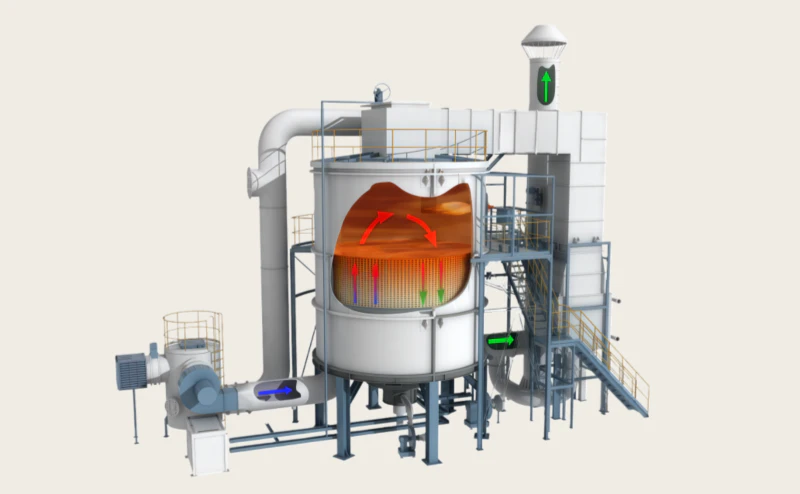
RTO Core Technical Parameters
Precision engineering dictates performance. Below is a distillation of the critical metrics that define the operational envelope of a CMN-grade RTO system, aligned with EPA and international IED standards.
| Parameter | Standard Range / Specification | Impact on Performance |
|---|---|---|
| Operating Temperature | 815°C – 980°C (1500°F – 1800°F) | Crucial for complete destruction of stable VOCs like methane or silicone-based oils. |
| VOC Destruction Efficiency (DRE) | ≥ 99% to 99.9% | Guarantees compliance with the most stringent local environmental regulations. |
| Thermal Energy Recovery (TER) | 95% – 97% | Minimizes auxiliary fuel consumption; often leads to “Auto-thermal” operation. |
| Residence Time | 0.5 – 1.2 Seconds | Ensures the gas stays at high temperature long enough for full chemical oxidation. |
| Treatment Capacity | 2,000 – 100,000+ scfm | Scalable to single stenters or centralized plant-wide collection. |
| Valve Leakage Rate | < 0.1% | Zero-leak poppet valves prevent “dirty” air from bypassing the combustion chamber. |
El VOC treatment efficiency of high-temperature thermal oxidizers is not merely a theoretical claim. It is an empirical necessity. A retention time of 1.0 second at 850°C typically yields a DRE of 99.2% for common textile lubricants (spin finishes). For high-concentration streams, we utilize custom-engineered flow baffles to eliminate “cold spots,” ensuring every cubic meter of air meets the flame.
Scenarios: Characteristics, Advantages, and Limitations
RTOs excel in environments characterized by high air volume and low-to-medium VOC concentrations—the exact profile of a textile heat-setting exhaust.
The Advantages
- Economic Resilience: Low operational costs due to high TER. If the VOC concentration exceeds 3% of the Lower Explosive Limit (LEL), the system runs on its own “waste” fuel.
- Durability: Ceramic media is immune to the acidic byproducts that often corrode catalytic systems.
- Versatility: Capable of handling varying airflows and fluctuating VOC loads without stalling.
The Limitations & Mitigations
The primary challenge in the fiber industry is particulate matter and condensable oils. If raw stenter exhaust enters the RTO, the ceramic media will clog (masking). CMN Industry Inc. solves this by integrating Electrostatic Precipitators (ESP) or multi-stage mechanical filters upstream, stripping 98% of the liquid oils before they reach the thermal stage.
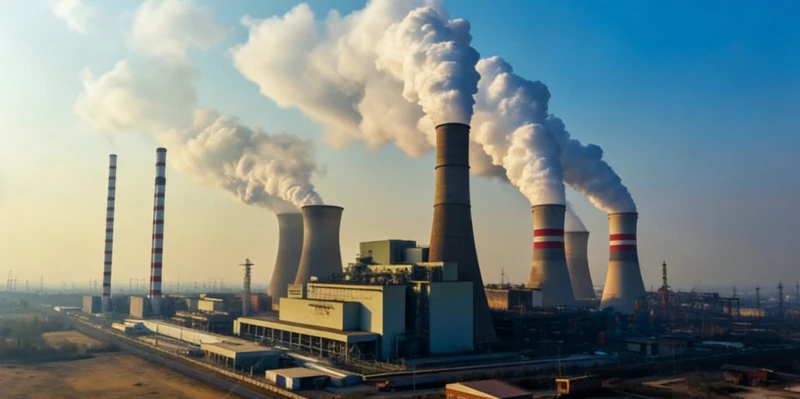
RTO System Components and Ecosystem Support
An RTO is a symphony of components, each playing a vital role in longevity and uptime. At CMN, we specify only industrial-grade peripherals.
- Ceramic Heat Exchange Media: We utilize random-packed saddles for high turbulence or honeycomb monoliths for low-pressure drop, depending on the dust load.
- Switching Valves: Fast-acting, pneumatic poppet valves with “bubble-tight” seals. Metal-to-metal seats are avoided to prevent bypass.
- Burner System: Low-NOx modulated burners that adjust in real-time to the caloric input of the process exhaust.
- Secondary Heat Recovery: Why stop at 97%? We often install a glycol-water heat exchanger after the RTO to provide free process heat for the dye house.
Global Brand Analysis: Benchmarking Excellence
While CMN Industry Inc. focuses on integrated textile solutions, the global market features several titans. Understanding the landscape helps in making an informed procurement decision.
| Brand | Core Strength | Typical Efficiency | Ideal Industry |
|---|---|---|---|
| Dürr (Ecopure) | High-volume automation | 97% TER | Automotive Painting |
| Epcon | High-particulate customization | 95% TER | Heavy Industrial/Oily |
| Anguil | System reliability/Service | 96% TER | Pharma/Chemical |
| CMN Industry Inc. | Textile/Fiber Integrated Heat Recovery | 97%+ TER | Chemical Fiber/Finishing |
Global Implementation & Regulatory Compliance
Navigating the “alphabet soup” of global regulations is daunting. From the US EPA Clean Air Act to the EU Industrial Emissions Directive (IED), the pressure is mounting.
European Union (The Netherlands Focus)
In the Netherlands, the Activiteitenbesluit milieubeheer and the **NeR (Nederlandse Emissierichtlijn Lucht)** set strict limits. VOC emissions are often capped at 5-20 mg/Nm³. Our RTOs allow Dutch textile mills in regions like Tilburg or Enschede to operate well within these “green zones,” often achieving near-zero detectable emissions.
The Global Top 10 Context
- USA: Compliance with Title V permits and RACT (Reasonably Available Control Technology) standards.
- China: Strict adherence to GB 37822-2019 (Volatile Organic Compounds Unorganized Emission Control Standard).
- Germany: Meeting the rigorous TA Luft technical instructions for air quality control.
RTO Case Studies: Real-World Transformation in Fiber & Textiles
The following cases represent CMN Industry Inc.’s boots-on-the-ground experience in optimizing heat-setting lines.
Case Study 1: Large-Scale Polyester Finishing Plant (Zhejiang, China)
This facility operated 12 high-speed stenters producing micro-denier polyester fabrics. The primary issue was a dense “blue smoke” consisting of spin finishes and plasticizers.
VOC Concentration: 450 mg/m³
Oil Mist: 180 mg/m³
Annual Gas Cost: $1.2M
VOC Concentration: < 10 mg/m³ (97.8% reduction)
Oil Mist: Undetectable
Gas Savings: $450k/year (via Auto-thermal operation)
The implementation involved a centralized collection system with an integrated 60,000 m³/h RTO. By capturing the latent heat of the oil mist, the burner remains off for 80% of the production cycle, effectively turning “pollution” into the plant’s primary heat source.
Case Study 2: High-End Knitwear Dyeing & Finishing (North Carolina, USA)
Facing “Notice of Violation” (NOV) from local regulators due to odor complaints and visible emissions from finishing softeners.
Opacity: 45% (Visible Plume)
Total Hydrocarbons: 320 ppm
Odor Dilution Threshold: 1:500
Opacity: 0% (Clear Stack)
Total Hydrocarbons: < 5 ppm
Odor Dilution Threshold: < 1:10
We installed a 3-Tower RTO to eliminate the “puffing” effect during valve switches. The client reported a total cessation of neighbor complaints within 48 hours of commissioning.
Case Study 3: Technical Textile Manufacturer (Saxony, Germany)
The challenge was high-temperature heat setting for automotive airbags, involving volatile flame retardants. The byproduct was mildly corrosive.
Exhaust Temp: 175°C
VOC Load: 850 mg/m³
Energy Waste: 100% (Direct Vent)
Destruction Efficiency: 99.6%
Secondary Recovery: 250 kW/h steam generated
ROI: 2.4 Years
Using 316L stainless steel in critical entry zones and an alkali scrubber pre-filter, CMN provided a solution that resisted corrosion while providing high-grade steam for the facility’s washing range.
Case Study 4: Synthetic Fiber Spinning Plant (Gyeonggi-do, South Korea)
Massive air volumes with dilute VOCs from spinning oil lubrication. Traditional carbon adsorption was too expensive due to frequent replacement of oil-soaked carbon.
Airflow: 85,000 m³/h
VOC Concentration: 120 mg/m³
Carbon Replacement Cost: $85k/Quarter
VOC Concentration: 8 mg/m³
OpEx Reduction: 70% vs Carbon Adsorption
Uptime: 99.8% (3-year average)
By switching to an RTO, we eliminated the hazardous waste stream of “spent carbon.” The RTO handles the high volume with ease, utilizing a high-surface-area honeycomb ceramic to keep pressure drop—and thus electrical costs—to an absolute minimum.
Personal Insight: Beyond the Data Sheets
In my decade of commissioning RTOs, I’ve learned that the “Devil is in the Ductwork.” Many vendors sell an RTO as a black box. However, in the textile industry, the biggest failure point is duct fires. Oily residue builds up in long horizontal runs. At CMN, we insist on sloped ducting with high-velocity transport and automated cleaning “pigs.” Solving the pollution problem is easy; keeping the system safe for twenty years is the real expertise.
Frequently Asked Questions (FAQ)
1. What is the typical lifespan of an RTO? With proper maintenance, a CMN RTO lasts 20-25 years. The ceramic media may need cleaning or partial replacement every 5-8 years.
2. Can RTOs handle silicones? Yes, but specialized ceramic media and maintenance routines are required to manage “silica ash” buildup.
3. How much space is required? A 30,000 scfm RTO typically requires a 10m x 15m footprint, plus access for maintenance.
4. Does an RTO produce secondary pollution? It produces minor amounts of NOx, but our low-NOx burners keep this far below international thresholds.
5. What is the difference between 2-tower and 3-tower? 3-tower systems eliminate the “spike” of dirty air during valve switching, achieving >99% DRE vs the 97-98% typical of 2-tower units.