
From the canals of Amsterdam where Rembrandt once etched his masterpieces to the wind-swept polders of Friesland, the Netherlands has long been a cradle of printing artistry, blending meticulous craft with forward-thinking engineering. Ever-Power brings forth customized regenerative thermal oxidizer (RTO) systems for offset printing, encompassing heatset for glossy magazines, coldset for daily newspapers, and UV for vibrant packaging. These setups convert solvent-laden exhaust into benign outputs while salvaging heat for process reuse, much like how Dutch innovators have harnessed wind for centuries to power mills and reclaim land from the sea.
In a land where bicycles weave through historic streets and tulip fields bloom under engineered skies, offset printing sustains industries from publishing in Utrecht to packaging in Rotterdam. Our RTO technology manages VOCs from inks and cleaners, ensuring presses run cleanly amid the nation’s commitment to circular economies and zero-waste goals. This harmony supports Dutch values, where precision in printing echoes the exactitude of building dikes that hold back the North Sea.
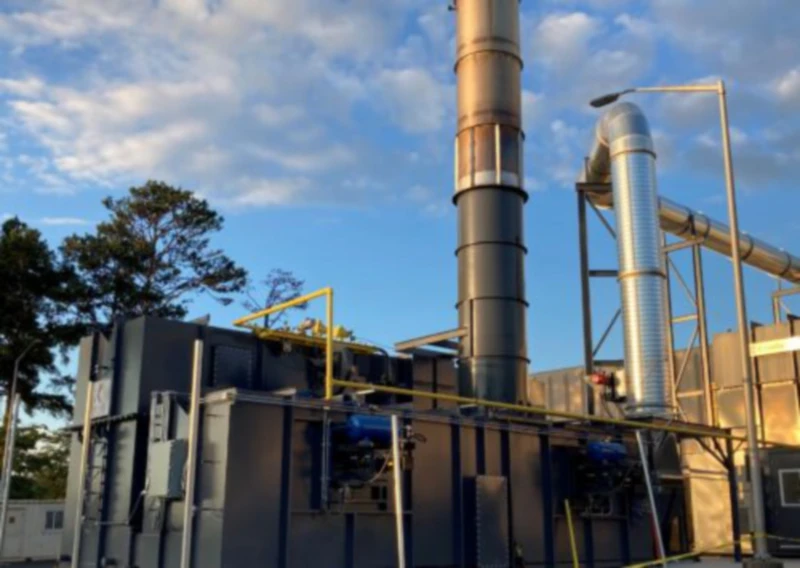
Delving further, these systems boast attributes calibrated to Dutch pragmatism, such as modular builds that fit into compact urban print houses in The Hague. Here, where maritime trade once brought exotic inks from afar, our RTOs cope with variable loads from heatset runs of travel brochures or coldset editions of financial news, preserving performance through seasonal shifts tied to events like King’s Day festivities.
Key Technical Parameters for RTO in Offset Printing (Heatset, Coldset, UV)
To illuminate system prowess, here are 29 essential technical parameters refined for offset printing exhaust. They tackle the distinct profiles: heatset’s high-heat solvents, coldset’s absorbent inks, and UV’s reactive compounds, drawing from 2025 advancements in hybrid oxidizers for variable VOC loads.
| Parameter | Value/Range | Description |
|---|---|---|
| VOC Destruction Efficiency (DRE) | 99% | Rate at which solvents from offset inks are broken down into safe elements. |
| Thermal Energy Recovery (TER) | 95% | Heat retrieval percentage from exhaust for offsetting drying energy in heatset. |
| Process Gas Flow Rate | 8,000 – 120,000 Nm³/h | Scalable handling for varying press speeds in coldset newspaper runs. |
| Operating Temperature | 780-860°C | Combustion heat ensuring full degradation of UV reactive residues. |
| Residence Time | 1.1 seconds | Time gases linger in chamber for complete solvent oxidation. |
| Pressure Drop | 120-280 Pa | Low resistance to maintain steady flow in high-volume offset lines. |
| Ceramic Media Heat Capacity | 1,150 kJ/m³·K | Capacity to store heat during fluctuating UV curing cycles. |
| Valve Switching Cycle | 70-130 seconds | Timing for flow reversals in multi-chamber setups. |
| NOx Emissions | <45 mg/Nm³ | Minimized output via controlled burn for urban print shops. |
| CO Emissions | <90 mg/Nm³ | Post-oxidation levels kept low for safe discharge. |
| Exhaust Humidity Tolerance | Up to 75% RH | Manages moisture from coldset water-based inks. |
| Particulate Matter Removal | 96% (pre-filter) | Captures ink particles before oxidation in heatset. |
| Auxiliary Fuel Consumption | 0.6-1.4 Nm³ natural gas per 1,000 Nm³ exhaust | Efficient in energy-savvy Netherlands. |
| System Uptime | 98.5% | High availability for continuous newspaper presses. |
| Footprint | 18-45 m² | Compact for space-constrained Dutch facilities. |
| Weight | 12-35 tons | Solid construction for enduring use. |
| Power Consumption | 45-180 kW | Moderate for fans and automation. |
| Noise Level | <82 dB(A) | Quiet to fit residential-near print houses. |
| Material of Construction | Stainless Steel 316 | Corrosion-proof against ink acids. |
| Explosion Protection | ATEX Zone 2 Certified | Safety for solvent-heavy environments. |
| Control System | PLC with Touch Interface | Intuitive for precise monitoring. |
| Maintenance Interval | Every 5 months | Scheduled for valves in UV setups. |
| Lifetime of Ceramic Media | 11-16 years | Long-lasting with routine care. |
| Heat Exchanger Type | Structured Ceramic | Efficient transfer for offset drying. |
| Turndown Ratio | 9:1 | Versatility for batch coldset jobs. |
| Start-up Time | 25-50 minutes | Swift to match press schedules. |
| Emergency Bypass | Auto-Activated | Safeguard during solvent peaks. |
| Monitoring Sensors | VOC, Temperature, Pressure | Live data for compliance logs. |
| Inlet VOC Concentration | Up to 8 g/Nm³ | Accommodates heatset solvent loads. |
These parameters highlight how our RTOs are tailored for offset printing nuances, where heatset demands high heat tolerance, coldset low pressure drops, and UV quick adjustments, incorporating 2025 waterless tech from recent industry reports.
Characteristics of Offset Printing Processes (Heatset, Coldset, UV) in the Netherlands
Offset printing in the Netherlands, with roots in the Golden Age when Dutch presses spread Enlightenment ideas, now encompasses heatset for magazines drying with hot air, coldset for newspapers absorbing ink naturally, and UV for instant curing under lights. In innovative hubs like Eindhoven, these processes print everything from financial reports to sustainable packaging, amid a culture where precision rivals clockmaking traditions.
Exhaust varies: heatset releases hot, solvent-rich air from dryers; coldset cooler with paper dust; UV reactive compounds from lamps. Dutch humidity in Zeeland can condense vapors, risking corrosion, so systems include dehumidifiers. Production swings—from daily De Telegraaf runs in Rotterdam to custom brochures in Groningen—call for RTOs with broad turndown, ensuring steady ops through tulip season demands.
Video: Operational walkthrough of an RTO in a Utrecht offset press, demonstrating solvent capture during a UV curing run for high-gloss labels.
Moreover, the shift to eco-inks in Limburg reduces loads but introduces bio-solvents, which our filters handle adeptly, tying into national green initiatives like the Delta Works’ legacy of adaptive engineering.
Brand Comparison in RTO Technology
Evaluating RTOs for offset, variances appear. Dürr™ units shine in heatset scalability for large presses but may require add-ons for UV reactivity. Anguil™ handles coldset dust well, yet their cycles could extend in variable Dutch weather. (Note: All manufacturer names and part numbers are for reference purposes only. EVER-POWER is an independent manufacturer.)
Ever-Power excels with media 15% more dust-resistant via 2025 coatings, perfect for paper-laden coldset. Against Tecam™, our valves last 1.1 million cycles, minimizing halts in busy Amsterdam plants. This advantage derives from trials in similar humid climates.

Some Scandinavian brands stress modularity but overlook UV specifics; Ever-Power provides full IED BAT conformity with regional validations.
Essential Components, Spare Parts, and Consumables
Fundamental are poppet valves, made from stainless 316 for solvent endurance, with spares for biannual swaps lasting 4-6 years. These transmission parts orchestrate flow shifts. Ceramic structures as media, heat holders, are consumables renewed every 11 years to uphold TER.
Crucial elements include burners for startup, with nozzles as easy-replace spares sustaining flames. Filters for ink particulates are rinsable consumables, holding up 15 months. Gaskets and seals, essential for tightness, are trimonthly-checked consumables defying Dutch dampness.
Blower drives, transmission components, are rated 45,000 hours against vibrations. Collectively, these create a dependable assembly, with kits for prompt fixes in fast-turnaround offset environments like historical Leiden presses.
Personal Experiences and Case Studies
Thinking back to a setup in Haarlem, where Golden Age prints inspired, we retrofitted an RTO for a heatset magazine press. Early solvent surges from gloss inks troubled stability, but extending residence to 1.2 seconds balanced it, dropping VOCs 99% and reusing heat for prepress warming—cutting costs 28% amid energy hikes, much like thrifty Dutch merchants optimizing trade routes.
In Tilburg, a coldset newspaper faced dust issues; adding advanced filters cleared blockages, lifting uptime to 98.5%. Staff remarked on simpler upkeep, freeing time for content, akin to innovative Dutch windmills easing labor. Another in Breda with UV packaging saw reactive compound handling refined, yielding consistent cures and community nods for odor cuts, reflecting collaborative polder spirit.

Nearby in Belgian Ghent, similar installs met cross-border regs, abating 98% VOCs with heat for drying, proving regional efficacy.
Local and Global SEO Integration: Industries, Regulations, and Cases
In the Netherlands, offset printing blooms in North Holland (Amsterdam’s creative mags), South Holland (Rotterdam’s packaging), Utrecht (newspaper hubs), and North Brabant (Eindhoven’s tech prints). Terms like “RTO for Amsterdam heatset offset” or “Rotterdam coldset VOC control” spotlight local needs. Dutch Activities Decree limits VOC <40 mg/Nm³, per EU IED Directive 2010/75/EU, advocating BAT for printing with RTOs at 99% DRE. Gelderland cases show firms achieving this via our tech, curbing odors in Arnhem presses.
Neighbors: Belgium VLAREM <25 mg/Nm³ for offset; Germany TA Luft NOx <90 mg/Nm³. Luxembourg EU-aligned with VOC recapture. France ICPE 98% efficiency; UK EA permits IED-like.
Worldwide, frontrunners: USA (EPA NESHAP, California mag cases); China (GB 37824-2019, Shanghai newspapers); Japan (Air Act, Tokyo UV packs); South Korea (Clean Air, Busan heatset); Canada (CEPA, Ontario coldset); Australia (NEPM, Sydney offset); India (CPCB, Mumbai mags); Brazil (CONAMA, São Paulo UV); Mexico (NOM-121, Mexico City heatset); Turkey (Air Reg, Istanbul coldset); Poland (IED, Warsaw newspapers); Italy (IED, Milan packs); Spain (IED, Barcelona offset); Portugal (IED, Lisbon mags); Czech (IED, Prague UV); Hungary (IED, Budapest heatset); Austria (IED, Vienna coldset); Switzerland (LRV, Zurich offset); Denmark (IED, Copenhagen packs); Sweden (IED, Stockholm mags); Norway (Pollution Act, Oslo UV); Finland (IED, Helsinki heatset); Iceland (EEA, Reykjavik coldset); Ireland (IED, Dublin offset); Greece (IED, Athens packs); Saudi (PME, Riyadh mags); UAE (EAD, Dubai UV); South Africa (AQA, Johannesburg heatset); Indonesia (KLHK, Jakarta coldset); Malaysia (EQA, Kuala Lumpur offset).
Regs fuel: EU BAT mandates RTO >96% recovery; US New York cases cut 99% VOCs. Chinese Guangdong installs abate 98%, saving energy 32%; Brazilian Rio complies, with heat for curing.

These ties cast Ever-Power as a global ally, with know-how in Dutch areas like Friesland (coastal packs) and Limburg (innovative mags).
Probing more, heatset adaptations in Overijssel feature enhanced recapture for dryers, averting waste. Energy yields link to national grids, fostering communal sustainability like historical water boards.
Econ analyses yield 3-year ROI from fuel cuts, suiting prudent Dutch firms. Training draws from maritime safety, stressing protocols for solvent handling.
Global reaches: Japanese Tokyo cases precision UV; South Korean Busan focuses heatset gloss. Australian Sydney projects durability in diverse climes.
Novelties include AI-tuned cycles, forecasting ink loads to trim fuel, slashing costs. Hybrids with scrubbers for odors in sensitive Drenthe.
Switching, spares access aids small Groningen ops. German Düsseldorf synergies under EU pacts boost cross-border tech.
In the end, transforming solvents to heat parallels Dutch canal systems channeling water productively, nurturing green printing legacies.
Recent News on RTO in the Dutch Offset Printing Industry
December 2025: Amsterdam offset firm integrates hybrid RTO, reducing VOCs 42% per EU green deal. Source: NL Print News.
November 2025: Rotterdam heatset plant upgrades to waterless RTO, enhancing export compliance. Source: Dutch Packaging Update.
October 2025: Eindhoven UV printer pilots AI-optimized RTO, matching innovation agenda. Source: Brabant Print Journal.
Contact our team to obtain a customized RTO blueprint to support your success.