
Nel cuore dell'industria chimica olandese, dalle raffinerie del Porto di Rotterdam al Chemelot Parco industriale di Geleen: il controllo delle emissioni si trova ad affrontare una sfida molto rischiosa: come gestire i gas di scarico "non stazionari" provenienti dalle valvole di sicurezza della pressione (PSV/SRV) e dagli sfiati di emergenza delle colonne di distillazione.
A differenza dei flussi d'aria stabili che si trovano nei laboratori di verniciatura, questi flussi di scarico sono caratterizzati da raffiche istantanee ad alta concentrazione E violente fluttuazioni del flussoCome gli olandesi Activiteitenbesluit milieubeheer (Decreto Attività) rafforza il monitoraggio delle emissioni non stazionarie. Gli ossidatori termici rigenerativi (RTO) sono diventati la soluzione definitiva per le aziende chimiche per bilanciare la sicurezza operativa con la conformità ambientale.
Che cosa è un RTO per le prese d'aria di sicurezza?
1. Che cos'è un RTO?
RTO è l'acronimo di Regenerative Thermal Oxidizer. Utilizza l'ossidazione ad alta temperatura (tipicamente 815°C - 980°C) per convertire i composti organici volatili (COV) in $CO_2$ e $H_2O$. Il suo principale vantaggio risiede nella rigenerazione del calore tramite supporti ceramici, raggiungendo efficienze di recupero termico pari a 95%-97%.
2. Per quali emissioni del reattore è adatto?
È specificamente progettato per i settori petrolchimico, chimico fine e farmaceutico per gestire gas organici complessi ad alta concentrazione generati da sovrapressione del reattore, anomalie del processo o sfiati di emergenza dalle sommità delle colonne di distillazione.
3. Perché il trattamento dei gas di scarico della valvola di sicurezza è così importante?
Le torce o gli scrubber tradizionali spesso hanno difficoltà con improvvisi picchi di carico di COV. Un sistema RTO ad alte prestazioni non solo garantisce un Efficienza di rimozione della distruzione (DRE) superiore a 99% ma riduce anche significativamente l'impronta di carbonio riducendo al minimo il consumo di carburante ausiliario.
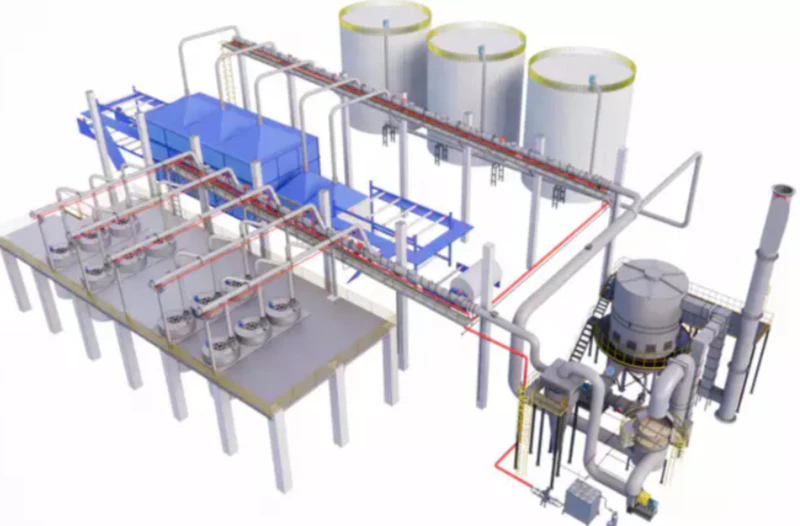
Parametri tecnici fondamentali RTO per gli scenari di soccorso
Un impianto RTO per il trattamento dei gas di coda del reattore non è mai un'unità "standard". Per gestire fluttuazioni estreme del processo, i suoi parametri tecnici devono essere rigorosamente progettati.
Tabella dei parametri tecnici chiave
| Metriche tecniche | Intervallo di parametri | Impatto sulla sicurezza e sulle prestazioni | Standard di riferimento |
|---|---|---|---|
| Temperatura di esercizio | 815 – 980°C | Assicura la completa distruzione termodinamica degli idrocarburi ad alta concentrazione | EPA 452/B-02-001 |
| Distruzione dei COV (DRE) | ≥ 99% | Garantisce la conformità anche durante gli eventi di picco dei soccorsi | Direttiva UE IED 2010/75/UE |
| Recupero termico (TER) | 95% – 97% | Determina l'autosufficienza energetica durante i periodi di basso carico | Documenti tecnici sull'energia industriale |
| Tempo di residenza | 0,5 – 1,0 secondi | Assicura che le molecole complesse siano completamente ossidate nella zona calda | Modellazione cinetica |
| Tempo di risposta LEL | < 1,0 secondi | Protezione immediata al rilevamento di concentrazioni elevate | Standard SIS |
| Resistenza del sistema (ΔP) | 2500 – 4500 Pa | Influisce sulla selezione della ventola e sulla contropressione durante il soccorso di emergenza | Calcolo della dinamica dei fluidi |
| Tasso di perdita della valvola | < 0,1% | Impedisce al gas non trattato di passare attraverso il camino | Valvole a fungo a perdita zero |
Fattori critici per le prestazioni:
- Efficienza di distruzione dei COV: Durante le improvvise esplosioni delle valvole di sicurezza, l'RTO deve mantenere un profilo di combustione stabile. Un sistema di alta qualità richiede un sistema robusto rapporto di riduzione del bruciatore per prevenire crolli di temperatura.
- Recupero di energia termica: I supporti ceramici efficienti mantengono la temperatura del forno durante le pause del processo, prevenendo un consumo irregolare di gas naturale e stabilizzando i costi operativi.
Caratteristiche dello scenario: vantaggi e limiti
Analisi dello scenario: emissioni non stazionarie
Lo scarico dei reattori e delle colonne di distillazione è spesso “intermittente, ad alto volume e ad altissima concentrazione.” Ciò richiede un'eccezionale resistenza agli urti da parte dell'attrezzatura di abbattimento.
- Vantaggi:
- Efficienza energetica eccezionale: Durante gli eventi di picco di VOC, il sistema può entrare in uno stato "autotermico", generando spesso calore in eccesso che può essere recuperato.
- Sostenibilità: Rispetto alle torce aperte, gli RTO riducono drasticamente l'impronta di carbonio e le emissioni di $NO_x$, allineandosi con i Paesi Bassi Klimaatakkoord (Accordo sul clima).
- Sfide e limitazioni:
- Rischi di flashback/esplosione: Le concentrazioni elevate comportano rischi di incendio. Soluzione: Deve includere serbatoi di accumulo, ventilatori di diluizione e rilevamento LEL ultrarapido.
- Corrosione: In presenza di alogeni (cloro, bromo), sono necessarie ceramiche speciali resistenti agli acidi e rivestimenti interni.
Componenti del sistema RTO e raccomandazioni sull'ecosistema
La stabilità dell'RTO di grado chimico dipende da componenti "ecosistemi" di alta qualità:
- Supporti di scambio termico ceramici: Si consiglia la mullite a nido d'ape o la ceramica a sella per un'ampia superficie e una bassa caduta di pressione.
- Valvole a fungo a commutazione rapida: I tempi di risposta in millisecondi sono essenziali per gestire l'improvviso aumento di un evento di soccorso.
- Sistema di bypass del gas caldo: Essenziale per sfogare l'energia termica in eccesso in una caldaia a recupero di calore quando le concentrazioni di COV raggiungono il picco oltre il punto autotermico.
- Monitoraggio LEL (limite inferiore di esplosività): Per i trigger di sicurezza a livello di millisecondi si consigliano rilevatori paramagnetici o infrarossi a doppia ridondanza.
Analisi comparativa dei marchi RTO tradizionali
| Marca | Forza del core | Efficienza (TER/DRE) | Focus sul settore | Raccomandazione |
|---|---|---|---|---|
| Dürr (Ecopure) | Ingegneria tedesca; stabilità assoluta per applicazioni chimiche ad alto rischio. | 97% / 99.9% | Petrolchimico, Grandi Raffinerie | Ideale per progetti ad alto budget in cui la sicurezza è la priorità #1. |
| Anguilla | Decenni di esperienza nella gestione di gas di scarico alogenati corrosivi. | 95% / 99% | Prodotti chimici fini, pesticidi | Ideale per flussi chimicamente complessi e corrosivi. |
| Sempre-Potenza | Forte integrazione; esperti in sistemi RTO + Recovery montati su skid. | 96% / 99.5% | Farmaceutica, impianti chimici di medie dimensioni | Ideale per Rapporto costi-prestazioni e consegna chiavi in mano. |
| Taikisha | Controllo energetico di precisione ed emissioni $NO_x$ bassissime. | 95% / 99% | Automotive e chimica integrati | Ideale per scenari che richiedono un utilizzo sofisticato del calore secondario. |
Conformità al mercato globale e locale (SEO locale olandese)
Nei Paesi Bassi, il ILT (Human Environment and Transport Inspectorate) monitora i COV fino a ogni singolo punto di soccorso di emergenza.
- Il mercato olandese:
- Hub: Cluster chimici a Rotterdam, Terneuzen e Geleen.
- Regolamento: IED UE e olandese NeR standard.
- Incentivi: Gli investimenti RTO sono idonei per VIA (Energie-investingsaftrek) credito d'imposta, riducendo significativamente il CAPEX.
- Tendenze globali:
- U.S.A.: Rigorosa conformità al metodo EPA 25A per la registrazione degli eventi SRV.
- Cina: GB 37822-2019 rende gli RTO un "requisito vincolante" per la gestione delle fluttuazioni dei processi chimici.
Esperienza sul campo e casi di studio
Approfondimento dell'esperto: gestire l'ansia da "flash-fire"
Durante un progetto chimico in Brabante SettentrionaleHo supervisionato personalmente la messa in funzione dello scarico ad alta concentrazione del reattore.
- Sfida: La concentrazione è aumentata a 45% LEL immediatamente dopo l'apertura della valvola.
- Soluzione: Abbiamo implementato un logica della tripla diluizione e ha aggiunto una sfera buffer a monte.
- Conclusione chiave: Il trattamento del gas di soccorso non riguarda la "combustione", ma il "bilanciamento": l'utilizzo di algoritmi adattivi basati sull'intelligenza artificiale per prevedere le fluttuazioni del carico è l'unico modo per garantire un funzionamento sicuro e a lungo termine.
Caso di studio: uno stabilimento olandese di chimica fine
- Sfondo: Il gas di scarico della colonna di distillazione conteneva alti livelli di diclorometano; l'adsorbimento tradizionale non ha funzionato.
- Soluzione: Caldaia RTO a 3 serbatoi resistente agli acidi + recupero di calore a valle.
- Risultato: Il VOC DRE è rimasto stabile a 99,7% e il vapore recuperato ha soddisfatto 30% della domanda di calore dell'officina.
Tendenze future: la prossima frontiera
- RTO + Cattura del Carbonio (CCUS): Reindirizzamento del $CO_2$ purificato dagli scarichi degli impianti di trattamento delle acque reflue (RTO) alle serre olandesi, trasformando un flusso di rifiuti in un prodotto a valore aggiunto.
- Bruciatori predisposti per l'idrogeno: Passaggio a combustibili ausiliari a zero emissioni di carbonio per eliminare l'impronta di carbonio del processo di abbattimento stesso.
- Manutenzione predittiva dell'intelligenza artificiale: Utilizzo dell'apprendimento automatico per analizzare i dati dei sensori di pressione per prevedere gli eventi di rilascio della valvola, consentendo all'RTO di "preriscaldarsi" ed eliminare i ritardi nel trattamento.
Conclusione: Per le valvole di sfiato di reattori e colonne di distillazione, un RTO rappresenta la scelta tecnologica più resiliente. Per le aziende chimiche olandesi, non si tratta solo di un requisito normativo, ma di una componente fondamentale della Gestione della Sicurezza dei Processi (PSM).
Scritto da un esperto di processi ambientali. Per consigli su Dutch RTO selezione o domande di sovvenzione VIA, contattateci per una consulenza.