Introduction: Environmental Challenges and RTO Solutions in Printing Industry
Against the backdrop of increasing global environmental awareness, the printing industry faces unprecedented pressure in volatile organic compounds (VOCs) emission control. As a traditional high-pollution industry, printing processes involving inks, cleaning agents, and fountain solutions generate substantial VOCs, posing environmental pollution risks and potential health hazards to workers.
💡 Key Insight: With the gradual implementation of China’s “Printing Industry Volatile Organic Compounds Emission Standards” and tightening environmental policies nationwide, printing enterprises urgently need to find efficient, economical, and reliable VOCs treatment solutions. In this context, Regenerative Thermal Oxidizer (RTO) technology has become the preferred choice for VOCs treatment in printing industry due to its exceptional VOCs removal efficiency and energy recovery capabilities.

Deep Analysis of RTO Technology Principles
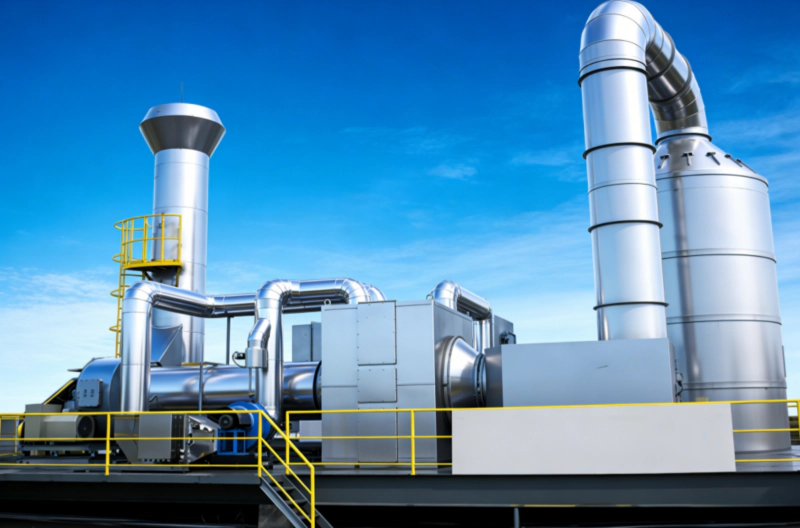
The core of RTO technology lies in the perfect combination of “regenerative heat exchange” and “thermal oxidation.” The system mainly consists of regenerative chambers, combustion chamber, valve systems, and control systems. The workflow is illustrated below:
🔄 RTO Four-Step Working Cycle
Step 1: Preheating Stage
VOCs exhaust enters preheated regenerative chamber, temperature rises to near oxidation level
Step 2: Oxidation Stage
Complete decomposition of VOCs to CO₂ and water at 760-850℃
Step 3: Recovery Stage
High-temperature clean gas transfers heat to another regenerative chamber
Step 4: Switching Stage
Valves switch airflow direction, initiating new cycle
Printing Industry Application Advantages
🎯 Strong Concentration Adaptability
Can handle VOCs exhaust with concentration range of 300-2000mg/m³
🔄 High Heat Recovery Efficiency
85-95% thermal energy recovery rate significantly reduces operation costs
⚡ Stable Treatment Efficiency
95-99% VOCs removal rate ensures stable compliance with emission standards

Technical Parameter Comparative Analysis
Performance comparison of different VOCs treatment technologies is crucial for selecting appropriate solutions. The table below provides detailed comparison of various indicators between RTO and other mainstream technologies:
| Technical Parameter | RTO System | Catalytic Oxidizer | 활성탄 흡착 |
|---|---|---|---|
| Optimal VOCs Concentration | 300-2000 mg/m³ | 500-3000 mg/m³ | <500 mg/m³ |
| Removal Efficiency | 95-99% | 90-95% | 85-92% |
| Heat Recovery Rate | 85-95% | 50-70% | N/A |
| Operating Temperature | 760-850°C | 300-400°C | Ambient Temperature |
| Catalyst Poisoning Risk | ● No Risk | ● High Risk | ● Medium Risk |
📝 Frequently Asked Questions (FAQ)
Below are the most common questions printing enterprises have when considering RTO systems:
For high-humidity exhaust from water-based inks, RTO systems can implement the following measures:
- Pre-treatment Dehumidification: Add dehumidification equipment before exhaust enters RTO
- Temperature Compensation: Appropriately increase oxidation temperature to overcome heat absorption from water evaporation
- Specialized Materials: Use moisture-resistant ceramic regenerative materials
- System Optimization: Reserve sufficient temperature margin during design
For small enterprises with air volume below 10,000 Nm³/h:
- Modular Solutions: Choose small-scale, modular RTO products
- Combination Technology: RTO combined with concentrator wheels can lower investment threshold
- Park Centralized Treatment: Consider shared treatment facilities in industrial parks
- Detailed Evaluation: Conduct specialized technical-economic feasibility study
Typical investment range: ¥500,000 – ¥1.5 million, recovery period 3-5 years.
RTO system maintenance is divided into three levels:
Daily Inspection
- Temperature & Pressure Monitoring
- Fan Operation Status
- Alarm Information Check
Monthly Maintenance
- Filter Cleaning
- Burner Inspection
- Sensor Calibration
Annual Overhaul
- Ceramic Media Inspection
- Valve Seal Replacement
- System Comprehensive Testing
Investment recovery period calculation formula:
Recovery Period (years) = Total Investment ÷ Annual Net Income
Where: Annual Net Income = Energy Saving Value + Environmental Subsidies + Emission Fee Reduction – Operation & Maintenance Cost
Example: Invest ¥3.8 million in RTO system, annual energy saving ¥840,000, receive subsidies ¥950,000, reduce emission fees ¥120,000, annual maintenance cost ¥80,000, then annual net income ¥1.83 million, recovery period approximately 2.1 years.
When selecting RTO suppliers, consider the following factors:
- Industry Experience: Successful cases in printing industry
- Technical Capability: R&D capability and patent technology
- Engineering Capability: Integrated design, installation, and commissioning services
- Service Network: After-sales service and spare parts supply capability
- Certifications: Relevant industry certifications and quality systems
Recommend visiting supplier’s completed projects and communicating with existing users about their experience.
🎯 Conclusion and Recommendations
The application of RTO technology in printing industry has demonstrated its exceptional performance in VOCs treatment and energy recovery. With increasing environmental requirements and rising energy costs, investing in RTO systems is not only necessary for environmental compliance but also a crucial strategy for enterprises to enhance competitiveness and achieve sustainable development.
🏢 Enterprise Implementation Recommendations
- Conduct detailed exhaust analysis
- Select suppliers with industry experience
- Consider future capacity expansion needs
- Establish comprehensive maintenance system
📈 Development Trends
- Intelligent RTO Systems
- Modular Design Solutions
- Energy System Integration Optimization
- Remote Monitoring & Maintenance
The path to green development in printing industry has begun, and RTO technology is becoming an important milestone on this journey.
To get the latest product pricing, please visit our homepage or contact us by phone.