
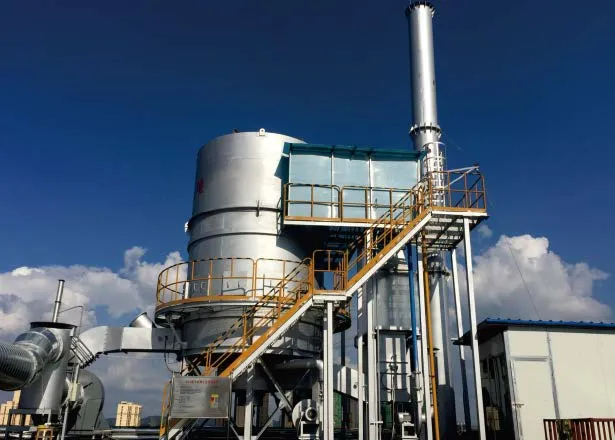
I. Por que as empresas petroquímicas preferem o RTO? 3 principais vantagens que abordam os principais problemas
Dentre as tecnologias de redução de COVs para a indústria petroquímica, a adsorção, a absorção e a combustão catalítica apresentam limitações: a adsorção requer a substituição frequente de consumíveis devido à fácil saturação; a absorção acarreta altos custos com produtos químicos e riscos de poluição secundária; a combustão catalítica é sensível aos componentes dos gases de escape e propensa ao envenenamento do catalisador. Os sistemas RTO de grande escala, no entanto, tornaram-se a principal escolha devido às suas vantagens exclusivas:
- Eficiência de remoção ultra-alta, riscos de não conformidade nulos.Para compostos orgânicos voláteis (COVs) petroquímicos comuns, como alcanos, alcenos e aromáticos, a eficiência de remoção permanece estável acima de 99%, superando em muito os requisitos de Normas de Emissão para a Indústria Petroquímica (GB 31571-2015). Ele pode atender facilmente aos padrões, mesmo para gases de escape com componentes complexos, evitando completamente o risco de multas ambientais.
- Alta eficiência na recuperação de calor, reduzindo os custos operacionais pela metade.Ao adotar regeneradores cerâmicos em formato de colmeia para recuperar o calor de oxidação, a eficiência térmica pode atingir mais de 95%. Quando a concentração de COVs é ≥2000 mg/m³, o sistema pode operar de forma autossustentável sem necessidade de fornecimento adicional de combustível. Comparado com equipamentos de combustão catalítica tradicionais, ele pode gerar uma economia de mais de 60% em custos de energia anuais.
- Grande adaptabilidade ao fluxo de ar, máxima estabilidade.Uma única unidade pode processar de 100.000 a 1.000.000 m³/h de gases de escape, adequando-se perfeitamente a cenários de alta emissão em plantas petroquímicas, como parques de tanques, reatores e áreas de carga/descarga. Além disso, apresenta ampla adaptabilidade à concentração (500-8000 mg/m³) e mantém operação estável mesmo diante de flutuações na concentração dos gases de escape.
II. Parâmetros técnicos essenciais de sistemas RTO de grande escala para aplicações petroquímicas
As configurações dos parâmetros do RTO variam significativamente sob diferentes condições de operação. A seguir, apresentamos os parâmetros padrão e as faixas de personalização para os principais RTOs de grande escala na indústria petroquímica, que podem ser ajustados com precisão de acordo com as emissões de gases de escape e os componentes da empresa:
| Nome do parâmetro | Configuração padrão | Faixa de personalização | Cenário de aplicação |
|---|---|---|---|
| Fluxo de ar de tratamento | 500.000 m³/h | 100.000-1.000.000 m³/h | Tratamento centralizado em grandes refinarias e parques químicos. |
| Eficiência de remoção de COVs | ≥99% | 99%-99.5% | Tratamento de gases residuais aromáticos e olefínicos de alta concentração |
| Temperatura de oxidação | 800-850℃ | 760-900℃ | Tratamento de COVs refratários (ex.: hidrocarbonetos aromáticos policíclicos) |
| Eficiência térmica | ≥95% | 95%-97% | Diversos cenários de redução de COVs petroquímicos |
| Material regenerador | Cerâmica alveolar de cordierita | Cerâmica de cordierita/alumina | Os gases residuais contendo enxofre/cloro requerem material de alumina. |
| Tempo de Residência | 0,5s | 0,5-1,0s | Gases residuais de alta viscosidade e refratários exigem extensão |
| Temperatura de saída | ≤150℃ | ≤120-150℃ | Pode ser aumentada para 200°C em cenários de recuperação de calor residual. |
| Grau à prova de explosão | Ex d IIB T4 Ga | Ex d IIC T3 Ga | Gases residuais inflamáveis de alta concentração (ex.: propano, butano) |
III. Desmistificado: Como o RTO “elimina” os COVs petroquímicos? Análise completa do princípio de funcionamento.
A lógica central do RTO é "oxidação em alta temperatura + circulação de calor", que permite a degradação eficiente de COVs e a recuperação de energia por meio de três etapas principais. O processo específico é o seguinte:
- Etapa de pré-tratamento: purificar os gases residuais para proteger o equipamento. Impurezas como poeira, óleo e condensado presentes nos gases residuais petroquímicos podem causar obstrução do regenerador e corrosão dos equipamentos. O gás residual entra inicialmente em um coletor de pó ciclônico + coletor de pó tipo cartucho para remoção de poeira com tamanho de partícula ≥1 μm; em seguida, passa por uma torre de pulverização + separador gás-líquido para remoção de óleo e umidade; finalmente, atravessa um corta-chamas de placa corrugada para evitar retrocessos de chama e acidentes de segurança, garantindo que o gás residual que entra no sistema principal esteja limpo e seguro.
- Etapa de pré-aquecimento: o regenerador armazena calor. O gás residual pré-tratado entra no regenerador e realiza uma troca de calor completa com o regenerador interno de cerâmica alveolar de alta temperatura. O regenerador transfere o calor armazenado no ciclo anterior para o gás residual, aquecendo-o rapidamente da temperatura ambiente para acima de 760 °C, criando as condições necessárias para a reação de oxidação subsequente sem consumo adicional de combustível.
- Estágio de Oxidação: Degradação em Alta Temperatura, Transformando-se em Substâncias Inofensivas O gás residual pré-aquecido entra na câmara de oxidação, onde um queimador auxiliar (que opera apenas durante a inicialização ou em condições de baixa concentração) mantém um ambiente de alta temperatura entre 800 e 850 °C. Os COVs sofrem reação de oxidação completa em oxigênio suficiente, decompondo-se em CO₂ e H₂O, substâncias não tóxicas e inofensivas, resultando na remoção fundamental dos poluentes.
- Estágio de armazenamento de calor: a recuperação de calor reduz o consumo de energia. Os gases de combustão em alta temperatura (cerca de 900 °C) gerados pela reação de oxidação entram em outro conjunto de regeneradores, transferindo calor para o regenerador antes que a temperatura dos gases de combustão caia abaixo de 150 °C para emissão. Através de um sistema automático de comutação de válvulas controlado por CLP, os três conjuntos de regeneradores completam alternadamente o processo de “armazenamento de calor-liberação de calor-purga”, realizando a utilização cíclica de calor e reduzindo significativamente os custos operacionais.
IV. Seleção de RTO para Empresas Petroquímicas: Comparação em 3 Etapas para Evitar Erros
O mercado de RTO (Otimização de Tratamento Remoto) é heterogêneo, com alguns equipamentos apresentando problemas como "eficiência de tratamento falsificada" e "falta de configurações de segurança". As empresas petroquímicas devem comparar produtos de diferentes fabricantes com base em três dimensões: "adaptação às condições de trabalho", "desempenho em segurança" e "custo total".
| Dimensão de comparação | RTO de alta qualidade (recomendado) | RTO de baixa qualidade (Evite) |
|---|---|---|
| Adaptabilidade às condições de trabalho | Suporta “tratamento classificado”, projeta canais separados para gases residuais de alta/baixa concentração; o material regenerador pode ser personalizado de acordo com o teor de enxofre e cloro; mantém operação estável com flutuação de fluxo de ar de ±20% | Utiliza configuração universal sem distinção entre os componentes do sistema de exaustão; o material do regenerador é único e suscetível à corrosão por gases residuais contendo enxofre; a eficiência diminui quando o fluxo de ar flutua. |
| Desempenho de segurança | Equipado com monitoramento online da concentração de COVs (precisão ±5%), válvulas de alívio de explosão duplas (pressão de ruptura de 0,1 a 0,2 MPa), sistema de purga de nitrogênio e suporte para desligamento automático em caso de falha 24 horas por dia, 7 dias por semana. | Equipado apenas com monitoramento básico de temperatura; ausência ou seleção incorreta de válvulas de alívio de explosão; ausência de purga com nitrogênio, o gás residual após o desligamento pode facilmente causar riscos. |
| Componentes principais | Regenerador tipo colmeia (tamanho dos poros de 10 a 20 mm, área superficial específica ≥ 200 m²/m³); câmara de oxidação com revestimento anticorrosivo de alta temperatura; válvulas à prova de explosão importadas. | Regenerador granular (área de superfície específica <150m²/m³); câmara de oxidação sem tratamento anticorrosivo; válvulas industriais comuns propensas a vazamentos. |
| Custo total | Eficiência térmica ≥95%, autoaquecimento em condições de alta concentração; vida útil superior a 10 anos, custo anual de manutenção ≤3% do preço total do equipamento. | Eficiência térmica <90%, requer fornecimento contínuo de combustível; vida útil de 3 a 5 anos, custo anual de manutenção ≥10% do preço total do equipamento. |
V. Serviço pós-venda profissional: Garantindo o funcionamento estável do RTO sem preocupações
A operação estável de sistemas RTO de grande escala depende de serviços profissionais que abranjam todo o ciclo de vida do produto. O serviço pós-venda dos fabricantes oficiais deve cobrir os seguintes 6 módulos, que também são considerações importantes para a seleção da empresa:
- Levantamento PreliminarEnvia engenheiros para realizar inspeções no local dos pontos de emissão de gases residuais, detecta as concentrações dos componentes, calcula os volumes de emissão e personaliza soluções exclusivas de redução de emissões para evitar configurações padronizadas.
- Instalação e ComissionamentoOferece serviços de "projetos chave na mão", com equipes profissionais responsáveis pela instalação de equipamentos, assentamento de dutos e fiação elétrica; realiza testes de operação contínua de 72 horas durante o comissionamento para garantir que todos os parâmetros atendam aos padrões.
- Treinamento de pessoalOferece treinamento teórico e prático para operadores e pessoal de manutenção, abrangendo ajuste de parâmetros, diagnóstico de falhas e inspeção diária. Os funcionários só podem assumir os cargos após serem aprovados na avaliação.
- Manutenção regularCria arquivos exclusivos para clientes e realiza manutenções trimestrais no local, como limpeza de regeneradores, calibração de válvulas e verificação de instrumentos, para prevenir falhas nos equipamentos.
- Resposta a emergênciasCompromete-se a fornecer orientação remota de 2 horas e serviços de emergência no local 24 horas por dia para resolver problemas repentinos, como desligamento de equipamentos e emissões excessivas.
- Suporte de dadosO equipamento está equipado com um sistema de monitoramento em nuvem que envia dados de emissão e parâmetros operacionais em tempo real, permitindo a conexão de dados com órgãos de proteção ambiental para facilitar o cumprimento das normas ambientais pela empresa.
Caso de conformidade com a RTO (Organização Regional de Transporte) do setor petroquímico holandês
Em fevereiro de 2023, a Koole Terminals, localizada no Porto de Roterdã, uma das maiores empresas de armazenamento de hidrocarbonetos da Europa (com capacidade total de armazenamento superior a 3,5 milhões de metros cúbicos), recebeu um alerta de não conformidade do Instituto Nacional de Saúde Pública e Meio Ambiente da Holanda (RIVM). A concentração de emissões de COVs (Compostos Orgânicos Voláteis) medida no gás respirável de seus tanques de armazenamento de petróleo bruto e nas operações de carga e descarga atingiu 1780 mg/m³, ultrapassando em muito os limites estabelecidos por três regulamentações:
– Diretiva da UE sobre Emissões Industriais (UE 2016/426): As emissões de COVs da indústria de armazenamento petroquímico devem ser ≤100 mg/m³, e a conformidade com o Nível II (≤50 mg/m³) deve ser alcançada até 2025;
– Lei Holandesa de Atividades Ambientais (Bal): Exige uma eficiência de remoção de COVs de ≥97% para unidades individuais e exige que os dados de emissão sejam submetidos com quatro semanas de antecedência através do portal de planejamento ambiental (Omgevingsloket);
– Regulamentos especiais para o Porto de Roterdã: Como zona de demonstração ambiental europeia, exige-se adicionalmente uma eficiência de recuperação de calor de ≥95% para o sistema de tratamento de gases residuais, a fim de cumprir a meta nacional holandesa de neutralidade de carbono.
Para atender aos requisitos regulatórios de múltiplos níveis da Holanda, este sistema RTO passou por otimizações específicas, desde os componentes principais até a interação de dados. A seguir, apresentamos as principais características de design certificadas pela Agência Holandesa do Trabalho (Nederlandse Arbeidsinspectie):
1. Controle de Emissões: Correspondência Precisa dos Limites de COVs e NOx
Atendendo à exigência dos Países Baixos de "controle total de poluentes característicos" na indústria petroquímica, o sistema emprega um design de "regenerador cerâmico de alta alumina + combustão em estágios": o tamanho dos poros do regenerador é personalizado para 2,5 mm para melhorar a eficiência de retenção de hidrocarbonetos de moléculas pequenas; a câmara de oxidação é dividida em três zonas de temperatura (780 °C, 820 °C e 790 °C), garantindo uma taxa de remoção de 99,91 TP3T de COVs como benzeno e tolueno, enquanto controla a geração de NOx para 28 mg/m³, muito abaixo do limite de 150 mg/m³ estipulado pela UE 2016/426.
2. Conformidade de dados: Integrada ao Sistema Oficial de Monitoramento Holandês
O sistema integra um módulo de monitoramento online CEMS em conformidade com os padrões do RIVM, coletando 12 parâmetros em tempo real, incluindo concentração de COVs, eficiência de recuperação de calor e consumo de combustível. Esses dados são sincronizados com três plataformas por meio de uma linha dedicada 4G: ① Portal de Planejamento Ambiental (Omgevingsloket) para geração automática de relatórios; ② Sistema interno de gestão ESG da empresa; ③ Terminal de monitoramento remoto do RIVM, atendendo integralmente ao requisito de “tripla cópia de segurança de dados” da Lei de Atividades Ambientais.
3. Conformidade com as normas de segurança: Em conformidade com as normas de segurança industrial holandesas.
Em conformidade com a Lei das Condições de Trabalho Holandesa, o sistema incorpora intertravamentos de segurança duplos: quando a concentração de COVs atinge 25% do limite inferior de explosividade, a purga com nitrogênio é iniciada automaticamente (tempo de resposta <0,5 segundos); está equipado com válvulas de pressão à prova de explosão certificadas pela norma nacional holandesa NEN-EN 14470, e também possui saídas de emergência independentes para os funcionários e um sistema de detecção de gás. O sistema foi aprovado na “Avaliação de Segurança de Equipamentos de Alto Risco” (RI&E) da Autoridade do Trabalho Holandesa.
Um relatório de monitoramento emitido em conjunto pelo RIVM e uma organização de testes independente (TNO) entre agosto de 2023 e fevereiro de 2024 demonstrou que o sistema não apenas cumpriu integralmente as normas, como também alcançou benefícios econômicos significativos. A seguir, os principais dados divulgados pelo departamento financeiro do Terminal Kohler:
<<
| Indicador</ | Requisito regulamentar</ | Medição real do sistema RTO</ |
|---|---|---|
| Concentração de Emissão de COVs | ≤100mg/m³ (2025: ≤50mg/m³) | 12,3 mg/m³ |
| Eficiência de remoção de COVs | ≥97% | 99.9% |
| Eficiência de recuperação de calor | ≥95% (Requisito do Porto de Rotterdam) | 96.7% |
| Custo operacional abrangente | — | 182.000 euros |
VI. 12 Perguntas Frequentes sobre RTO para Empresas Petroquímicas
1. O RTO pode tratar VOCs de alta concentração (como o gás respirável em tanques) em empresas petroquímicas?
Sim. O RTO possui uma faixa de adaptabilidade de concentração de 500 a 8000 mg/m³. Após a entrada de gases residuais de alta concentração no sistema, o calor liberado pela reação de oxidação pode suprir suas próprias necessidades operacionais sem a necessidade de combustível adicional, o que reduz os custos operacionais. No entanto, sistemas de monitoramento e diluição de concentração devem ser instalados para evitar que as concentrações excedam o limite inferior de explosividade.
2. Ocorrerá corrosão quando a RTO tratar gases residuais petroquímicos contendo enxofre e cloro?
Um sistema RTO de alta qualidade pode evitar a corrosão através de configurações anticorrosivas personalizadas. Os gases residuais contendo enxofre/cloro geram óxidos ácidos, sendo necessário selecionar regeneradores de cerâmica de alumina, tubulações de aço inoxidável 316L, aplicar revestimentos anticorrosivos de alta temperatura (como concretos refratários de alta alumina) na parede interna da câmara de oxidação e utilizar borracha fluorada para as vedações das válvulas, o que pode prolongar efetivamente a vida útil do equipamento.
3. A produção em larga escala de RTO ocupa uma área extensa? É adequada para locais compactos em parques químicos?
Pode ser personalizado de acordo com o local. O RTO de três câmaras ocupa uma área relativamente grande, enquanto o RTO rotativo possui uma estrutura mais compacta graças ao design integrado, com uma área de ocupação menor que a do RTO de três câmaras sob a mesma vazão de ar de tratamento, tornando-o adequado para parques químicos com espaços reduzidos. Além disso, estruturas verticais podem ser adotadas para economizar ainda mais espaço.
4. O funcionamento do RTO é ruidoso? Isso afetará o ambiente ao redor?
Não. Os ventiladores, válvulas e outros equipamentos de um RTO de alta qualidade são equipados com dispositivos de redução de ruído. Os ventiladores são do tipo centrífugo de baixo ruído, com silenciadores instalados na entrada e na saída, e a base do equipamento possui amortecimento de vibração. O ruído de operação pode ser controlado abaixo de 85 dB, atendendo aos requisitos de Padrões de Emissão para Ruído de Perímetro em Áreas Industriais (GB 12348-2008).
5. Quanto tempo leva para o RTO atingir uma operação estável após a inicialização?
Em circunstâncias normais, o tempo de inicialização a frio é de 1 a 1,5 horas. O sistema aquece o regenerador através do queimador auxiliar e, quando a temperatura do regenerador sobe acima de 760 °C, o gás residual pode ser introduzido para entrar na fase de operação estável. Se o projeto de "pré-aquecimento com calor residual" (utilizando o calor residual de equipamentos petroquímicos) for adotado, o tempo de inicialização pode ser reduzido para menos de 30 minutos.
6. Como o sistema RTO lida com o desligamento repentino de equipamentos petroquímicos?
O sistema iniciará automaticamente o procedimento de emergência: primeiro, fechará a válvula de entrada de gases residuais para interromper o fornecimento de COVs; em seguida, acionará o sistema de purga de nitrogênio para purgar o regenerador e a câmara de oxidação, removendo os gases residuais; simultaneamente, desligará o queimador auxiliar para permitir que o equipamento esfrie naturalmente, evitando danos aos componentes por altas temperaturas. O RTO poderá ser reiniciado rapidamente após o equipamento petroquímico retomar a operação.
7. O que está incluído principalmente no custo de manutenção de um RTO? Qual é o custo anual aproximado?
Os custos de manutenção incluem principalmente a substituição de consumíveis (cartuchos de filtro, vedações, etc., representando cerca de 30%), inspeção manual (cerca de 20%) e consumo de energia (combustível auxiliar para condições de baixa concentração, representando cerca de 50%). Para um RTO com vazão de ar de tratamento de 500.000 m³/h, se a concentração de COVs for ≥2000 mg/m³, o custo anual de manutenção é de cerca de 2% a 3% do preço total do equipamento; para condições de baixa concentração, o custo é de cerca de 3% a 5%.
8. Os dados de emissão de gases residuais tratados com RTO podem ser conectados à plataforma do departamento de proteção ambiental em tempo real?
Sim. O sistema de monitoramento online (CEMS) equipado com RTO formal pode monitorar parâmetros como concentração de COVs na saída, concentração de CO₂ e temperatura em tempo real. Os dados são enviados para a plataforma de nuvem corporativa via rede 4G/5G e também suportam conexão com o sistema de monitoramento dos departamentos locais de proteção ambiental, atendendo aos requisitos de redes de dados de proteção ambiental.
9. O RTO tem um custo de investimento mais elevado do que o equipamento de combustão catalítica. Vale a pena investir nele?
A longo prazo, é mais vantajoso. O investimento inicial em RTO é cerca de 1,5 a 2 vezes maior que o de um equipamento de combustão catalítica, mas o custo operacional é apenas 1/3 a 1/2. Tomando como exemplo uma condição de operação com vazão de ar de tratamento de 100.000 m³/h e concentração de COVs de 3.000 mg/m³, o RTO pode gerar uma economia de aproximadamente 800.000 RMB em custos anuais de energia, e o investimento adicional pode ser recuperado em 2 a 3 anos. Além disso, possui uma vida útil mais longa (10 anos contra 5 anos para combustão catalítica).
10. A RTO pode garantir que todos os componentes do gás residual misto multicomponente em empresas petroquímicas atendam aos padrões?
Sim. O ambiente de oxidação em alta temperatura (800-850 °C) do RTO permite a degradação completa da maioria dos COVs petroquímicos, incluindo hidrocarbonetos aromáticos policíclicos refratários e compostos heterocíclicos. Para componentes específicos, a eficiência de remoção pode ser garantida como ≥99% ajustando-se a temperatura de oxidação (por exemplo, aumentando para 880-900 °C) e estendendo-se o tempo de residência (por exemplo, de 0,5 s para 0,8 s), atendendo aos requisitos de emissão.
11. Quantos operadores são necessários para o sistema RTO? É necessária qualificação profissional?
Com alto grau de automação, requer pouca mão de obra. Apenas 2 a 3 operadores são necessários para um único RTO de grande escala, responsáveis pela inspeção diária, monitoramento de parâmetros e manutenção simples. Os operadores precisam receber treinamento profissional oferecido pelo fabricante para dominar as especificações de operação segura, não sendo exigida nenhuma qualificação específica do setor. No entanto, recomenda-se a participação regular em treinamentos de aprimoramento profissional organizados por órgãos de proteção ambiental.
12. Que soluções os fabricantes fornecerão se a RTO não cumprir as normas de emissão?
Os fabricantes formais fornecerão um serviço completo de “diagnóstico-retificação-conformidade”: primeiro, analisar as causas das emissões excessivas por meio do sistema de monitoramento remoto (como flutuações de concentração, bloqueio do regenerador, vazamento de válvulas, etc.); fornecer orientação remota para ajuste de parâmetros, se for um problema de parâmetro; enviar pessoal para manutenção no local em até 24 horas para substituir os componentes defeituosos, se for uma falha do equipamento; realizar monitoramento contínuo após a retificação para garantir a conformidade das emissões, e o fabricante auxiliará no gerenciamento dos riscos de não conformidade durante esse período.
Conclusão: Escolher a RTO certa é tanto uma responsabilidade ambiental quanto uma melhoria vantajosa.
Para as empresas petroquímicas, a redução de COVs deixou de ser uma mera "exigência passiva de conformidade" e se tornou uma oportunidade para "melhoria proativa da eficiência". Com suas principais vantagens de degradação eficiente, economia de energia e estabilidade, os sistemas RTO de grande escala podem não apenas auxiliar as empresas a lidarem facilmente com as inspeções ambientais, mas também reduzir os custos operacionais por meio da recuperação de calor, alcançando uma situação vantajosa tanto para a proteção ambiental quanto para os benefícios econômicos.
Se a sua empresa enfrenta desafios no controle de VOCs, clique no botão “Consulta Gratuita” abaixo. Enviaremos engenheiros especializados para realizar inspeções no local e criar uma solução exclusiva de controle de VOCs personalizada para você, tornando a gestão da proteção ambiental mais tranquila e econômica!