1. The Waste Gas Dilemma for Netherlands’ Fragrance & Flavor Enterprises
[Must-Read for Netherlands’ Fragrance & Flavor Enterprises] When pungent odors drift from spice workshops in Amsterdam, when VOCs monitoring data in Rotterdam’s chemical parks repeatedly exceed standards, and when penalty notices from the EU Industrial Emissions Directive (IED) arrive on desks – environmental anxiety for Netherlands’ fragrance & flavor enterprises is no longer a “choice” but a “survival issue.” As one of the world’s core clusters for the fragrance & flavor industry, branches of leading enterprises like Firmenich and Givaudan, along with hundreds of small and medium-sized workshops in the Netherlands, are facing the dual test of “maintaining pure aroma while meeting waste gas standards.” The emergence of Regenerative Thermal Oxidation (RTO) technology has become the “golden key” to solving the dual problems of odor pollution and VOCs exceedance.
- Escalating Environmental Compliance Pressure: The Netherlands Environmental Agency (RIVM) has lowered industrial VOCs emission limits to below 50mg/m³, with some regions (e.g., Utrecht Province) implementing “near-zero emission” pilots. Non-compliant enterprises face fines of up to €250,000 or even suspension of production licenses.
- Neighborhood Conflicts & Brand Crisis: The Netherlands has a high population density, and many fragrance & flavor factories are adjacent to residential areas. A spice factory in Rotterdam once faced collective complaints from surrounding residents due to waste gas odors, making local media headlines and leading to suspension of product listing by cooperative supermarkets, severely damaging brand image.
- Energy Waste & Rising Costs: Traditional activated carbon adsorption requires frequent replacement of consumables, accounting for 40% of enterprises’ annual environmental expenditure; catalytic combustion has insufficient efficiency for high-concentration terpene waste gas common in the Netherlands and produces secondary pollutants.
2. RTO System: More Than Compliance, A Energy-Saving Tool for Dutch Enterprises
- 99%+ Treatment Efficiency, Meeting RIVM’s Strict Standards: RTO decomposes VOCs into CO₂ and H₂O through high-temperature oxidation, with stable treatment efficiency of over 99% for organic waste gas such as benzyl alcohol and citronellol common in the fragrance & flavor industry. Emission concentration can be as low as below 10mg/m³, fully complying with environmental requirements across the Netherlands.
- 95% Heat Recovery Rate, Reducing Production Energy Consumption: Industrial electricity costs in the Netherlands are about €0.3 per kWh, and RTO systems can recover heat from waste gas oxidation for workshop heating, material preheating, etc. It is estimated that an RTO system with a processing capacity of 10,000m³/h can save nearly €80,000 in energy costs annually for a medium-sized Dutch spice factory.
- Complete Odor Elimination, Restoring Enterprise-Neighborhood Relations: Unlike activated carbon adsorption which only treats symptoms, RTO completely oxidizes and decomposes odor sources, with no obvious odor in treated waste gas. After installing RTO, an Amsterdam fragrance enterprise saw resident complaints drop from 15 per month to 0, and also obtained the “Green Enterprise” certification from the local government.
3. RTO System for Fragrance & Flavor Industry: Core Technical Parameters (Netherlands Customized Version)
For the varying production scales of Netherlands’ fragrance & flavor enterprises (from small workshops to large chemical park branches), we offer three customized RTO models with the following core parameters:
| 模型 | Processing Air Volume (m³/h) | VOCs Concentration Range (mg/m³) | Oxidation Temperature (℃) | Heat Recovery Rate (%) | Floor Area (㎡) | Netherlands Local Adaptability |
|---|---|---|---|---|---|---|
| RTO-1000 | 500-1000 | 500-5000 | 760-820 | ≥92 | 8-12 | Suitable for small & medium spice workshops in Utrecht/Groningen, compatible with natural gas auxiliary heating |
| RTO-5000 | 1000-5000 | 800-8000 | 780-850 | ≥95 | 20-30 | Adapted for medium fragrance factories in Rotterdam/The Hague, with RIVM real-time monitoring data interface |
| RTO-10000 | 5000-10000 | 1000-12000 | 800-900 | ≥96 | 40-60 | For large enterprises in Dutch chemical parks, supporting centralized waste gas treatment from multiple workshops, compliant with EU IED Directive |
4. RTO Working Principle: How Fragrance & Flavor Waste Gas is “Turned into Treasure”?
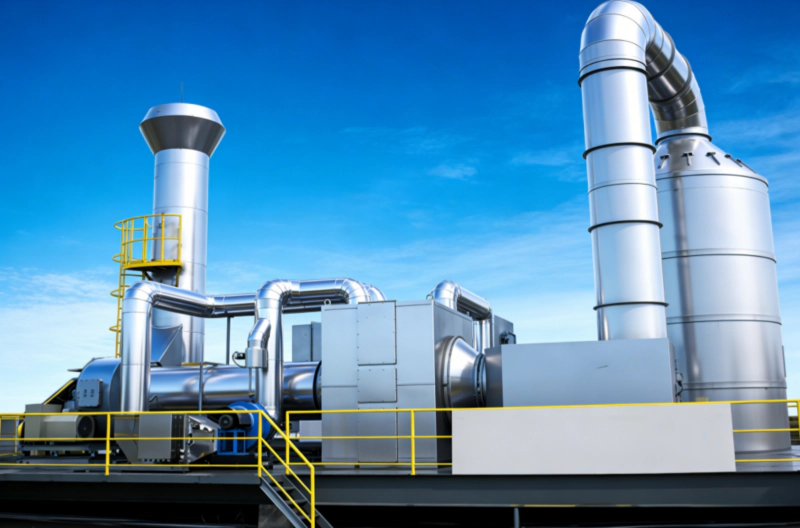
The core of RTO system is the cyclic process of “heat storage – oxidation – heat exchange”. Aiming at the characteristics of complex composition and small amount of viscous substances in fragrance & flavor waste gas, we have specially optimized the system with the following specific workflow:
- Preprocessing Stage: Waste gas first enters a Netherlands-customized filtration device to remove impurities such as spice dust and resin particles – this design prevents viscous substances from adhering to the heat storage body and extends equipment service life by 30%.
- Heat Storage & Heating Stage: Preprocessed waste gas enters the heat storage chamber and is heated to above 760℃ (optimal oxidation temperature for fragrance & flavor VOCs) by ceramic heat storage bodies. At this time, the heat storage bodies release stored heat without consuming a large amount of additional energy.
- Oxidation Decomposition Stage: High-temperature waste gas enters the oxidation chamber, and with the assistance of a Netherlands natural gas-compatible burner, VOCs molecules are completely oxidized into CO₂ and H₂O, and odor substances are fully decomposed.
- Heat Recovery Stage: Oxidized high-temperature gas enters another heat storage chamber, transfers heat to the ceramic heat storage body, and then is discharged at a temperature below 100℃. Stored heat is used to heat subsequent incoming waste gas, realizing energy recycling.
5. RTO System Selection Guide for Netherlands Market: Reject “One-Size-Fits-All”, Choose “Most Suitable”
When selecting RTO systems, Netherlands’ fragrance & flavor enterprises often face the dilemma of “high prices for imported brands, no guarantee for local small factory assembled products”. We compare mainstream RTO solutions to help you make the optimal choice:
| Comparison Dimension | Imported Brands (e.g., a German brand) | Local Small Factory Assembled Products | Our Customized RTO System |
|---|---|---|---|
| Initial Investment Cost | High (over 50% higher than market average) | Low (but hidden late maintenance risks) | Medium (optimal cost performance, supporting installment payment) |
| Netherlands Environmental Compatibility | Compliant with EU standards, but additional debugging needed for RIVM data interface | Some indicators non-compliant, with compliance risks | Natively compatible with RIVM monitoring system, pass environmental acceptance after installation |
| Optimization for Fragrance & Flavor Waste Gas | Universal design, easy to block when treating viscous waste gas | No special optimization, unstable treatment efficiency | Custom filtration + anti-stick heat storage body, adapted to terpene/ester waste gas |
| Local Service Response | Response time over 48 hours, engineers need to be deployed from Germany | Fast response but limited technical capabilities | Dual service centers in Rotterdam/Amsterdam, 2-hour emergency response |
| Annual Operating Cost | High (spare parts need import, expensive) | Volatile (high equipment failure rate, uncontrollable maintenance cost) | Stable (local spare parts warehouse, heat recovery reduces energy consumption) |
6. Case Study: RTO Renovation of A Medium-Sized Fragrance Enterprise in the Netherlands
Enterprise Background: A fragrance enterprise located near the Port of Rotterdam, specializing in food-grade fragrance production, with 50 employees and monthly output of 15 tons of fragrance. The main waste gas components are vanillin and phenethyl alcohol, with pre-treatment waste gas emission of 3000m³/h and VOCs concentration of about 3000mg/m³. It faced frequent complaints due to odor issues.
Pre-Renovation Pain Points: Using activated carbon adsorption, the monthly cost of replacing activated carbon was about €8,000, VOCs removal rate was only 75%, and emission concentration was about 750mg/m³, far exceeding RIVM limits, facing a €200,000 fine risk.
RTO Solution: A customized RTO-5000 system was provided, equipped with special preprocessing device and RIVM real-time data upload module, completed installation and commissioning in March 2024.
Renovation Results:
- Environmental Indicators: VOCs emission concentration reduced to 8mg/m³, odor completely eliminated, successfully passed RIVM acceptance, with zero complaints;
- Cost Savings: Monthly activated carbon consumable cost of €8,000 saved, heat recovery used for workshop heating, saving about €6,000 in natural gas costs monthly, with annual comprehensive cost savings of €168,000;
- Brand Upgrade: Obtained the “Green Production Enterprise” title from Rotterdam Municipal Government, successfully entering the supplier list of a large Dutch supermarket chain.
7. Netherlands Exclusive After-Sales Service: “Full Life Cycle Guarantee” for Worry-Free Operation
We understand that for Dutch enterprises, “service response speed” and “local support capability” are as important as the equipment itself. To this end, we have built an exclusive after-sales service system for the Dutch market:
- Local Installation & Acceptance: Installation and commissioning by the engineer team of Rotterdam headquarters, fully assisting in docking with RIVM environmental acceptance to ensure one-time pass.
- 24/7 Emergency Response: Dual service centers in Amsterdam and Rotterdam, with 15 senior engineers, committed to on-site emergency fault handling within 2 hours.
- Regular Inspection & Maintenance: Quarterly inspection plan formulated according to Dutch climate characteristics, focusing on insulation layer, heat storage body and other components susceptible to low temperature.
- Local Spare Parts Warehouse: A spare parts warehouse set up in the free trade zone of Port of Rotterdam, with sufficient stock of common spare parts (e.g., filter cotton, igniter) for same-day delivery.
- Environmental Policy Update Reminder: Dedicated account manager regularly pushes updates on Dutch and EU environmental policies, assisting enterprises in system upgrade in advance to avoid compliance risks.
8. Frequently Asked Questions (FAQ) About RTO for Netherlands’ Fragrance & Flavor Enterprises
1. We are a small spice workshop in Groningen with air volume of only 800m³/h, is RTO suitable?
Yes. Our RTO-1000 model is specially designed for small enterprises, with floor area of only 8㎡, and supports adjusting operation power according to actual air volume without energy waste. Currently, 5 small workshops in Groningen have installed it and all passed environmental acceptance smoothly.
2. RTO system needs to connect to natural gas, will the fluctuation of natural gas prices in the Netherlands affect operating costs?
The impact is minimal. The system’s heat recovery rate is over 92%, and natural gas is only needed for auxiliary heating during startup and when VOCs concentration is extremely low. For RTO-5000 model, even if natural gas prices rise by 20%, the additional monthly cost is no more than €500.
3. Our waste gas contains a small amount of cinnamaldehyde which is corrosive, can RTO system treat it?
Yes. For corrosive waste gas, we will customize heat exchange pipes and oxidation chamber with corrosion-resistant materials for the system, and add neutralization device in the preprocessing stage. An enterprise producing cinnamon fragrance in Zaandam, Netherlands has used this customized system for 1 year with stable operation.
4. After installing RTO, how to connect to RIVM’s online monitoring system?
Our system is natively equipped with RIVM-recognized data transmission interface. Engineers will complete docking and commissioning directly during installation to ensure real-time upload of VOCs concentration, waste gas flow and other data without additional operation by enterprises.
5. Rotterdam Chemical Park has requirements for noise of environmental protection equipment, is RTO noisy during operation?
Compliant with park standards. The system is equipped with imported noise reduction device from the Netherlands, with operating noise below 75 decibels, far lower than the 85-decibel limit of Rotterdam Chemical Park, and will not affect production even if installed in the workshop.
6. What is the service life of RTO system? Do core components need regular replacement?
The whole machine has a service life of over 15 years. Core components such as ceramic heat storage body can be used for 8-10 years under normal use; wearing parts such as filter cotton need to be replaced every 3-6 months, and our local spare parts warehouse can supply them quickly.
7. Our enterprise plans to apply for the Dutch government’s “Green Energy Subsidy”, can we install RTO?
Yes. RTO system is a “high-efficiency environmental protection and energy-saving equipment” encouraged by the Dutch government, complying with the subsidy conditions of the Dutch Energy and Climate Agreement. We can assist enterprises in preparing application materials, and some customers have successfully obtained 30% equipment investment subsidy.
8. The temperature in the Netherlands is low in winter, will the startup time of RTO system be prolonged?
No. The system is equipped with intelligent preheating module, and can reach stable operation temperature within 30 minutes after startup at -5℃, consistent with startup time in normal temperature environment.
9. Compared with catalytic combustion, what are the advantages of RTO in treating fragrance & flavor waste gas?
Catalytic combustion is prone to catalyst poisoning for terpene waste gas, and treatment efficiency decreases with service time; RTO uses high-temperature oxidation, unaffected by waste gas composition, with long-term stable treatment efficiency over 99% and no secondary pollution.
10. Our factory in Utrecht has limited space, can RTO system be installed vertically?
Yes. For enterprises with limited space, we provide vertical RTO solution, reducing floor area by 40%. An essential oil refinery in Utrecht has adopted this solution and successfully completed installation in 10㎡ space.
11. Does the operation of RTO system require professional operators?
No. The system is equipped with bilingual (Chinese + Dutch) operation interface, runs automatically after one-click startup, and sends real-time alarm and information to the person in charge in case of abnormality. Ordinary workshop workers can master basic operation after 1 hour of training.
12. If our production scale expands in the future, can RTO system be upgraded?
Yes. Our RTO system supports modular upgrade, and processing air volume can be increased only by adding corresponding heat storage chamber and oxidation module, avoiding repeated investment. A fragrance enterprise in The Hague, Netherlands has increased processing air volume from 2000m³/h to 5000m³/h by upgrading modules.
Conclusion: With RTO as a Shield, Protect the “Aroma and Reputation” of Netherlands’ Fragrance & Flavor Industry
Under the Netherlands’ national strategy of “Green Growth”, environmental compliance has become the core competitiveness of fragrance & flavor enterprises. RTO system is not only an environmental protection equipment to solve VOCs and odor problems, but also a “strategic tool” to help enterprises reduce costs and enhance brand value.
If you are also facing waste gas treatment issues, please visit our homepage to contact us.