BLESP1W-100W Series Electrostatic Precipitators
Discover the BLESP1W-100W Dry Electrostatic Precipitator. Handle up to 2.3M m³/h gas volumes at 400°C with ultra-low resistance. Request a quote today!
Engineered for ultra-large gas volumes, extreme temperatures, and heavy dust concentrations, the BLESP Series is the ultimate heavy-industrial environmental solution. Delivering incredibly low operating resistance and exceptional ultra-low emission control, this system provides a highly efficient, stable, and cost-effective flue gas purification solution for global enterprises.
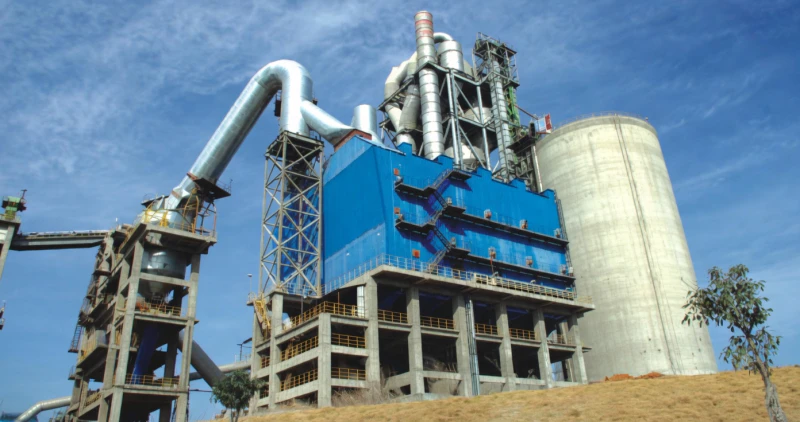
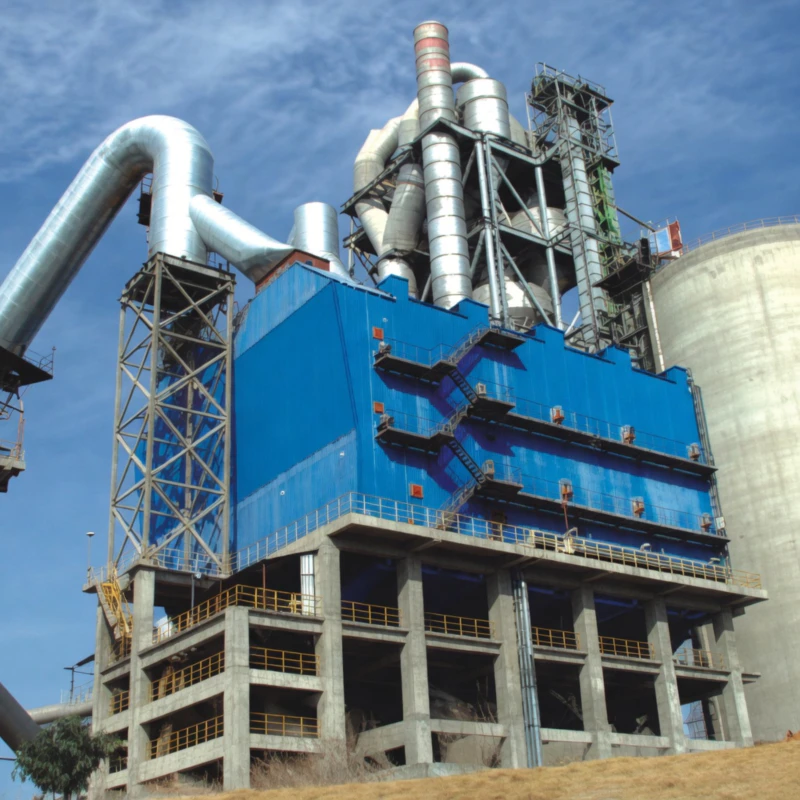
Figure 1: Full-scale exterior architectural layout of the BLESP Series Electrostatic Precipitator
1. Product Overview & Strategic Market Positioning
El BLESP1W-100W Series Dry Electrostatic Precipitator (Dry ESP) is an advanced, high-voltage industrial dust collection system that harnesses intense electrostatic fields (Coulomb force) to meticulously separate suspended particulate matter from exhaust gas streams. Serving as the ultimate defense in heavy-duty flue gas treatment, this system has been deeply optimized in dimensional design, electrical control, and aerodynamics. It serves as a highly robust, cost-effective, and fully compatible drop-in replacement for premium legacy brands such as GE (Alstom)® or FLSmidth® Coromax® ESP models, allowing manufacturing facilities to upgrade their aging infrastructure without incurring exorbitant OEM capital expenditures.
Industry Applications at a Glance:
Extensively deployed in coal-fired power plant boilers, cement manufacturing (rotary kiln heads and tails), metallurgical sintering plants, steel mills, and heavy chemical processing facilities for pre-desulfurization dedusting and final stack emission control.
Core Advantage Summary:
The system is uniquely capable of managing monumental gas volumes up to 2,300,000 m³/h at scorching temperatures reaching 400°C. Astoundingly, it achieves this while operating at a phenomenally low pressure drop of just 200~350 Pa, saving immense electrical costs for Induced Draft (ID) fans annually.
2. Main Technical & Structural Specifications
Engineered for absolute precision and modular scalability, the BLESP1W-100W Series is fully customized to fit your exact volumetric flow rates and spatial site constraints. Below are the verified technical capacities.
Main Technical Specification
| Parámetros técnicos | Specification / Performance Value |
|---|---|
| Gas Volume (m³/h) | 20,000 - 2,300,000 |
| Allowable Gas Temperature (°C) | 70 ~ 400 |
| Densidad de polvo de entrada admisible | 10 - 1,300 (g/Nm³) |
| Casing Pressure Tolerance (Pa) | 2,000 ~ 20,000 |
| Resistencia de funcionamiento (Pa) | 200 ~ 350 (Ultra-Low Energy) |
| Outlet Emission Target | < 50 (Customizable down to < 30 mg/Nm³) |
Main Structural Parameter
| Structural Attribute | Design Scalability Range |
|---|---|
| Number of Chambers (pcs.) | 1 ~ 2 |
| Passages Per Chamber (pcs.) | 9 ~ 40 |
| Height of Electrostatic Field (m) | 5 ~ 15 |
| Number of Fields in Series (pcs.) | 1 ~ 6 |
| Collecting Plates Per Row (pcs.) | 5 ~ 12 |
| Passage Space (mm) | 300, 400, 450 |
| Cross Sectional Area (m²) | 10 ~ 494 |
3. Working Principle & Structural Composition
An electrostatic precipitator is a highly sophisticated dust removal device used to separate particles from a gas stream utilizing electrostatic force (Coulomb force). It is widely recognized as one of the most efficient dedusting technologies in the world, ideal for purifying large-scale exhaust gas during intense industrial production.
Ionization & Charging: Two primary electrodes—a discharging electrode (cathode wire) and a collection electrode (anode plate)—complete the function of gas purification. When the two electrodes are energized with high-voltage direct current, an intense electric field is created. Under this field strength, a corona discharge occurs, ionizing the gas stream and generating a massive cloud of free electrons and anions. As dust passes through, it collides with these ions and becomes highly negatively charged.
Migration & Rapping: The charged suspended particles are instantly driven toward the positively charged collection plates by electrostatic repulsion and attraction. Accumulated particles are then removed from the collection plates at periodic intervals by a mechanical rapping system (hammering mechanism). The heavy agglomerated dust falls directly to the base hoppers for safe disposal, while the purified exhaust gas is safely expelled into the atmosphere through the stack.
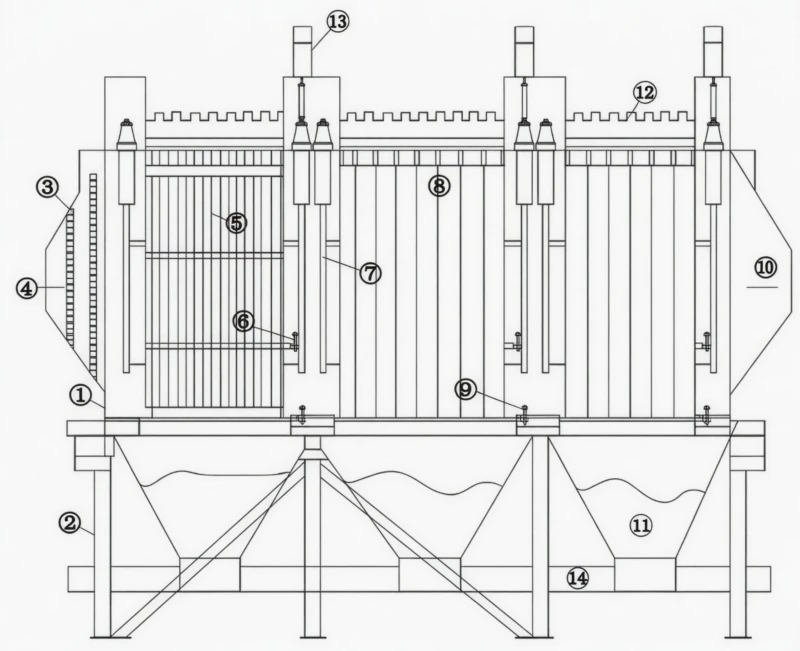
Figure 2: Schematic representation of Coulomb force particle capture and migration
4. Core System Advantages
Choosing the BLESP Series means selecting ultimate reliability and massive reductions in long-term operational costs. Here are the 5 core advantages of our system:
Ultra-Low Operating Resistance
Operating at an aerodynamic resistance of just 200~350 Pa, our ESPs drastically reduce the electrical load on your Induced Draft (ID) fans, saving massive energy OpEx compared to restrictive baghouses (>1500 Pa).
Extreme Temperature Tolerance
Built entirely of robust metallurgical components, the system handles continuous flue gas temperatures up to 400°C safely, completely eliminating the risk of filter fires or thermal media degradation.
Massive Volume & Heavy Load
Designed for mega-facilities, it effortlessly processes up to 2,300,000 m³/h of gas volume and easily manages punishing inlet dust concentrations reaching 1,300 g/Nm³ without clogging.
Zero Consumable Replacement
Unlike baghouses that require frequent, labor-intensive bag replacements, our rigid discharge wires and heavy-duty collection plates offer decades of maintenance-free service, enabling uninterrupted production.
Modular Open Architecture
Engineered with adaptable cross-sectional dimensions, making it the perfect modular system for retrofitting existing casings or serving as primary filtration upstream of a Oxidador térmico regenerativo (RTO).
5. Structure & Material Craftsmanship
The unparalleled longevity and collection efficiency of the BLESP1W-100W Series stem from its meticulous heavy-industrial engineering, premium material selection, and advanced aerodynamic distribution technology.
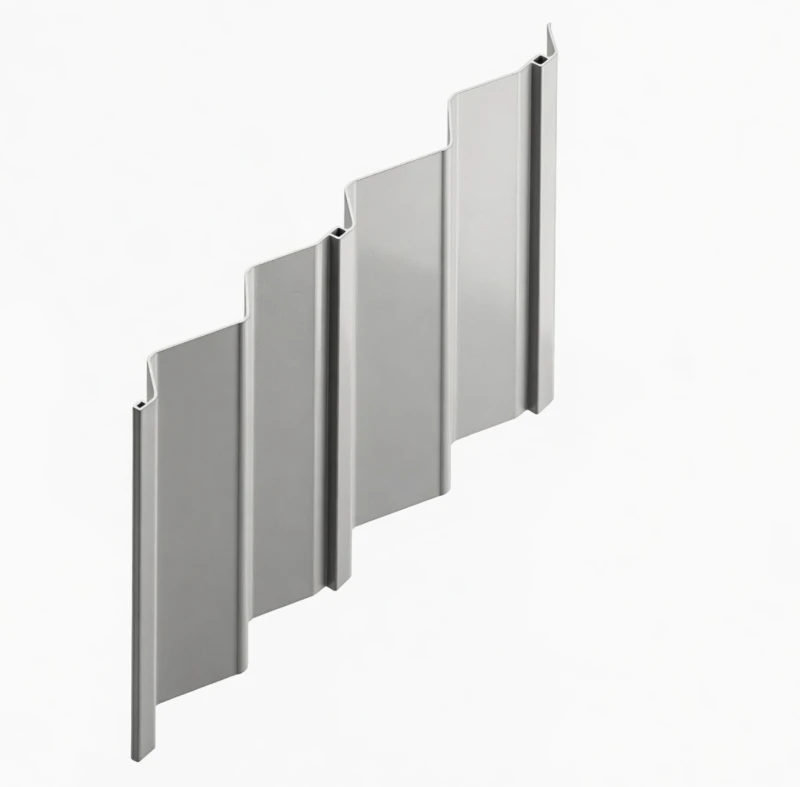
Figure 3: ZT24 profile collecting plates exhibiting exceptional discharging performance
- ZT24 Collecting Plates (Anode): We utilize the advanced ZT24 plate profile. This corrugated geometry provides a highly uniform current density and maximizes the effective dust-collecting surface area by 10% within a compact footprint, drastically reducing dust re-entrainment.
- Rigid Discharge Electrodes (Cathode): Customized with B, v, V, or fishbone type electrodes based on flue gas conditions. Their sharp geometrical design ensures a potent, highly stable corona discharge at lower voltages, preventing wire breakage.
Internal Gas Distribution & Mechanical Rapping Systems
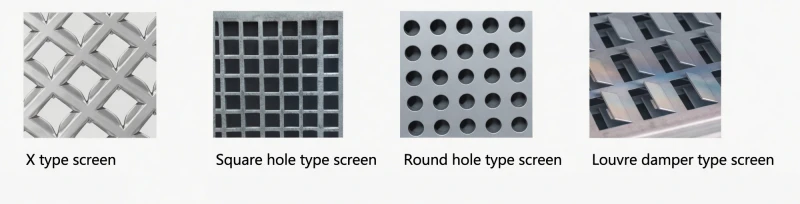
Figure 4: Perforated Gas Distribution Boards
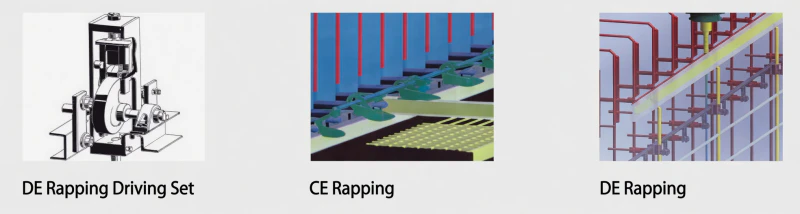
Figure 5: Rapping Drive Mechanism Setup
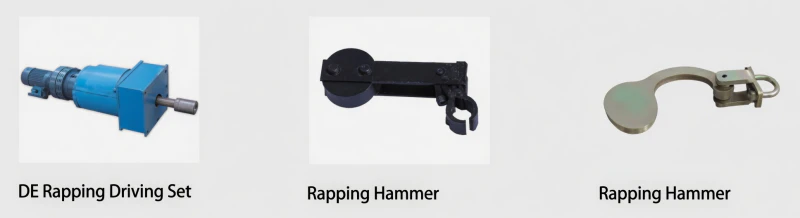
Figure 6: Side-driving Revolving-arm Hammer
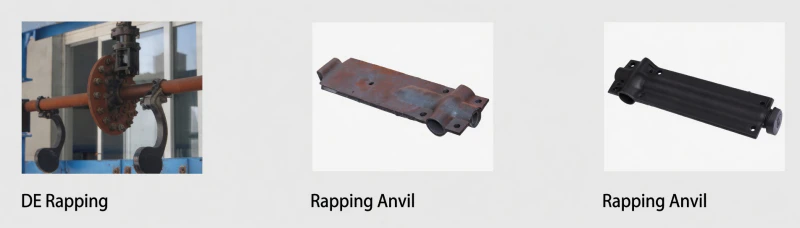
Figure 7: Heavy-duty Striking Anvil
- Gas Distribution Screens (Fig 4): Available in X-type, square-hole, round-hole, and louvre damper types. High perforation rates ensure turbulent gas is converted into a uniform laminar flow across the electrostatic fields.
- Rapping & Cleaning Device (Fig 5-7): The discharge electrode utilizes a top cam lifting mechanism or internal vertical drive. The collecting electrode employs a highly reliable side-driving revolving-arm hammer method, delivering precise shear force to dislodge dust cakes safely.
6. Typical Application Scenarios
The sheer volumetric capacity, aerodynamic design, and thermal durability of the BLESP Series establish it as the primary dedusting choice across the world's most demanding heavy industries.
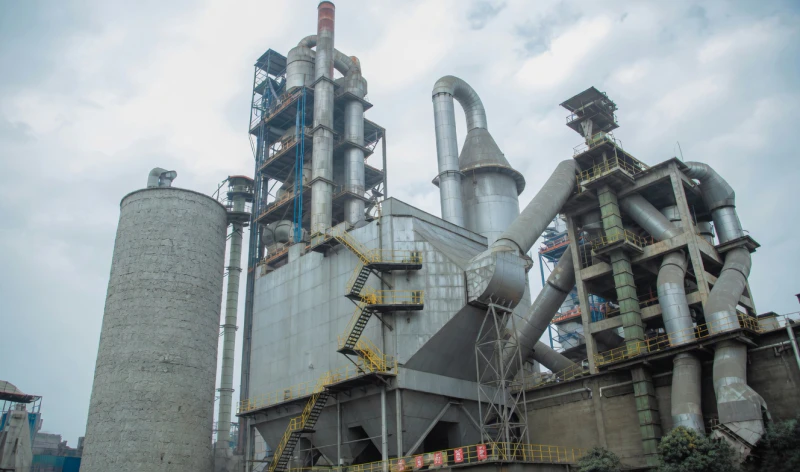
🏭 Cement Manufacturing (Kiln Tail)
Challenge & Mechanism: Rotary kilns produce massive gas volumes at 400°C laden with abrasive clinker dust. Built with heat-resistant steel and wide-passage spacing, our ESP efficiently recovers valuable clinker dust without clogging, emitting only clean air.
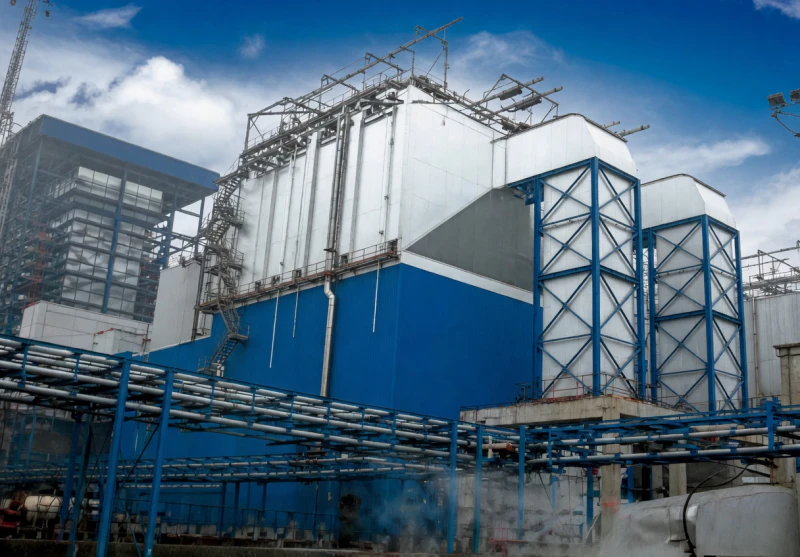
⚡ Power Generation (FGD Pre-dedusting)
Challenge & Mechanism: Coal-fired boilers emit continuous high volumes of sub-micron fly ash. Installed upstream of the Flue Gas Desulfurization (FGD) tower, the ESP's multi-field design captures 99.9% of fly ash, protecting wet scrubbers from siltation.
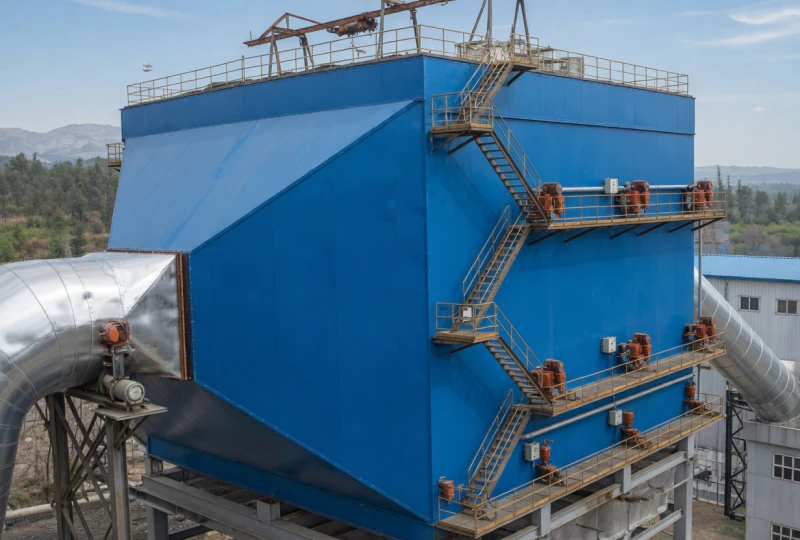
⚒️ Metallurgy (Sintering Machine)
Challenge & Mechanism: Sintering exhaust is highly corrosive and laden with sticky metallic dust. Equipped with specialized anti-corrosive collecting plates and an extreme-shear rapping system, it forces sticky metallic particulates safely into the hoppers.
7. Market Comparison: High ROI vs. Legacy Western Brands
Procurement teams and EPC contractors routinely weigh our systems against legacy Western environmental brands. The BLESP Series is precision-engineered to match or exceed the strict operational criteria of these premium models, delivering absolute functional equivalence at a fraction of the Capital Expenditure (CapEx).
Regulatory & Procurement Disclaimer: Mention of trademarks such as GE® (Alstom®) o FLSmidth® (Coromax®) is strictly for technical comparison, dimensional benchmarking, and retrofit sizing purposes. We do not manufacture or sell counterfeit products, and we claim no affiliation, sponsorship, or endorsement by these entities. Our objective is to transparently assist industrial clients in selecting highly compatible, cost-effective infrastructure upgrades.
| Evaluation Metric | Our BLESP Series | Legacy Western Brands |
|---|---|---|
| Eficiencia de eliminación de partículas | Up to 99.9% (Consistently < 30-50 mg/Nm³) | Up to 99.9% |
| Capital Expenditure (CapEx) | Highly Competitive (Direct OEM Pricing) | Premium Corporate Pricing |
| Customization & Footprint | 100% Bespoke engineering; tailor-made to slide onto existing foundations. | Rigid catalog sizing; limited retrofit flexibility forcing costly rework. |
| Manufacturing Lead Time | Typically 8 - 14 Weeks | Often 24 - 36+ Weeks |
| Spare Parts Ecosystem | Open-source architecture; utilizes globally standardized parts. | Operators are locked into expensive, proprietary OEM contracts. |
8. Quality Certifications & Global Service Commitment
Operational safety, structural durability, and environmental compliance are at the absolute forefront of our manufacturing ethos. We support our global industrial clientele with ironclad warranties and dedicated lifecycle engineering support.
- ISO 9001:2015 Certification: Stringent and audited quality control over heavy steel fabrication, precision welding, and high-voltage electrical assembly. All pressure-bearing casing welds meet strict industrial standards.
- CE Marking & Compliance: All high-voltage electrical cabinets, High-Frequency TR Sets, and automated PLC control systems strictly adhere to European health, safety, and environmental protection directives.
- Emission Performance Guarantee: We contractually guarantee the outlet emission limits based on the actual flue gas engineering data provided during the design phase.
- Turnkey Global Support: From initial Computational Fluid Dynamics (CFD) airflow modeling to on-site erection supervision, commissioning, and comprehensive operator training anywhere in the world.
9. Frequently Asked Questions (FAQ)
1. Why should a facility choose a Dry ESP over a Baghouse Dust Collector?
2. Can the BLESP handle explosive or highly combustible dust?
3. What happens if the process dust has high electrical resistivity?
4. How exactly is the accumulated dust removed from the plates?
5. Is the BLESP system compatible as a pre-filter for an RTO?
6. Can you retrofit the internals of our existing, aging ESP casing?
7. What routine maintenance does a Dry ESP require?
8. How do I determine the exact equipment size for my plant?
9. What is the power consumption of the high voltage electrical system?
10. How is this massive equipment shipped to the job site?
Ready to Optimize Your Industrial Emission Control?
Do not let outdated or undersized dust collection systems throttle your production lines or put your facility at risk of severe environmental non-compliance fines. Engage with our application engineering team today to discuss custom system layouts, structural retrofit sizing, and obtain a highly competitive technical quotation.
-300x300.webp)