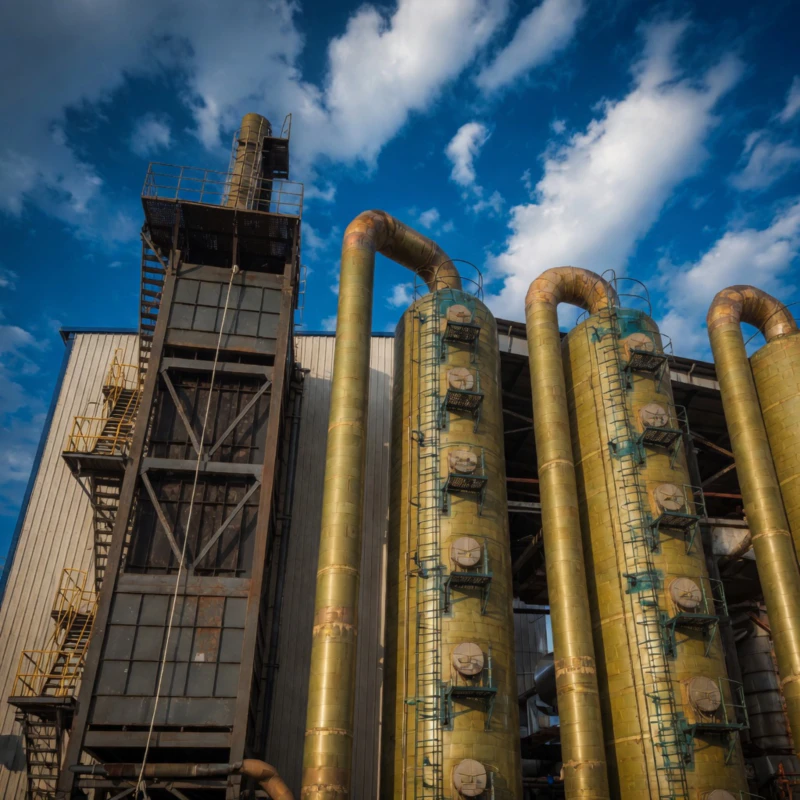
BLDJ1W-100W Series Single-Alkali Desulfurization System
Discover the BLDJ1W-100W Single-Alkali Desulfurization System. Achieve >95% SO2 removal with zero tower scaling, compact design, and low CapEx.
1. Visão geral do produto
High-Efficiency Acidic Pollutant Removal
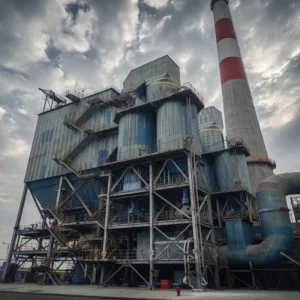
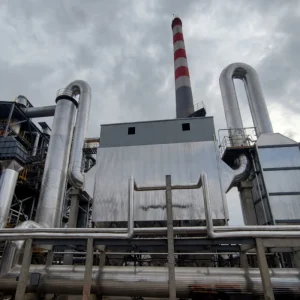
O BLDJ1W-100W Series Single-Alkali Desulfurization System is a state-of-the-art environmental protection equipment designed to rapidly neutralize and remove sulfur dioxide (SO2) and other acidic pollutants from industrial flue gas. Utilizing sodium hydroxide (NaOH) or sodium carbonate (Na2CO3) as the primary liquid absorbent, this system guarantees exceptionally fast reaction kinetics and zero internal scaling.
As a highly cost-effective and structurally optimized solution, the BLDJ Series serves as a perfect, budget-friendly replacement for premium Western models such as the Babcock & Wilcox or Duerr Megtec wet scrubber systems. It matches their desulfurization efficiency (exceeding 95%) while drastically reducing initial capital expenditure and ongoing maintenance costs.
Resumo das principais vantagens: Extremely rapid gas-liquid absorption, zero risk of gypsum scaling inside the tower, high desulfurization efficiency even under fluctuating loads, and a highly compact footprint designed for both new installations and retrofits.
2. Technical Specifications
Main Technical Parameters
The BLDJ1W-100W series offers a wide operational range to accommodate various industrial capacities. Our engineering team customizes the precise dimensions based on your specific flow rates.
| Item de parâmetro | Specification Range | Unidade |
|---|---|---|
| Processing Gas Volume | 10,000 - 1,000,000 | m³/h |
| Temperatura de gás permitida | ≤ 180 | °C |
| Allowable Inlet Sulfur Concentration | 1 - 1,000 | mg/Nm³ |
| Shell Design Pressure | -6,000 to +6,000 | Pai |
| Resistência operacional | 800 to 1,300 | Pai |
| Guaranteed Outlet Emission | < 35 | mg/Nm³ |
3. Process Chemistry
Princípio de funcionamento
Single alkali desulfurization (sodium alkali method) removes acidic pollutants by reacting an alkaline absorbent with SO2 in the flue gas. The process takes place in the Core Reaction Zone of the absorption tower, ensuring maximum gas-liquid contact time.
Step 1: Flue Gas Absorption
As the hot flue gas ascends through the tower, it intersects with the atomized liquid droplets. The sulfur dioxide dissolves rapidly into the water to form sulfurous acid.
SO2 + H2O ↔ H2SO3
Step 2: Main Neutralization
Taking NaOH as the initial absorbent, the sulfurous acid reacts instantaneously with the sodium hydroxide to form sodium sulfite and water. This is the primary desulfurization mechanism.
H2SO3 + 2NaOH = Na2SO3 + 2H2O
Step 3: Saturation Reaction
If the SO2 concentration in the flue gas is in excess, the newly formed sodium sulfite will further react with the acid to form sodium bisulfite.
H2SO3 + Na2SO3 = 2NaHSO3
4. Key Benefits
Five Core Advantages
1. Ultra-Fast Reaction Kinetics
Sodium-based alkalis possess exceptional solubility and alkalinity. The gas-liquid mass transfer rate is significantly faster than calcium-based systems, ensuring rapid SO2 absorption.
2. Zero Tower Scaling
Because the reaction products (sodium sulfite/bisulfite) are highly soluble in water, there is absolutely no risk of solid precipitation or scaling clogging the spray nozzles or tower internals.
3. High Efficiency
Routinely achieves over 95% desulfurization efficiency, effortlessly meeting the strict <35 mg/Nm³ ultra-low emission standards required by modern environmental regulations.
4. Compact Footprint
The high reactivity allows for a smaller tower volume and a lower liquid-to-gas ratio. This reduces the footprint, making it ideal for retrofitting older plants with limited space.
5. Lower CapEx
The simplified slurry preparation and lack of complex solid-handling equipment dramatically lower the initial capital expenditure compared to double-alkali or limestone-gypsum systems.
5. Structural Engineering
System Mix & Materials
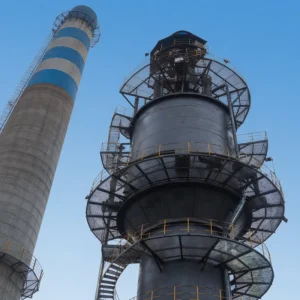
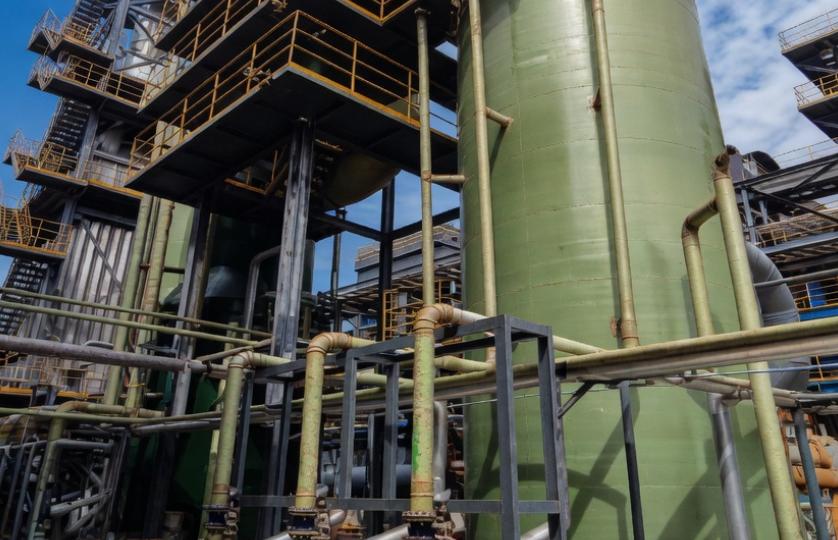
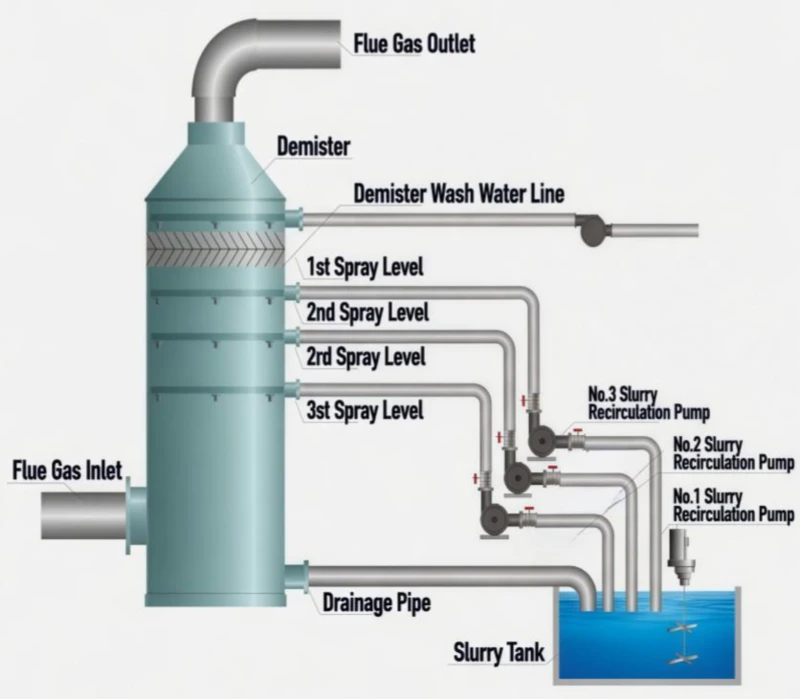
The BLDJ Series is fabricated using highly anti-corrosive materials. The main tower shell typically utilizes carbon steel lined with heavy-duty glass flake epoxy or high-grade FRP (Fiberglass Reinforced Plastic) to withstand the acidic environment.
- 1. Flue Gas Inlet
- 2. Multi-level Spray Layer
- 3. High-Efficiency Demister
- 4. Clean Flue Gas Outlet
- 5. Platform and Ladder
- 6. Circulation Pump
- 7. Demister Wash Pump
- 8. Circulation Water Tank
- 9. Wash Water Tank
- 10. Heavy-Duty Agitator
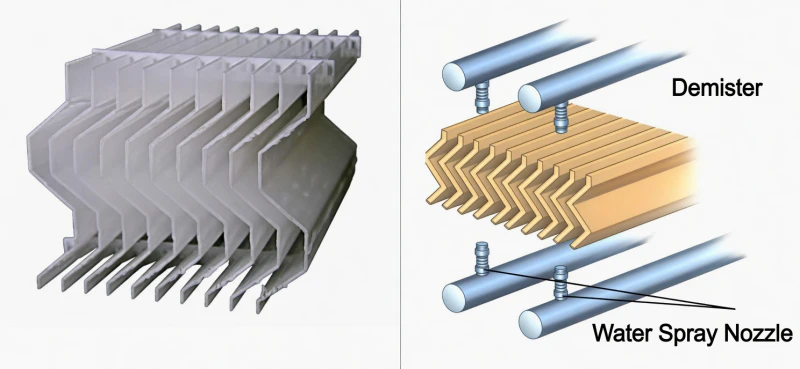
Chevron Demister
Captures entrained alkaline droplets before the gas exits, preventing downstream duct corrosion.
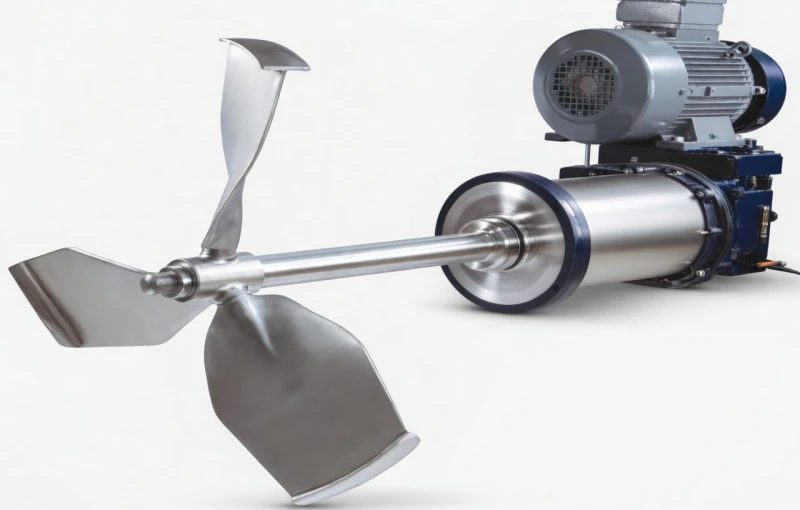
Tank Agitator
Ensures homogenous mixing of the sodium alkali solution in the reaction pool, optimizing pH control.
High-Performance Spray Nozzles
Atomizes the absorbent liquid into fine mists to maximize the gas-liquid contact surface area.
6. Application Scenarios
Where the BLDJ Series Excels
Industrial Boilers
Ideal for small to medium-sized coal-fired or biomass boilers. The system handles fluctuating loads efficiently and fits into tight plant spaces seamlessly.
Metallurgy & Smelting
Effectively treats medium to low-sulfur exhaust gases generated during metal refining, protecting the surrounding environment from acid rain.
Fábricas de produtos químicos
Neutralizes mixed acidic gases emitted from various chemical synthesis processes, utilizing widely available sodium hydroxide as a convenient reagent.
7. ROI & Benchmarking
Why Choose Our System?
Isenção de responsabilidade: Mention of brands like Babcock & Wilcox or Duerr Megtec is strictly for technical benchmarking and customer sizing reference. We do not sell counterfeit products nor claim any affiliation. Our BLDJ Series is independently engineered to offer a high-ROI alternative.
| Métrica de avaliação | Our BLDJ1W-100W Series | Premium Western Brands | Standard Limestone Systems |
|---|---|---|---|
| SO2 Eficiência de remoção | ≥ 95% | ≥ 95% | ≥ 90% (Prone to scaling) |
| Despesas de capital (CapEx) | Altamente competitivo | Extremamente alto | High (Complex equipment) |
| System Scaling Risk | Zero | Zero | Alto |
| Footprint & Integration | Compact / Custom | Standard Sizes | Massive Footprint |
8. Quality Assurance
Global Certifications & EPC Services
Quality is engineered into every weld and valve of our systems. We operate under stringent international protocols to guarantee decades of reliable performance.
- ISO 9001:2015: Certified Quality Management Manufacturing.
- CE Compliance: Meets rigorous European safety and environmental directives.
- Turnkey EPC Solutions: End-to-end service covering fluid dynamics modeling, custom fabrication, shipping, and on-site commissioning.
- After-Sales Commitment: Rapid-response global technical support and extended warranties on core pumps and agitators.
Ready for Compliance?
Contact our engineering team with your flue gas volume and sulfur concentration for a customized CAD blueprint and quote.
9. Knowledge Base
Perguntas frequentes (FAQ)
1. What is the difference between single-alkali and double-alkali desulfurization?
Single-alkali uses only a sodium-based solution (NaOH/Na2CO3) for absorption, keeping the process simple with no scaling. Double-alkali uses sodium for absorption but adds calcium (lime) outside the tower to regenerate the sodium. Single-alkali is preferred for simpler operations and lower initial costs where absorbent recovery isn't strictly mandated.
2. Why does the BLDJ series guarantee no scaling?
The reaction products of sodium and sulfur dioxide (sodium sulfite and sodium bisulfite) are highly soluble in water. Unlike calcium sulfate (gypsum) in limestone systems, they will not crystallize and build up on the tower walls or spray nozzles.
3. Can this system handle high-sulfur coal emissions?
The single-alkali method is generally optimized for medium to low-sulfur flue gas. For extremely high sulfur concentrations, operational costs (sodium consumption) may rise. We recommend consulting us so we can calculate if a Limestone-Gypsum system might offer better long-term ROI for high-sulfur applications.
4. What is the expected lifespan of the absorption tower?
Constructed from heavy-duty carbon steel lined with premium glass-flake epoxy or high-quality FRP, the tower body is designed to resist severe acid corrosion, typically offering an operational lifespan exceeding 15 to 20 years with proper maintenance.
5. Does the system require a lot of space?
No. Due to the high reactivity of sodium alkalis, the liquid-to-gas ratio is low. This allows the absorption tower to be designed with a smaller diameter and shorter height compared to traditional wet scrubbers, saving valuable facility space.
6. How is the wastewater handled?
The discharge contains soluble sodium salts. Depending on local environmental regulations, it may require oxidation (to sodium sulfate) and neutralization before discharge, or it can be routed to an evaporation crystallization system for zero-liquid discharge (ZLD).
7. Are the circulation pumps prone to failure?
We use specialized anti-corrosive and wear-resistant centrifugal pumps lined with high-molecular polymers. Because the circulating liquid is a clear solution (not a thick slurry like in gypsum systems), the wear and tear on the impellers is minimal.
8. What maintenance is required?
Routine maintenance includes checking the pH sensors, ensuring the circulation pumps are lubricated, and periodically inspecting the chevron demisters to ensure they are clean. The system's PLC automation handles most daily operations.
9. Can the system be automated?
Yes. The BLDJ series is fully integrated with a PLC control cabinet and HMI touchscreen. It automatically adjusts the alkali dosing rate based on real-time inlet SO2 concentrations and pH feedback loops.
10. How quickly can a system be manufactured and installed?
Depending on the required gas volume capacity, manufacturing typically takes 6 to 10 weeks. Installation and commissioning usually require an additional 3 to 5 weeks on-site, fully guided by our dispatched field engineers.
Upgrade Your Emission Control Today
Ensure your facility remains compliant, safe, and efficient. Explore our home page to see our full environmental protection capabilities.