.webp)
BLWESP1W-240W Series Wet Electrostatic Precipitator
Eradicate acid mist and gypsum rain with the BLWESP Series Wet Electrostatic Precipitator. Achieve <5mg/Nm³ ultra-low emissions for your industrial plant.
Ultra-Low Emission Terminal Flue Gas Purification System
In modern industrial flue gas treatment, traditional dry dedusting and desulfurization technologies are often insufficient to meet the world's most stringent environmental mandates—specifically the elimination of "gypsum rain", blue smoke, acid mist, and sub-micron PM2.5 aerosols. The BLWESP1W-240W Series Wet Electrostatic Precipitator is a heavy-duty terminal environmental protection device engineered to completely resolve these pain points. Featuring ultra-low operating resistance, aerospace-grade anti-corrosive materials, and a 99.9% aerosol capture rate, this system represents the ultimate defense line for achieving absolute "ultra-low emissions." Furthermore, it serves as a highly cost-effective, fully compatible drop-in replacement for premium GE (Alstom)® and Babcock & Wilcox (B&W)® WESP models, allowing industrial facilities to dramatically slash their Capital Expenditure (CapEx) without compromising on purification performance.
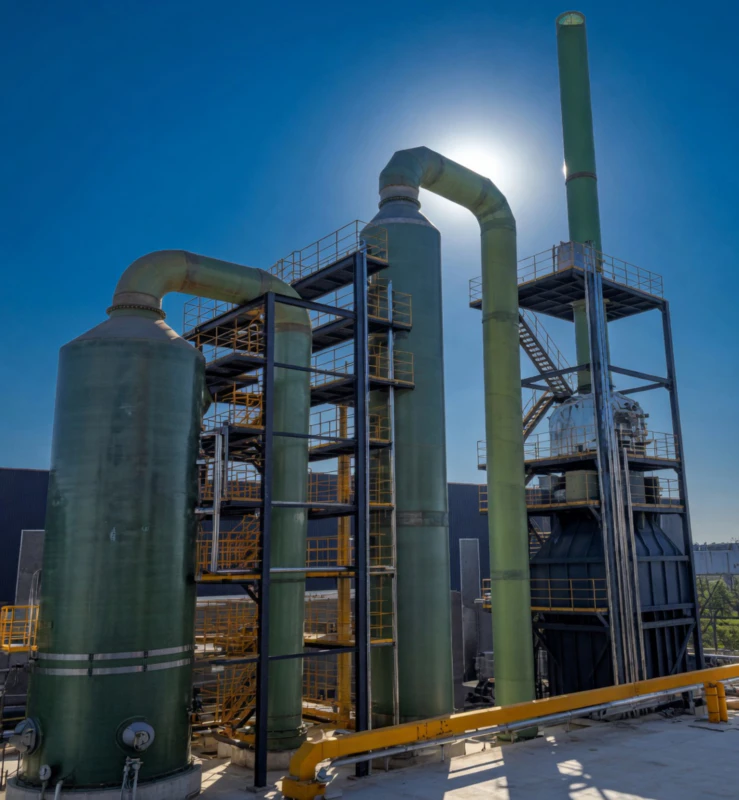
Figure 1: Full-scale industrial installation of the BLWESP Series Wet Electrostatic Precipitator
1. Product Overview & Strategic Positioning
System Definition: The BLWESP Series is an advanced terminal purification device typically positioned downstream of a wet Flue Gas Desulfurization (FGD) system or wet scrubber. By deploying a high-voltage direct current (DC) electrostatic field across saturated wet flue gas, it highly efficiently captures micro-dust, SO3 acid mist, heavy metal particles, and fine water droplets that evade primary filtration systems.
🚀 Industry Applications at a Glance:
- Coal-Fired Power Generation: Eliminates gypsum slurry droplets carried over from FGD towers, resolving stack "rain" and highly visible white/blue smoke plumes.
- Steel Metallurgy & Sintering: Treats highly humid, corrosive, and heavy metal-laden metallurgical exhaust gases.
- Chemical & Hazardous Waste Incineration: Intercepts highly aggressive HCl, HF, and H2SO4 acid mists, shielding downstream chimneys from severe chemical corrosion.
- Building Materials & Glass Manufacturing: Captures ultra-fine sub-micron dust, achieving absolute ultra-low emissions below 5mg/Nm³.
Core Advantage Summary: Our WESP systems are engineered to handle colossal gas volumes up to 2,400,000 m³/h. Because the system utilizes a continuous or intermittent water film for cleaning (rather than mechanical rapping), the risk of secondary dust re-entrainment is absolutely eliminated. Despite its formidable collection power, the system operates with an aerodynamic resistance of merely 300~500 Pa, drastically reducing the electrical consumption of your Induced Draft (ID) fans.
2. Main Technical & Structural Specifications
To meet the uncompromising demands of large-scale environmental engineering projects, the BLWESP1W-240W Series offers a highly elastic modular expansion design. The following tables outline the exceptional aerodynamic performance and structural capacities of the series.
Main Technical Specification
| Teknik Parametre | Specification Range / Value |
|---|---|
| Gas Volume (m³/h) | 10,000 - 2,400,000 |
| Allowable Gas Temp (°C) | 30 ~ 90 (Saturated Wet) |
| Inlet Dust Density (mg/Nm³) | 1 - 300 |
| Casing Pressure (Pa) | 2,000 ~ 20,000 |
| Çalışma Direnci (Pa) | 300 ~ 500 |
| Outlet Emission (mg/Nm³) | < 10 (Guaranteed < 5) |
Main Structural Parameter
| Structural Attribute | Design Values / Scalability |
|---|---|
| Number of Modules (pcs.) | 1 ~ 20 |
| Tubes per module (pcs.) | 10 ~ 180 |
| Anode Tube Height (mm) | 6,000 |
| Number of Electric Fields | 1 - 10 |
| Tube internal flow velocity | 0.8 ~ 2.0 (m/s) |
| Anode Tube Specs (mm) | Inscribed circle φ300 / φ360 |
| Filtration Area (m²) | 100 ~ 20,000 |
3. Working Principle & Structural Composition
The principle of wet electrostatic dust removal technology involves applying tens of thousands of volts of DC high voltage between the anode tube ve cathode wire. Under the action of a strong electric field, the gas between the positive and negative electrodes is fully ionized, generating a massive number of free electrons and ions.
During their rapid movement toward the electrodes under the electric field force, these ions collide with fine dust particles, acid mist, and aerosols in the flue gas, heavily charging them. The negatively charged particles are subsequently separated from the main airflow and driven forcefully toward the anode tube wall under Coulombic forces.
Unlike dry ESPs that use hammers, the wet electrostatic precipitator requires a dedicated flushing system. This system provides a continuous or intermittent water film to wash the electrode tubes and wires, allowing the accumulated slurry to flow into the basal zone strictly via gravity—effectively negating any possibility of particle re-entrainment.
⚙️ Product Mix (Core Structural Components):
- 1. Casing
- 2. Support
- 3. Inlet
- 4. Distribution Screen
- 5. Cathode Line
- 6. Insulator Box
- 7. Cathode Beams
- 8. Anode Tube
- 9. Tensioning Device
- 10. Outlet
- 11. Flushing System
- 12. Heavy Hammer
- 13. HV Power Supply
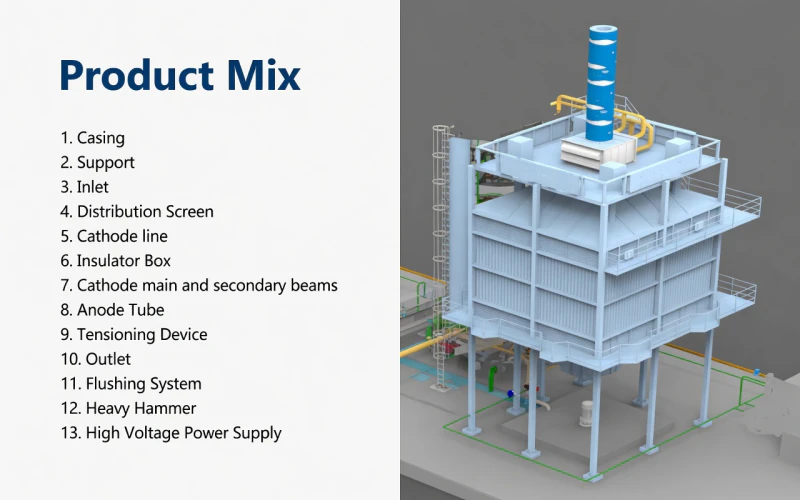
Figure 2: Internal architecture showing gas flow and the flushing mechanism
4. Five Core Advantages of the BLWESP Series
In the challenging field of post-desulfurization and highly corrosive chemical exhaust gas treatment, our WESP system demonstrates absolute superiority over conventional filters.
Eradicates Gypsum Rain & Acid Mist
Achieves an astonishing 99.9% interception rate for aerosols and sub-micron particulate matter. Outlet emissions are strictly controlled below <5mg/Nm³, completely eliminating visible white/blue smoke plumes.
Aerospace-Grade Corrosion Resistance
The anode tubes are crafted from Conductive Fiberglass Reinforced Plastic (FRP) or premium 2205 Duplex Stainless Steel. This renders the system completely immune to severe chemical pitting from HCl, HF, and H2SO4.
Zero Secondary Re-entrainment
By discarding the mechanical rapping method used in dry ESPs and adopting an intelligent water film flushing system, electrode surfaces are kept absolutely clean, maintaining a highly potent electric field.
Ultra-Low Aerodynamic Resistance
The honeycomb hexagonal anode tube array creates an exceptionally smooth fluid dynamic channel. The overall system pressure drop is a mere 300~500 Pa, lowering the electrical consumption of exhaust fans.
High-Frequency Microcomputer Control
Equipped with a microsecond-response high-frequency switching power supply. It actively tracks spark flashovers in the wet, harsh electric field environment and dynamically adjusts the discharge voltage.
5. Core Structure & Advanced Material Craftsmanship
Wet electrostatic precipitators operate perpetually in a high-humidity, high-acidity, and high-voltage environment. The lifespan of the equipment relies entirely on uncompromising material selection. We have upgraded the anti-corrosive capabilities of every internal component:
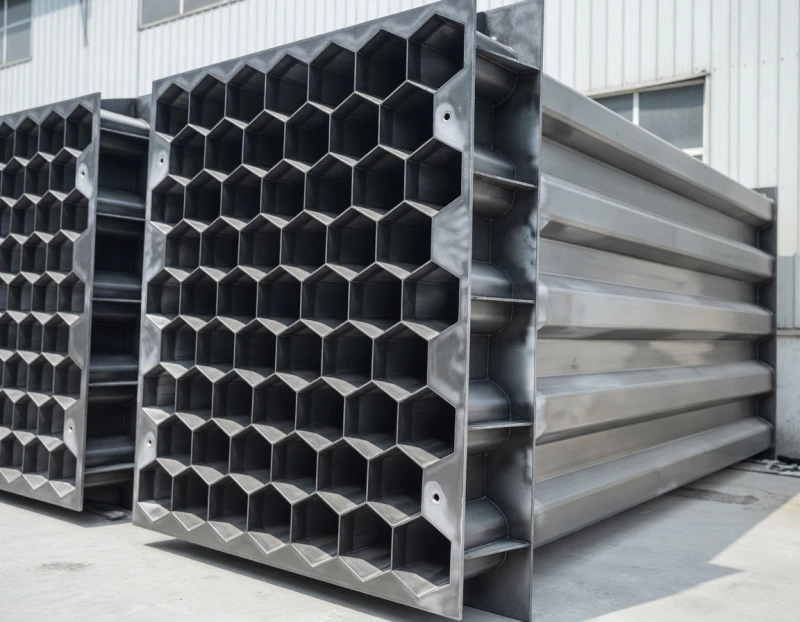
Honeycomb Anode Tube
Constructed from highly durable Conductive Fiberglass (FRP) or 2205 Duplex material arranged in a honeycomb formation. Outstanding electrical conductivity and impenetrable corrosion resistance.
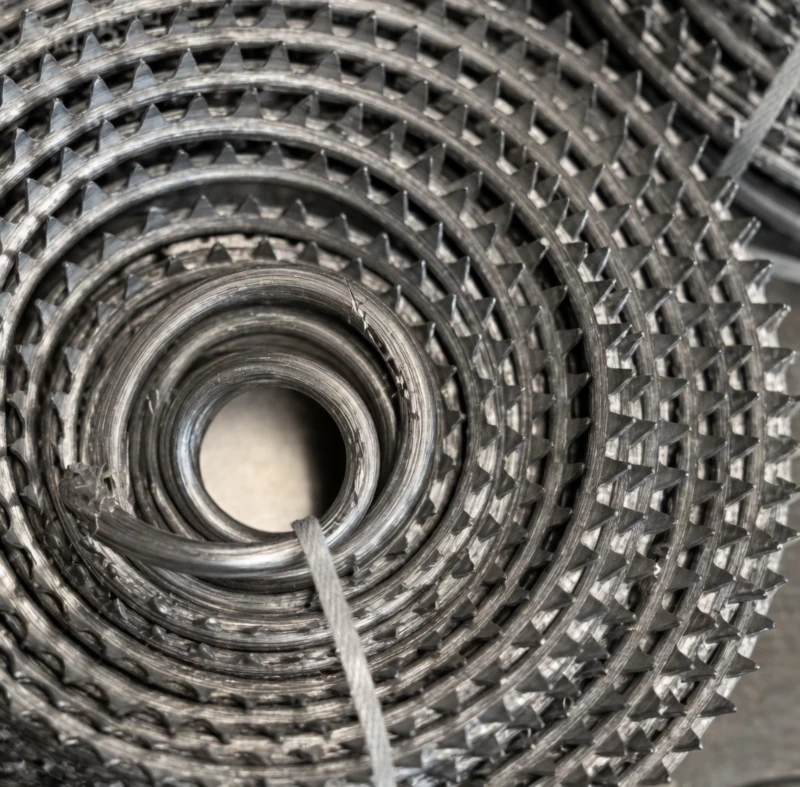
High-Efficiency Cathode Wire
Select from lead-antimony alloy barbed wire, 2205 stainless steel barbed wire, or robust tubular barbed wire. Guarantees excellent discharge performance, endurance, and non-breakability.
Auxiliary Control & Safety Subsystems
.webp)
Dağıtım Ekranı
Available in X-type, square-hole, and round-hole patterns. Ensures turbulent incoming gas is smoothed into a uniform laminar flow.
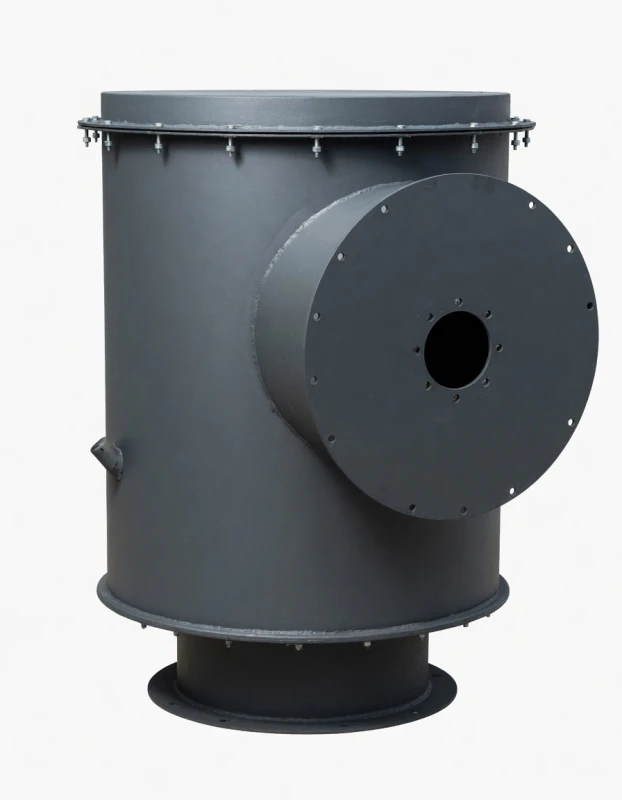
Yalıtkan Kutu
The critical "isolation barrier." Equipped with automated heating elements, it ensures insulators remain dry and safe from electrical tracking.
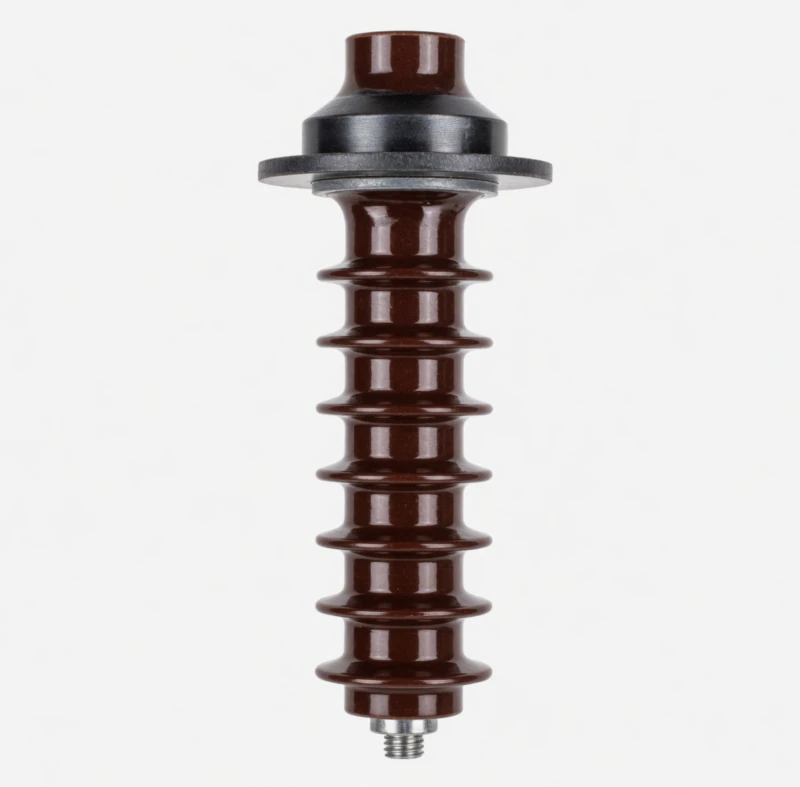
Gerdirme Cihazı
Heavy bottom weights ensure that the long discharge wires remain absolutely stable and straight, preventing short-circuits during high-velocity flows.
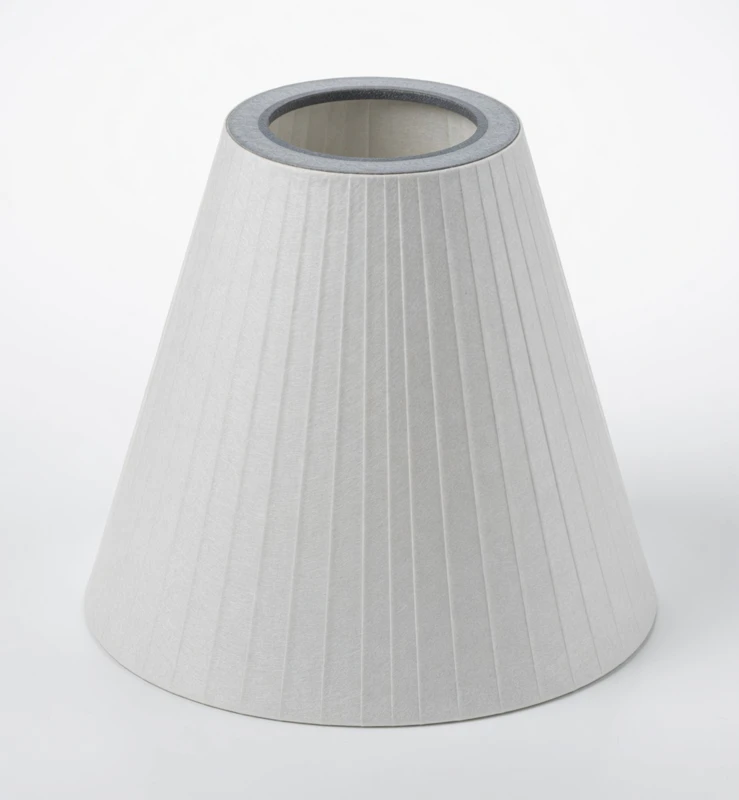
Figure 3: Insulating Magnetic Bottle
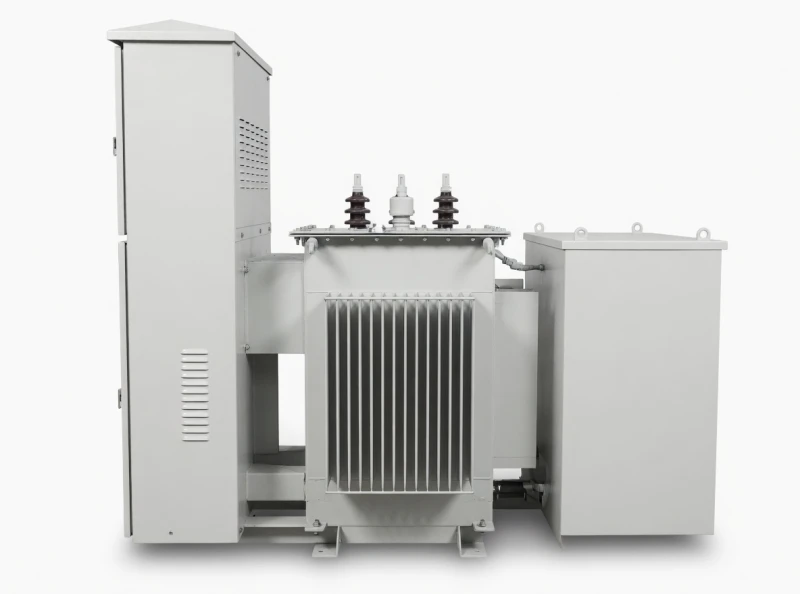
Figure 4: Smart High-Frequency DC Power Cabinet
6. Typical Application Scenarios & Synergy
Wherever conventional dry baghouses fail due to "high humidity, high corrosiveness, and fine aerosols," the Wet Electrostatic Precipitator thrives. It is globally recognized as the ultimate security filter in heavy industrial matrices.
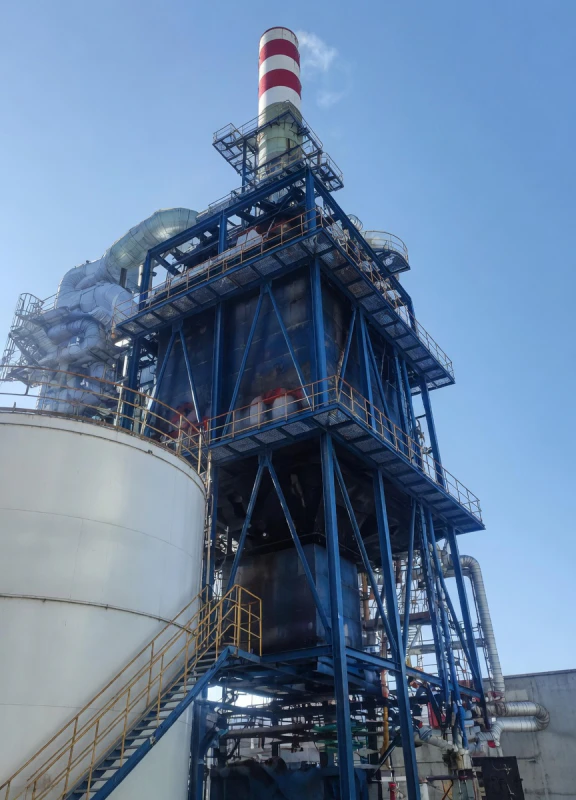
🏭 Coal-Fired Power Plants: Post-FGD
Challenge & Principle: Flue gas exiting wet desulfurization (FGD) towers carries massive amounts of moisture and gypsum droplets, causing blue smoke. Installing a WESP directly atop or downstream of the scrubber electromagnetically adsorbs these droplets. It is the proven technology to achieve "near-zero emissions."
.webp)
⚒️ Metallurgy & Chemical Incineration
Challenge & Principle: Chemical incineration and metallurgical sintering generate dangerous amounts of HCl and heavy metal aerosols, forming lethal acid mists upon cooling. Utilizing conductive FRP anode tubes, the WESP remains impervious to severe acid pitting while forcefully intercepting acid aerosols.
⚗️ The Perfect Synergy with Regenerative Thermal Oxidizers (RTO)
When treating complex exhaust streams containing both Volatile Organic Compounds (VOCs) and highly sticky dust or paint mist, routing this gas directly into a Rejeneratif Termal Oksitleyici (RTO) is catastrophic. Sticky dust will rapidly clog or even incinerate the RTO's expensive ceramic heat exchange beds. Utilizing a WESP as the primary pre-treatment device ensures that 99% of sticky particulate matter and paint droplets are washed away, guaranteeing long-term, stable operation of your abatement system.
7. Market Comparison: Superior ROI vs. Legacy Western Brands
When tendering for multi-million dollar environmental EPC projects, engineers must balance guaranteed performance against Capital Expenditure (CapEx). Backed by a robust heavy-industrial supply chain, the BLWESP Series delivers purification efficiency that rivals or surpasses premium Western brands, while entirely eliminating exorbitant brand markups.
Regulatory & Sizing Disclaimer: Trademarks mentioned herein, such as GE® (Alstom®) Ve Babcock & Wilcox®, remain the exclusive property of their respective owners. We do not manufacture or distribute counterfeit equipment. These brands are referenced solely for objective technical benchmarking, assisting engineers seeking compatible "Drop-in Replacements".
| Evaluation Metric | Our BLWESP Series | Premium Legacy Brands |
|---|---|---|
| Fine PM2.5/SO3 Removal Efficiency | Consistently >99.9% (Emissions <5 mg/Nm³) | Up to 99.9% |
| Capital Expenditure (CapEx) | Highly Cost-Effective (Direct OEM Manufacturing) | Burdensome Brand Premium & Import Tariffs |
| Customization & Flexibility | 100% Bespoke engineering. Tube bundles can be integrated directly atop existing FGD towers to save space. | Strict catalog sizing. Retrofitting older plants often forces the owner to reconstruct expensive foundations. |
| Production & Shipping Lead Time | Typically 10 - 16 Weeks | Often Exceeds 30+ Weeks |
| Spare Parts Ecosystem | Open-source architecture. Fully compatible with globally standard insulators, anode tubes, and PLCs. | Clients are locked into purchasing exorbitantly priced, proprietary OEM replacement parts. |
8. Quality Certifications & Global Service Commitment
Wet Electrostatic Precipitators operate in exceptionally hostile internal environments (High Voltage + High Acidity + Saturated Humidity). Even the slightest material flaw or welding imperfection can lead to catastrophic electrical breakdown or structural corrosion. We treat safety, durability, and compliance as the lifeblood of our manufacturing process:
- ISO 9001:2015 International Certification: We implement draconian audit controls over heavy anti-corrosive steel fabrication, precision welding, and high-voltage electrical assembly. All pressure-bearing welds pass strict non-destructive testing (NDT).
- CE Marking & Electrical Safety: The associated high-voltage control cabinets, High-Frequency TR Sets, and automated PLC water flushing systems rigorously comply with European health, safety, and environmental directives.
- Contractual Emission Guarantee: Provided accurate initial flue gas composition data, we explicitly guarantee in writing that the final stack emissions will easily pass local environmental monitoring tests.
- Global Turnkey Engineering Support: We provide end-to-end services ranging from Computational Fluid Dynamics (CFD) pipeline optimization to shipping container logistics, on-site erection supervision, commissioning, and comprehensive operator training worldwide.
9. Frequently Asked Engineering Questions (FAQ)
1. What is the fundamental difference between a WESP and a Dry ESP?
2. Why use Conductive FRP or 2205 Stainless Steel instead of standard carbon steel?
3. What is the maximum operating temperature for a WESP?
4. Will the continuous water flushing consume massive amounts of water?
5. Why is a WESP highly recommended upstream of an RTO for certain industries?
6. Can a WESP be retrofitted if my existing desulfurization tower has limited space above it?
7. Can this system guarantee outlet emissions below 5mg/Nm³?
8. With the insulator box operating in extreme humidity, how do you prevent high-voltage short-circuits?
9. What specific data do I need to provide for an accurate equipment quotation?
10. How are these massive anode tube bundles and casings shipped globally?
Ready to Eradicate Industrial Smoke Plumes Permanently?
Do not let outdated scrubber systems or failing dust collectors subject your facility to severe environmental non-compliance fines. Contact our application engineering team today to receive a free, bespoke CAD layout, flow analysis, and a highly competitive technical quotation tailored to your exact industrial matrix.