
🏭 Catégorie : Génie chimique
⏱️ Temps de lecture : 8 à 10 minutes
📊 Nombre de mots : plus de 850
Traitement des COV
sécurité chimique
Récupération d'énergie
Optimisation des processus
🚀 Résumé
La technologie modulaire d'oxydation thermique régénérative (RTO) représente une avancée majeure dans le traitement des COV de l'industrie chimique, offrant 99%+ efficacité de destruction avec Récupération d'énergie 95%Ce guide complet explore comment les systèmes RTO modulaires répondent aux défis uniques de la fabrication chimique tout en offrant une sécurité, une flexibilité et un retour sur investissement supérieurs aux technologies traditionnelles.
💰 Retour sur investissement en 2 à 3 ans
⚡ 92-96% Récupération d'énergie
🛡️ Certifié SIL3/ATEX
Introduction : Le défi de l'évolution de l'industrie chimique
Le secteur de la fabrication de produits chimiques est confronté à des défis environnementaux de plus en plus complexes en matière de traitement des composés organiques volatils (COV). Contrairement à d'autres industries, les procédés chimiques génèrent des flux d'échappement caractérisés par :
🧪 Chimie complexe
Plusieurs solvants, composés halogénés et espèces réactives nécessitent des approches de traitement spécialisées
⚠️ Impératifs de sécurité
Composés inflammables et explosifs nécessitant un équipement certifié ATEX et de multiples couches de sécurité
📈 Opérations variables
Procédés discontinus avec des fluctuations de concentration importantes (50 à 8 000 mg/m³) et des variations de débit
💡 La solution RTO modulaire : Contrairement aux systèmes monolithiques traditionnels, la technologie RTO modulaire relève ces défis grâce à une conception évolutive et axée sur la sécurité, qui s'adapte aux exigences de l'industrie chimique tout en offrant une efficacité et une flexibilité sans précédent. Cette approche modulaire permet aux installations de démarrer avec une capacité essentielle et de l'étendre au fur et à mesure de la croissance de la production, minimisant ainsi l'investissement initial et maximisant la valeur à long terme.

Comprendre la technologie RTO modulaire : au-delà de l’oxydation thermique traditionnelle
L'oxydation thermique à réaction (RTO) modulaire représente un changement de paradigme par rapport à la conception conventionnelle des oxydants thermiques. Alors que les systèmes RTO traditionnels fonctionnent comme des unités uniques à capacité fixe, la RTO modulaire utilise des modules standardisés et interconnectés qui fonctionnent ensemble comme un système intégré. Cette approche novatrice offre plusieurs avantages clés pour les applications chimiques :
🔧 Principes technologiques fondamentaux
Procédé d'oxydation thermique
Les COV sont oxydés à 760-850°C dans des chambres remplies de céramique, atteignant une efficacité de destruction de 99%+ grâce à un contrôle optimal de la température et du temps de séjour.
Récupération de chaleur régénérative
Les supports céramiques captent et recyclent l'énergie thermique, atteignant une efficacité de récupération de chaleur de 92-96% – nettement supérieure à celle des systèmes traditionnels.
Architecture modulaire
Les modules indépendants peuvent fonctionner, être entretenus ou étendus sans arrêter l'ensemble du système, offrant ainsi une flexibilité opérationnelle sans précédent.
La philosophie de conception modulaire s'étend au-delà de la structure physique pour inclure systèmes de contrôle modulaires, dispositifs de sécurité modulaires, et options modulaires de récupération d'énergieCette approche holistique permet aux usines chimiques de personnaliser leurs systèmes RTO précisément en fonction de leurs exigences de procédés spécifiques, de leurs protocoles de sécurité et de leurs besoins d'intégration énergétique.
Comparaison technique : RTO modulaire vs technologies conventionnelles
| Paramètre technique | RTO modulaire | RTO traditionnel | Oxydant catalytique | Systèmes d'adsorption |
|---|---|---|---|---|
| Plage de concentration optimale | 50-8000 mg/m³ (Capacité à grande échelle) |
100-3000 mg/m³ (Portée limitée) |
200-4000 mg/m³ (Plage moyenne) |
<500 mg/m³ (Faible concentration) |
| Efficacité de destruction | 99.0-99.8% (Taux le plus élevé disponible) |
95-99% (Bonne performance) |
90-95% (Dégradation du catalyseur) |
85-92% (Une percée se produit) |
| Taux de récupération d'énergie | 92-96% (Efficacité maximale) |
85-90% (Rendement standard) |
50-70% (Récupération limitée) |
N / A (Aucune récupération) |
| Certification de sécurité | Zone SIL3/ATEX 1 (Niveau de sécurité maximal) |
SIL2 (Sécurité standard) |
SIL1 (Sécurité de base) |
SIL1 (Sécurité de base) |
| Exigences de maintenance | Remplacement modulaire (Temps d'arrêt minimal) |
Arrêt complet (Impact sur la production) |
remplacement du catalyseur (Dépense courante) |
Remplacement des médias (Déchets dangereux) |
📈 Pourquoi l'oscillateur RTO modulaire excelle dans les applications chimiques
L'avantage du RTO modulaire va au-delà des indicateurs de performance de base. Pour les usines chimiques, la capacité de augmenter progressivement la capacité, effectuer maintenance sans arrêt complet, et intégrer des systèmes de sécurité avancés Le RTO modulaire représente ainsi le choix optimal pour la fabrication chimique moderne. La flexibilité de cette technologie lui permet de s'adapter à l'évolution des exigences de production, aux nouvelles réglementations et aux normes de sécurité changeantes sans nécessiter le remplacement complet du système.
Applications dans l'industrie chimique : exemples concrets de réussite des systèmes modulaires RTO
🏭 Étude de cas : Usine de fabrication de produits chimiques fins
Défi: Cette usine multiproduits, dotée de 12 lignes de production différentes, générait des mélanges de solvants complexes. Les opérations par lots entraînaient des fluctuations de concentration importantes (100 à 6 000 mg/m³). Les systèmes RTO traditionnels peinaient à gérer le taux de réduction de charge et à garantir la conformité aux normes de sécurité.
Solution RTO modulaire : Système RTO à 4 modules installé, doté d'algorithmes de contrôle basés sur l'IA. Chaque module gère des lignes de production spécifiques, permettant un fonctionnement indépendant lors des opérations de maintenance ou des périodes de faible production.
Résultats:
🏗️ Étude de cas : Complexe pétrochimique
Défi: Installation de traitement en continu avec un volume important de gaz d'échappement (80 000 Nm³/h) contenant des composés soufrés. Nécessaire pour respecter des limites strictes en matière de NOx tout en récupérant l'énergie pour la production de vapeur.
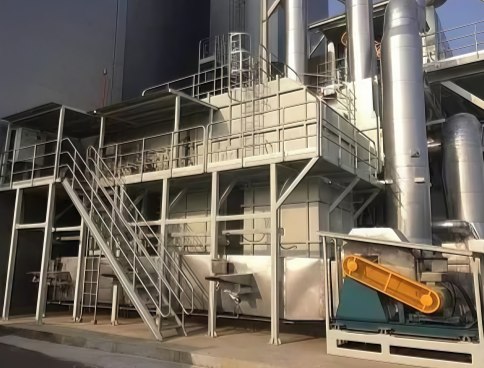
Solution RTO modulaire : Système RTO à six modules avec matériaux résistants à la corrosion et chaudière de récupération de chaleur intégrée. La régulation thermique avancée minimise la formation de NOx tout en maximisant la récupération d'énergie.
Résultats:
Analyse économique : Investissement et retour sur investissement dans les RTO modulaires
💰 Analyse de l'investissement
45-55%
25-30%
10-15%
8-12%
📈 Facteurs de retour sur investissement
- Économies d'énergie : 60-70% de retour sur investissement total grâce à la récupération de chaleur
- Conformité réglementaire : Éviter les amendes et les pénalités
- Crédits carbone : Recettes supplémentaires provenant de la réduction des émissions
- Efficacité opérationnelle : Maintenance et temps d'arrêt réduits
- Temps de production disponible : La maintenance modulaire préserve la production
🧮 Exemple de calcul du retour sur investissement
Remarque : Calcul basé sur un système typique de 40 000 Nm³/h pour une usine chimique de taille moyenne. Le retour sur investissement réel varie en fonction des coûts énergétiques locaux, du contexte réglementaire et des conditions de procédé spécifiques.
Questions fréquentes : RTO modulaire dans l’industrie chimique
Si vous êtes intéressé par nos services, veuillez consulter notre site web. page d'accueil pour obtenir les informations les plus récentes.