
Case Study · Industrial Emission Control
How a high-performance glass fiber manufacturer upgraded its kiln wet flue gas desulfurization system with Magnetic Plume Abatement technology — achieving invisible stack discharge and full GB 16297−1996 compliance while managing the unique combination of high kiln exit temperature, high-sodium-sulfate dust loading, and a sub-tropical high-humidity climate that amplifies white plume visibility year-round.
Glass Fiber Kiln Off-Gas Treatment
Magnetic Fume Purification
High-Humidity Plume Suppression
Na₂SO₄ Crystallite Dust Capture
01 — Industry Background
Glass Fiber Manufacturing and the Multi-Challenge Emission Profile of Kiln Exhaust
Glass fiber is an inorganic non-metallic material with core compositions including silicon dioxide, aluminium oxide, and calcium oxide. Valued for its electrical insulation, heat resistance, and corrosion-resistant properties, glass fiber is applied across construction, transportation, wind energy, and electronics manufacturing. Product classifications span chopped strand mats, woven rovings, continuous rovings, needle mat, and specialty fabrics; end markets range from structural composites to electronic circuit board substrates.
China’s glass fiber industry traces its industrial origins to the 1940s, and since the 1990s has grown into one of the world’s dominant production centers. Major domestic producers account for over half of global glass fiber supply. However, the sector faces capacity rationalization pressure as supply periodically exceeds demand, and environmental compliance investment has become a key competitive differentiator as regulatory enforcement intensifies.
Glass fiber production relies on continuous-melt tank furnaces (kilns) operating at temperatures exceeding 1,400°C to fuse raw silica, limestone, dolomite, and borosilicate glass batch materials. These kilns generate flue gas with a distinctive and challenging pollutant profile that distinguishes glass fiber kiln off-gas from standard boiler or smelting exhaust: very high exit temperature (170–200°C at the kiln), large fluctuations in gas volume due to side-firing at the kiln ends, and high sodium sulfate particulate loading generated when sulfur-bearing batch materials combust in the high-temperature zone. For facilities in sub-tropical, high-humidity regions — where relative humidity averages 70–80% and minimum monthly temperatures average only 4–8°C in winter — the visible white plume is pronounced under nearly all ambient conditions, not just cold-weather operation.
“High-humidity sub-tropical locations are the hardest environment for plume abatement. Annual average humidity of 70–80% means the atmospheric conditions that amplify white plume visibility are present almost every day of the year. The MPA system’s water molecule capture capability needs to be specified at a higher performance level for this climate than for a drier northern China location treating the same pollutant loading.”
— Engineering Technical Summary, Glass Fiber Industry Magnetic Plume Abatement Project
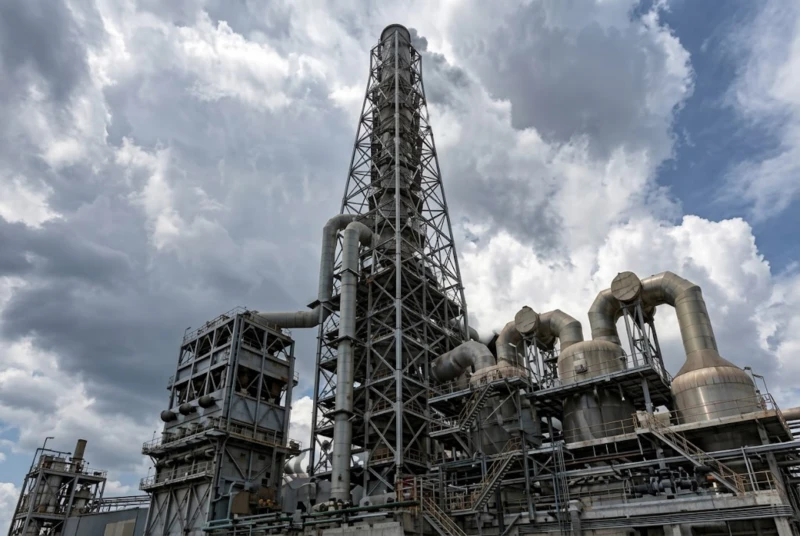
02 — Pollution Profile
Glass Fiber Kiln Off-Gas: Five Compounding Challenges That Rule Out Standard Abatement Approaches
The facility established in 1991 focuses on high-performance glass fiber new materials, combining R&D, manufacturing, and sales of glass fiber and composite materials. Its product portfolio spans chopped strand mats, rovings, short-cut fiber, square fabric, and woven fabrics, with quality recognized by international partners. This project upgrades the existing kiln wet flue gas desulfurization (WFGD) system by adding a Magnetic Plume Abatement unit downstream.
Glass fiber kiln off-gas presents five compounding challenges that together rule out the simple deployment of any single conventional abatement technology:
- 1. Very high kiln exit temperature (170–200°C): Kiln off-gas exits at temperatures far above the operating range of most absorber materials and well above the acid dew point. A heat recovery or pre-cooling stage (heat exchanger) is required before the gas can enter the wet desulfurization scrubber, and the subsequent MPA unit sees a lower-temperature, humidity-saturated gas stream.
- 2. High gas volume fluctuation: Glass fiber kilns use side-firing burners at both kiln ends. When kiln operators change burner settings, gas volume fluctuates significantly over short periods. The MPA system must maintain stable performance across a wide load range without manual adjustment.
- 3. Multi-pollutant complexity — dust, SO₂, NOx, HF: During glass fiber production, the main pollutants include flue dust, SO₂, NOx, and hydrogen fluoride (HF). The simultaneous presence of all four pollutant categories requires a treatment train designed to address each without creating interactions or breakthrough from one stage affecting another.
- 4. High sodium sulfate (Na₂SO₄) crystallite dust loading: Glass fiber kiln particulate loading is unusually high compared to most industrial kilns. The dust arises from two sources: Na₂SO₄ crystallite particles formed when sulfur-bearing raw materials precipitate during rapid cooling in the kiln gas cooling zone; and fine glass raw material particles carried over by the kiln off-gas stream. This high-density, mixed-composition particulate requires robust capture capability in the MPA absorber layer.
- 5. High residual corrosivity (SO₂ and HF) after wet desulfurization: Even after WFGD treatment, the post-scrubber gas retains significant SO₂ and HF fractions. These acidic gases combine with the high-humidity steam at sub-dew-point temperatures to form corrosive acid mist that requires anti-corrosion specification across all downstream equipment including the MPA unit.
The site geography adds a sixth compounding factor: the facility is located in a sub-tropical monsoon climate zone, with annual average temperature of 16–18°C, peak monthly averages of 26–29°C, and minimum monthly averages of 4–8°C. Annual mean relative humidity is 70–80%. Annual sunshine hours of only 1,000–1,400 make this one of China’s lowest-sunshine regions. The consequence for visible white plume formation is severe: high ambient humidity amplifies plume visibility year-round, not only in winter. The MPA system must deliver enhanced water molecule capture capability to achieve invisible discharge across this challenging climate range.
| पैरामीटर | प्रारंभिक सांद्रता | Outlet (Design) | Regulatory Limit |
|---|---|---|---|
| एनओएक्स | — | ≤50 मिलीग्राम/एन.मी³ | 50 mg/Nm³ |
| SO₂ | 400 mg/Nm³ | ≤30 mg/Nm³ | 30 mg/Nm³ |
| Particulate matter (PM) | 100 mg/Nm³ | ≤30 mg/Nm³ | 30 mg/Nm³ |
| Mixed inlet pollutant density (MPA inlet) | 50 mg/Nm³ | ≤10 mg/Nm³ | 10 mg/Nm³ |
| Visible white plume | Present (persistent, year-round) | None (invisible) | Invisible, no abnormal odor |
| Flue gas volume (rated) | 22,000 Nm³/h | — | — |
| Kiln exit temperature | 170–200°C | — | — |
| MPA unit inlet temperature | ≈40°C | — | — |
| Humidity (at MPA unit inlet) | 50% (post-scrubber) | — | — |
| Site annual mean relative humidity | 70–80% | — | — |
| Applicable standard | GB 16297−1996 Comprehensive Emission Standard of Air Pollutants | ||
03 — Engineering Requirements
Design Criteria for MPA in a High-Dust, High-Temperature, High-Humidity Glass Fiber Kiln Application
The following binding requirements governed the engineering design. They reflect the compound difficulty of glass fiber kiln off-gas treatment and the sub-tropical climate context that amplifies white plume formation beyond what is typical in drier industrial regions.
Commercially Proven, Standard-Compliant
Only field-proven, commercially mature technologies acceptable. All equipment and materials must meet applicable national standards. The system must achieve a 30%–50% improvement over existing baseline performance using verified abatement approaches specific to the glass fiber kiln environment.
Wide Load Tolerance 10%–110%
The system must maintain stable purification and white plume suppression across 10%–110% of rated gas volume. Kiln side-firing operation creates rapid volume swings that cannot be anticipated by manual control — the system must respond automatically without operator intervention or set-point adjustment.
Multi-Acid Corrosion Resistance
All components must resist both SO₂-derived sulfuric acid mist and HF. Graphene composite absorber layer provides the required multi-acid resistance and thermal stability for regenerative backwash purging of Na₂SO₄ crystallite and glass raw material dust deposits accumulated during operation.
शून्य द्वितीयक प्रदूषण
No new wastewater, spent reagent, or hazardous solid waste may result from the MPA stage. System raw materials must have a stable domestic supply chain. All major equipment must be sourced from nationally certified quality manufacturers.
ऊर्जा दक्षता
The entire upgraded treatment system — including the wind-cooled heat exchanger, circulating water pump, magnetic field generator, and induced draft fan — must minimize aggregate running power. Target running cost for the complete system is below 100 RMB per operating hour at local electricity tariff.
Noise Compliance
All equipment must not exceed 85 dB(A) at 1 m, meeting GB 12348−2008 Class II industrial limits. The wind-cooled heat exchanger fan array requires particular noise engineering attention as it is typically the highest-noise component in the upgraded treatment train.
Enhanced Water Molecule Capture for High-Humidity Climate
The sub-tropical location with 70–80% annual mean relative humidity requires the MPA system to deliver enhanced water molecule capture capability above the standard specification for drier climates. The BLIMF-150B induction magnetic field unit is specified alongside the BLEMG-1KS generator to provide the additional field strength required for full plume suppression under high-ambient-humidity conditions.
Modular and Future-Ready
Modular design must accommodate future emission standard tightening over 3–5 years without core system replacement. Advanced technology must simultaneously reduce residual gaseous co-emissions to position the facility for ultra-low emission classification under forthcoming glass fiber sector standards.
04 — Treatment Solution
Upgrading the Existing WFGD System with Downstream MPA Polishing for Full Plume Elimination
Magnetic Plume Abatement (MPA) — also described as magnetic fume purification, dry-phase acid mist and dust capture, non-thermal white smoke elimination, or magnetic field kiln exhaust polishing — eliminates visible white plume by simultaneously capturing Na₂SO₄ crystallite dust, HF-derived acid mist, residual SO₂ aerosols, and saturated water vapor from post-WFGD glass fiber kiln exhaust. A dual magnetic field configuration — the BLEMG-1KS primary generator and the BLIMF-150B induction field unit — was specified for this high-humidity application to provide the elevated field strength needed to achieve water molecule capture at the 70–80% ambient humidity condition that characterizes the site year-round.
F02/F03 Kiln Upgraded Process Flow
Kiln
Exchanger
पंखा
Tank
Tower
→ WFGD
(BLCNXB-2.2W)
⭐ New equipment added in this upgrade
The 170–190°C kiln off-gas enters the pre-treatment tower where it is absorbed by sodium hydroxide solution spray, reducing temperature and removing mist. The booster fan then directs the gas to the absorption tower, where secondary sodium hydroxide solution spray provides full absorption and mist elimination before online monitoring and discharge. For the F02/F03 kilns, the upgraded process flow adds the MPA unit downstream of the existing WFGD scrubber to provide deep polishing of the residual fine aerosol and water vapor fraction responsible for the visible white plume.
.webp)
System Configuration and Key Technical Parameters
The MPA unit — model BLCNXB-2.2W — uses a tower-external, bottom-entry / top-exhaust configuration. A notable feature of this installation is the dual magnetic field configuration: the primary BLEMG-1KS magnetic energy generator is supplemented by a BLIMF-150B induction magnetic field unit to provide the elevated field strength required to achieve full water molecule capture under the high ambient humidity conditions of the sub-tropical site. Equipment dimensions of 6.2×4.4×15.5 m fit within the available space adjacent to the existing WFGD scrubber.
| पैरामीटर | विनिर्देश |
|---|---|
| Unit Model | BLCNXB-2.2W |
| Layout Type | Tower-external, stand-alone module |
| Air Flow Orientation | Bottom-entry, top-exhaust |
| शुद्धिकरण दक्षता | ≥971टीपी3टी |
| Inlet Mixed Pollutant Concentration | 50 mg/Nm³ |
| Outlet Mixed Pollutant Concentration | ≤10 mg/Nm³ |
| System Resistance | 250 Pa |
| Treated Flue Gas Volume | 22,000 Nm³/h |
| MPA Unit Inlet Temperature | ≈40°C (post-WFGD) |
| Absorber Layer Material | Graphene composite |
| Equipment Dimensions (L×W×H) | 6.2 m × 4.4 m × 15.5 m |
| Primary Magnetic Generator | BLEMG-1KS |
| Supplementary Induction Field Unit | BLIMF-150B (high-humidity enhancement) |
| Full System Running Power (incl. heat exchanger, pump, fan) | 210 kW |
| Annual Operating Hours | 7,200 h/year |
| Annual Electricity Cost (full system) | Approx. 982,800 RMB/year |
| Applicable Emission Standard | GB 16297−1996 Comprehensive Air Pollutant Emission Standard |
Note on system running cost breakdown: Of the 210 kW total system power, the wind-cooled heat exchanger draws 55 kW, the circulating water pump 90 kW, the magnetic induction field unit 50 kW, and the MPA magnetic energy generator 15 kW. Annual operating cost of 982,800 RMB reflects the full upgraded treatment system, not the MPA unit alone. The MPA generator itself (15 kW) contributes approximately 70,200 RMB/year to the total system electricity cost.
.webp)
05 — Core Advantages
Why This Dual-Field MPA Configuration Succeeds Where Standard Abatement Approaches Fall Short
- ✓
Dual Magnetic Field Configuration Engineered for High-Ambient-Humidity Performance: The standard single-generator MPA configuration (BLEMG-1KS alone) delivers ≥97% purification efficiency at typical industrial site humidity levels of 40–60%. At this facility’s site with 70–80% annual mean ambient humidity, the density of water vapor molecules in the ambient air creates additional aerosol nucleation sites that suppress plume elimination performance in standard configurations. The supplementary BLIMF-150B induction magnetic field unit increases the total field gradient within the absorber zone to the level required to capture water vapor molecules at the elevated humidity condition, achieving invisible discharge even on high-humidity summer days when the atmospheric moisture content amplifies plume formation. - ✓
Graphene Composite Absorber Captures Na₂SO₄ Crystallite Dust and HF Simultaneously: The two specific dust types that characterize glass fiber kiln off-gas — Na₂SO₄ crystallites from sulfur precipitation and fine glass raw material particles — behave differently under standard filtration: crystallites are hygroscopic and cake-form on fibrous filter bags causing blinding, while glass-raw-material particles are abrasive to conventional absorber media. The graphene composite surface is neither blocked by hygroscopic crystallite caking nor abraded by glass particle impact, enabling sustained capture efficiency across both dust types without the increasing pressure drop that bag filters experience. - ✓
Automatic Load Tracking Handles Rapid Kiln Gas Volume Fluctuations: Side-firing kilns generate abrupt gas volume changes when burner configurations are adjusted. The combined BLEMG-1KS / BLIMF-150B control system monitors gas flow and composition online and adjusts combined magnetic field intensity within seconds of detecting a load change, maintaining purification efficiency across the full 10%–110% operating range without requiring operator intervention. This automatic response capability is essential for kiln side-firing operations where volume swings of 20–30% over minutes are routine. - ✓
Plug-In Upgrade to Existing WFGD System — No Redesign of Upstream Equipment: The MPA unit installs as a downstream module connected to the existing WFGD scrubber exhaust outlet. The existing heat exchanger, booster fan, sedimentation tank, pre-treatment tower, main fan, and WFGD scrubber all continue to operate without modification. Only the ductwork connection between the WFGD scrubber outlet and the new MPA unit requires installation work during the plant tie-in period. - ✓
Zero Secondary Wastewater from MPA Stage: The WFGD scrubber already generates a wastewater stream requiring management. Adding the MPA dry-process polishing stage introduces zero additional wastewater, zero reagent consumption, and zero secondary pollution. This keeps the facility’s post-upgrade environmental permit footprint identical to the pre-upgrade state for all wastewater-related parameters. - ✓
Year-Round Compliance in the Highest-Humidity Months When Plume Is Most Visible: In a site with 70–80% annual mean humidity, the summer peak humidity months (July–September, relative humidity often exceeding 85%) represent the compliance-critical period when visible white plume is most pronounced and most likely to attract community and regulatory attention. The dual-field MPA configuration was validated to achieve invisible discharge under these peak summer humidity conditions, providing full-year compliance coverage without seasonal system adjustment.
Technology Comparison: Dual-Field MPA vs. Conventional Alternatives for Glass Fiber Kiln Off-Gas
| Criterion | Dual-Field MPA (BLEMG + BLIMF) | Bag Filter + GGH | Alkali Wet Scrubbing |
|---|---|---|---|
| White plume in high-humidity climate | Eliminated (year-round) | No (haze in humid seasons) | No (saturated vapor passes through) |
| Na₂SO₄ crystallite fouling resistance | High (graphene composite) | Low (hygroscopic bag blinding) | मध्यम |
| HF + SO₂ co-removal capability | Yes (both captured) | नहीं | Partial (acid gas only) |
| Secondary wastewater generated | कोई नहीं | कोई नहीं | High volume |
| Kiln gas volume fluctuation response | Automatic (10%–110%) | Limited (fixed resistance) | Manual adjustment needed |
| Integration with existing WFGD | Direct downstream plug-in | Major upstream redesign | Additional scrubber required |
06 — Operational Results
Commissioning Results and Full-System Running Cost Verification
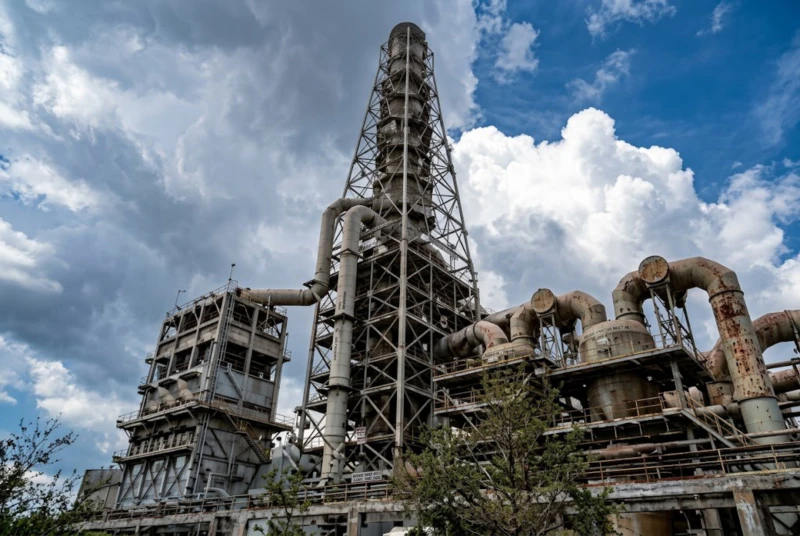
The magnetic plume abatement unit achieved first-time commissioning success. Operating data and plume elimination performance met all design targets. The stack exhaust achieved invisible status under all tested operating conditions, including during periods of elevated ambient humidity when the sub-tropical climate amplifies visible plume formation. Annual running cost for the complete upgraded system (heat exchanger + circulating pump + MPA unit + magnetic induction field) was verified at approximately 982,800 RMB per year.
07 — Implementation Cautions
Critical Engineering Considerations for Glass Fiber Kiln Off-Gas MPA Applications
- ⚠️
High-humidity climate requires supplementary induction field specification — do not use standard single-generator configuration: A standard BLEMG-1KS single-generator MPA installation will achieve ≥97% purification efficiency for particulate and acid mist capture in most industrial applications. However, at sites where annual mean ambient humidity exceeds 65%, water vapor molecule density in the gas stream increases the energy required to achieve full aerosol capture and visible plume elimination. Before specifying the MPA configuration for any glass fiber or similar high-humidity site, obtain the annual mean and peak-month relative humidity data and apply the humidity correction factor to the field strength specification. If corrected field strength exceeds the BLEMG-1KS rated output, a supplementary BLIMF induction field unit must be specified. - ⚠️
Sodium sulfate crystallite dust is hygroscopic and causes accelerated absorber fouling compared to standard industrial dust: Na₂SO₄ crystallites absorb moisture from the surrounding gas stream and form a sticky, cake-like deposit on absorber surfaces that is significantly more difficult to remove by standard backwash than dry, non-hygroscopic industrial dust. The backwash system must be designed for this adhesive loading condition, with higher pump head, increased nozzle coverage, and a hot-water regeneration protocol (80–90°C) rather than ambient-temperature backwash. First-year backwash inspection intervals should be set at monthly rather than quarterly to establish the site-specific fouling rate before the permanent maintenance schedule is fixed. - ⚠️
Very high kiln exit temperature requires validated heat exchanger pre-cooling before the MPA unit can operate within design parameters: Glass fiber kiln off-gas at 170–200°C is far above the MPA unit’s 50°C inlet temperature design limit. The wind-cooled heat exchanger in the existing pre-treatment train is critical infrastructure for the MPA upgrade. If the heat exchanger capacity is reduced by fouling, fin erosion, or cooling air blockage, the post-exchanger gas temperature rises, which both damages the MPA absorber layer and reduces purification efficiency. Implement a monthly heat exchanger performance check (outlet temperature measurement) as part of the MPA maintenance programme. - ⚠️
HF in the post-WFGD gas stream requires graphene composite specification — no standard metallic absorber alternative: Even after alkaline washing, the post-WFGD gas retains HF content that is corrosive to standard metallic absorber materials and FRP. The graphene composite absorber layer in the BLCNXB-2.2W is specifically specified for HF-containing service. Do not accept material substitutions that reduce the acid resistance specification, even where the primary pollution concern appears to be particulate and SO₂ rather than HF. HF degrades under-rated absorber materials within weeks at the concentrations typical of post-WFGD glass fiber kiln off-gas. - ⚠️
The wind-cooled heat exchanger fan noise is often the dominant noise source in the upgraded treatment train: The wind-cooled heat exchanger uses large-diameter axial fans operating at significant airflow rates to cool kiln off-gas from 170–200°C to approximately 40°C. These fans are often the highest-noise component in the upgraded system, and their noise contribution must be evaluated against the site boundary noise limit before the heat exchanger is sized and specified. If boundary noise analysis reveals that the heat exchanger fan array exceeds the limit, acoustic enclosures or low-noise fan designs must be incorporated at the specification stage, not added reactively after commissioning. - ⚠️
CEMS monitoring must account for the elevated glass fiber sector pollutant parameter set: Glass fiber kiln off-gas contains HF in addition to the standard NOx, SO₂, and PM parameters. GB 16297−1996 includes HF as a regulated parameter for glass and glass fiber manufacturing. Confirm with the competent authority before CEMS procurement whether HF must be monitored continuously or only via periodic sampling, and ensure the CEMS installation at the MPA outlet covers all parameters that will be checked during acceptance inspection. Some local authorities also require periodic boron compound monitoring for borosilicate glass fiber kilns.
08 — Engineering Takeaways
Four Transferable Lessons from This High-Humidity Glass Fiber Kiln Project
- 1
Climate-adjusted MPA specification is not a conservative option — it is the only option for high-humidity sites. At sites with annual mean relative humidity above 65%, specifying a standard single-generator MPA configuration and expecting full plume elimination is a design error. The humidity correction factor must be applied at the field strength specification stage, before any equipment is ordered. The cost difference between a standard and humidity-corrected configuration is modest; the cost of underperformance — visible white plume remaining after commissioning, requiring system modification — is substantially higher. - 2
Report the full system running cost, not just the MPA unit cost, when evaluating the economics of an upgrade. This project’s 210 kW system running power includes 55 kW for the heat exchanger, 90 kW for the circulating water pump, 50 kW for the induction field unit, and only 15 kW for the MPA generator itself. The MPA generator accounts for just 7% of total system power draw. Comparisons of “MPA electricity cost” with alternative technologies should use full-system electricity cost on both sides of the comparison, including all auxiliary equipment, to provide a valid economic benchmark. - 3
Na₂SO₄ crystallite fouling is qualitatively different from standard industrial dust fouling and requires a distinct maintenance protocol. Hygroscopic crystallite deposits cake-form on absorber surfaces in a way that standard cold-water backwash does not effectively remove. The hot-water regenerative purging protocol (80–90°C water, dissolving the Na₂SO₄ cake) must be incorporated as a scheduled maintenance event from the first day of operation, with the initial interval set conservatively (monthly) and adjusted based on first-year deposit accumulation data. Facilities that apply standard industrial dust backwash protocols to glass fiber kiln Na₂SO₄ deposits typically experience absorber efficiency decline within 8–12 weeks. - 4
The heat exchanger is the MPA unit’s most critical upstream dependency — its performance must be actively monitored. For any MPA installation downstream of a pre-cooling heat exchanger, the heat exchanger outlet temperature is the most important upstream parameter to monitor continuously. A rise of 10°C above the design outlet temperature indicates heat exchanger fouling and reduces MPA absorber capture efficiency. Integrating a heat exchanger outlet thermocouple into the MPA SCADA alarm system, with a first-alert threshold set at design outlet + 5°C, provides the early warning needed to schedule cleaning before performance degradation is visible at the stack.
09 — Frequently Asked Questions
Magnetic Plume Abatement for Glass Fiber Kilns: Ten Questions Answered
Questions from environmental engineers, kiln operations managers, and technical procurement teams at glass fiber manufacturing facilities evaluating MPA upgrades to existing WFGD systems.
Ready to Eliminate Your Kiln White Plume Year-Round?
Explore the Full Range of Industrial Emission Control Solutions
From glass fiber kiln magnetic plume abatement in high-humidity sub-tropical climates to regenerative thermal oxidation systems for industrial VOC abatement, our engineering team delivers climate-validated solutions for the most demanding industrial emission control requirements.