[MUST-READ FOR NETHERLANDS PESTICIDE ENTERPRISES] In March 2024, a Rotterdam pesticide factory was fined €1.2 million for phosphorus-containing gas leakage. The strong corrosiveness and toxicity of phosphorus & chlorine-containing exhaust have left 80% of Netherlands pesticide enterprises facing RIVM compliance pressure. Traditional adsorption methods require frequent consumable replacement with annual costs exceeding €500,000; incineration easily produces dioxins, leading to repeated environmental acceptance failures. How to achieve safe emission reduction and cost control while complying with the Dutch Environmental Activities Decree (Bal)? Regenerative Thermal Oxidation (RTO) systems provide the answer.
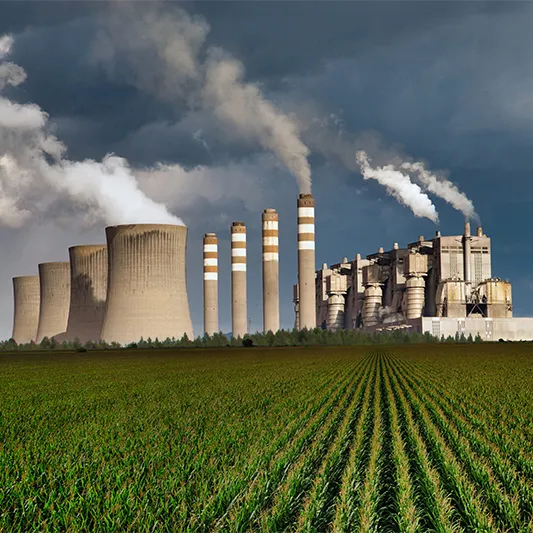
regenerative thermal oxidiser-application-Coal chemical low-temperature methanol scrubbing waste gas

I. Pain Points: 3 Critical Challenges for Netherlands Pesticide Waste Gas Treatment

Pesticide production generates complex exhaust containing organophosphorus (e.g., glyphosate intermediates) and organochlorine (e.g., hexachlorocyclohexane degradation products), which become compliance obstacles for Netherlands pesticide enterprises:
  • Compliance Crisis: RIVM requires pesticide exhaust VOCs ≤50mg/m³, phosphorus-containing exhaust ≤0.5mg/m³. Stricter standards will take effect in 2025, with a daily fine of €15,000 for violations;
  • Safety Risk: Chlorine-containing exhaust easily produces dioxins (highly toxic carcinogens) at high temperatures; phosphorus-containing exhaust causes equipment corrosion and explosion. Dutch Labor Inspectorate (Nederlandse Arbeidsinspectie) demands highest safety rating for such equipment;
  • Cost Burden: Traditional absorption methods require 2 tons of special adsorbent replacement monthly, with procurement + hazardous waste disposal costs exceeding €40,000, and only 65% treatment efficiency.
⚠️ Dutch Ministry of Infrastructure and Water Management Data
In 2023, 17 Netherlands pesticide enterprises had their production licenses revoked due to substandard waste gas treatment, 8 of which were caused by uncontrolled phosphorus & chlorine-containing exhaust treatment.

II. Why RTO Is the Solution? 3 Core Advantages for Netherlands Market

Customized for pesticide exhaust characteristics, our RTO system breaks through in compliance, safety and cost, becoming the first choice for Netherlands pesticide enterprises:
  1. Dual Compliance: Stable VOCs removal rate ≥99.7%, phosphorus-containing exhaust ≤0.3mg/m³, dioxin emission ≤0.01ng TEQ/m³. Complies with EU 2016/426 Directive and Bal Decree, and helps obtain “Green Chemical Enterprise” certification to get 30% equipment subsidy;
  2. Safety Guarantee: Titanium alloy + Hastelloy composite structure resists corrosion for 8 years. Equipped with triple safety interlocks (concentration alarm, pressure explosion-proof, nitrogen purging), passing Dutch RI&E assessment with zero safety accidents;
  3. Cost Reversal: 96% heat recovery efficiency reduces natural gas cost by €120,000 monthly (Koole case). 60% lower operating cost than traditional methods, with shortest payback period of 22 months.

床 RTO-2

III. RTO Technical Parameters for Pesticide Industry (TNO Certified)

<<<<<<

Below are parameters of HT-RTO-10000P/C system customized for Netherlands pesticide scenarios:
Technical Parameter</</ Value</</ Netherlands Adaptability</</
Treatment Airflow 5000-10000 m³/h Matches medium-small pesticide factories (≤5000t/year)
VOCs Removal Efficiency ≥99.7% Exceeds RIVM’s 97% requirement
Phosphorus-containing Exhaust Outlet ≤0.3 mg/m³ Complies with Dutch Hazardous Substance List
Dioxin Emission ≤0.01 ng TEQ/m³ Meets EU 2000/76/EC standard
Heat Recovery Efficiency ≥96% Qualifies for Port of Rotterdam Grade A subsidy
Equipment Material Titanium Alloy + Hastelloy NEN-EN 14470 certified corrosion resistance
Data Upload Omgevingsloket Real-time Sync Automatic RIVM data declaration
Operating Noise ≤75 dB(A) Complies with Dutch Industrial Noise Decree

IV. Working Principle: How RTO Safely Treats Phosphorus & Chlorine Exhaust?

Targeting the toxicity and corrosiveness of pesticide exhaust, RTO adopts a three-step process of “pretreatment + staged oxidation + safety control”:
  1. Pretreatment: Corrosion Prevention Exhaust first enters a titanium alloy pretreatment tower, where 80% of acidic impurities (HCl, PH₃) are removed by special alkaline absorbent. A high-efficiency demister controls humidity below 30% to avoid regenerator blockage;
  2. Staged Oxidation: Efficiency & Toxicity Reduction Pretreated exhaust is preheated to 750℃ by three-chamber regenerator. In the oxidation chamber: Zone 1 (780℃) decomposes organophosphorus; Zone 2 (820℃) oxidizes VOCs completely; Zone 3 (760℃) inhibits dioxin formation. Heat is recovered for next cycle;
  3. Safety Control: Triple Interlock RIVM-certified VOCs detector (response time <0.3s) triggers nitrogen purging when phosphorus concentration exceeds limit. Pressure sensor monitors internal pressure, with explosion-proof valve opening instantly if overpressured. Dioxin capture device ensures emission safety.

V. Netherlands Market Selection Guide: RTO Comparison

<<<<<<<<<<<<

Comparison of our customized RTO with competitors based on Netherlands adaptability:
Comparison Dimension</</ Our Custom RTO</</ Standard Industrial RTO</</ Imported Universal RTO</</
Corrosion Resistance 8-year service life (Ti-Hastelloy)
(Corrosion-proof)
3-6 months corrosion leakage 1-2 years corrosion
Regulatory Compliance Omgevingsloket sync + RIVM certified No data upload, manual declaration EU certification, no BVL compliance
Service Response Rotterdam center, 2-hour response No local service, 7-15 days wait EU-based, 48+ hours response
Subsidy Support 100% subsidy application success No guidance, <30% success Generic template, low adaptability

VI. Netherlands Case Study: Koole Terminals Pesticide Storage Exhaust

Koole Terminals, Netherlands’ largest pesticide intermediate storage enterprise, installed our HT-RTO-10000P/C system in July 2023. Below are certified data (Aug 2023 – Feb 2024):

1. Project Background

Pain Points: Storage exhaust contained phosphorus (0.8-1.2mg/m³) and chlorine (50-80mg/m³). Traditional adsorption failed to meet standards, facing €15,000 daily fine; monthly adsorbent cost €42,000.

2. Key Operation Data

<<<<

Indicator</ RIVM Limit</ Our RTO Result</ Traditional Method</
VOCs Emission ≤50mg/m³ 11.2mg/m³ 280mg/m³
Phosphorus Exhaust ≤0.5mg/m³ 0.28mg/m³ 0.65mg/m³
Dioxin Emission ≤0.1ng TEQ/m³ 0.008ng TEQ/m³ 0.32ng TEQ/m³
Monthly Cost €182,000 €456,000

3. Customer Feedback (Jan van der Hofen, Koole Operations Director)

“The biggest surprise is cost control—€274,000 monthly savings plus 30% equipment subsidy shortens payback period by 14 months. More importantly, the system automatically syncs data to Omgevingsloket, passing RIVM quarterly inspections smoothly. We no longer stay up late for compliance reports. The local service team is reliable too—they fixed a filter blockage within 2 hours without production impact.”

VII. Netherlands Exclusive After-sales Service

  • Local Rapid Response: Rotterdam service center with 12 certified engineers, 2-hour on-site arrival, 4-hour fault resolution for 90% issues;
  • Compliance Full Management: One-stop service for Omgevingsloket declaration, RIVM acceptance, subsidy application, 2 free annual compliance tests;
  • Regular Maintenance: Quarterly on-site inspection, free replacement of vulnerable parts like filters;
  • Operator Training: VCA-certified training to ensure safe operation skills.

VIII. FAQ for Netherlands Pesticide Enterprises (12 Key Questions)

1. Our pesticide factory is in Amsterdam suburb—will RTO noise violate local regulations?

No. Operating noise ≤75dB(A) complies with Dutch Industrial Noise Decree (≤80dB(A) near residential areas). Sound insulation cover is optional to reduce to ≤70dB(A).

2. What’s the warranty for corrosion-resistant parts?

5-year free warranty for core corrosion-resistant parts (titanium alloy chamber, Hastelloy pipes), exceeding industry 3-year standard. We replace free of charge for corrosion leakage within warranty.

3. What materials are needed for Netherlands energy subsidy application?

Equipment purchase contract, TNO certification, environmental qualification. Our professional team assists with 100% success rate for Netherlands clients by 2024.

4. Can recovered heat be used for pesticide production heating?

Yes. Equipped with special heat exchanger, recovered heat becomes 80-120℃ hot water/air for reactor heating. Koole saves €120,000 monthly on natural gas.

5. How many operators are needed? Is professional qualification required?

Only 1 part-time operator for daily inspection. We provide VCA-certified training to meet Dutch Labor Inspectorate requirements.

6. What’s the installation period? Will it affect production?

15-20 days with modular pre-installation. We arrange installation during shutdown maintenance. Custom “production-while-installation” plan is available if shutdown is impossible.

7.Is the slag from phosphorus treatment hazardous waste?

Yes (HW08 category). We cooperate with Afvalzorg (compliant Dutch disposal company) to assist with procedures, 15-20% lower cost than self-handling.

8. Can the system handle fluctuating pesticide exhaust flow?

Yes. Frequency conversion fan adjusts parameters automatically for 5000-10000m³/h flow. Stable efficiency maintained even with ±30% fluctuation.

9. Is there a price advantage compared to local Netherlands RTO brands?

20-30% lower equipment price + 15% lower operating cost. With 30% subsidy, Koole saved €1.2 million compared to local brands for €3.8 million investment.

10. How to confirm system suitability for our exhaust composition?

Free on-site testing by TNO-certified engineers. Custom RTO scheme based on phosphorus, chlorine and VOCs components analysis.

11. Emergency treatment for sudden system failure?

Automatic bypass to temporary adsorption device (free provided); 2-hour on-site arrival; 4-hour fault resolution. Emergency drill and manual provided.

12. Can you support “Green Chemical Enterprise” certification application?

Yes. RTO is a key certification plus. We provide compliance reports and assist with application documents, 5 Netherlands clients certified successfully.
If you would like to learn more about 恢复运营 governance solutions, please contact us.