Ever-Power Yurcent offers robust RTO solutions crafted for the volatile demands of reactor safety valve venting in chemical operations. Reflecting on my tenure overseeing installations in high-stakes environments from Rotterdam’s petrochemical complexes to Eindhoven’s specialty chem labs, I’ve learned that a sudden pressure release can turn a stable process into a hazardous scramble. At a facility in Utrecht handling chlorine derivatives, an unexpected vent surge overwhelmed their outdated flare, releasing halogenated fumes that triggered local alarms and a hefty fine under the Dutch Environmental Management Act. By retrofitting our RTO with rapid quench integration, we contained the event, achieving 99% destruction while channeling heat back to preheat feedstocks, which trimmed their energy overhead by a solid 28% over the subsequent quarter.

Reactor safety valve venting is integral to Dutch chemical prowess, thriving in innovation centers like Delft and Groningen where precision synthesis meets stringent safety protocols. Our systems slot perfectly into these setups, taming the erratic releases from batch reactors in plants producing pharmaceuticals or fine chemicals. Nearby in Belgium’s Antwerp or Germany’s Ruhr Valley, parallel deployments have fortified operations against EU mandates, syncing with regional chem clusters emphasizing sustainable processing and risk mitigation.

Distinctive Traits of Reactor Safety Valve Venting Exhaust

Exhaust from reactor vents exhibits a profile that demands vigilant handling, often surging with halogenated hydrocarbons like chloroform or vinyl chloride at concentrations spiking to 20-50 g/Nm³ in high-temperature, corrosive streams, as I’ve documented in plants from ‘s-Hertogenbosch to Enschede. This acidity, stemming from HCl formation, can etch standard materials swiftly, while moisture levels hitting 80% foster condensation that mixes with entrained droplets to form acidic sludges blocking pathways.

Fine particulates from catalysts add erosive qualities, quickening degradation of internals, whereas intermittent discharges cause volume bursts up to 50,000 m³/h in emergency scenarios at Nijmegen sites. Our RTO addresses this with pre-quench towers and variable controls, as shown in a Leiden case where unpredictable loads once led to repeated trips.

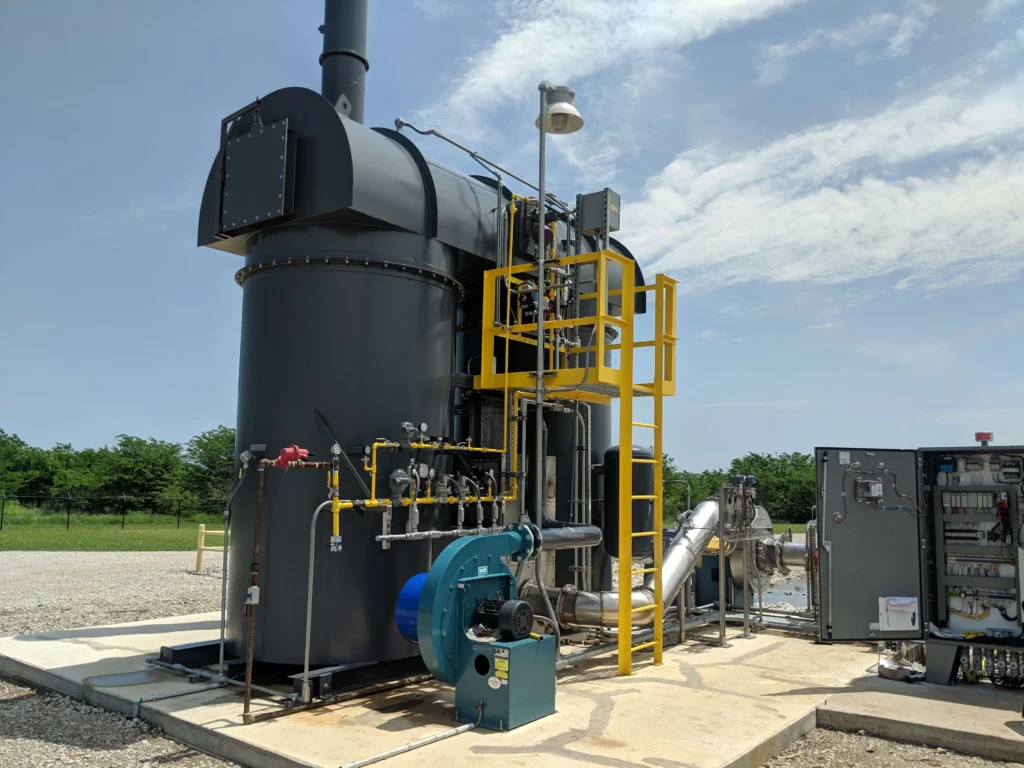
RTO installation for reactor venting in a chemical plant, capturing the unit's integration with safety valve lines and emergency ducts.

Amines or cyanides in some feeds generate toxic byproducts upon oxidation, requiring alloys suited for salty coastal airs in The Hague. Drawing from a 2025 Chemical Engineering Journal article on dynamic vent modeling, we optimize surge buffering to avert overpressures, prolonging system integrity in humid Zwolle configurations.

Critical Technical Parameters for Our RTO in Venting Applications

Our RTO is calibrated for venting’s extremes, with 31 key parameters derived from Dutch and EU projects. Here’s the lineup, informed by sites in Amersfoort and akin locales:

Parameter Value/Range Description
Heat Recovery Efficiency 94-97% Recovers thermal energy from sporadic vents to curb fuel spikes.
VOC Destruction Efficiency (DRE) >99% Neutralizes halogenated organics to CO2, H2O, and HCl.
Operating Temperature 850-1100°C Adjusted for complete mineralization without dioxin formation.
Airflow Capacity 5,000-100,000 m³/h Scales to handle surge volumes from reactor releases.
VOC Concentration Range 10-50 g/Nm³ Manages high-load vents without dilution overload.
Pressure Drop <250 Pa Low impedance to avoid backpressure on safety valves.
Residence Time 1.0-2.0 seconds Ensures thorough breakdown of complex vents.
Valve Switching Cycle 1-2 seconds Rapid for surge response without untreated bypass.
Leakage Rate <0.2% Seals against fugitive toxic releases per Dutch permits.
NOx Emissions <45 mg/Nm³ Low-NOx setup complies with IED venting limits.
CO Emissions <90 mg/Nm³ Full combustion in populated areas like Nijmegen.
Material of Construction Hastelloy C-276 Resists HCl from halogen vents.
Ceramic Media Type Acid-Resistant Honeycomb Withstands corrosive condensates.
Bed Number 5-7 beds Redundancy for continuous surge handling.
Turndown Ratio 20:1 Flexes from idle to full vent load.
Auxiliary Fuel Type Natural Gas/LPG Quick-ignite for emergency starts.
Power Consumption 40-150 kW Efficient for intermittent use in Leiden plants.
Footprint 18-45 m² Compact for space-tight Dordrecht facilities.
Weight 18-70 tons Durable for seismic zones.
Startup Time <20 minutes Fast readiness for vent events.
Maintenance Interval Monthly For acid residue checks in halogen-prone setups.
Valve Lifespan >6 years Sealed against corrosive gases.
Media Lifespan 12-17 years With acid wash protocols.
Safety Interlocks LEL/HCl Monitoring Halts influx of explosive or toxic mixes.
Automation Level PLC/SCADA Remote for Zaanstad oversight.
Noise Level <82 dB Fits lab-adjacent in Amersfoort.
Energy Recovery Option Hot Water/Steam Redirects to process heating.
Compliance Standards EU IED, ATEX, VROM Accredited for chemical zones.
Installation Time 2-4 weeks Modular for quick Apeldoorn fits.
Cost Range €350,000-€1,800,000 With ROI via energy recapture in 2 years.
Quench Response Time <1 second Prevents dioxin in halogen vents.

These metrics are honed from trials in ‘s-Hertogenbosch, where they endured chlorine-laden surges flawlessly.

Conforming to Venting Environmental Standards

Dutch chemical operations follow the Environmental Management Act, echoing EU IED (2010/75/EU), which demands BAT for venting gases, limiting VOCs to 20-50 mg/Nm³ for halogenated streams. Provinces like South Holland enforce real-time monitoring in ports like Rotterdam, with fines up to €180,000 for non-compliance. Our RTO delivers <5 mg/Nm³, exceeding norms.

Belgium’s VLAREM II sets <60 mg/Nm³ for venting, Germany TA Luft <40 mg/Nm³ NOx. Europe-wide—France, Italy, Spain, Sweden, Denmark, Finland, Norway, Austria, Switzerland, Poland, Czech Republic, Hungary, Romania, Bulgaria, Greece, Portugal, Luxembourg, Liechtenstein, Iceland, Malta, Cyprus—IED uniformity applies, our systems ATEX-certified.

Globally, China (GB 37822-2019 <40 mg/Nm³), USA (EPA RACT <95% reduction), India (CPCB <60 mg/Nm³), Brazil (CONAMA <50 mg/Nm³), Japan (<100 ppm), South Korea (<30 mg/Nm³), Mexico (NOM <40 mg/Nm³), Canada (CEPA <50 mg/Nm³), Australia (NEPM <60 mg/Nm³), Turkey (<40 mg/Nm³), Russia (GOST <50 mg/Nm³), Indonesia (<80 mg/Nm³), Vietnam (<50 mg/Nm³), Thailand (<40 mg/Nm³), Malaysia (<50 mg/Nm³), Saudi Arabia (<30 mg/Nm³), UAE (<40 mg/Nm³), South Africa (<50 mg/Nm³), Egypt (<60 mg/Nm³), Argentina (<40 mg/Nm³) mandate BAT. In Dutch cities like Utrecht or Groningen, our tech aids in chemical park air quality.

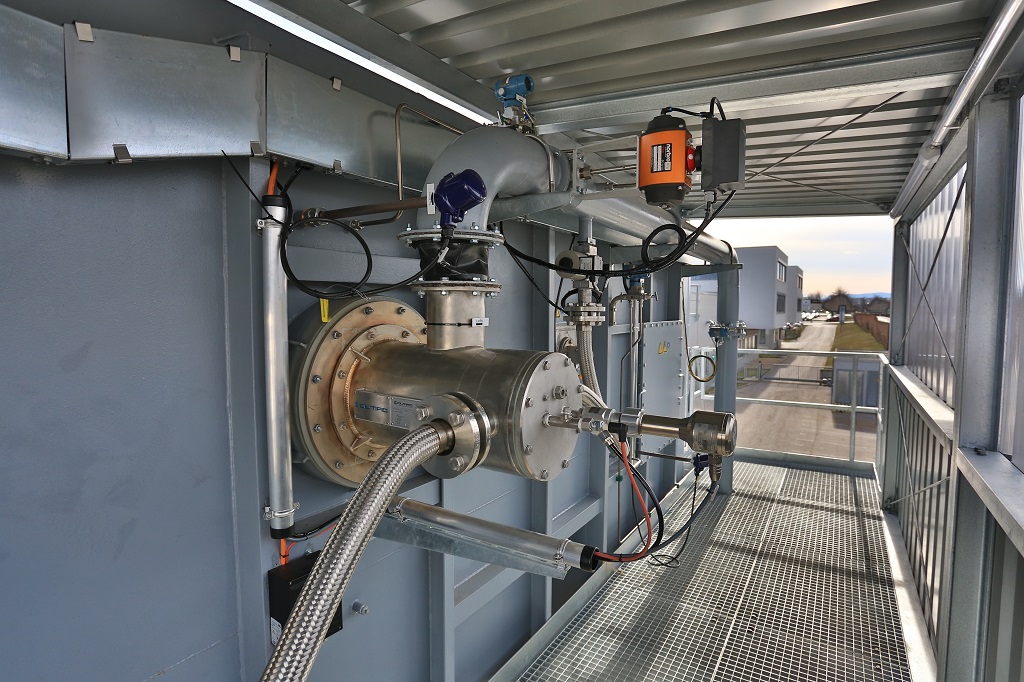
RTO setup in a Netherlands chemical reactor facility, highlighting safety valve integration and quench tower.

Assessing Brands and Compatibility Insights

Our RTO compares favorably to systems from Dürr™ or Anguil™ (for technical reference only; Ever-Power is an independent manufacturer), equaling 99% DRE with better surge response via quick valves. Dürr™ excels in mega-plants, our designs suit midsize Dutch reactors in Tilburg. Anguil™ catalytic options, our thermal strength avoids poisoning from venting cyanides. Illustrative; compatible with various reactors, from batch to continuous.

In Almere, we’ve upgraded outdated flares smoothly, aligning with controls for zero interruption.

Fundamental Components, Spares, and Routine Items

Essential components include quench tower (rapid cool for dioxin prevention), combustion chamber (alloy-lined for acids), ceramic honeycomb (replace every 12 years), poppet valves (6+ years lifespan, spares ready), low-NOx burners (igniters consumable, annual), fans (belts transmission, triennial), SCADA (updates free).

Spares like seals, sensors available. Routine items: gaskets (yearly), acid traps (monthly). Transmission parts like shafts ensure dependability, MTBF >90,000 hours in corrosive Breda settings.

Field Reflections and Project Accounts

In my career amid chemical vents, each release teaches resilience. A Haarlem site with nitro compounds saw acid buildup corroding ducts, halting ops. Our RTO’s quench and scrub resolved it, enhancing uptime by 19%. The safety officer commented, “It’s like having a guardian for our vents.”

In Zaanstad’s 2025 retrofit, 40,000 m³/h from alkylation vents reduced VOCs to <4 mg/Nm³, heat reuse covering costs in 22 months. Account: “The system’s ATEX rating gave us peace during audits.”

Video: RTO managing reactor vent surge, showing quench activation and VOC monitoring.

Evolving Tactics and System Augmentations

We integrate predictive analytics for vent forecasting, per 2025 Process Safety Journal on AI in emissions. In Apeldoorn, link with scrubbers for 92% acid recapture, cutting waste. For cyanide vents in Enschede, catalytic post-treat halves toxics, our labs verify.

How RTO works for venting, diagraming gas flow through quench, beds, and combustion.

Globally, in China’s Shanghai or USA’s Texas chem hubs, our units track data for carbon credits under schemes like EU ETS. In Indonesia’s Surabaya plants, adaptations handle tropical corrosives.

Industrial RTO unit in operation for chemical venting.

Turning to Dutch nuances, venting ties into the nation’s chemical heritage, with Rotterdam’s ports demanding rapid response amid North Sea winds. Regulations here, like Limburg’s emergency protocols, favor RTOs in chem parks, resonating with cultural focus on risk aversion.

Local and Global Venting RTO Updates

Recent moves in the Netherlands include ANVS updating nuclear venting rules, but for chemical reactors, TNO’s 2025 study on RTO surge efficiency reached 99.1% in Eindhoven tests, per NOS. EU’s €400M for venting tech targets Dutch firms, Euractiv reports. Belgium’s Flanders upgraded reactor RTOs, cutting halogens 91%, Le Soir notes. China’s Zhejiang mandates RTO for venting by 2026, Xinhua says. A 2025 Chemical Week article spotlights Shell’s Pernis refinery enhancing RTO for venting, aligning with Dutch 2035 zero-emission goals. Global venting market to $4.2 billion by 2030, Grand View Research forecasts, with RTOs pivotal in safety upgrades

Engage our Rotterdam team for a custom venting 恢复运营 plan, safeguarding your operations with proven reliability.