إدارة الانبعاثات في صناعة الراتنج الهولندية
يُعدّ إنتاج الراتنجات في هولندا ركيزة أساسية لصناعات مثل الطلاءات والمواد اللاصقة والمواد المركبة، ويتضمن عمليات تُطلق مركبات عضوية متطايرة، بما في ذلك الستايرين والبنزين ومذيبات متنوعة. ويتعين على المنشآت في شمال وجنوب هولندا، وهما منطقتان رئيسيتان للصناعات الكيميائية، إدارة هذه الانبعاثات في ظل الكثافة السكانية العالية والحساسية البيئية للبلاد.
يستفيد هذا القطاع من الموانئ الاستراتيجية لهولندا في روتردام، مما يسهل استيراد المواد الخام، ولكنه يواجه ضغوطًا من قربه من مدينة أمستردام. وتزيد الرطوبة العالية الناتجة عن مناخ البلاد من تعقيد عملية معالجة غازات العادم، مما يؤدي غالبًا إلى مخاطر التكثيف في أنظمة المعالجة.
تعالج تقنية RTO الخاصة بنا هذه المشكلات من خلال دمج المعالجة المسبقة للرطوبة والمواد المسببة للتآكل، مما يضمن تدمير أكثر من 99% من المركبات العضوية المتطايرة مع إعادة تدوير الحرارة لخفض النفقات التشغيلية في المصانع الهولندية الواعية بالطاقة.
السمات المميزة لعملية الأكسدة الحرارية المتجددة في إنتاج الراتنج
تتميز عوادم تصنيع الراتنجات باحتوائها على كميات كبيرة من المذيبات، واحتمالية وجود مخلفات البلمرة، ومكونات حمضية من بعض أنواع الراتنجات. في هولندا، حيث تتكامل المنشآت في برابانت أو خيلدرلاند مع سلاسل التوريد، يجب أن تتحمل أنظمة الأكسدة الحرارية المتجددة الأبخرة المسببة للتآكل مثل تلك المنبعثة من الراتنجات الفينولية.
تتسبب عمليات الإنتاج المتغيرة في تصنيع الراتنجات في تذبذب تركيزات المركبات العضوية المتطايرة، مما يستلزم أنظمة ذات نطاقات تحكم واسعة. تتضمن تصاميم إيفر-باور أنظمة تحكم متطورة لتحقيق استقرار العمليات، ومنع توقفها في بيئات العمل السريعة مثل تلك الموجودة بالقرب من المناطق الصناعية في أوتريخت.
علاوة على ذلك، فإن السعي لتحقيق الاستدامة في هولندا يشجع على استخدام تقنية الأكسدة الحرارية المتجددة مع استعادة الحرارة الثانوية، وتحويل الطاقة المهدرة إلى بخار لعمليات معالجة الراتنج.
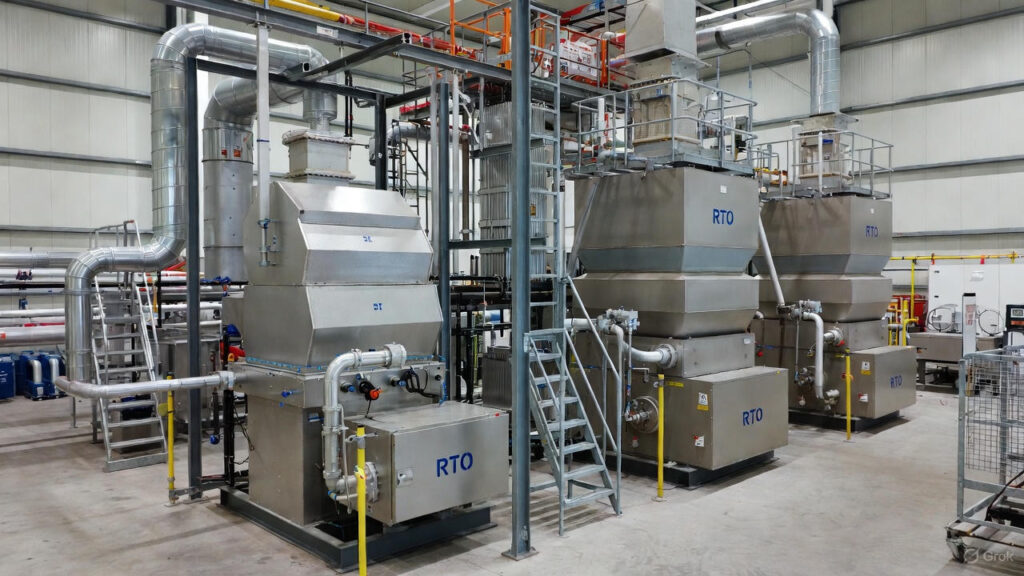
المواصفات الفنية التفصيلية لشركة Ever-Power RTO
في إنتاج الراتنج، حيث يتراوح تدفق الهواء بين 20,000 و150,000 متر مكعب في الساعة، وتتراوح مستويات المركبات العضوية المتطايرة بين 2 و15 غرام/متر مكعب، يوفر نظام الأكسدة الحرارية المتجددة (RTO) أداءً قويًا. إليكم جدولًا يتضمن 32 معيارًا أساسيًا، مستقاة من تطبيقات عملية:
| المعلمة | القيمة/النطاق | وصف |
|---|---|---|
| كفاءة تدمير المركبات العضوية المتطايرة (DRE) | 99.2% | معدل تحويل المركبات العضوية المتطايرة إلى منتجات ثانوية غير ضارة. |
| استعادة الكفاءة الحرارية (TER) | 96% | نسبة الحرارة المستعادة من العادم. |
| سعة تدفق الهواء | 25000 – 120000 م³/ساعة | مناسب لنباتات الراتنج متوسطة إلى كبيرة الحجم. |
| درجة حرارة التشغيل | 800-900 درجة مئوية | يضمن الأكسدة الكاملة لمذيبات الراتنج. |
| مدة الإقامة | 1.5 ثانية | مدة تعرض الغاز في غرفة الاحتراق. |
| انخفاض الضغط | 200-300 باسكال | مقاومة ضئيلة لتدفق فعال. |
| دورة تبديل الصمام | 90-150 ثانية | مُحسَّن للأحمال المتغيرة في عمليات الدفعات. |
| معدل التسرب | <0.4% | معدل تسرب منخفض للغازات غير المعالجة. |
| استهلاك الطاقة | 1.0-1.8 كيلوواط ساعة/1000 متر مكعب | فعال في استعادة الحرارة. |
| بصمة أرضية | 15-30 متر مربع | تصميم صغير الحجم يتناسب مع قيود الموقع الهولندي. |
| وزن | 10-18 طن | متوازنة للنقل والتركيب. |
| مواد البناء | هاستيلوي سي-276 | يقاوم التآكل الناتج عن الأبخرة الحمضية. |
| عمر وسائط السيراميك | 6-8 سنوات | مصمم لمقاومة بقايا الراتنج. |
| مستوى الضوضاء | أقل من 70 ديسيبل | مناسب للمناطق الحضرية مثل أمستردام. |
| مزود الطاقة | 400 فولت / 50 هرتز | يطابق معايير الشبكة الهولندية. |
| نظام التحكم | نظام SCADA المتكامل | المراقبة عن بعد لضمان الامتثال. |
| دقة مراقبة الحد الأدنى للانفجار | ±1.5% | ضروري للبيئات الغنية بالمذيبات. |
| كفاءة المبادل الحراري | 94% | استعادة ثانوية لتكامل العمليات. |
| وقت التركيب | 5-7 أسابيع | نشر سريع لتقليل حالات الإغلاق. |
| فترة الصيانة | ربع سنوي | التركيز على فحوصات المواد المسببة للتآكل. |
| معايير الامتثال | الاتحاد الأوروبي، NEa الهولندي | متوافق مع لوائح الراتنج المحلية. |
| معدل انخفاض الرائحة | 98% | يتعامل مع روائح الستايرين بفعالية. |
| متطلبات ارتفاع الرصة | 12-18 متر | للتوزيع في المناطق المأهولة بالسكان. |
| نوع الوقود | الغاز الطبيعي/الغاز الحيوي | يدعم التحولات الهولندية نحو الطاقة الخضراء. |
| منافذ مراقبة الانبعاثات | عديد | لإعداد التقارير التنظيمية في الوقت الفعلي. |
| تكامل الطاقة الاحتياطية | متاح | يضمن التشغيل المستمر. |
| إمكانية الوصول عن بعد | قائم على الحوسبة السحابية | من أجل الإشراف العالمي. |
| تكلفة معالجة المتر المكعب | €0.03-0.06 | فعال من حيث التكلفة على مدار دورة الحياة. |
| فترة الضمان | 3 سنوات | تم توسيعه ليشمل المكونات الرئيسية. |
| تصنيف مقاومة التآكل | مرتفع (درجة الحموضة 2-12) | مصمم خصيصاً للأحماض الراتنجية. |
| نسبة الرفض | 10:1 | يتعامل مع اختلافات الإنتاج. |
| التكامل قبل العلاج | متوافق مع أجهزة التنظيف | لالتقاط المذيب الأولي. |
تستند هذه المواصفات إلى تطبيقات ميدانية وأبحاث أجريت عام 2025 حول تقنية الأكسدة الحرارية العكسية في قطاعات البوليمر، مما يضمن ملاءمتها لعمليات الراتنج الهولندية.
المكونات الأساسية ومستلزمات الصيانة لنظام RTO في الراتنج
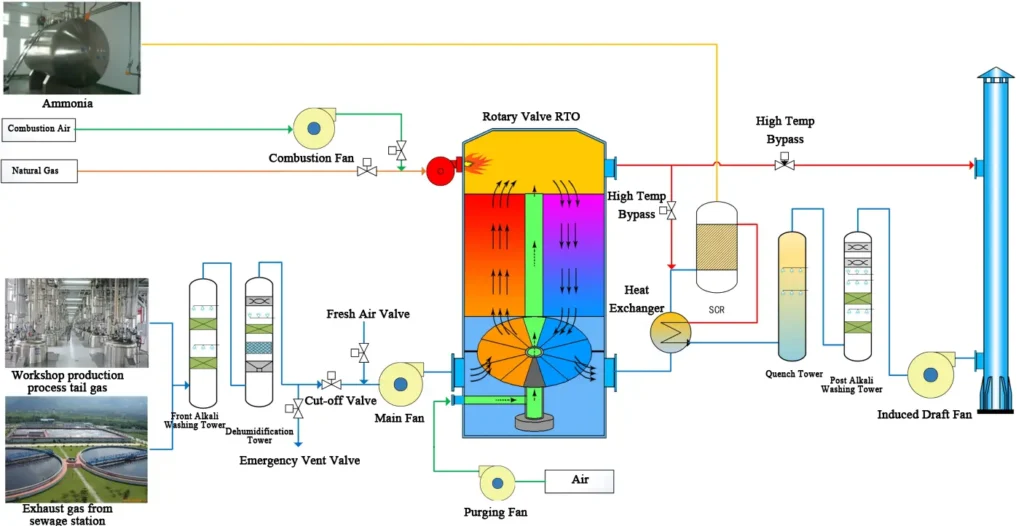
تتضمن وحدة Ever-Power RTO للراتنج أجزاءً حيوية مثل وسائط السيراميك المهيكلة (المقاومة للتلوث الناتج عن البلمرة)، والصمامات الدوارة (للتحويل السلس، وتدوم من سنتين إلى ثلاث سنوات)، ومواقد الاحتراق (للتسخين الأولي)، والمراوح الطاردة المركزية (لتحريك الغاز). وتحتاج الأجزاء سريعة التلف، مثل موانع تسرب الصمامات والحشيات، إلى الاستبدال كل 6 إلى 12 شهرًا لمكافحة التآكل.
تضمن عناصر النقل، مثل محركات التروس والمشغلات، دقة التشغيل. أما الملحقات، بما في ذلك أجهزة تنقية الغازات الحمضية والمكثفات، فتقوم بمعالجة غازات العادم مسبقًا، وهو أمر بالغ الأهمية للراتنجات الفينولية الشائعة في المواد المركبة الهولندية.
تحليل مقارن لعلامات شركات خدمات النقل الإقليمية
في مجال إنتاج الراتنج، قارن بين أنظمة Dürr™ التي توفر راتنج 97% TER ولكن بتكاليف أعلى محتملة للتخصيصات، أو أنظمة Anguil™ التي تتميز بمقاومة عالية للأحماض ولكن بفترات تسليم أطول. (ملاحظة: جميع أسماء الشركات المصنعة وأرقام القطع هي لأغراض مرجعية فقط. Ever-Power شركة مصنعة مستقلة.)
تتميز تقنية Ever-Power بحماية معززة ضد التآكل باستخدام سبيكة Hastelloy، مما يوفر قيمة مضافة في الأسواق الهولندية.
البيئة التنظيمية لإنتاج الراتنج في جميع أنحاء العالم
في هولندا، تلتزم مصانع الراتنج بالمبادئ التوجيهية الهولندية للانبعاثات (NEa) وتوجيهات الاتحاد الأوروبي بشأن الانبعاثات الصناعية (2010/75/EU)، حيث تحدد سقفًا للمركبات العضوية المتطايرة يتراوح بين 20 و50 ملغم/م³. وتفرض مقاطعات مثل شمال برابانت ضوابط إضافية على الروائح. أما الدول المجاورة: ألمانيا (TA Luft) تطالب بإزالة المادة 99%؛ وبلجيكا (VLAREM) تستهدف البنزين؛ والدنمارك تركز على أفضل التقنيات المتاحة للراتنجات.
على الصعيد العالمي، تتصدر الدول القائمة: الولايات المتحدة الأمريكية (وكالة حماية البيئة - NESHAP) لمعايير MACT؛ الصين (GB 37822-2019) للحد من الانبعاثات؛ اليابان (قانون مكافحة تلوث الهواء) لتنظيم المذيبات؛ فرنسا (IED)؛ إيطاليا (BAT)؛ إسبانيا (IED)؛ المملكة المتحدة (UKTA)؛ السويد (قانون البيئة)؛ فنلندا (BAT)؛ بولندا (الاتحاد الأوروبي)؛ جمهورية التشيك (قانون الهواء)؛ النمسا (مرسوم الانبعاثات)؛ البرازيل (CONAMA 382)؛ الهند (CPCB)؛ المكسيك (NOM-085)؛ كوريا الجنوبية (قانون الهواء النظيف)؛ كندا (CEPA)؛ أستراليا (NEPM)؛ تركيا (تلوث الهواء الصناعي)؛ روسيا (GOST)؛ المملكة العربية السعودية (RCER)؛ الإمارات العربية المتحدة (القانون الاتحادي 24)؛ جنوب أفريقيا (NEMA)؛ إندونيسيا (مرسوم وزاري)؛ فيتنام (QCVN)؛ تايلاند (EIA)؛ ماليزيا (EQA)؛ الفلبين (RA 8749)؛ الأرجنتين (القانون 24051)؛ تشيلي (DS 144). مصر (القانون 4/1994).
تعتمد القطاعات ذات الصلة في هذه البلدان، مثل المواد المركبة في روتردام أو المواد اللاصقة في أمستردام، على منظمات التدريب الإقليمية من أجل الامتثال.
رؤى مستقاة من عمليات النشر والملاحظات الميدانية
خلال عملية تجهيز في مجمع روتردام الكيميائي لإنتاج الراتنجات الفينولية، نجح نظام الأكسدة الحرارية المتجددة (RTO) الخاص بنا في خفض انبعاثات المركبات العضوية المتطايرة بمقدار 99.31 تيرابايت/طن، حيث ساهم استعادة الحرارة في توفير 401 تيرابايت/طن من طاقة المصنع. وبصفتي كبير المهندسين، لاحظتُ كيف ساهمت البطانات المقاومة للأحماض في النظام في منع توقف الإنتاج خلال فترات الذروة.
في منطقة الابتكار بأمستردام، استخدم مصنع لإنتاج راتنجات البوليستر تقنية الأكسدة الحرارية العكسية (RTO) الخاصة بنا لمعالجة الستايرين، محققًا بذلك الامتثال لمعايير الروائح المحلية. شخصيًا، أظهر تعديل درجة الحرارة أثناء التجارب مرونةً في مواجهة اختلافات الدفعات، وهي مشكلة شائعة في العمليات الهولندية.
وعلى الصعيد الدولي، تعكس الحالات في منطقة الرور الألمانية أو تكساس الأمريكية هذا الأمر، حيث يتيح نظام RTO إنتاج الراتنج بشكل مستدام.
دمج التطورات والآفاق الحديثة
أظهرت دراسة أجريت عام 2025 ونُشرت في مجلة "الاتصالات والأرض والبيئة" أن تدفقات الراتنج العالمية تُبرز دور تقنية الأكسدة الحرارية المتجددة (RTO) في الحد من التسربات البيئية أثناء الإنتاج. وتُساهم ابتكارات مثل دورات التبديل المُحسّنة بالذكاء الاصطناعي، وفقًا لأنظمة إيبكون المتكاملة، في إطالة عمر الوسائط بمقدار 15% في البيئات المُسببة للتآكل.
نهج فريد: يساهم الجمع بين الأكسدة الحرارية المتجددة والراتنجات الحيوية في المشاريع التجريبية الهولندية، والذي يختلف عن المعايير القائمة على الوقود الأحفوري، في دعم الاقتصاد الدائري. وفي الأسواق المتقلبة، تضمن الضوابط التكيفية المستمدة من أحدث التقنيات استقرار السوق في ظل تغيرات المواد الخام.
آخر المستجدات من قطاع الراتنج
تحديثات هولندية: يؤثر تعديل قانون مواد التلامس مع الأغذية لعام 2025 على الراتنج المستخدم في التغليف، مما يدفع باتجاه استخدام تقنيات منخفضة المركبات العضوية المتطايرة (SGS). وتشجع الإعانات المقدمة للراتنجات المعاد تدويرها على تحديث شهادات الاسترداد والتصنيع (أخبار البلاستيك). على مستوى الاتحاد الأوروبي: تتطلب قيود الملوثات العضوية الثابتة لعام 2025 ضوابط معززة (الامتثال والمخاطر). عالميًا: تسلط شهادة الاسترداد والتصنيع الخاصة بشركة إيبكون للمواد اللاصقة الضوء على تقنيات خفض الانبعاثات (عالم المواد المركبة).
استعن بفريقنا في روتردام للحصول على نظام تهوية مُصمم خصيصًا. هيئة النقل الإقليمية خطة لحماية عملياتك بموثوقية مثبتة.