As environmental mandates transition from standard compliance to the absolute enforcement of “Ultra-Low” and “Near-Zero” emission targets, large-scale utility boilers and heavy industrial kilns require an uncompromising technological response. While non-catalytic methods suffice for smaller units, massive thermal power plants require a process capable of consistently achieving Nitrogen Oxide (NOx) removal rates exceeding 95%. The Selective Catalytic Reduction (SCR) system stands as the global apex of denitrification engineering. By deploying advanced catalytic beds within a precisely engineered reactor housing, the BAOLAN BLSCR Series transforms high-volume, high-velocity flue gas into harmless nitrogen and water. This comprehensive technical exposition explores the chemical kinetics, reactor architecture, and operational subsystems that make SCR the mandatory standard for mega-scale industrial emission governance.
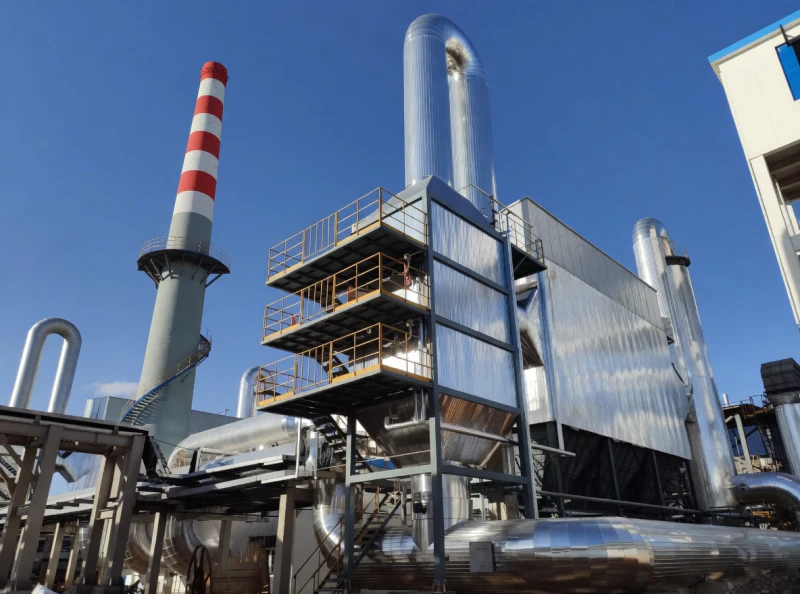
Figure 1: Mega-Scale Deployment of the BL-Series SCR Denitrification Infrastructure
1. Engineering Parameters for Mega-Scale Capacities
The BLSCR series is meticulously designed to process extreme volumetric loads that would overwhelm lesser technologies. Capable of handling massive flue gas volumes ranging from 10,000 to an astounding 2,300,000 cubic meters per hour ($m^3/h$), the system is the frontline defense for national power grids and massive metallurgical complexes.
Operational Specifications
- Denitrification Efficiency: Consistently operates at > 95% efficiency, securing compliance with near-zero emission standards.
- Thermal Window: Optimized for lower-temperature operations compared to SNCR, functioning flawlessly between 180°C and 400°C.
- Ammonia Water Pressure: Maintained accurately between 0.3 and 0.6 MPa for precision atomization.
- Lance Flow Rate: Calibrated flow rates of 20 to 100 L/h, integrating seamlessly with automated PID control systems.
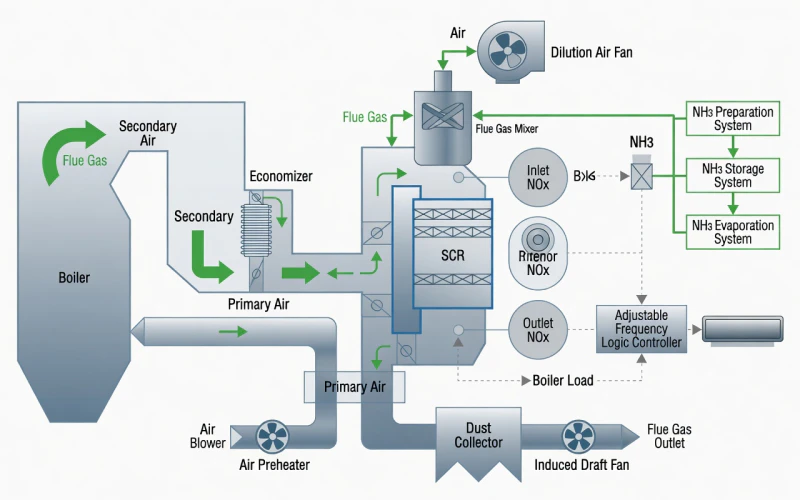
Figure 2: SCR Process Topology: From Boiler Outlet to Clean Gas Discharge
2. Catalytic Kinetics: The Science of Selectivity
The acronym “SCR” defines exactly how this process dominates the emission control sector. In the presence of oxygen ($O_2$) and a specialized catalytic bed, Nitrogen Oxides ($NO_x$) are reduced to harmless Nitrogen ($N_2$) and water ($H_2O$) using a reducing agent such as ammonia ($NH_3$).
Why is it “Selective”?
The term “Selective” refers to the highly specific nature of the chemical reaction. Under the influence of the catalyst, the injected ammonia ($NH_3$) will preferentially seek out and react with the toxic $NO_x$ in the flue gas stream, rather than simply being oxidized (burned) by the abundant oxygen present in the environment. However, the presence of $O_2$ remains an indispensable promoter for the denitrification reaction to occur efficiently at lower temperatures.
Primary Reaction Mechanics:
$4NO + 4NH_3 + O_2 \rightarrow 4N_2 + 6H_2O$
$6NO + 4NH_3 \rightarrow 5N_2 + 6H_2O$
$2NO_2 + 4NH_3 + O_2 \rightarrow 3N_2 + 6H_2O$
By lowering the required activation energy from 850°C (seen in SNCR) down to a manageable 180°C – 400°C window, the SCR reactor can be strategically placed downstream of the boiler economizer and upstream of the air preheater, utilizing the ideal thermal profile of the utility boiler without interrupting power generation.
Managing Side Reactions
If parameters change, side reactions must be managed by the PLC control system to prevent ammonia slip and sulfate formation:
$4NH_3 + 3O_2 \rightarrow 2N_2 + 6H_2O$
$SO_3 + 2NH_3 + H_2O \rightarrow (NH_4)_2SO_4$
$SO_3 + NH_3 + H_2O \rightarrow NH_4HSO_4$
3. Reactor Architecture & Catalyst Topologies
The Heart of the System: The SCR Reactor
The SCR Reactor is the monumental core of the flue gas denitrification system. Its primary function is to securely house the catalyst modules, providing the necessary spatial volume for the chemical reaction to occur. A superior reactor design ensures that the high-velocity flue gas flows smoothly, with an exceptionally uniform aerodynamic distribution across the catalyst bed. Apart from the chemical makeup of the catalyst itself, the geometric precision of the reactor’s internal flow guides is the decisive factor in achieving a 95%+ denitrification rate.
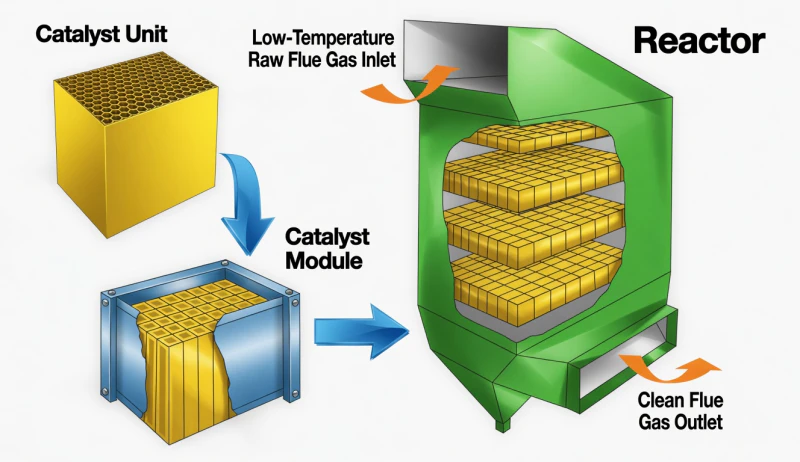
Figure 3: Modular Internal Structure of the SCR Reactor Housing
Сотовый катализатор
The dominant technology in the market (>65% global share). Manufactured via uniform extrusion, it boasts an extremely large specific surface area. Both the interior and exterior media consist of active catalytic substances. Under identical operating parameters, it offers a smaller volume, lighter weight, high poisoning resistance, and superior overall performance.
Plate-Type Catalyst
Featuring an internal metal mesh frame coated with active substances, it has a smaller specific surface area but offers exceptionally strong anti-clogging performance. It holds a <33% market share. Its main vulnerability lies in the exposed metal mesh edges after cutting, which are highly susceptible to chemical corrosion over long-term operation.
Corrugated-Plate Catalyst
An ultra-lightweight option formed by coating active substances onto corrugated substrates. It has a medium specific surface area and the highest pressure drop among the three. Due to its relatively poor wear resistance, it maintains a very low market share (<5%) and is almost exclusively utilized in ultra-clean gas-fired power units rather than abrasive coal environments.
4. Asset Preservation: The Soot Blowing Subsystem
Maintaining the Micro-Pores
The effectiveness of a catalyst is determined by its active surface area. In the harsh environment of a utility boiler, fly ash, dust, and sticky ammonium salts constantly threaten to plug the microscopic pores of the honeycomb or plate catalyst beds. If these pores are blocked, the injected ammonia cannot reach the NOx, resulting in plunging efficiency and dangerous ammonia slip.
- Performance Guarantee: The integrated soot blower utilizes high-energy acoustics or steam to continuously blow off ash deposits, ensuring the flue gas passes uniformly through the catalyst.
- Energy Reduction: By keeping the gas passages clear, the soot blower prevents excessive pressure drop across the reactor, drastically reducing the electrical load on the massive induced draft fans.
- Catalyst Longevity: Regular cleaning prevents abrasive wear and chemical poisoning, extending the multi-million dollar catalyst’s service life by years.
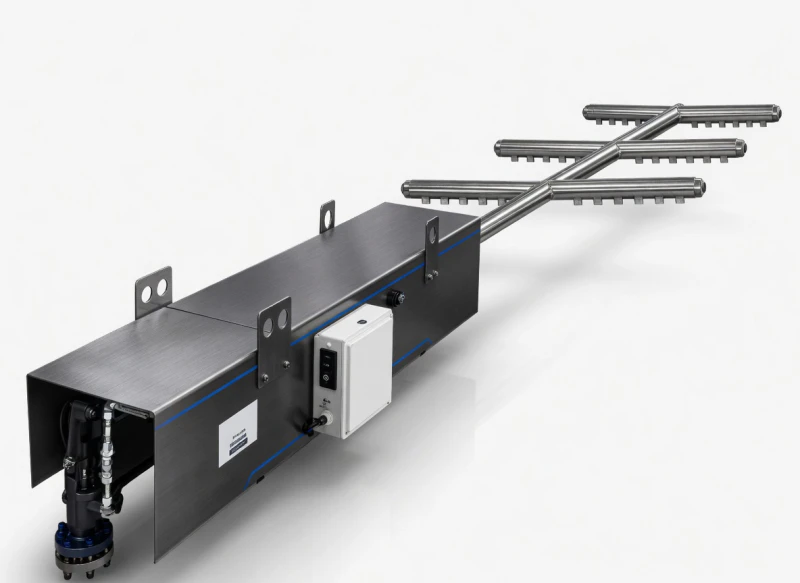
Figure 4: Acoustic Soot Blower: Preserving Aerodynamic and Catalytic Efficiency
5. Universal Application: Beyond Thermal Power
While the SCR technology is the undisputed king of large utility boilers in thermal power plants, its capability to achieve >95% NOx reduction makes it the mandatory technology for any industry facing strict ultra-low emission compliance.
Cement, Glass, and Coking Industries
Modern environmental regulations do not discriminate by sector. Facilities operating massive cement kilns, high-temperature glass furnaces, and complex coking plants are now required to meet the same stringent metrics as national power grids. The BAOLAN BLSCR series is highly adaptable to these environments.
By customizing the catalyst pitch (the physical spacing within the honeycomb structure) and selecting specific active metal coatings, BAOLAN engineers can tailor the SCR reactor to survive high-dust loads in cement plants or resist specific alkaline metal poisoning found in glass manufacturing. This ensures that regardless of the industrial vertical, the facility secures a “Near-Zero” emission profile safely and reliably.
.webp)
Figure 5: Cross-Sector Compliance: Deploying SCR in the Heavy Industry Matrix
6. The BAOLAN Standard: Lean Manufacturing & Integrated Supply
A mega-scale SCR project is not a simple equipment purchase; it is a massive infrastructural undertaking. BAOLAN EP INC. operates as an integrated supplier, bridging the gap from R&D and design to lean manufacturing and intelligent commissioning.
Advanced Manufacturing
With an annual production capacity exceeding 50,000 tons, the industrial park utilizes robotic automatic welding, CNC cutting machines, and massive plate bending equipment to guarantee the structural integrity of every massive reactor housing.
Turnkey Automation
We supply complete electrical control equipment, including the high and low voltage power cabinets and sophisticated instrumentation required to run the SCR logic automatically and flawlessly.
Global Experience
Since 2000, our specialized engineering departments have successfully delivered integrated air pollution control systems to power plants, cement factories, and metallurgical facilities worldwide, operating strictly under ISO9001 guidelines.
By trusting the complete seven-module architecture—from the Ammonia Unloading Module to the intelligent Flue Gas Duct System—facility owners secure a reliable, internationally advanced benchmark in environmental protection.
Secure Your Near-Zero Emission Future Today
Do not allow strict NOx mandates to threaten the operational continuity of your mega-scale utility boilers or industrial kilns. Harness the unparalleled power of the BAOLAN BLSCR Selective Catalytic Reduction system to guarantee >95% denitrification efficiency, backed by decades of precision manufacturing and intelligent process engineering. Contact our senior technical team today to design a specialized, ultra-low emission architecture for your facility.