Case Study · Industrial Emission Control
How a solid waste resource recovery facility treating acid sludge, flue ash, and spent catalysts achieved zero visible white plume, full GB 31573 compliance, and tar-free continuous operation — using a graphene composite Magnetic Plume Abatement system rated for 120,000 Nm³/h of tar-laden, strongly corrosive furnace off-gas.
Solid Waste Incineration Off-Gas Treatment
Magnetic Fume Purification
Non-Thermal Plume Suppression
Hazardous Waste Flue Gas Abatement
01 — Industry Background
The Solid Waste Treatment Sector and Its White Plume Compliance Challenge
The solid waste treatment and resource recovery industry has grown rapidly alongside global industrialization and urbanization. Municipal solid waste, industrial solid waste, construction debris, and agricultural waste all require safe processing, and the sector’s market size in China expanded from 12.74 billion RMB in 2017 to 18.05 billion RMB by 2022 — a compound annual growth rate of 10.8%. With this scale comes a proportional growth in thermal treatment capacity: rotary kilns, SPI (Sinter Plate Incinerator) thermal furnaces, and high-temperature incineration units now handle millions of tonnes per year.
Combustion flue gas from solid waste incineration is among the most compositionally complex off-gas streams encountered in industrial air pollution control. Unlike single-component industrial furnaces, solid waste incinerators burn heterogeneous feeds that generate not only the conventional NOx, SO&sub2;, and particulate matter found in coal combustion, but also acid gases (HCl, HF), heavy metals (lead, cadmium, arsenic, mercury), tar particulates, and organic compounds from incomplete combustion. Crucially, the tar fraction presents a specific operational hazard: tar condenses on equipment surfaces and blocks spray nozzles, reducing treatment efficiency over time and requiring costly hot-water purging during maintenance outages.
On the regulatory side, solid waste incinerators in China are now governed by GB 31573–2015 Emission Standard of Air Pollutants for Inorganic Chemical Industry as the primary framework, supplemented by the Hazardous Waste Incineration Pollution Control Standard (GB 18484–2020) for facilities handling hazardous feed streams. Both standards impose tight multi-pollutant limits and include an increasingly enforced requirement for no visible white plume at the stack. Achieving all these limits simultaneously — while managing the tar fouling problem and the strongly corrosive nature of the gas stream — rules out most conventional single-technology abatement approaches.
“Solid waste incineration flue gas is not just corrosive — it is adhesive. The tar fraction coats conventional absorber surfaces, neutralises spray nozzles, and progressively reduces system efficiency. The only durable solution is a purification medium that can be thermally regenerated in-situ and is intrinsically resistant to tar fouling.”
— Engineering Technical Summary, Solid Waste Treatment Magnetic Plume Abatement Project
02 — Pollution Profile
Flue Gas Characterization: Multi-Pollutant Off-Gas from Rotary Kiln Solid Waste Incineration
The facility in this case study was established in June 2016 and operates in the solid waste resource recovery sector, handling acid sludge, flue ash, spent nickel catalysts, and oxide iron catalysts. Its core production technology combines rotary sintering with slag-fraction pyrometallurgical reduction: roasting techniques recover valuable metals (nickel, cobalt) from spent catalysts, with slag and co-products directed to downstream material production.
The incineration furnace off-gas stream carries the following pollutant categories simultaneously, creating a multi-hazard treatment challenge that exceeds the capability of any single abatement technology:
- Organic pollutants and acid wash contaminants: Primarily NOx (largely NO and NO&sub2;) and sulfur compounds (SO&sub2;, SO&sub3;), arising from both the inorganic waste feed and residual organic matter in the acid sludge fraction.
- Acid gases — HCl and HF: Present in small but regulated quantities from chlorinated and fluorinated waste fractions. Their combined corrosive effect mandates graphene composite absorber materials rather than standard fibrous media.
- Heavy metals: Lead, cadmium, nickel, and arsenic as sub-micron aerosols carried over from the high-temperature roasting furnace. These must be captured to near-zero levels to comply with hazardous waste incineration standards.
- Tar particulates and coke oil: Solid waste incineration produces tar condensate and coke oil particulates that are adhesive at flue gas temperatures below the dew point. These foul conventional spray nozzles and filter media, requiring a dedicated backwash mechanism and hot-water purge protocol during maintenance windows.
- Fine particulate matter (PM&sub2;.&sub5;): Initial concentration 80 mg/Nm³ at the scrubber inlet. Requires deep sub-micron capture through the magnetic field purification stage.
- Saturated water vapor generating white plume: Post-wet-scrubber exhaust enters the magnetic abatement unit at approximately 35°C with near-100% relative humidity and a mixed inlet pollutant loading of 50 mg/Nm³, producing a dense white plume under all ambient conditions.
| Parametre | Başlangıç Konsantrasyonu | Outlet (Design Target) | Regulatory Limit |
|---|---|---|---|
| NOx | 50 mg/Nm³ | ≤50 mg/Nm³ | 50 mg/Nm³ |
| SO&sub2; | 50 mg/Nm³ | ≤30 mg/Nm³ | 30 mg/Nm³ |
| Particulate matter (PM) | 80 mg/Nm³ | ≤10 mg/Nm³ | 10 mg/Nm³ |
| Carbon monoxide (CO) | 1,000 mg/Nm³ | Controlled upstream | — |
| Hydrogen fluoride (HF) | 10 mg/Nm³ | Near zero | — |
| Arsenic (As) | 0 mg/Nm³ (below detection) | — | Heavy metals provision |
| Mixed inlet pollutant density (post-desulfurization, MPA inlet) | 50 mg/Nm³ | ≤10 mg/Nm³ | 10 mg/Nm³ |
| Visible white plume | Present (severe) | None (invisible) | No visible white plume |
| Flue gas volume | 120,000 Nm³/h | — | — |
| Inlet temperature (MPA unit) | ≈35°C | — | — |
| Inlet humidity | 50% (at MPA inlet) | — | — |
03 — Engineering Requirements
Design Criteria for Magnetic Plume Abatement in Solid Waste Incineration Applications
Before selecting the abatement technology, the engineering team established the following binding design requirements. These reflect the unique multi-pollutant, tar-adhesive, strongly corrosive character of solid waste incineration off-gas and are consistent with the documented project specification record.
Proven Technology, Certified Equipment
All selected abatement technologies must be commercially mature and field-proven. Equipment and ancillary materials must be manufactured to national standard specifications. No pilot-scale or experimental processes are acceptable for a live waste processing facility operating under hazardous waste permit conditions.
Stable Performance Under Fluctuating Load
The system must maintain purification performance and white plume suppression when flue gas volume varies between 10% and 110% of rated design capacity. Solid waste feed quality varies batch-to-batch, causing significant swings in gas volume and pollutant concentration that the system must absorb without set-point adjustments.
Corrosion-Resistant Materials Throughout
All components in contact with the acid-laden flue gas stream must incorporate certified anti-corrosion protection. The graphene composite absorber layer specified for this project provides both the corrosion resistance required by the HCl/HF content and the thermal stability needed to withstand periodic hot-water regenerative purging of accumulated tar deposits.
Sıfır İkincil Kirlilik
The abatement process must not generate wastewater effluent, spent chemical reagent, or additional hazardous solid waste streams. By-products of the MPA purification stage must be manageable as ordinary industrial solid waste or returned to the waste processing stream without creating a new environmental liability category.
Energy Efficiency and Domestic Supply Chain
Equipment selection must minimize both capital expenditure and running costs. All major equipment must be sourced from nationally certified quality manufacturers with established domestic supply chains, ensuring long-term spare parts availability without dependence on imported components with extended lead times.
Noise Compliance
Equipment running noise must not exceed 85 dB(A) at 1 m from the unit, meeting GB 12348–2008 Class II limits. Fan selection must be validated against the system pressure drop calculation before procurement, as under-specified fans are the primary cause of MPA system under-performance in field installations.
Modular and Future-Proof Design
The modular design concept must accommodate regulatory tightening over a 3–5 year horizon without full system replacement. As hazardous waste standards continue to be revised toward lower emission limits and zero visible plume requirements, the system must be extendable through add-on modules rather than redesign from scratch.
Tar Fouling Management
The system design must explicitly address the tar adhesion problem inherent in solid waste incineration off-gas. The chosen absorber material (graphene composite) must be thermally regenerable using hot-water purging during scheduled maintenance windows, and the recirculation backwash system must include filtration to remove accumulated tar particulates and prevent nozzle blockage.
04 — Treatment Solution
How the Magnetic Plume Abatement System Was Configured for Solid Waste Off-Gas
Magnetic Plume Abatement (MPA) — also referred to as magnetic fume purification, dry-phase acid mist capture, non-thermal white smoke elimination, or magnetic field flue gas polishing — eliminates visible white plume by simultaneously removing the three physical co-causes: fine particulate matter, acid mist aerosols, and saturated water vapor. A controlled magnetic field generated by the BLEMG-2KF unit causes paramagnetic molecules and charged aerosol particles to migrate toward and be captured by the graphene composite absorber layer, leaving the exiting gas stream depleted of the aerosol phase responsible for visible plume formation.
For this solid waste treatment application, the MPA unit is installed as the final deep-polishing stage downstream of the existing desulfurization scrubber. Furnace off-gas follows this sequence: the kiln exhaust is first collected by the induced draft fan, then directed to the desulfurization scrubber where SO&sub2;, HCl, and HF are neutralized. The pre-treated gas — still carrying fine aerosols and saturated water vapor at 50 mg/Nm³ mixed pollutant loading — then enters the MPA unit. Here, the magnetic field and graphene composite absorber layer complete the deep purification, reducing the outlet mixed pollutant concentration to ≤10 mg/Nm³ and rendering the exhaust genuinely invisible before it reaches the main stack.
Process Flow: Rotary Kiln Furnace to Clean Stack
Furnace
Pre-Filter
Scrubber
(BLCNXB-12W)
Stack
.webp)
.webp)
System Configuration and Key Technical Parameters
The MPA unit specified for this project uses a tower-external, bottom-entry / top-exhaust layout, mounted as a standalone module adjacent to the existing desulfurization tower. The graphene composite absorber layer was selected over standard fibrous or metallic media for its combined corrosion resistance and thermal regenerability — a critical property for managing the tar fouling challenge specific to solid waste incineration off-gas.
| Parametre | Özellikler |
|---|---|
| Unit Model | BLCNXB-12W |
| Layout Type | Tower-external, stand-alone module |
| Air Flow Orientation | Bottom-entry, top-exhaust |
| Arıtma Verimliliği | ≥97% |
| Inlet Mixed Pollutant Concentration | 50 mg/Nm³ |
| Outlet Mixed Pollutant Concentration | ≤10 mg/Nm³ |
| System Resistance | 250 Pa |
| Treated Flue Gas Volume | 120,000 Nm³/h |
| Inlet Flue Gas Temperature | ≈35°C |
| Absorber Layer Material | Graphene composite (thermally regenerable) |
| Equipment Dimensions (L×W×H) | 10.0 m × 9.65 m × 17.5 m |
| Magnetic Energy Generator Model | BLEMG-2KF |
| Running Power | 85 kW |
| Annual Operating Days | 330 days/year |
| Annual Electricity Cost | Approx. 309,700 RMB/year |
.webp)
.webp)
05 — Core Advantages
Why Magnetic Plume Abatement Outperforms Alternatives for Solid Waste Off-Gas Treatment
- ✓
Graphene Composite Absorber — Engineered for Tar Resistance: The graphene composite absorber layer is thermally stable and does not degrade when exposed to tar particulates or coke oil condensates at the temperatures encountered in post-wet-scrubber solid waste flue gas. Accumulated tar deposits can be fully removed by hot-water purging during scheduled maintenance windows, restoring the absorber to original efficiency without replacing the media. This contrasts sharply with fibrous filter bags or spray nozzle-based systems, which are irreversibly fouled by tar adhesion within weeks of operation. - ✓
True Multi-Pollutant Removal in a Single Dry Stage: The MPA system simultaneously captures fine particulates (PM&sub2;.&sub5;), acid mist droplets, and saturated water vapor — the three co-causes of visible white plume — without a separate polishing scrubber, electrostatic precipitator, or condensation heat exchanger. Fewer treatment stages means lower capital cost, reduced maintenance burden, and a smaller plant footprint compared with multi-unit wet systems. - ✓
Zero Secondary Wastewater or Chemical Reagent Cost: Unlike conventional alkali-solution scrubbing systems that require continuous NaOH or Ca(OH)&sub2; dosing and generate contaminated wastewater requiring further treatment, the MPA process operates entirely dry. There is no ongoing reagent procurement, no wastewater treatment plant capacity requirement, and no spent reagent disposal liability. This significantly simplifies the compliance picture for hazardous waste facilities, which face stringent wastewater discharge restrictions alongside their air emission obligations. - ✓
Low Specific Energy Consumption — 85 kW for 120,000 Nm³/h: The MPA unit draws 85 kW at full throughput, delivering a specific energy consumption of 0.71 W per Nm³/h — substantially lower than wet reheat systems (typically 3–5 W per Nm³/h) or high-voltage electrostatic precipitators (typically 1.5–3 W per Nm³/h). At 330 operating days per year, the annual electricity cost is approximately 309,700 RMB, or roughly 0.26 RMB per operating hour per 1,000 Nm³ treated. - ✓
Wide Load Tolerance Designed for Variable Waste Feed Quality: Solid waste feed quality varies significantly from batch to batch, causing swings in furnace throughput and flue gas volume that conventional systems struggle to track. The BLEMG-2KF magnetic energy generator continuously adjusts field intensity in response to real-time gas monitoring, maintaining design-level purification performance across the full 10%–110% operating range without manual intervention. - ✓
Forward Regulatory Positioning for Hazardous Waste Permit Renewals: Facilities handling solid waste under hazardous waste operating permits face increasingly stringent renewal conditions with each permit cycle. With an MPA system in place, the facility can demonstrate best-available-technology compliance at the permit renewal stage and is structurally positioned to absorb further emission tightening through modular upgrades rather than capital-intensive system replacement.
Technology Comparison: Magnetic Plume Abatement vs. Conventional Alternatives for Solid Waste Incineration
| Criterion | Magnetic Plume Abatement | Alkali Wet Scrubbing | Bag Filter + GGH Reheat |
|---|---|---|---|
| White plume elimination | Complete (invisible stack) | No (haze persists) | Partial (temp-dependent) |
| Tar fouling resistance | High (graphene + hot purge) | Low (nozzle blockage) | Low (bag blinding) |
| Secondary wastewater | Hiçbiri | High volume | Hiçbiri |
| Purification efficiency | ≥97% | ≈80–85% | ≈90% (new bags only) |
| Specific energy (W per Nm³/h) | 0.71 | 3–5 | 2–4 |
| Reagent cost | Sıfır | Ongoing (NaOH) | Sıfır |
| Maintenance interval | Quarterly inspection; annual purge | Weekly nozzle check | Frequent bag replacement |
06 — Operational Results
First-Time Commissioning Success and Verified Performance Data
The magnetic plume abatement unit completed first-time commissioning successfully, with all operating data and plume suppression performance meeting design targets from the initial start-up. The stack exhaust achieved a genuinely invisible state under all normal operating conditions. Precise and advanced magnetic purification technology, together with intelligent control systems, demonstrated its effectiveness in eliminating pollutants from the flue gas and materially reducing white plume generation.
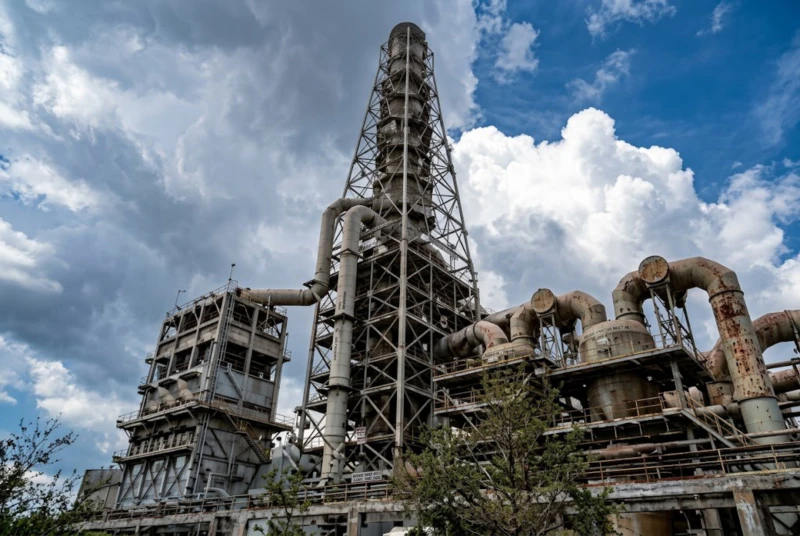
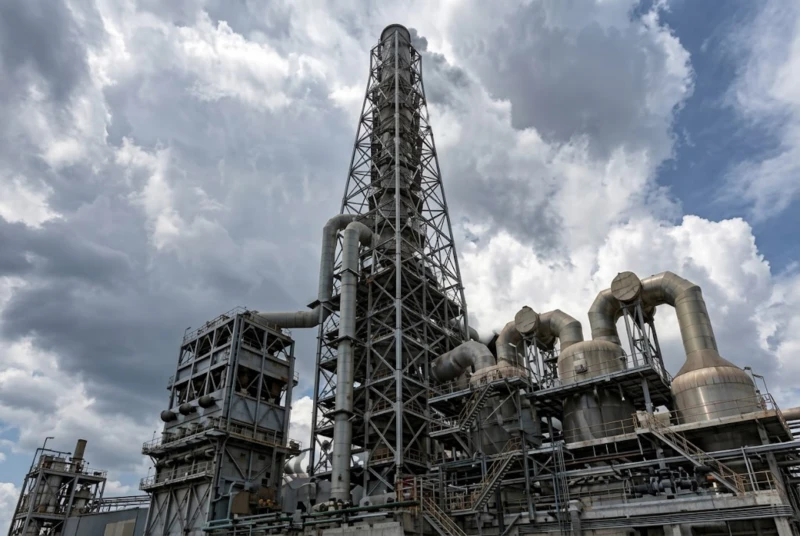
The before-and-after comparison is unambiguous: with the MPA unit in standby mode, a dense white plume is visible rising from the stack against the sky; with the unit fully operational, the same stack is virtually invisible under identical operating conditions. These field photographs, captured under normal production conditions, confirm that the technology delivers on its core promise without requiring atmospheric or seasonal conditions to mask the result.
07 — Implementation Cautions
Critical Engineering Considerations for Solid Waste Incineration Off-Gas Treatment
- ⚠️
Tar adhesion is the primary long-term performance risk: Solid waste incineration off-gas carries tar particulates and coke oil that condense on absorber surfaces and spray nozzles at temperatures below approximately 60°C. If the recirculation backwash system is not equipped with in-line filtration, tar accumulates in the spray headers and progressively blocks nozzle orifices within 4–8 weeks of operation. Install 50-micron in-line basket strainers on all backwash recirculation lines and implement a quarterly nozzle inspection protocol from day one of operation. - ⚠️
Hot-water purge scheduling is not optional: The graphene composite absorber layer can be thermally regenerated by hot-water purging, dissolving and flushing accumulated tar deposits. This purge must be scheduled during planned maintenance shutdowns — typically once per quarter during the first year, reducing to twice annually once steady-state fouling rates are established. Hot water at 80–90°C (not steam, which can thermal-shock the graphene composite bonding) is significantly more effective than cold water for tar dissolution. If purging is deferred, tar build-up reduces bed permeability and forces the system to operate at elevated pressure drop, reducing airflow and consequently purification efficiency. - ⚠️
Corrosion protection must be specified across all equipment, not just the MPA unit: The strongly corrosive nature of solid waste incineration off-gas (containing HCl, HF, SO&sub3; aerosols, and organic acids simultaneously) means that upstream ductwork, dampers, expansion joints, and the induced-draft fan all require dedicated anti-corrosion specification. Failures in upstream components allow corrosion products and condensate to contaminate the gas stream before it reaches the MPA unit, increasing pollutant loading and shortening the absorber regeneration interval. - ⚠️
Waste classification and upstream segregation are prerequisites: Solid waste facilities typically handle multiple waste categories simultaneously — in this case acid sludge, flue ash, and spent catalysts each with different combustion chemistry. Gas streams from different process stages (incineration furnace exhaust, drying off-gas, cooling gas) must be classified and segregated before entering the shared treatment system. Mixing incompatible streams without upstream characterization can produce unexpected compound formation that degrades treatment performance. - ⚠️
Hazardous waste permit conditions impose additional monitoring obligations: Facilities operating under a hazardous waste incineration permit are typically subject to continuous emission monitoring system (CEMS) requirements for a broader set of pollutant parameters than standard industrial facilities, including dioxins, heavy metals, and HCl in addition to the conventional NOx, SO&sub2;, and particulate channels. Ensure the CEMS specification covers all permit-required parameters before commissioning, and confirm that the new MPA unit discharge point is correctly designated as the official monitoring location in the operating permit. - ⚠️
Hazardous solid waste from maintenance purging requires compliant disposal: The tar-laden wastewater generated during the hot-water absorber purge may carry heavy metals and persistent organic compounds at concentrations that classify it as hazardous waste under applicable standards. Confirm the classification of purge effluent with a certified laboratory analysis before the first purge, and ensure that the disposal route (on-site treatment or licensed contractor) is in place before system commissioning. A purge effluent management plan should be included in the overall environmental management system documentation for the facility.
08 — Engineering Takeaways
Four Transferable Lessons from This Solid Waste Treatment Project
- 1
Absorber material selection is the decisive design choice in tar-adhesive applications. The selection of graphene composite over alternative absorber media was the engineering decision that determined whether this project would succeed or fail over a multi-year operating life. Conventional fibrous absorber pads would have required monthly replacement under the same tar loading conditions, generating a recurring maintenance cost and waste stream that would have made the project economically unviable. Material specification deserves proportionally more design attention in solid waste incineration applications than in any other MPA deployment context. - 2
Corrosion is a system-level problem, not a unit-level one. This project demonstrated that specifying the MPA unit in corrosion-resistant materials is necessary but not sufficient. Upstream ductwork failures caused by corrosion from the same gas stream would have increased pollutant loading at the MPA inlet beyond the design envelope, shortening absorber life and reducing overall system performance. A whole-system material audit — from furnace exit to stack top — conducted before construction is the most cost-effective way to prevent this outcome. - 3
Planned maintenance protocols must be designed before commissioning, not after. The hot-water purging requirement and backwash filtration maintenance schedule are not afterthoughts — they are integral to the system performance guarantee. Facilities that commission MPA systems without a documented maintenance management plan in place typically experience their first performance degradation incident within 3–6 months and attribute it to equipment failure rather than deferred maintenance. Building the purge and inspection schedule into the facility’s CMMS (computerized maintenance management system) before start-up prevents this. - 4
First-time commissioning success is an achievable expectation, not an optimistic aspiration. The zero-fault first commissioning result in this project was the outcome of thorough pre-commissioning engineering: accurate baseline flue gas characterization, conservative design margins, pre-validated fan curve matching against measured system pressure drops, and operator training completed before start-up day. Facilities that invest in this pre-commissioning engineering discipline consistently achieve first-time success; those that do not typically require 2–4 weeks of post-commissioning remediation.
09 — Frequently Asked Questions
Magnetic Plume Abatement for Solid Waste Treatment: Ten Questions Answered
Questions collected from environmental compliance officers, plant managers, and engineering teams evaluating MPA technology for solid waste incineration facilities.
Ready to Eliminate Your White Plume?
Explore the Full Range of Industrial Emission Control Solutions
From magnetic plume abatement in solid waste treatment to regenerative thermal oxidation systems for high-concentration VOC abatement, our engineering team delivers field-verified solutions for the most challenging industrial emission control requirements.