High-Efficiency Denitrification System Process
Comprehensive coverage of SNCR and SCR denitrification technologies, integrating R&D, design, lean manufacturing, engineering installation, and intelligent commissioning. We help your industrial kilns effortlessly surpass strict environmental thresholds, from ultra-low to near-zero emissions.
اتصل بناIntroduction to Denitrification System Process
Our company is dedicated to providing efficient and reliable turnkey denitrification solutions for industrial flue gas treatment. Our product range covers SNCR and SCR denitrification systems, integrating R&D, design, lean manufacturing, engineering installation and intelligent commissioning into a comprehensive service offering.
Honed through numerous projects, our BL series has established itself as a technical benchmark in the environmental protection industry. Via continuous iteration and optimization, the BL series has reached internationally advanced standards in structural rationality, operational stability and denitrification efficiency, fully complying with various stringent emission requirements—from conventional standards to ultra-low and near-zero emissions.
Backed by profound technical expertise, the BL series has been successfully deployed in key industrial sectors such as steel, coking, power generation, metallurgy, cement and chemical engineering. We stand as your trustworthy partner for denitrification solutions.
SNCR Denitrification System
Selective Non-Catalytic Reduction (SNCR) is a highly mature, commercial NOx control technology. Operating entirely without a catalyst, it utilizes the furnace and outlet flue directly as the reactor, resulting in relatively low initial investment and a significantly shortened construction period.
By injecting an amino-containing reducing agent into a specific high-temperature zone, the system breaks down harmful nitrogen oxides into harmless nitrogen gas and water vapor. SNCR is the ideal, cost-effective choice for small to medium-sized boilers and projects with conventional emission targets.
Working Principle & Reactions
The SNCR process relies on a precise temperature window of 850°C to 1050°C. At these high temperatures, the injected reducing agent decomposes rapidly into ammonia, which selectively reacts with the NOx in the flue gas.
Primary Reduction Reaction (NO)
The dominant reaction neutralizing nitric oxide into harmless nitrogen gas.
Secondary Reduction Reaction (NO2)
Simultaneously breaks down nitrogen dioxide present in the exhaust stream.
System Structure & Modules
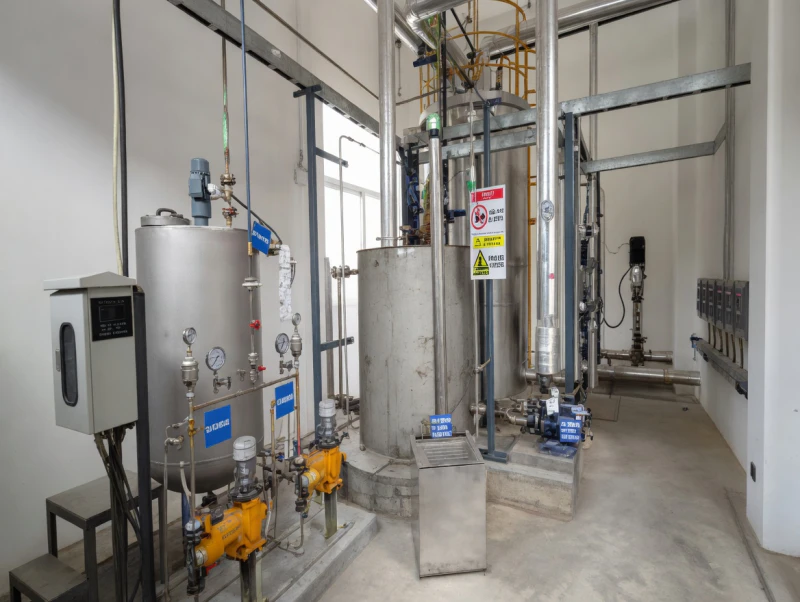
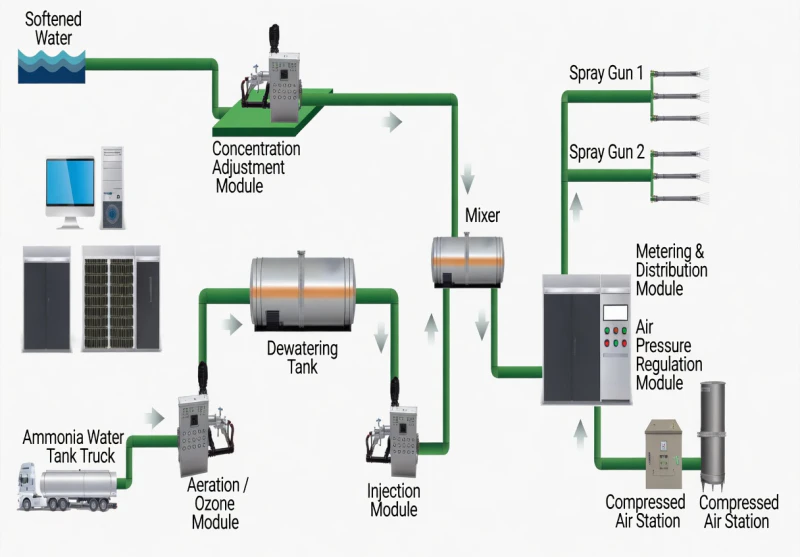
A well-engineered SNCR system requires precise fluid handling and intelligent control to inject the exact amount of reactant into the correct temperature window. Our complete turnkey package includes:
Ready to Implement SNCR?
Contact our engineering team today to review your boiler specifications, analyze temperature windows, and get a custom layout for your SNCR Denitrification System.
View Detailed Product SpecsSCR Denitrification System
Selective Catalytic Reduction (SCR) is the most proven, advanced, and widely adopted technology globally for achieving ultra-low NOx emissions. By utilizing a specialized catalyst in the presence of oxygen, it facilitates the reduction of harmful nitrogen oxides into harmless nitrogen (N2) and water (H2O).
Our SCR systems guarantee exceptionally high denitrification efficiencies, often exceeding 90% to 95%. They are uniquely engineered for the most demanding heavy industrial applications, including massive utility boilers, cement kilns, glass furnaces, and coking plants, where strict environmental compliance is non-negotiable.
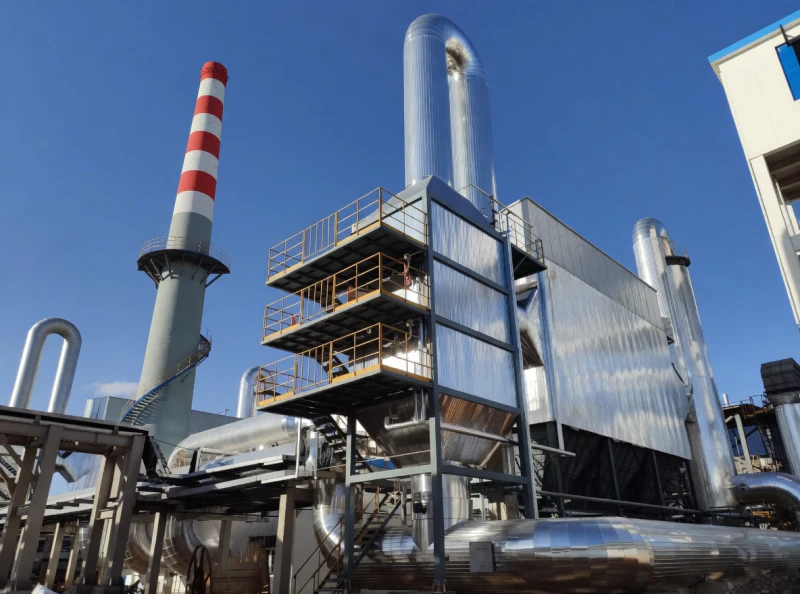
The SCR Reactor
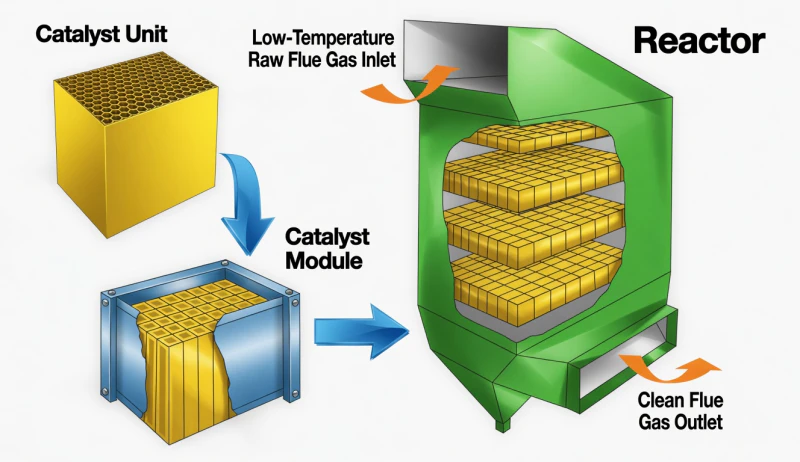
ال SCR Reactor is the absolute core equipment of the entire flue gas denitrification system. Its primary function is far more than simply housing the catalyst blocks; it provides the precise physical environment required for the complex denitrification reactions to occur.
Through advanced Computational Fluid Dynamics (CFD) modeling, our reactors are meticulously engineered to guarantee smooth flue gas flow dynamics and highly uniform gas-ammonia distribution. This prevents localized catalyst wear and ammonia slip.
Working Principle & Reactions
The process is termed "Selective" because, under the action of the specific catalyst, the reducing agent (typically Ammonia or pyrolyzed Urea) reacts preferentially with NOx rather than being combusted by the abundant O2 in the flue gas. The presence of O2 is actually indispensable, as it promotes the denitrification reaction.
Main Denitrification Reactions
Under the action of the catalyst, ammonia rapidly and efficiently reduces the NO and NO2 in the flue gas into completely harmless nitrogen gas and water vapor.
Potential Side Reactions
If temperatures fluctuate drastically or an excess of ammonia is injected (ammonia slip), secondary reactions can occur, potentially forming ammonium bisulfate which can foul air preheaters.
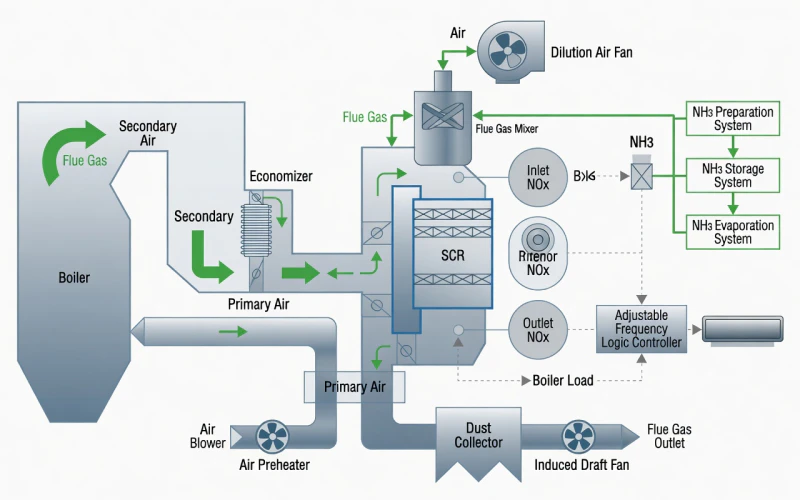
بنية النظام
A highly efficient SCR system is a complex integration of fluid dynamics, chemical engineering, and intelligent automation. Our comprehensive turnkey package is composed of 7 major industrial modules:
Achieve Ultra-Low Emissions Today
Submit your boiler specifications, flue gas temperatures, and target NOx levels. Our engineers will provide a highly customized SCR layout and catalyst volume analysis.
View Full Product SpecsSCR Catalyst Selections
The catalyst is the active medium that drives the reduction of NOx. We provide precisely engineered catalyst types tailored to your specific flue gas conditions, dust load, and temperature profiles.
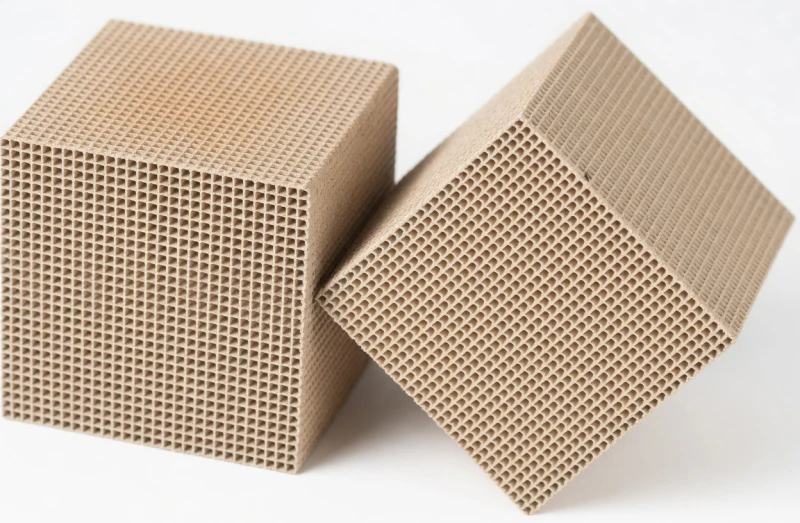
Honeycomb Catalyst
High Market Share: Features a massive specific surface area. Under identical parameters, it offers a smaller volume and lighter weight with a highly versatile application range. Both interior and exterior media consist of active substances.
Plate-type Catalyst
Strong Anti-Clogging: Features a smaller specific surface area resulting in a larger volume, but excels in high-dust environments. Built with an internal metal frame coated with active substances. Note: Prone to dust accumulation in basket gaps and mesh edge corrosion.
Corrugated-plate Catalyst
Niche Application (<5% Share): Ultra-lightweight with a medium surface area. Features relatively poor wear resistance and is susceptible to gap dust accumulation. Exclusively recommended for clean, gas-fired power units.
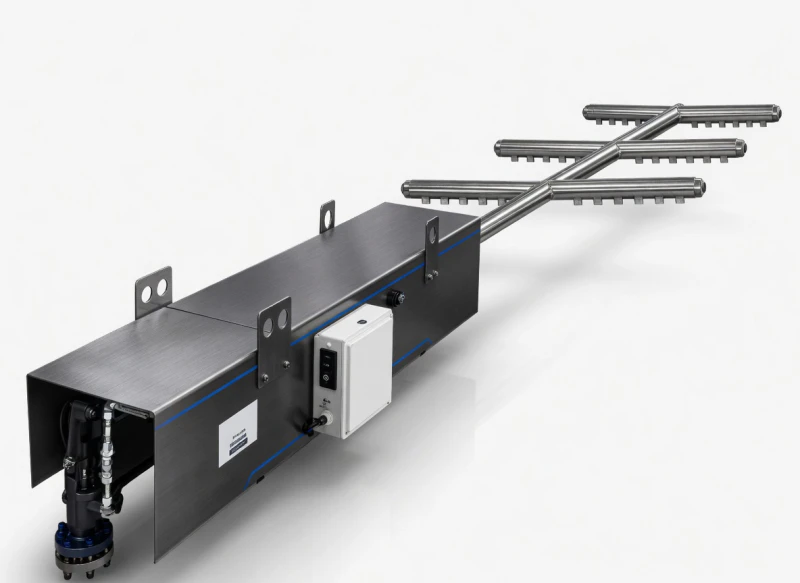
Soot Blowing System
The continuous operation of the SCR reactor in heavy dust environments relies on the Soot Blower. Using sonic waves or pressurized steam, it maintains the aerodynamic integrity and chemical reactivity of the catalyst blocks.
Remove Ash Deposits
Forcefully blows off fly ash, dust, and sticky ammonium salts on the surface and within the pores of the catalyst to prevent severe clogging.
Ensure Efficiency
Ensures flue gas passes uniformly through the catalyst channels, strictly preventing denitrification efficiency drops caused by ash blockages.
Reduce System Resistance
Avoids excessive pressure differences within the flue duct and reactor, actively reducing the parasitic energy consumption of the induced draft (ID) fan.
Protect the Catalyst
By preventing ash buildup, it mitigates long-term abrasion and chemical poisoning, drastically extending the service life and ROI of the catalyst.
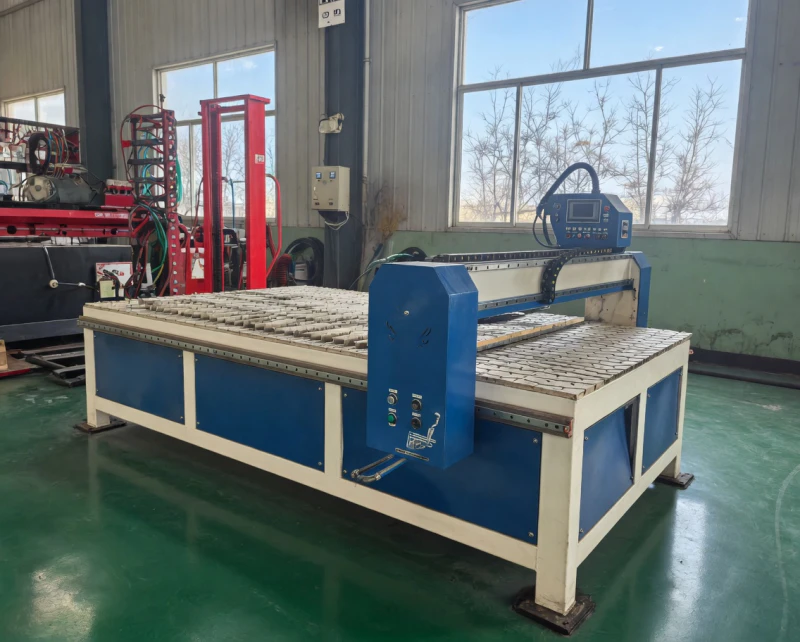
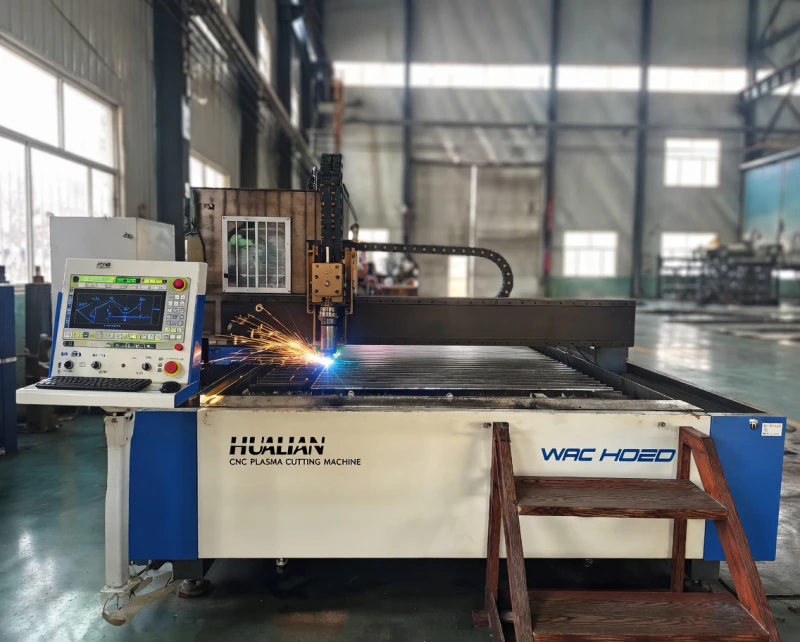
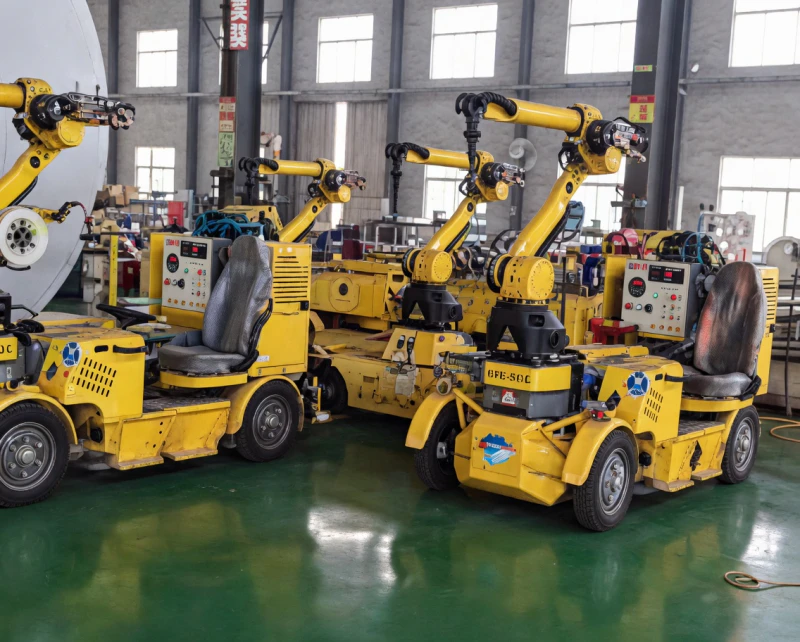
Perfect Manufacturing Facilities
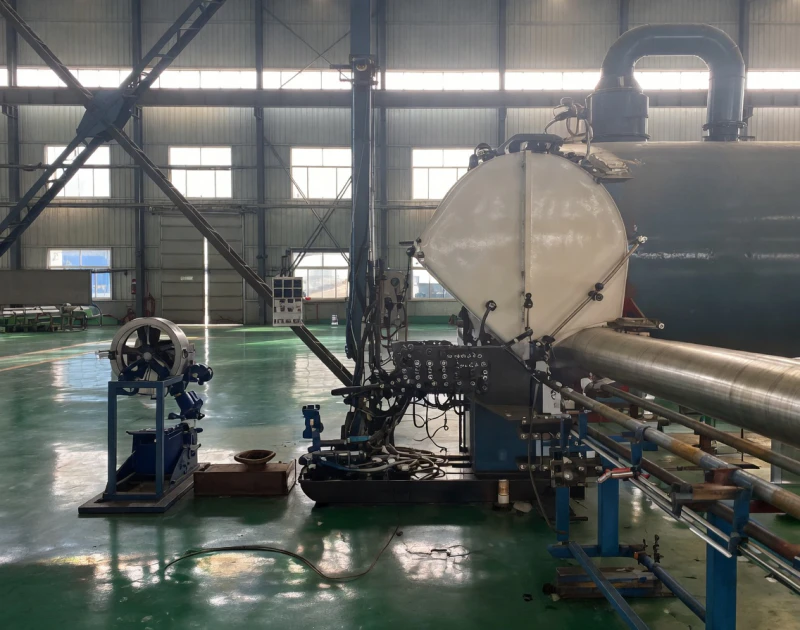
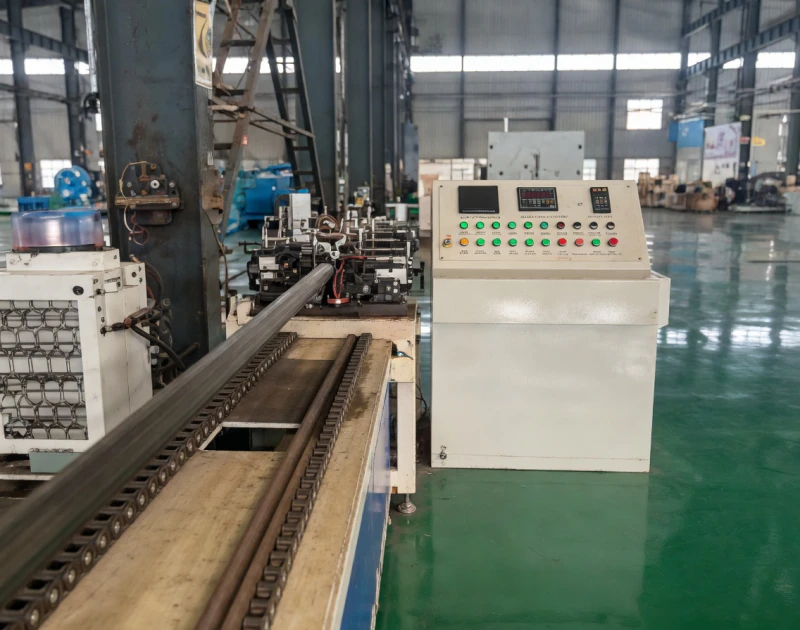
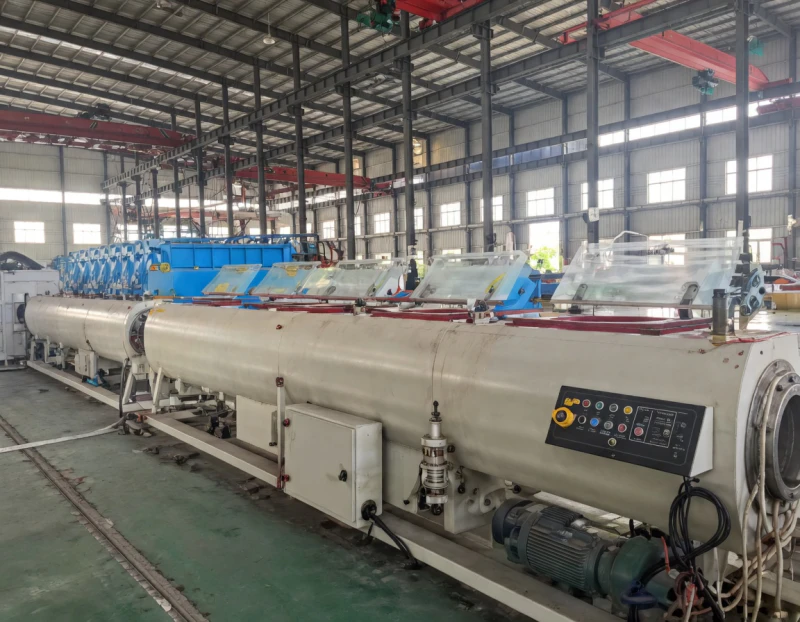
As an integrated supplier specializing in the R&D and production of environmental protection system equipment, we boast an annual production capacity exceeding 50,000 tons. We are equipped with specialized production lines for polar plates and discharge electrodes of dust removal equipment, as well as large-scale edge planers and plate bending machines for manufacturing ring girders, fully meeting the requirements of mass production.
Adhering strictly to the ISO9001 management system, our production quality maintains a leading position in the industry.
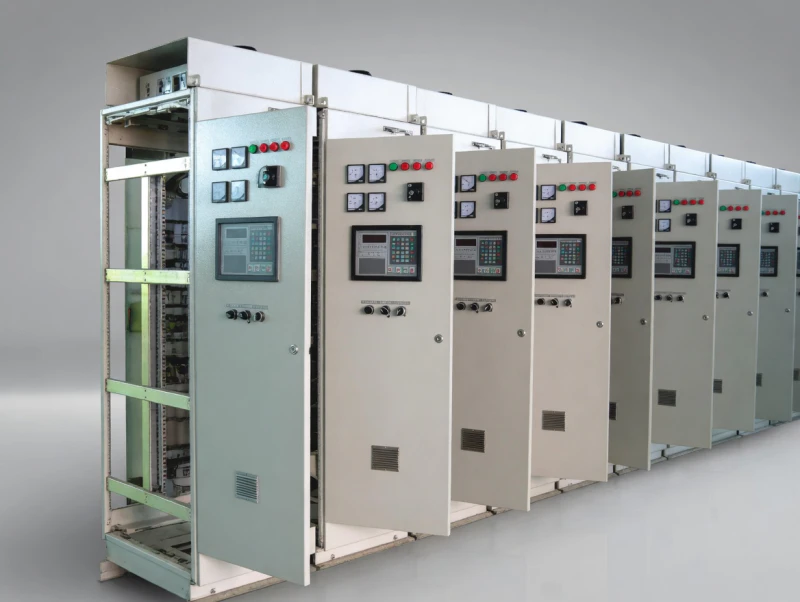
Control & Instrumentation
Our company provides complete electrical control equipment, instrumentation, and hardware for the high and low-voltage power supply and control systems required for electric denitrification processes.
Which System is Right for Your Plant?
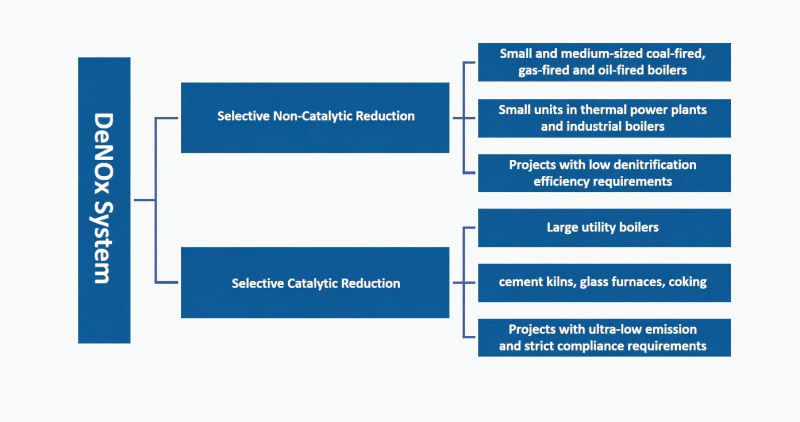
Choosing between Selective Non-Catalytic Reduction (SNCR) and Selective Catalytic Reduction (SCR) depends entirely on your local emission regulations, boiler size, and budget. Use our guide below to find the perfect fit.
Choose SNCR If...
Cost-Effective & Compact- ✔ You operate small to medium-sized coal-fired, gas-fired, or oil-fired boilers.
- ✔ Your facility only needs to meet conventional or moderate denitrification requirements.
- ✔ You have limited site space and cannot install a massive external reactor.
- ✔ You require a lower initial Capital Expenditure (CapEx) and a rapid construction cycle.
Choose SCR If...
انبعاثات منخفضة للغاية- ✔ You operate large utility boilers, cement kilns, glass furnaces, or coking plants.
- ✔ You are mandated to achieve ultra-low or near-zero emission standards.
- ✔ You require guaranteed NOx removal efficiencies of over 90%.
- ✔ You have the budget and infrastructure space to accommodate an independent catalytic reactor.
| مقياس التقييم | SNCR System | SCR System |
|---|---|---|
| Denitrification Efficiency | 30% - 60% (Typical Field) | > 90% (Ultra-Low) |
| Reaction Temperature Window | High (850°C - 1050°C) | Moderate (Catalyst Dependent) |
| Catalyst Required? | لا | Yes (Honeycomb, Plate, etc.) |
| بصمة النظام | Very Small (Uses existing furnace) | Large (Requires dedicated reactor) |
| Initial Investment (CapEx) | قليل | عالي |
| Construction Cycle | Short | Relatively Long |
Integrated Supply & Turnkey Engineering
Relying on independent R&D, continuous technological innovation, and extensive Sino-foreign strategic cooperation, our company has been delivering comprehensive integrated supply solutions since 2000.
Through the seamless joint efforts of our specialized divisions—the Engineering Complete Equipment Department, Cement Complete Equipment Department, Metallurgical Engineering Department, and International Business Department—we successfully execute complex engineering projects worldwide.
Our Supply Scope Includes:
- ✓ Various advanced denitrification systems and comprehensive air pollution control (APC) systems.
- ✓ Foreign engineering projects for complete equipment in small and medium-sized power plants, cement plants, and metallurgical facilities.
What Our Partners Say
Don't just take our word for it. Hear from industry leaders who have transformed their environmental compliance and operational efficiency with our integrated solutions.
"We partnered with them for a full turnkey SCR denitrification system upgrade at our main thermal power facility. The level of engineering integration and their ability to supply the complete electrical control package was outstanding. Since commissioning, our NOx emissions have consistently remained well below the ultra-low emission targets without any significant ammonia slip issues."
Michael K.
Plant Director, Power Generation"Their International Business Department made the overseas procurement process completely seamless. They supplied a highly customized SNCR system for our cement plant, encompassing everything from the unloading modules to the intelligent control instrumentation. The robust construction and reliable performance of their equipment have drastically improved our operational stability."