In the highly specialized and heavily regulated fields of heavy industrial manufacturing—specifically within the cement production, glass manufacturing, and coking sectors—the management of flue gas emissions has evolved from a secondary operational concern into the absolute primary metric of regulatory survival. These specific industries generate some of the most complex, abrasive, and chemically hostile exhaust profiles known to modern engineering. They require a denitrification architecture capable of managing extreme dust loads, vaporized heavy metals, and massive temperature fluctuations while strictly adhering to ultra-low and near-zero emission mandates. The Selective Catalytic Reduction (SCR) process has emerged globally as the undisputed gold standard for these applications. By utilizing advanced, precisely formulated catalytic beds alongside intelligent ammonia injection, the BAOLAN BL-Series SCR technology achieves and sustains Nitrogen Oxide (NOx) removal efficiencies exceeding 95%. This comprehensive technical analysis provides a deep dive into the chemical kinetics, customized reactor geometries, and specialized asset protection subsystems required to successfully deploy SCR technology across these three uniquely challenging industrial landscapes.
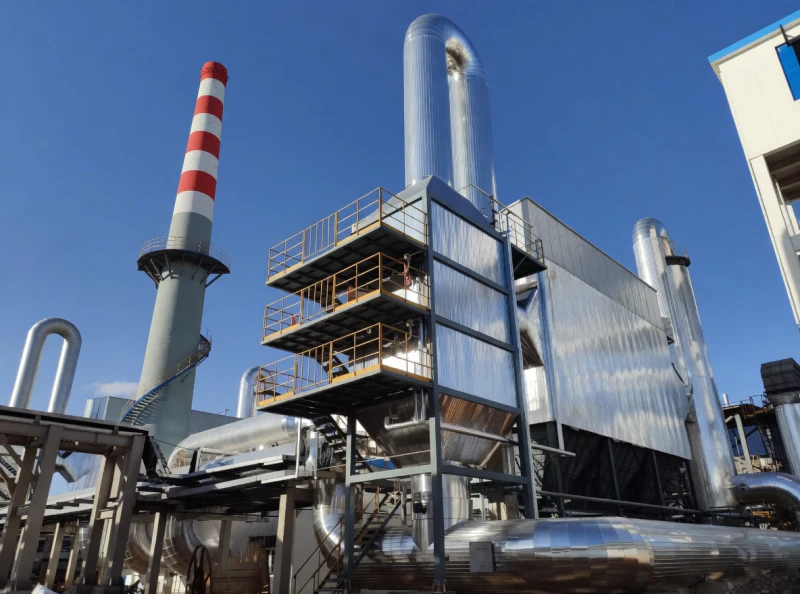
Figure 1: Mega-Scale Deployment of the BL-Series SCR Denitrification Infrastructure
1. Catalytic Kinetics: The Science of Selective Abatement
To understand how SCR survives in hostile environments like glass furnaces and cement kilns, one must first deconstruct its foundational chemistry. The term “Selective” refers to the highly specific nature of the catalytic reaction. When a reducing agent—typically ammonia water or vaporized urea—is injected into the hot flue gas stream, the presence of the catalyst drastically lowers the activation energy required for the chemical reaction. This allows the ammonia to preferentially target and bond with toxic Nitrogen Oxides (NOx), completely ignoring the abundant oxygen (O2) that would otherwise simply burn the ammonia away.
Primary Reaction Mechanics
Operating within an optimized thermal window of 180°C to 400°C, the system executes the following primary transformations:
$4NO + 4NH_3 + O_2 \rightarrow 4N_2 + 6H_2O$
$6NO + 4NH_3 \rightarrow 5N_2 + 6H_2O$
$2NO_2 + 4NH_3 + O_2 \rightarrow 3N_2 + 6H_2O$
The result is absolutely clean, environmentally benign nitrogen gas and water vapor. Furthermore, the BAOLAN BLSCR series utilizes advanced Programmable Logic Controllers (PLC) to tightly meter the ammonia injection. This eliminates “ammonia slip” and prevents the formation of corrosive side-products, such as ammonium bisulfate, which can severely damage downstream components.
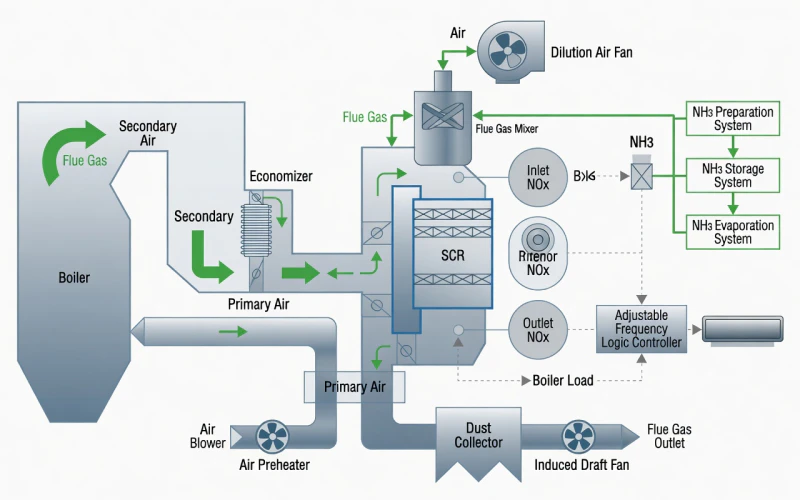
Figure 2: Comprehensive SCR Process Topology and Reagent Delivery Flow
2. Cement Kiln Applications: Surviving the High-Dust Paradigm
Cement production is notoriously harsh on environmental control equipment. The flue gas exiting the preheater of a modern dry-process cement kiln carries an exceptionally high concentration of dust—often exceeding 80 grams per normal cubic meter.
Combating Calcium Obstruction
This dust is not merely inert dirt; it is highly alkaline, containing massive amounts of calcium oxide (CaO) and potassium compounds. If standard SCR reactors are applied here without modification, this alkaline dust will quickly bridge across the narrow channels of the catalyst, causing severe physical blockage (plugging) and chemical poisoning. The calcium reacts with the sulfur present in the gas to form a hard, cementitious crust directly over the catalytic pores, instantly blinding the active sites and shutting down the denitrification process.
To solve the high-dust paradigm, BAOLAN engineers deploy specialized high-pitch configuration strategies. For cement kilns, the BL-Series SCR utilizes Plate-type catalysts or large-pitch Honeycomb catalysts. The plate-type catalyst, built on an internal metal frame structure coated with active substances, features much wider gas passages that resist bridging. Furthermore, the reactor is designed with a vertical, downward-flow geometry. Gravity, combined with high-velocity gas dynamics, helps carry the heavy particulate matter through the reactor without allowing it to settle on the catalyst surface.
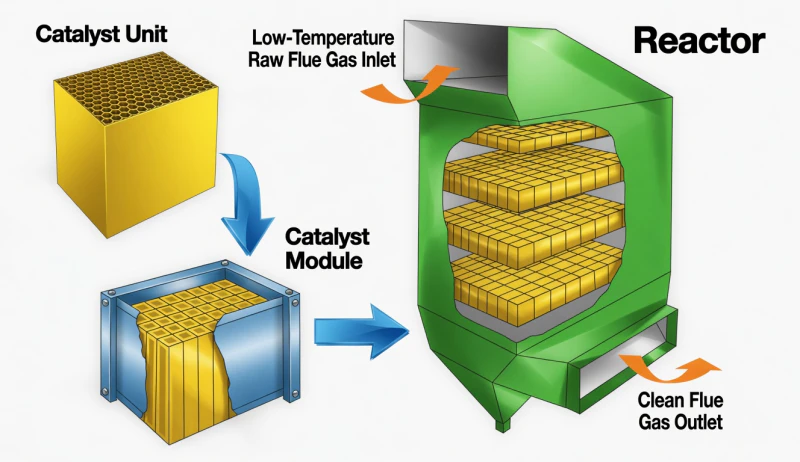
Figure 3: Vertical Flow Reactor Architecture Optimized for Cement Dust Management
3. Glass Furnaces: Navigating Severe Alkali Metal Poisoning
The glass manufacturing industry presents an entirely different threat profile. The flue gas generated from melting silica, soda ash, and limestone is laden with vaporized alkali metals, specifically sodium (Na) and potassium (K), along with heavy metals like arsenic and boron. These are notorious “catalyst killers.”
Chemical Formulations and Electrostatic Pre-Treatment
When vaporized sodium or potassium condenses onto the standard Vanadium-Tungsten-Titanium catalyst, it neutralizes the acidic active sites, permanently destroying the catalyst’s ability to facilitate the reduction of NOx. To counter this, BAOLAN implements a dual-stage defensive strategy for glass furnaces.
First, the system architecture places a high-temperature Electrostatic Precipitator (ESP) upstream of the SCR reactor to strip the majority of the vaporized alkali metals from the gas phase before they can reach the catalyst. Second, the catalyst modules are custom-formulated with modified active substrates designed specifically for high-alkali environments. These poisoning-resistant catalysts maintain their integrity even in continuous 24/7 glass melting operations, ensuring the facility consistently meets sub-50 mg/Nm3 NOx emission limits.
.webp)
Figure 4: Cross-Sector Compliance: Glass Furnace Emission Control Implementations
4. Coking Industry: The Ammonium Bisulfate Threat
The coking industry produces a highly complex flue gas. Coke oven exhaust is characterized by relatively low temperatures, high moisture content, and significant concentrations of both sulfur dioxide (SO2) and volatile organic compounds (tar).
The Low-Temperature Condensation Risk
The primary risk in coking applications is the formation of Ammonium Bisulfate ($NH_4HSO_4$). When unreacted ammonia (slip) encounters sulfur trioxide at temperatures below 230°C, it forms a highly viscous, sticky liquid. This liquid condenses directly inside the micropores of the catalyst, effectively gluing fly ash and tar into a concrete-like blockage that destroys the reactor’s aerodynamic integrity.
Upstream Desulfurization Synergy
To deploy SCR in a coking plant successfully, BAOLAN utilizes a system-wide approach. The SCR reactor is often placed downstream of a highly efficient desulfurization unit (such as SDA or SDS Dry processes). By stripping the sulfur out of the gas stream *before* it reaches the SCR catalyst, the formation of ammonium bisulfate is mathematically prevented.
Low-Temperature Catalysts
Additionally, specialized low-temperature SCR catalysts are deployed. These catalysts are manufactured with enhanced formulations that maintain high catalytic activity even when flue gas temperatures dip to 180°C, a common occurrence during coking oven reversals, ensuring continuous, uninterrupted compliance.
5. The Soot Blowing Subsystem: Safeguarding Aerodynamic Purity
Maintaining the Catalyst Matrix
Regardless of whether the application is cement, glass, or coking, fly ash and residual dust are inevitable. To ensure that the expensive catalytic volumes maintain their 100% active surface area, the BAOLAN BL-Series integrates highly advanced automated soot blowing systems directly into the reactor housing.
- Acoustic Soot Blowers: Utilizing low-frequency, high-energy sound waves to create vibrational resonance across the catalyst bed, shattering dust bridges without introducing moisture into the system.
- Steam/Air Rake Blowers: Delivering high-velocity bursts of compressed air or dry steam across the face of the catalyst layers to physically sweep fly ash away, ensuring uniform flue gas distribution and preventing the energy-draining pressure drops that overload induced draft fans.
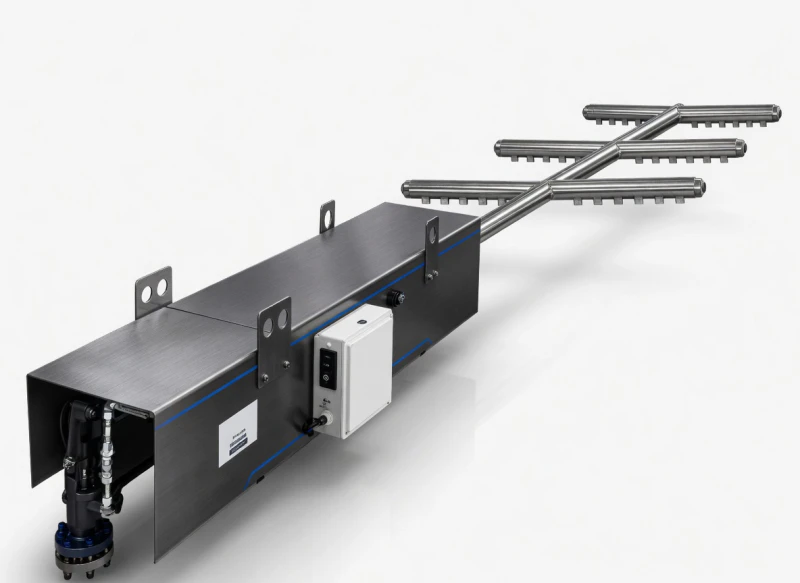
Figure 5: Acoustic Resonance Blower
.webp)
Figure 6: Pneumatic Rake Soot Blower
6. Lean Manufacturing and Turnkey Execution
Delivering a mega-scale SCR project requires more than exceptional chemical engineering; it demands massive industrial production capabilities. BAOLAN EP INC. operates as a highly integrated supplier, capable of executing end-to-end turnkey projects for the world’s largest manufacturing conglomerates.
Heavy Manufacturing Base
Operating an industrial park with an annual production capacity exceeding 50,000 tons. Equipped with robotic automatic welding, CNC cutting stations, and large-scale plate bending machines to fabricate monumental reactor housings with microscopic precision.
Intelligent Automation
Delivering complete electrical control modules, including high and low voltage power cabinets. Our advanced PLC systems orchestrate the ammonia metering, distribution grids, and soot blowing arrays in real-time, eliminating human error.
Quality Assurance
Governed strictly by ISO9001 management protocols, our entire product mix—from the ammonia unloading modules to the final flue gas ductwork—maintains an internationally advanced level of structural rationality and operational safety.
This comprehensive service offering ensures that whether you are operating a high-dust cement kiln, an alkali-rich glass furnace, or a complex coking plant, the BL-Series SCR system will perform flawlessly, protecting your facility against regulatory penalties and safeguarding public health.
Architect Your Ultra-Low Emission Strategy Today
Do not allow strict NOx mandates or highly complex flue gas profiles to compromise the profitability and operational continuity of your heavy industrial assets. Harness the transformative power of the BAOLAN BL-Series SCR technology to guarantee greater than 95% denitrification efficiency, backed by decades of precision manufacturing and intelligent process engineering. Contact our senior technical team today to design a specialized, ultra-low emission architecture for your facility.