
Master VOCs Compliance with Advanced RTO Engineering
Turnkey Regenerative Thermal Oxidizers designed for >99.5% destruction efficiency and optimized thermal recovery for heavy industries worldwide.
Visit Homepage →What are VOCs? Defining the Scope
Volatile Organic Compounds (VOCs) are carbon-based chemicals that have a high vapor pressure at ordinary room temperature.
In industrial air pollution control, VOCs are organic chemicals that readily evaporate into the atmosphere. Emitted as gases from various solids and liquids, they encompass a wide array of human-made and naturally occurring compounds.
Most industrial VOCs are hazardous, contributing to the formation of ground-level ozone ($O_3$) and fine particulate matter (PM2.5) when reacting with nitrogen oxides in sunlight.
- Aromatic Hydrocarbons
- Oxygenated Solvents
- Halogenated Organics
- Aliphatic Alkanes
- Petroleum Vapors
- Industrial Alcohols
Our Regenerative Thermal Oxidation (RTO) solutions are engineered to achieve over 99% destruction efficiency of these harmful chemical groups.
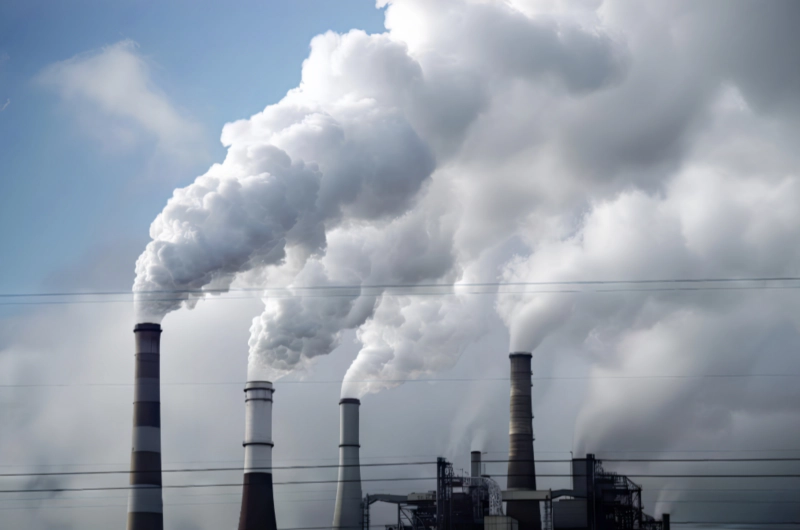
Pollutant Classification & Industry Profiles
Effective air pollution control requires a multi-dimensional understanding of chemical molecular structures and the specific emission dynamics of different industrial processes.

Solvent-Based Paint Effluents
- Chemicals: Esters (Butyl Acetate), Ketones, and Aromatic hydrocarbons (Toluene, Xylene).
- Profile: Large exhaust volumes with low-to-medium organic concentration.
- Strategy: Zeolite Rotor Concentration combined with RTO to minimize auxiliary fuel costs.
Engineering Logic: Maximize thermal energy recovery ($>95\%$) from paint solvent combustion.
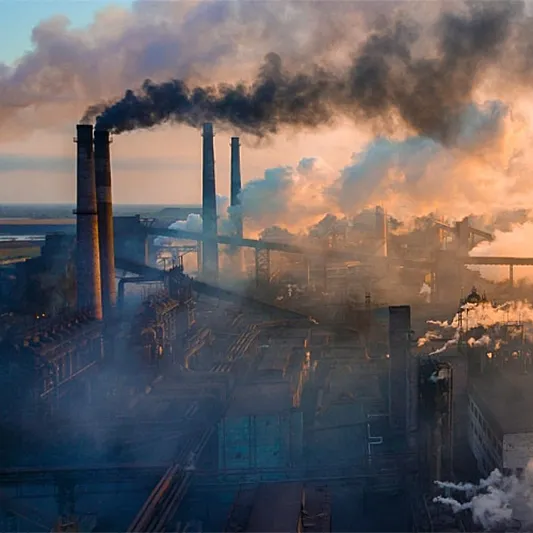
Complex Coal-Tar Volatiles
- Chemicals: Polycyclic Aromatic Hydrocarbons (PAHs), benzene derivatives, and cyanides.
- Profile: High-temperature flue gas with potential for particulate and tar fouling.
- Strategy: Specialized high-temperature ceramic media and integrated pre-filtration.
Engineering Logic: Robust valve design to prevent leakage during pressure fluctuations.

Oxygenated Solvent Recovery
- Chemicals: Ethanol, Isopropanol (IPA), Acetone, and Ethyl Acetate.
- Profile: High volatility and distinctive odor profiles requiring total neutralization.
- Strategy: Direct combustion via RTO ensures destruction efficiency exceeding $99.5\%$.
Engineering Logic: Precise air-to-fuel ratio control to manage solvent concentration spikes.

Halogenated Organic Synthesis
- Chemicals: Methylene Chloride, Chlorobenzene, and Chloroform.
- Profile: Formation of corrosive acidic gases ($HCl, HF$) during thermal oxidation.
- Strategy: Corrosion-resistant chamber lining and downstream acid scrubbing towers.
Engineering Logic: Secondary pollution control to neutralize acidic oxidation byproducts.

High-Purity Cleaning Effluents
- Chemicals: IPA, NMP (N-Methyl-2-pyrrolidone), and photoresist thinners.
- Profile: Highly sensitive production environments requiring zero downtime.
- Strategy: Multi-chamber RTO with redundant safety interlocks and ultra-high efficiency.
Engineering Logic: Ultra-clean combustion with near-zero $NO_x$ secondary emissions.
Data-Driven RTO Selection
Selecting the correct Regenerative Thermal Oxidation architecture depends on the specific molecular bond energy and the adiabatic flame temperature of your VOC profile. Our technical team provides complimentary chemical gas auditing to ensure your system meets global compliance standards.
Analyze My VOC ProfileHow RTO Eliminates Industrial VOCs
Process Intake
Process exhaust is gathered and passed through multi-stage dry filters to remove 99% of particulates, protecting the ceramic beds.
Thermal Exchange
The "cold" VOC gas passes through a hot ceramic bed, absorbing stored heat and rising to nearly 750°C before combustion.
Oxidation Zone
In the main chamber, gas reaches 800°C to 850°C. Organic molecules are destroyed, turning into H₂O and CO₂.
Heat Regeneration
Hot purified gas exits through a second ceramic bed, transferring 95% of its energy back to the media for the next cycle.
Clean Release
Purified, cool air is continuously monitored for compliance before safe atmospheric discharge through the exhaust stack.
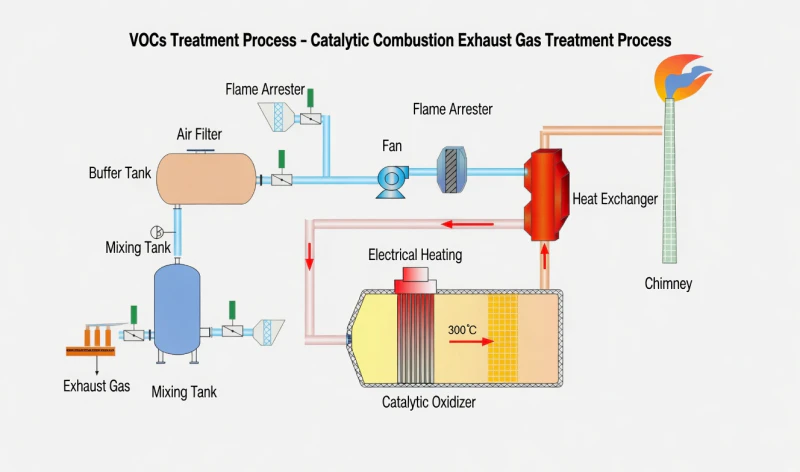
Technical Diagram: Multi-Tower Thermal Cycle & Valve Sequence
RTO Engineering & Selection Guide
01. Air Volume (Flow Rate)
Calculated in Nm³/h. This determines the physical dimensioning of the ceramic heat exchange beds and the diameter of the switching valves to prevent excessive pressure drop and ensure laminar flow.
02. VOC Concentration
Determines if the system can achieve "Self-Sustained Combustion" without auxiliary fuel. High concentrations must be strictly monitored to stay below 25% LEL (Lower Explosive Limit) for operational safety.
03. Chemical Composition
The presence of halogens (Cl, F) requires acid-resistant liners (SS316L/Alloy), while sticky tars, silicon, or heavy particulates require specialized pre-filtration or high-void ceramic media types.
04. Destruction Efficiency
Standard regulatory compliance typically requires >98%, while ultra-low emission zones or highly toxic gases demand 3-chamber or Rotary systems to achieve >99.5% Destruction Removal Efficiency (DRE).
05. Thermal Efficiency (TER)
Target energy recovery is usually 95%. While higher TER significantly reduces auxiliary fuel consumption (OPEX), it increases the required volume of ceramic media and initial capital expenditure (CAPEX).
06. Site Constraints
Comprehensive evaluation of ground load-bearing capacity and available footprint. Modular RTO designs or Rotary configurations are preferred for facilities with limited spatial flexibility or rooftop installations.
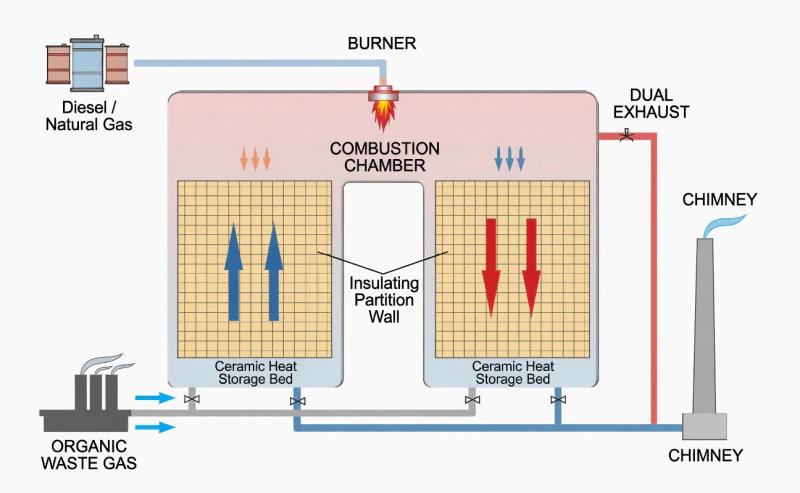
2-Bed Regenerative Thermal Oxidizer
- Simple Structure: Cost-effective with minimal mechanical moving parts.
- Processing Efficiency: Generally ≤ 95% due to exhaust gas escaping during valve switching.
- Footprint: Highly compact design suitable for smaller industrial sites.
- Operational Note: Experiences significant pressure fluctuations during chamber reversals.
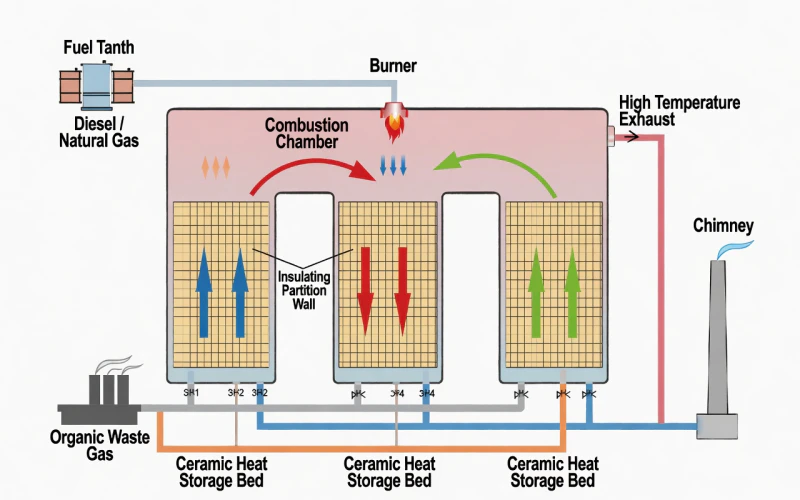
3-Bed Regenerative Thermal Oxidizer
- Complex Architecture: Utilizes 9 control valves and a third "purge" bed to eliminate bypass.
- Superior Efficiency: Delivers processing efficiency > 99.5%, ideal for strict emission zones.
- Pressure Stability: Optimized valve timing ensures relatively small pressure fluctuations.
- Operational Note: Requires a larger installation area and higher initial investment.
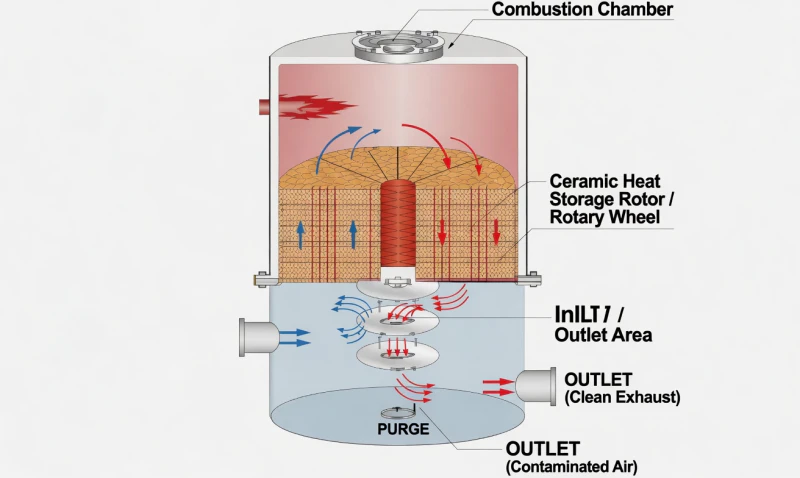
Advanced Rotary RTO
- Integrated Design: Uses a single rotary valve for intake, exhaust, and purge cycles.
- Efficiency & Stability: Processing efficiency > 99% with extremely stable system pressure.
- Optimized Footprint: Equipment integration allows for a very small installation footprint.
- Energy Saving: Stable pressure is ideal for integrated secondary waste heat recovery.
Ready for a Customized Engineering Audit?
Our technical team analyzes your specific VOC bond energy and adiabatic flame temperatures to determine the most cost-effective RTO architecture for your facility.
Request Technical Sizing DataProven RTO Performance Worldwide
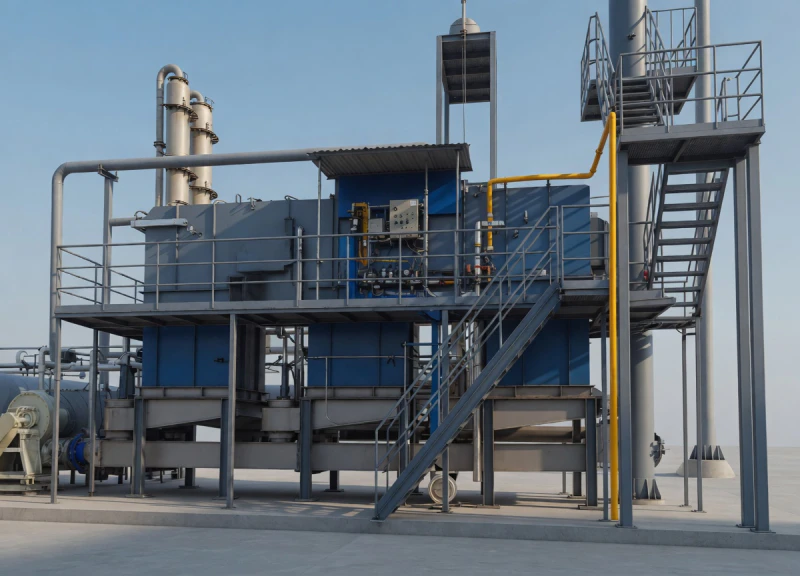
Automotive Coating Line VOC Abatement
Implemented for a leading Russian automotive manufacturer to handle high-flow exhaust during extreme sub-zero winter operations.
.webp "Precision RTO deployment in Jurong Island, Singapore: Treatment of complex fine chemical vapors.")
Fine Chemical & Solvent Purification
A high-precision RTO system engineered for the world-class petrochemical hub to manage corrosive halogenated solvents.