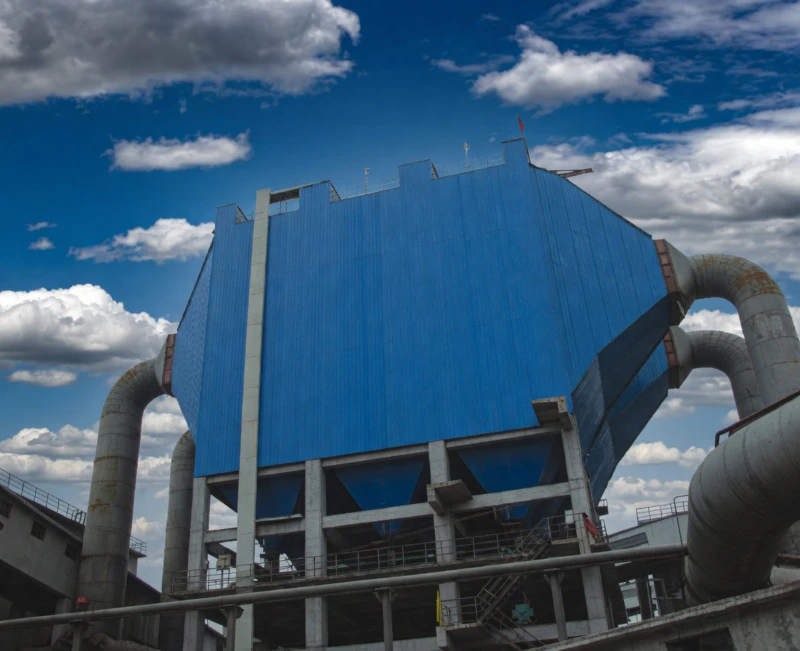
Industrial Particulate Matter (PM2.5) & VOCs Synergistic Control System
Eliminate RTO media clogging permanently. Seamlessly integrate ultra-precision filtration with guaranteed 99.9% thermal destruction efficiency.
.webp)
Multi-Sector Synergistic Abatement
RTO systems fail when exposed to untreated multi-component emissions. Our integrated pre-treatment architectures are specifically deployed in extreme industrial environments to capture PM2.5 before thermal oxidation.
Glass & Coking Facilities
Handling high-temperature exhaust laden with complex sulfides, nitrides, and heavy PM2.5 loads. We deploy robust pre-filtration to prevent inorganic ash from melting and glazing onto the RTO ceramic media.
Fine Chemicals & Pharmaceuticals
Managing batch processing exhaust containing corrosive organic salts, aerosols, and halogenated VOCs. Our synergistic scrubbing integration captures sticky aerosols, preventing chemical bridging and channel blockage.
Industrial Coating & Printing
Neutralizing high solid-content overspray and paint mists. Without highly efficient wet electrostatic precipitation (WESP) or multi-stage dry filtration, sticky resins will instantly blind RTO heat exchangers.
Our System Integration Solutions
Deploying specialized particle capture front-ends designed to shield the RTO primary architecture, ensuring uncompromised system longevity and complete multi-pollutant abatement.
.webp)
WESP + RTO Integrated Matrix
Engineered specifically for saturated gas streams, heavy condensable aerosols, and sticky organic oil mists. The Wet Electrostatic Precipitator (WESP) acts as the ultimate terminal barrier, capturing 99% of micro-particulates and sub-micron liquid aerosols. By dropping incoming loading parameters to near-zero levels, it securely isolates the RTO combustion layer from fouling and structural fouling risks.
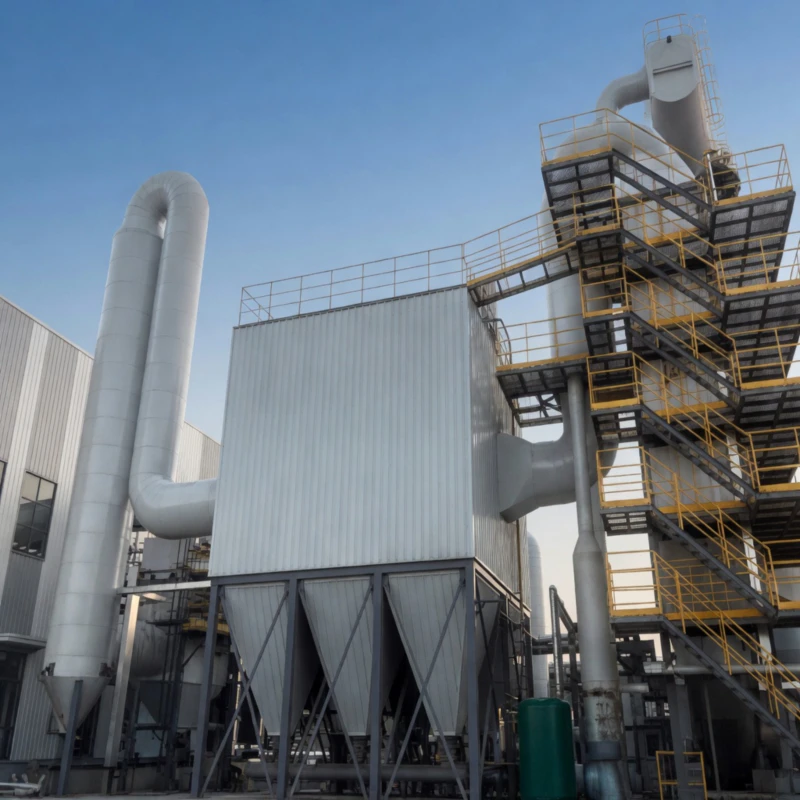
Baghouse Filtration + RTO Matrix
Engineered for heavy inorganic particulate loads and completely dry process exhaust profiles. Utilizing our BLBD1W–230W Series Baghouse Dust Collector, the system intercepts coarse and fine particulate compounds through high-density needle-felt media matrices before the gas enters the thermal zone. Equipped with safety interlocks and optimized pulse-jet cleaning systems, it preserves RTO ceramic element cleanliness under continuous high-volume operation.
Working Principle & PM2.5 Removal Advantages
A pure thermal system cannot handle complex dust loads. Our dual-stage process decouples physical particulate collection from high-efficiency thermal destruction, maximizing uptime and reliability.
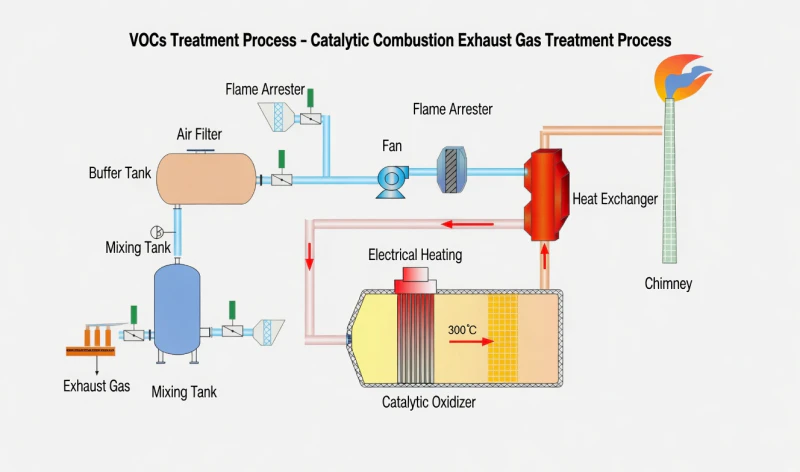
The Dual-Stage Synergistic Mechanism
Industrial emission streams combining volatile gases with sub-micron particulate matter cannot be treated with standalone technologies. Our integrated approach utilizes a structural division of labor to preserve process boundaries:
Exhaust air first passes through our specialized high-intensity capture barrier (WESP array or high-density fabric collector). Micro-dust and aerosols are extracted with ≥ 99.5% efficiency, dropping total heavy particulate loading down to under 5 mg/Nm³.
The stripped, particulate-free gas enters the clean-air distribution valve array of the RTO. It travels safely through honeycomb ceramic heat exchange matrix blocks into the central combustion layer, achieving a certified 99.9% VOC destruction rate with zero build-up.
Permanent Media Safeguard
By capturing sticky oils, alkali salt crystals, and corrosive ash fractions prior to the thermal zone, our pre-treatment matrix prevents ceramic glazing, melting, and channel bridging completely. This extends primary RTO internal element lifespans significantly.
Optimized Energy Footprint
Eliminating particulate build-up inside the RTO maintains system pressure drop strictly under 2800 Pa. This minimizes system airflow restriction, saving up to 30% in continuous induced draft (ID) fan power consumption over standard operational cycles.
True Continuous Compliance
Simultaneous compliance for multi-pollutant exhaust limits. Fully guarantees your plant sits comfortably within ultra-low boundary mandates specified by the European BREF directives, Netherlands NeR standard framework, and local clean air regulations.
Guaranteed Engineering Boundaries
Every system parameter is backed by computational fluid dynamics (CFD) simulation and rigorous real-world emission testing. We build verifiable performance margins directly into your air pollution control matrix.
| Technical Parameter | Guaranteed Standard | EEAT Verification & Engineering Mechanism |
|---|---|---|
| VOCs Destruction Removal Efficiency (DRE) | ≥ 99.9% | Achieved via continuous 3-bed thermal retention and CFD-optimized residence time matrix (≥ 1.2 seconds at a core combustion zone temperature ≥ 820°C). |
| PM2.5 & Sub-micron Particulate Capture | ≥ 99.5% | Secured via integrated multi-field Wet Electrostatic Precipitator (WESP) array or secondary high-density needle-felt PTFE membrane filtering bags prior to RTO thermal loading. |
| Outlet Particulate Concentration | < 5 mg/Nm³ | Fully verified to sit comfortably within the ultra-low limit regulations dictated by the European BREF directives and the strict Netherlands NeR framework rules. |
| System Pressure Drop (ΔP) Boundary | ≤ 2800 Pa | Maintained via dynamic PLC-driven variable frequency drive (VFD) induction loops linked directly to automated digital differential pressure transmitters across the heat exchange beds. |
| Primary Thermal Heat Recovery Efficiency | ≥ 95% | Utilizes premium monolithic honeycomb ceramic media matrices characterized by high specific surface areas, minimizing ongoing auxiliary fuel consumption during continuous operation. |
| Integrated Automated Dosing Accuracy | ± 0.1 pH | Managed through localized smart closed-loop controllers handling precise chemical reagent delivery into front-end mist-eliminator quenching layers. |
Proven Cross-Industry Deployment
Our synergistic filtration and RTO integration matrices are engineered to withstand complex multi-pollutant exhaust streams, mitigating extreme particulate loading across specialized processing lines.
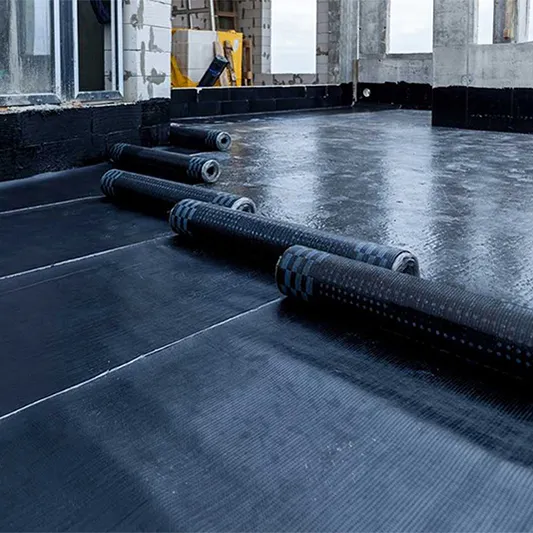
Waterproof Membrane Industry
Characterized by heavy asphalt smoke, condensable oil mist, and fine particulate emissions. Standard thermal systems suffer rapid clogging due to tar accumulation. Our specialized pre-treatment intercepts sticky particulate fractions, ensuring clean gas delivery directly into the RTO combustion core.
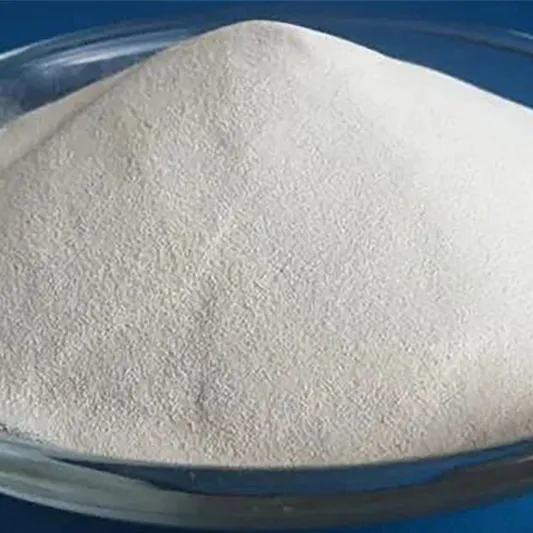
PVC Paste Resin Industry
Exhaust matrices combine fine PVC powder dust with high concentrations of volatilized plasticizer aerosols (DOP/DOTP). This creates dangerous, sticky particulate layer compounds. Our multi-stage dynamic integration completely strips out the aerosol fractions, eliminating the risk of RTO media blinding.

Printing Industry
High-volume packaging lines generate fast-moving solvent vapor streams laden with ultra-fine localized ink mist and paper fibers. Pre-filtering traps microscopic airborne particulates cleanly, enabling the primary RTO to operate at optimal efficiency with near-zero auxiliary fuel dependency.
Validation of Synergistic Control
Challenge: A major metallurgical facility faced critical RTO media glazing and channeling blockage failures within 90 days of operation due to high sub-micron PM2.5 loads and condensable tar aerosols (> 150 mg/Nm³).
Solution: Implementation of a localized multi-field WESP pre-treatment extraction barrier coupled directly with an optimized 3-bed regenerative thermal oxidation system.
Stop Blind Equipment Selection
Every industrial waste gas stream possesses a unique thermodynamic and particle profile. Attempting to install an isolated RTO system without addressing complex pre-treatment parameters guarantees operational failure. Secure your system baseline baseline performance today.
Request Free Engineering Consultation