Total Neutralization of Industrial Odors:
Advanced RTO Thermal Oxidation
Purification efficiency exceeds 99.5%, ensuring full boundary odor concentration (OU) compliance. Custom-engineered for chemical, pharmaceutical, and food sectors, our systems surpass the Netherlands' NeR (Nederlandse Emissie Richtlijn) and Activiteitenbesluit requirements, Russian GOST, and Singapore NEA global standards.
Navigating Complex Malodorous Emissions in the Netherlands
The Nature of Odors
Industrial malodors often originate from compounds with extremely low olfactory thresholds, detectable even at parts-per-billion (ppb) levels. These typically include Sulfur-containing molecules (H2S, Mercaptans), Nitrogen-based groups (Ammonia, Amines), and Oxygenated organics such as Aldehydes and Fatty Acids.
The Compliance Gap
In the Netherlands, traditional scrubbing or carbon methods often struggle to meet the stringent "stankhinder" (odor nuisance) requirements set by the NeR (Nederlandse Emissie Richtlijn) and the Activiteitenbesluit. Achieving the necessary Odor Unit (OU) reductions at the boundary of sensitive industrial zones requires more than simple filtration.
The RTO Advantage
Regenerative Thermal Oxidation (RTO) shifts the focus from temporary masking to permanent molecular destruction. By subjecting the gas stream to high-temperature oxidation at 750°C to 850°C, complex odorants are irreversibly decomposed into harmless water vapor and CO2, ensuring total compliance.

Mastery in Molecular Odor Dissociation
Sulfur-Containing Compounds
Total oxidation of malodorous molecules including Hydrogen Sulfide (H2S), Methyl Mercaptan, and Dimethyl Sulfide (DMS). We prevent sulfuric acid corrosion via precision thermal management.
Nitrogenous Malodors
Decomposition of Ammonia (NH3), organic amines, and nitriles. Our RTO process ensures complete break-down without the risk of secondary thermal NOx formation.
Oxygenated Organics
Neutralizing high-intensity odorants such as Aldehydes (Formaldehyde), Ketones, and volatile Fatty Acids common in the Dutch food processing and flavoring sectors.
Complex Industrial Mixtures
Synergistic treatment of diverse VOC streams from chemical synthesis, rendering plants, and industrial composting to ensure zero-odor detection at factory boundaries.
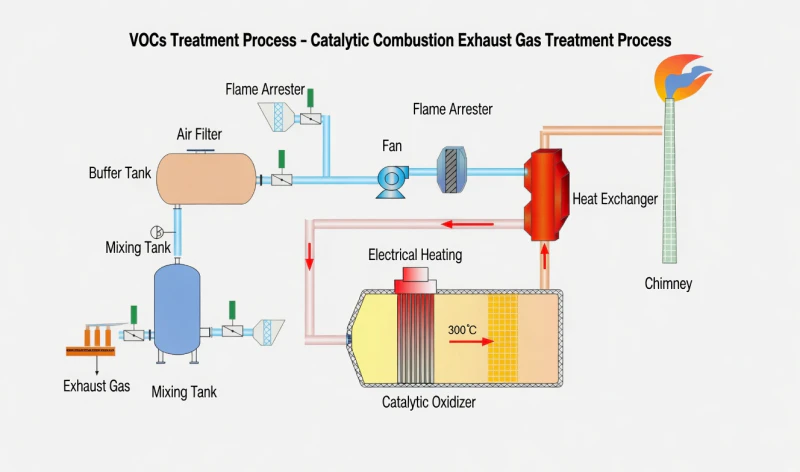
How RTO Eliminates Industrial Odors
Thermal Pre-heating Cycle
Raw odorous air (containing H2S, NH3, and Mercaptans) enters the RTO through an inlet valve. It passes through the hot ceramic regenerative bed, reaching the oxidation threshold before entering the furnace.
Molecular Oxidation
In the combustion chamber, gases dwell for 1 to 2 seconds at temperatures between 750°C and 850°C. This thermal energy shatters molecular bonds, converting odorants into harmless H2O and CO2.
Regenerative Energy Capture
The clean, high-temperature air exits through a second ceramic bed. As it passes, the ceramic media captures and stores 95 percent of the thermal energy to be used for the next incoming cycle.
Valve Phase Switching
Precision pneumatic valves change the flow direction every few minutes. This ensures the regenerative beds alternate between heating and cooling, maintaining a self-sustaining energy loop.
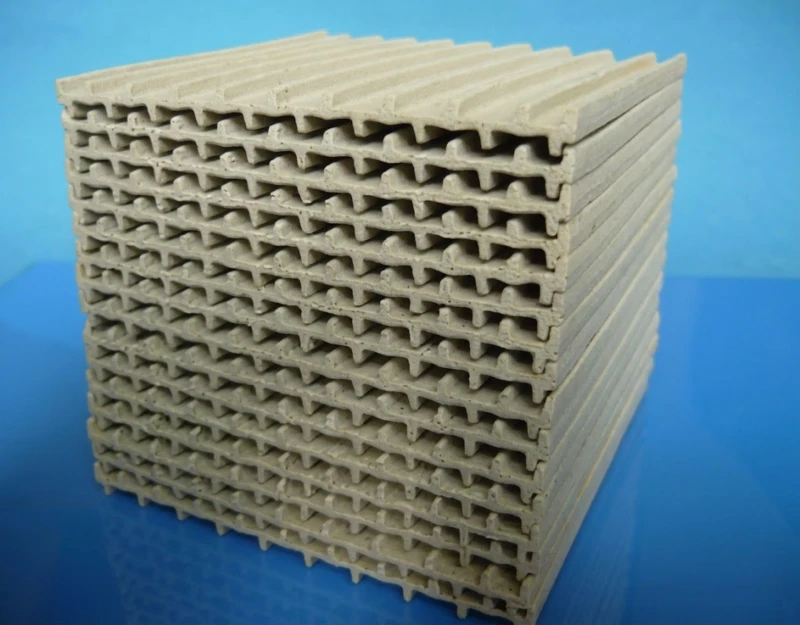
This high-density honeycomb ceramic is the heart of the RTO system. Its superior heat capacity and massive surface area allow for maximum heat transfer. By using this media, industrial facilities in the Netherlands can achieve total odor neutralization while significantly reducing natural gas consumption.
Odor Control Selection Matrix
Cross-referencing gas dynamics with engineered RTO configurations for the Dutch industrial landscape.
| Industrial Sector | Odor Profile | Concentration | Recommended RTO Configuration |
|---|---|---|---|
| Food & Beverage | Fatty acids, Aldehydes, Esters | Low to Medium | 2-Chamber RTO with integrated Heat Exchange |
| Chemical & Pharma | Sulfur (H2S), Nitrogen (NH3), Solvents | High / Corrosive | 3-Chamber RTO + SS316L Internal Lining |
| Waste Management | Mercaptans, DMS, Ammonia | Variable | Multi-Bed RTO with Zeolite Concentration |
| Petrochemical | Alkanes, Aromatic Hydrocarbons | High / Explosive | RTO with LEL Monitoring & Flame Arrestors |
Material Science Selection
For odors rich in Hydrogen Sulfide (H2S) or chlorinated VOCs, we specify high-alloy stainless steels (SS316L or Duplex) to prevent acid dew point corrosion in the heat recovery beds.
Safety & Stability
High-concentration process vents require precision LEL (Lower Explosive Limit) monitoring and integrated pressure dampening to prevent system trips and ensure 24/7 uptime.
Energy Recovery (TER)
In the Netherlands, energy costs are a primary concern. Our matrix prioritizes configurations that achieve 95 percent thermal energy recovery, allowing for self-sustained operation.
Tailored RTO Engineering

Processing, Baking & Flavorings
Ensuring complete elimination of pungent organic odors from industrial baking, intensive frying, and high-precision flavoring extraction. Our RTO solutions provide guaranteed odor-free performance for Dutch facilities located near urban areas.

Reactor Vents & Solvent Recovery
High-efficiency abatement for intermittent reactor exhausts and complex chemical vapors. Engineered with SS316L internals to withstand corrosive halogenated solvents and high-concentration VOC loads common in the Chemelot and Port of Rotterdam regions.

Sludge Drying & Composting
Neutralizing massive air volumes containing malodorous Mercaptans, H2S, and Ammonia. Our RTOs are optimized for the sludge drying and rendering industries, ensuring strict compliance with the Activiteitenbesluit odor emission standards.

Tank Vents & Wastewater Treatment
Specialized vapor treatment for breathing valves in petroleum tank farms and primary wastewater processing. Systems include advanced LEL safety monitoring and pressure-swing dampening to manage explosive vapors under hazardous zone conditions.
Global Performance Portfolio
Engineering success in high-threshold industrial odor abatement.
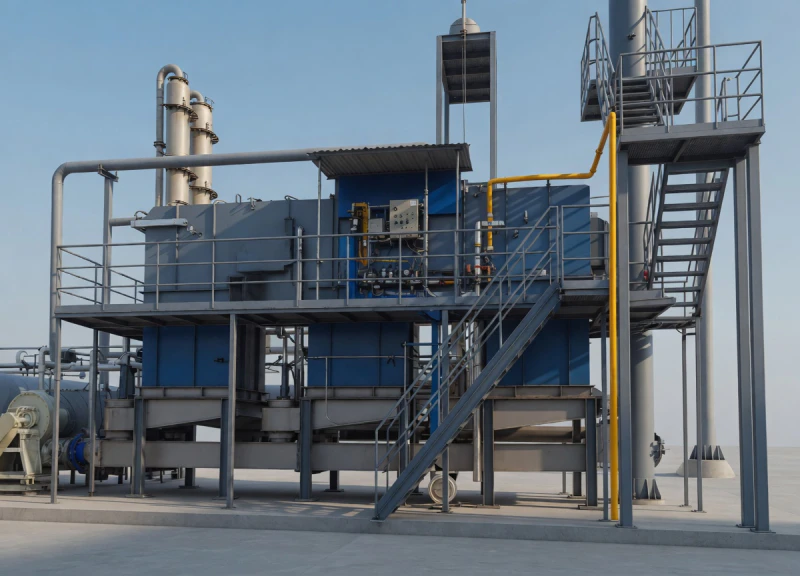
Petrochemical Storage Vapor Control
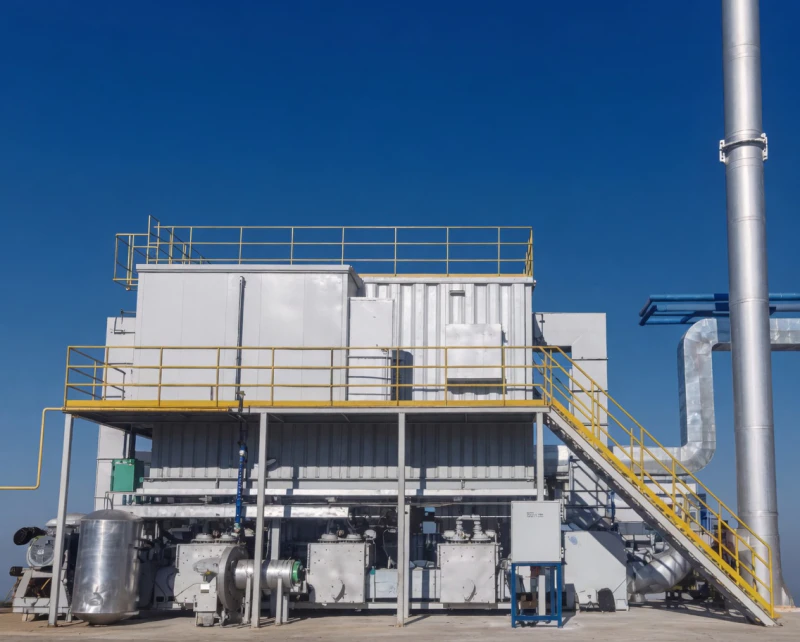
This high-volume 3-chamber RTO manages complex aliphatic and aromatic hydrocarbon vapors from terminal breathing valves, ensuring zero odor detection at the site boundary.
Industrial Flavoring Odor Abatement
Designed for an intensive fragrance production facility, this system decomposes complex Esters and Aldehydes, reducing Odor Units (OU) to well below residential legal limits.
Compliance & Certifications
Fully aligned with the Nederlandse Emissie Richtlijn for VOC and odor classification.
Guaranteed adherence to Dutch general rules for industrial boundary geurhinder (odor nuisance).
Certified engineering and manufacturing protocols for asset longevity and reliability.
Explosion-proof safety systems and high-integrity safety logic for hazardous zones.