As global industrial environmental regulations undergo a paradigm shift toward “near-zero” emission limits, traditional dry dust collection systems are encountering their physical boundaries. Industries such as coal-fired power generation, metallurgy, and heavy chemical processing are facing unprecedented challenges in eradicating fine particulate matter (PM2.5), sulfur trioxide (SO3) acid mist, sticky aerosols, and heavy metals like mercury. Enter the Wet Electrostatic Precipitator (WESP)—the ultimate tail-end guardian for flue gas purification. In this comprehensive technical deep dive, we unpack the fluid dynamics, electro-physics, and material engineering behind WESP technology, illustrating precisely why it has become the definitive solution for modern industrial compliance.
1. What Exactly is a Wet Electrostatic Precipitator?
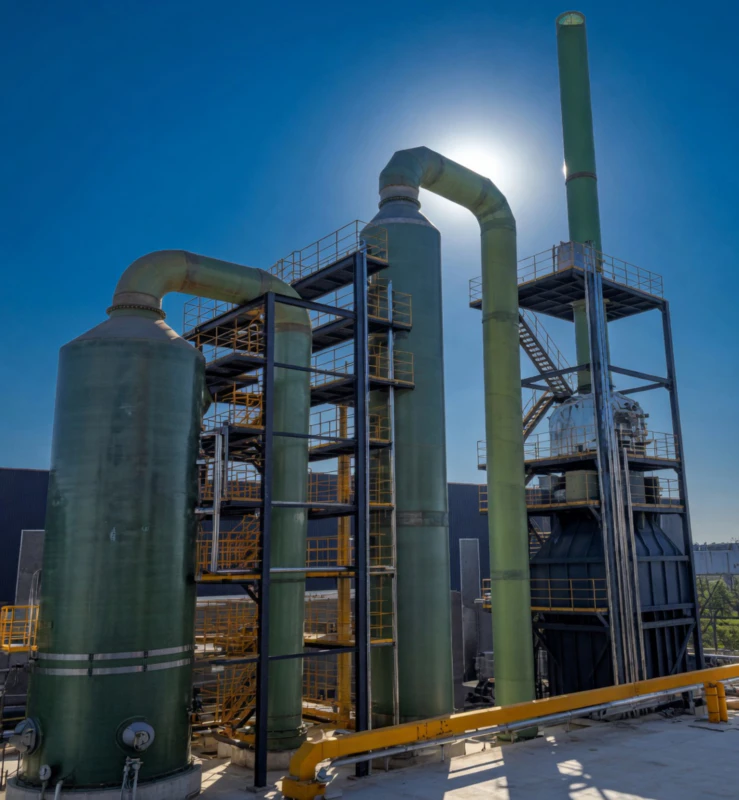
A Wet Electrostatic Precipitator (WESP) operates on the exact same fundamental principles of electro-physics as a traditional Dry Electrostatic Precipitator (DESP). However, the critical divergence lies within its operational environment and its particle clearance mechanism. While dry systems utilize mechanical rapping hammers to violently dislodge dry ash from collection plates—a process that inevitably causes some dust to re-enter the gas stream—WESPs are designed to operate in fully saturated, 100% relative humidity flue gas environments. Typically, a WESP is positioned at the absolute end of the exhaust sequence, directly downstream of a Wet Flue Gas Desulfurization (WFGD) scrubber.
Because the flue gas entering the WESP is saturated with moisture and cooled to temperatures usually between 30°C and 90°C, the collected particulate matter forms a wet slurry rather than dry ash. To remove this slurry, WESPs employ continuous or intermittent liquid flushing (washing) systems. This continuous wet film entirely eliminates the phenomenon known as “secondary dust re-entrainment.” Consequently, the WESP can successfully capture ultra-fine sub-micron particles, microscopic liquid aerosols, and highly sticky contaminants that would otherwise blind a fabric filter or pass straight through a dry ESP.
2. The Physics: A Step-by-Step Working Principle
To truly understand the ultra-low emission capabilities of a WESP, one must examine the micro-level physics occurring within the reactor. The process can be broken down into four distinct phases: High-Voltage Ionization, Particle Charging, Electrostatic Migration, and Liquid Flushing.
Phase 1: High-Voltage Ionization (Corona Discharge)
The system’s Transformer Rectifier (TR) set applies tens of thousands of volts of Direct Current (DC) high voltage between the grounded Anode Tube (the collection surface) and the suspended Cathode Wire (the discharge electrode). When the voltage surpasses the corona onset threshold, the intense electric field violently strips electrons from the gas molecules immediately surrounding the cathode wire. This creates a visible, luminous “corona discharge” cloud, generating a massive avalanche of free electrons and negative gas ions streaming toward the anode.
Phase 2: Particle Charging (Field & Diffusion Charging)
As the saturated, pollutant-laden flue gas flows upward through this highly active ionized zone, the particles are bombarded by the migrating ions. For larger particles (greater than 1 micron), field charging dominates, where ions follow electric field lines to collide with the particle. For ultra-fine sub-micron particles (PM2.5 and below), diffusion charging takes over, driven by the random Brownian motion of the ions. Within fractions of a second, virtually every dust particle, acid mist droplet, and heavy metal aerosol becomes heavily negatively charged.
Phase 3: Electrostatic Migration & Collection
Once charged, the particles are subjected to a powerful Coulomb force. This electrostatic attraction aggressively pulls the negatively charged particulate matter out of the vertical gas stream and drives it horizontally toward the grounded positive Anode Tube. Because the migration velocity in a WESP is highly efficient, even the finest aerosols that evade upstream scrubbers are captured. Upon contacting the wet inner walls of the tube, the particles surrender their electrical charge and become trapped in the surface tension of the liquid.
Phase 4: Liquid Flushing & Slurry Removal
The final phase is what gives the WESP its name. A network of specialized spray nozzles located above the electric field continuously or intermittently coats the interior walls of the anode tubes with a thin film of water. This descending liquid film constantly washes the trapped dust, acid, and heavy metals down into a collection hopper at the base of the unit. Gravity safely removes the resulting slurry for subsequent wastewater treatment, ensuring the collection surfaces remain perpetually clean and electrically optimal.
3. Material & Architectural Engineering
Because WESPs operate in highly corrosive, acidic, and moisture-saturated environments, meticulous material selection and aerodynamic precision are the absolute differentiators in determining system longevity and overall DeNOx/De-dusting performance.
3.1 The Flue Gas Distribution Board
Before the flue gas even reaches the electrostatic field, it must be perfectly managed. If gas enters the anode tubes at varying velocities, the electrostatic forces will be overwhelmed by turbulent aerodynamic forces, leading to poor collection efficiency. To solve this, advanced WESPs utilize precision-engineered Distribution Boards (perforated screens). Available in X-type, square-hole, or round-hole configurations, these boards rely on sophisticated Computational Fluid Dynamics (CFD) to ensure the gas flow is uniformly dispersed across the entire cross-section of the reactor, with a Coefficient of Variation (CV) typically kept below 10%.
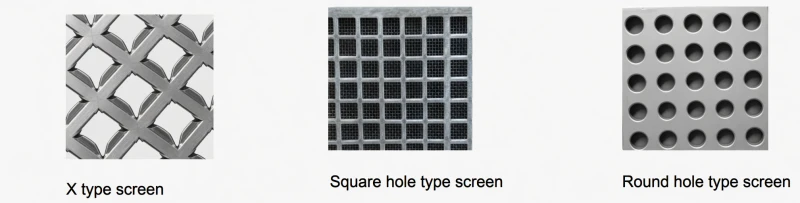
Aerodynamic Perforated Distribution Board
3.2 The Anode Tube (Collecting Surface)
The Anode Tube acts as the primary trapping mechanism. Modern heavy-duty WESPs have largely transitioned to a honeycomb structural arrangement. Compared to older plate-type or concentric cylinder designs, the honeycomb geometry dramatically maximizes the specific surface area available for dust collection while occupying a significantly smaller physical footprint. Because these tubes are constantly bathed in acidic slurries containing sulfuric acid, hydrochloric acid, and fluorides, standard metals fail quickly.
Therefore, the industry standard relies on two premium materials: Conductive Fiberglass Reinforced Plastic (FRP) and 2205 Duplex Stainless Steel. Conductive FRP is highly favored due to its excellent electrical conductivity (achieved via embedded carbon fibers), absolute immunity to acidic corrosion, and lightweight nature, which reduces structural steel requirements.
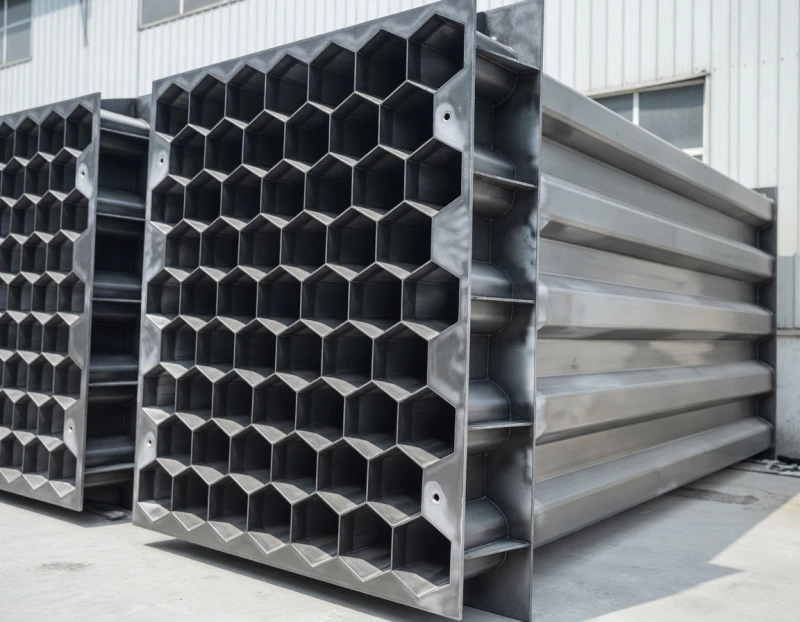
Conductive FRP Honeycomb Anode Structure
3.3 The Cathode Wire (Discharge Electrode)
Suspended precisely down the vertical center of each individual anode tube, the cathode wire is the critical component responsible for emitting the corona discharge. It must endure continuous, aggressive high-voltage electrical stress, potential sparking, and severe chemical corrosion without snapping. A broken cathode wire can short out an entire electrical field, leading to immediate system failure.
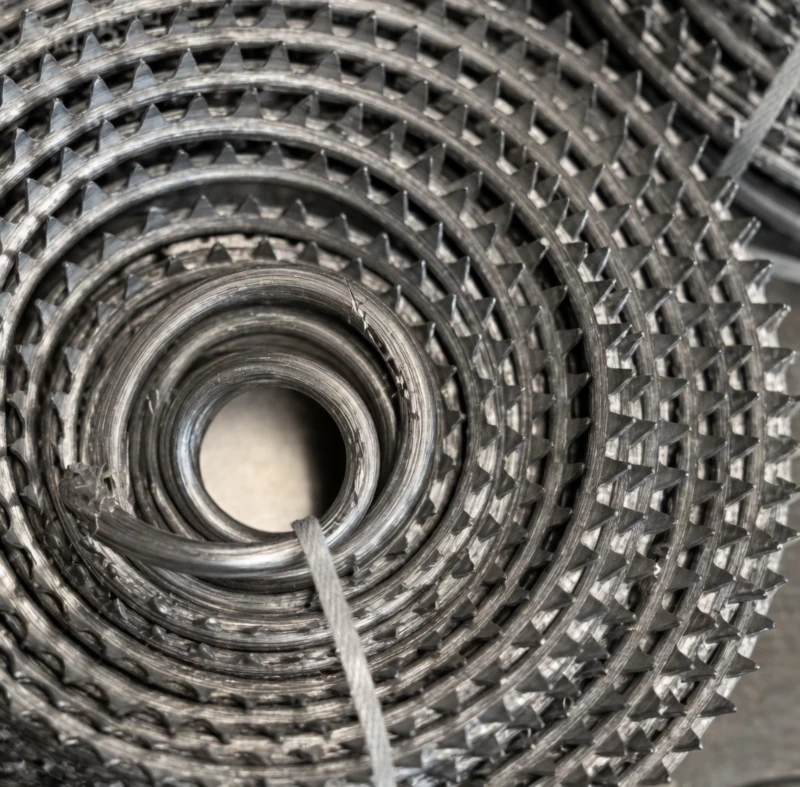
To combat this, elite WESP systems employ robust designs such as lead-antimony alloy barbed wires, 2205 stainless steel rigid masts, or specialized tubular star-shaped wires. These designs not only ensure immense tensile strength and zero breakability but are also engineered with sharp discharge points that lower the corona onset voltage, ensuring a thicker, more stable cloud of ionizing electrons.
Rigid Cathode Wire / Discharge Electrodes
4. Why WESP Triumphs in the Tail-End
While Baghouse Filters and Dry ESPs are excellent primary bulk-dust collectors, they possess inherent flaws when dealing with the complex chemistry of post-desulfurization flue gas. The WESP overcomes these limitations through several distinct engineering advantages:
Immunity to the “Back-Corona” Effect
In dry ESPs, highly resistive dust builds up on plates, acting as an insulator and causing localized electrical breakdowns (back-corona), which destroys collection efficiency. Because a WESP flushes dust away continuously in a highly conductive liquid film, the collection plate resistance remains virtually zero, ensuring permanent optimal electrical strength.
Multi-Pollutant Eradication (The “Blue Plume” Killer)
Standard baghouses cannot catch gases. A WESP, however, acts as a universal trap. It condenses and captures SO3 acid mist (which causes the notorious “colored plume” above smokestacks), fine gypsum droplets escaping the wet scrubber, and condensed heavy metals like mercury, achieving true multi-pollutant abatement in a single pass.
Exceptional Energy Efficiency
Despite its astonishing collection efficiency (reducing outlet dust to strictly < 10 mg/Nm³ or even < 5 mg/Nm³), the smooth aerodynamic honeycomb structure yields an incredibly low operational pressure drop—typically only 300 to 500 Pa. This is a fraction of the 1500+ Pa resistance commonly induced by heavy fabric filters, saving massive amounts of Induced Draft (ID) fan electricity.
5. Extensive Industrial Application Scenarios
Because WESPs are uniquely capable of handling massive volumes of high-humidity, highly corrosive gas streams (ranging from 10,000 to 2,400,000 m³/h), they have become the mandatory standard for ultra-low emission retrofits across the globe’s heaviest industries.
Coal-Fired Power Generation
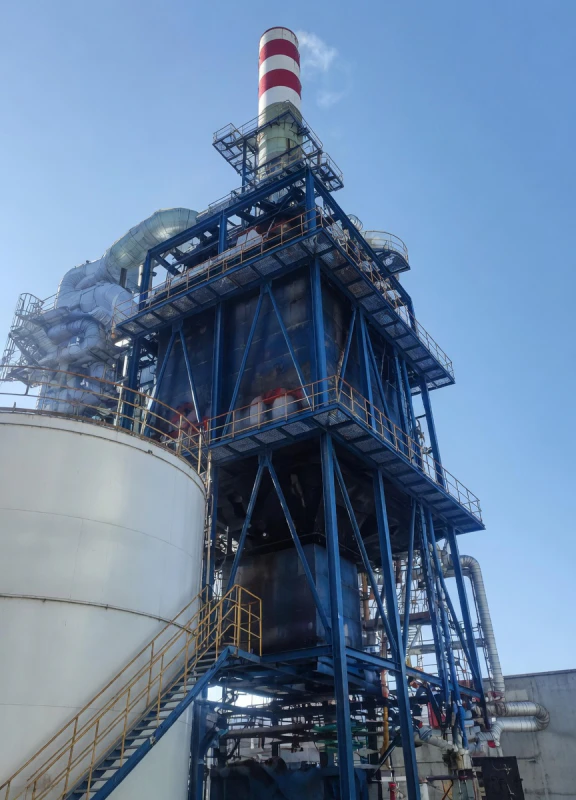
In massive utility boilers, flue gas passing through a Wet FGD tower picks up entrained gypsum droplets, unreacted limestone slurry, and condensed sulfuric acid aerosols. Releasing this creates “acid rain” and visible smog. Positioning a WESP as the final barrier completely eliminates these sub-micron escapees, allowing power plants to achieve strict near-zero emission thresholds globally.
Chemical, Lithium & Metallurgy
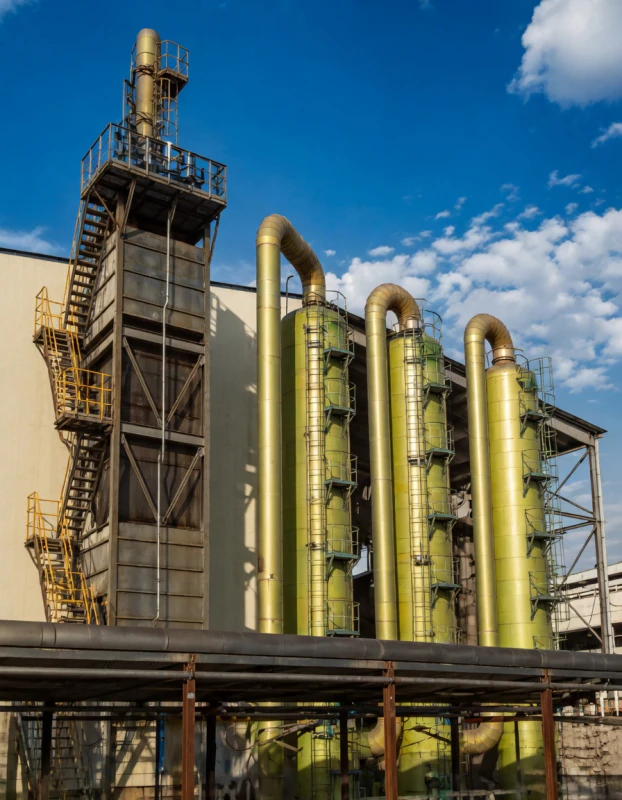
In the booming new energy sector, facilities undertaking Lithium Carbonate Calcination produce highly valuable but incredibly fine, sticky dust. Baghouses quickly blind in these conditions. WESPs not only prevent emission violations but actively recover this high-value product. Similarly, in steel sintering plants and non-ferrous metal smelting, WESPs are the only systems robust enough to extract heavy metallic aerosols from wet exhaust streams without degrading.
Ready to Upgrade Your Plant to Ultra-Low Emissions?
Our BLWESP Series is fully customizable to your specific industrial load, seamlessly integrating with your existing scrubbers and DCS infrastructure. Contact our global environmental engineering team today to discuss your inlet gas volume, temperature profile, and compliance targets.