
In the high-stakes environment of integrated steel manufacturing, the Basic Oxygen Furnace (BOF) stands as the beating heart of production. During the oxygen “blow” phase, the converter generates a massive volume of off-gas. This “Converter Gas” is incredibly valuable due to its high Carbon Monoxide (CO) content—often 65% to 75%—making it a prime fuel for power generation. However, this same CO concentration, combined with extreme heat, fine metallic dust, and the intermittent nature of the steelmaking process, transforms the exhaust stream into a highly explosive hazard.
To safely purify this gas without catastrophic failure, standard rectangular Electrostatic Precipitators (ESPs) simply cannot be used. Instead, engineers must deploy a highly specialized, explosion-proof Cylindrical ESP. In this technical deep dive, we explore the fluid dynamics, structural physics, and electrical safety mechanisms that mandate the cylindrical architecture.

1. The Threat: The Combustible Nature of Converter Gas
To understand the design imperative of the Cylindrical ESP, one must first analyze the volatile nature of the gas it treats. The BOF process is not continuous; it is a batch process. During the oxygen lancing period, pure oxygen reacts with the carbon in the molten iron, generating immense amounts of CO gas.
The Intermittency Hazard: Because the blowing is intermittent, the gas composition inside the exhaust ducting fluctuates wildly. During the start and end of the blow, ambient air (containing 21% Oxygen) can easily be drawn into the system. Carbon Monoxide has a wide explosive range—when CO mixes with air at concentrations between 12.5% and 74%, any ignition source will trigger a violent explosion.
Inside an Electrostatic Precipitator, thousands of volts are applied to discharge electrodes to ionize the gas and capture dust. Occasional electrical sparking (arcing) between the electrodes and the collection plates is practically inevitable. Therefore, the ESP provides the exact ignition source needed to detonate a CO/O2 mixture. To prevent catastrophic destruction, the physical shape and sealing of the ESP must guarantee that explosive gas mixtures can never accumulate in the first place.
2. The Aerodynamic Imperative: Eliminating “Dead Zones”
Why can’t a standard, box-like rectangular ESP be used? The answer lies in fluid dynamics and the terrifying concept of “dead zones.”
The Flaw of Rectangular Designs
In a standard rectangular ESP, the 90-degree corners create natural aerodynamic anomalies. As gas flows through a square or rectangular box, friction and eddy currents cause the gas velocity in the sharp corners to drop to near-zero. These areas are known as “dead zones” or “blind areas.”
During the transition phases of the BOF blow, when air inevitably mixes with the CO, this highly explosive mixture can become trapped and stagnate in these dead zones. If an electrical spark occurs nearby, the accumulated pocket of gas will detonate.
The Cylindrical Solution
By designing the ESP casing as a perfect cylinder, engineers eliminate corners entirely. The aerodynamic profile of a cylinder ensures a streamlined, piston-like flow of gas through the reactor. There are no 90-degree pockets for eddy currents to form.
Consequently, any explosive gas/air mixture that enters the ESP is immediately flushed through the system. By maintaining strict control over the gas velocity and ensuring a “corner-free” environment, the formation of combustible dead zones is structurally impossible.
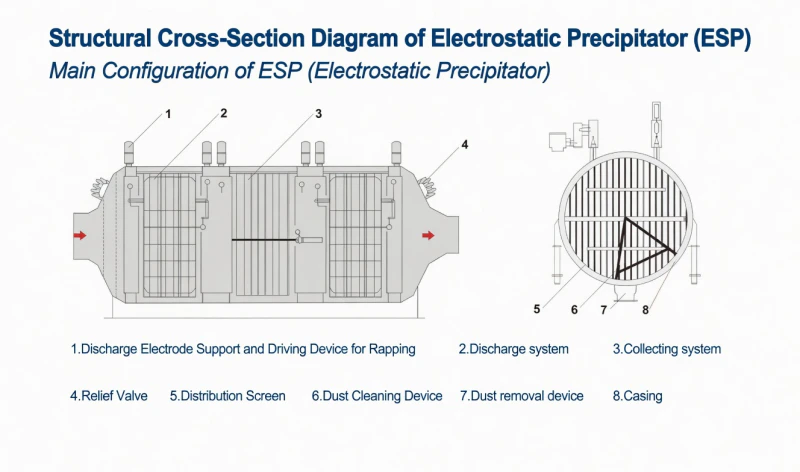
Structural Schematic of a Cylindrical Dry Type Converter ESP
3. Pressure Containment: Surviving Micro-Explosions
Even with perfect aerodynamics, minor deflagrations (micro-explosions) can occasionally occur during severe process upsets. The equipment must be built to swallow these pressure spikes without rupturing.
Hoop Stress vs. Bending Stress
From a mechanical engineering perspective, flat metal plates (used in rectangular ESPs) handle internal pressure very poorly. Pressure forces cause flat plates to bow and flex (bending stress), requiring massive amounts of heavy external reinforcement to prevent tearing.
A cylinder, however, translates internal pressure into hoop stress (tension across the circumference of the shell). Steel handles tension incredibly well. The cylindrical design allows the outer casing of the ESP to withstand immense internal pressure surges—up to 0.2 MPa—without suffering structural deformation.
- Zero Leakage Sealing: The cylindrical shape allows for superior continuous welding, achieving a 100% sealed structure with a “zero” air leakage rate. This prevents any fugitive air from entering and creating an explosive mixture.
- Explosion Relief Valves: Built into the top of the cylindrical casing are calibrated relief valves. If a pressure spike exceeds safe operational limits, these valves burst open in milliseconds, venting the explosive force safely upwards into the atmosphere, saving the costly internal electrodes and collector plates from destruction.
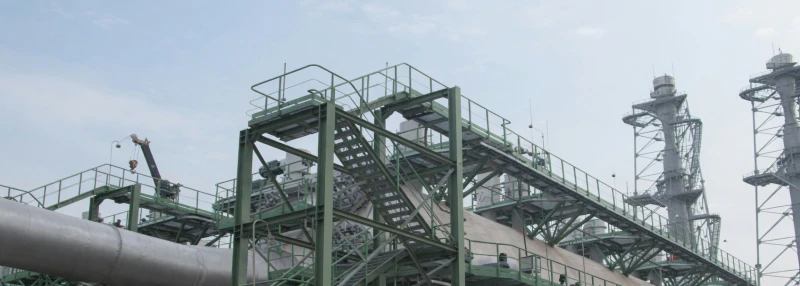
Reinforced Cylindrical Casing Rated for 0.2 MPa
4. Isolating Ignition: High-Voltage Safety Architecture
The central contradiction of a Dry Type Converter ESP is that it must inject upwards of 60,000 to 80,000 volts of electricity into a chamber filled with highly flammable gas. The points where the high-voltage electrical cables enter the steel casing are prime locations for catastrophic arcing. To secure these vulnerabilities, specialized insulation systems are engineered.
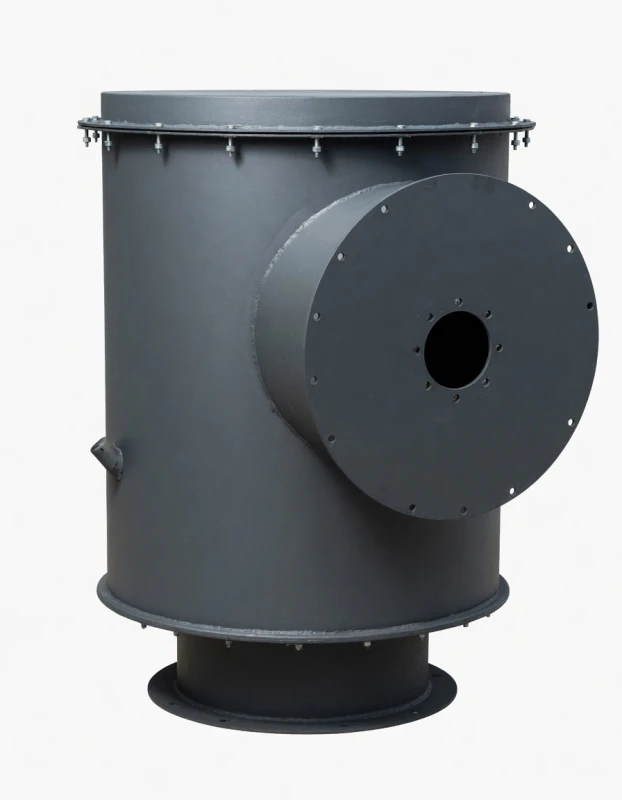
The Purged Insulator Box
The high-voltage lines enter the ESP through massive ceramic insulators housed within heavy-duty steel Insulator Boxes. To absolutely prevent converter gas from seeping up into these boxes and being ignited by a stray spark, the boxes are continuously pressurized with heated, inert nitrogen gas (N2). This positive pressure barrier guarantees that the combustible gas stream never contacts the sensitive electrical feed-throughs.
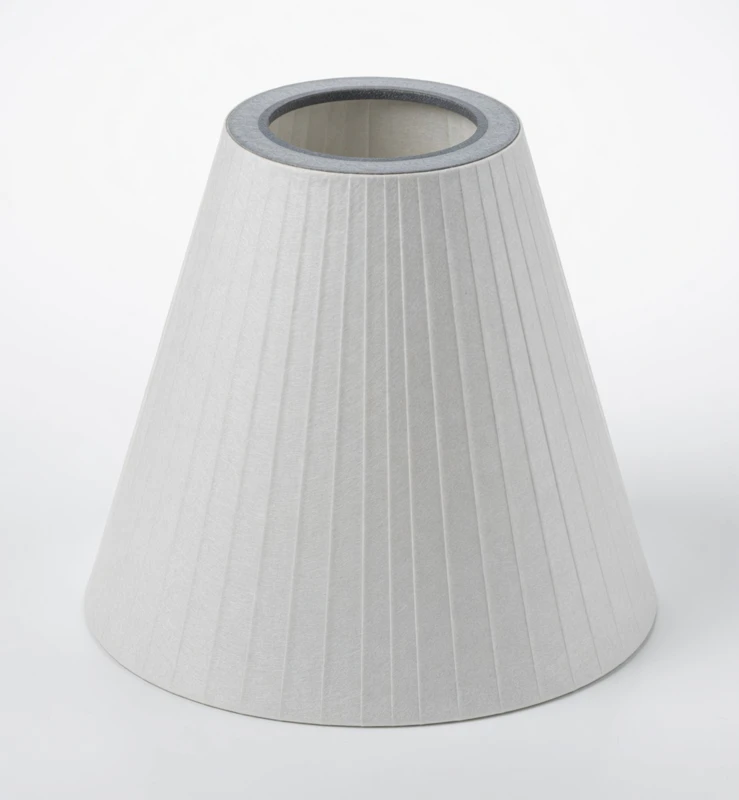
Insulating Magnetic Bottles
The internal cathode system (which carries the high voltage) is immensely heavy and must be physically suspended from the roof of the ESP casing. This is accomplished using massive ceramic structures known as Insulating Magnetic Bottles (or support insulators). These components possess extraordinary dielectric strength, capable of preventing the 80kV charge from grounding out against the steel casing, while simultaneously supporting tons of structural weight in extreme heat.
5. Intelligent Spark Suppression: High-Frequency Power
Traditional Line-Frequency (50/60 Hz) Transformer Rectifiers react too slowly to electrical sparking. If an arc forms in a standard ESP, it delivers a massive jolt of energy into the gas stream before the circuit breaker trips—more than enough energy to ignite Carbon Monoxide.
To mitigate this, Dry Type Converter Gas ESPs utilize advanced High-Frequency Power Supplies (HFPS). Operating at frequencies of 20 kHz to 50 kHz, these smart power systems monitor the electrical field in microseconds. The moment a pre-spark condition is detected, the HFPS instantly cuts the power, extinguishing the arc before it can deliver enough thermal energy to trigger a deflagration. Once the threat passes, the power ramps back up in milliseconds, ensuring uninterrupted high-efficiency dust collection without compromising plant safety.
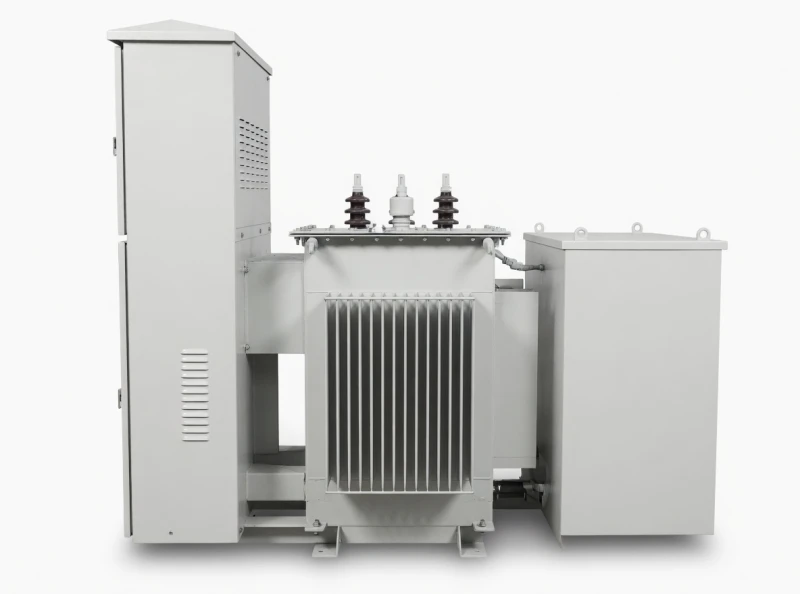
Smart High-Frequency Power Supply Unit
Secure Your Steelmaking Operations Today
Handling BOF Converter Gas requires uncompromising safety and expert engineering. Our Cylindrical Dry Type ESPs are custom-engineered to deliver zero-leakage, explosion-proof performance while driving your emissions below 10mg/Nm³.