
The industrial commercial printing and packaging sector faces unique and highly demanding challenges in exhaust gas management. High-speed offset presses, flexographic printing lines, and rotogravure operations generate immense volumetric airflows heavily burdened with a complex mixture of viscous ink mist, aerosolized resins, and volatile organic solvents. Traditional physical filtration systems fail rapidly when exposed to these sticky aerosols. To bridge this critical technology gap, the Ionization Catcher series has been introduced. These ionization catcher series products are advanced equipment in the fields of environmental protection and energy recovery, with internationally leading levels[cite: 12]. They can be widely used in industries such as printing, chemicals, coking, and spraying, achieving efficient treatment of tar and particulate matter[cite: 10, 14].
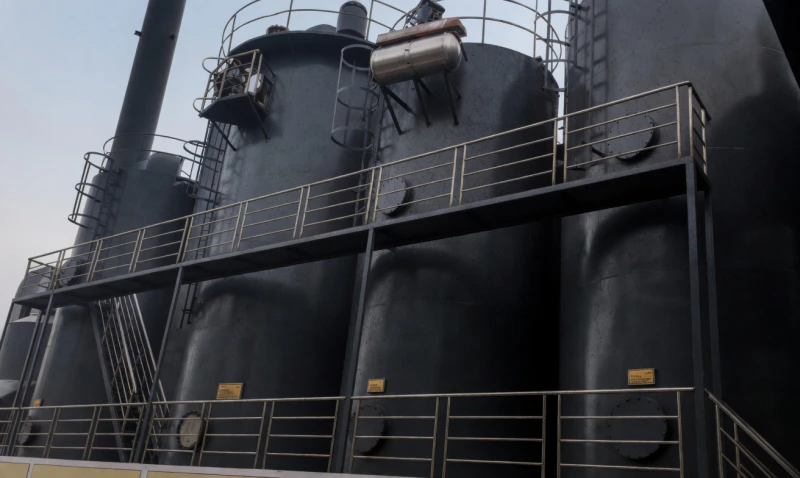
A Typical Industrial Installation in a Large-Scale Printing Line Environment
1. The Menace of Viscous Ink Aerosols
During continuous, high-speed industrial printing processes, liquid inks and solvents are transferred onto substrates via rapidly rotating cylinders. The immense shear forces generated by these rollers atomize a significant percentage of the ink into the surrounding air, creating a dense cloud of overspray known as ink mist. This exhaust gas is heavily burdened with a complex, multi-phase mixture of liquid pigment droplets, binding resins, curing agents, and Volatile Organic Compounds. The physical nature of these viscous contaminants creates a profound engineering dilemma that traditional filtration cannot solve.
If these volatile emissions are routed directly into a standard fabric baghouse or pleated filter bank, the sticky ink mist and moisture will instantly blind the microscopic pores of the filter media. Capillary action draws the viscous liquid deep into the fabric, baking into an impermeable crust that permanently ruins the filtration bags. Similarly, if routed into a traditional dry electrostatic precipitator, the viscous ink droplets will cement themselves to the dry collection plates. When mechanical rapping hammers attempt to dislodge this material, it does not fall away cleanly; instead, it smears and accumulates, causing severe bridging between electrical components and triggering localized short-circuits.
The Ionization Catcher represents a revolutionary departure from standard filtration, specifically engineered to thrive in this exact hostile environment. Our company’s ionization catcher integrates design, manufacturing, installation, and commissioning[cite: 11]. Over the years, through practical applications and continuous optimization in numerous industrial projects, the product structure has become increasingly rational, with strong operational stability and high processing efficiency[cite: 13]. It operates as a paramount pre-treatment safeguard, ensuring that downstream thermal oxidizers are protected from sticky resin accumulation that could otherwise lead to dangerous facility fires.
2. Deciphering the Process Flow Schematic
To truly comprehend the efficiency of the Ionization Catcher against viscous ink mist, one must examine the cross-sectional fluid dynamics and electrostatic forces occurring within the reactor tubes. The schematic diagram reveals a masterful manipulation of Coulomb forces designed to separate liquid impurities from the gas stream without ever relying on restrictive mechanical filters.
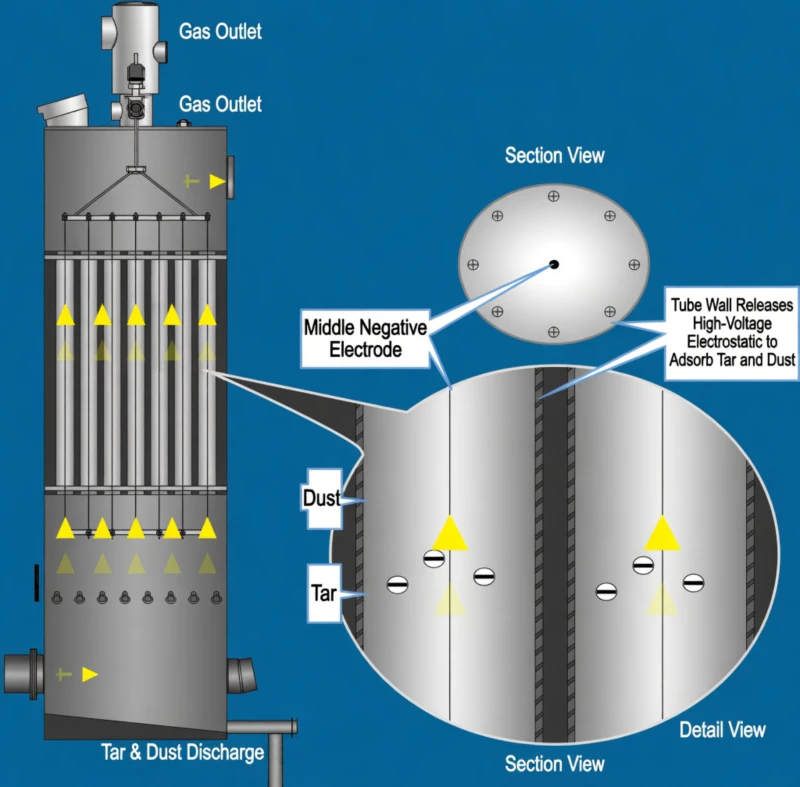
Schematic Overview: Electrostatic Ionization and Gravity Discharge Mechanics
Center Negative Electrode and Ionization
As detailed in the schematic, the core of the system relies on a perfectly centered discharge wire acting as the negative electrode. When smoke containing impurities such as tar and droplets passes through this electric field, it encounters a massive, continuous corona discharge[cite: 23, 24]. The high-voltage field ionizes the surrounding gas medium, generating a dense cloud of free electrons and negative gas ions.
The impurities in the gas stream violently collide with these free electrons. The impurities adsorbed with negative ions and electrons move to the precipitation electrode under the action of the electric field’s Coulomb force[cite: 24]. This targeted migration prevents the particulate matter from continuing upward and escaping with the clean gas stream.
Tube Wall Adsorption and Gravity Discharge
Simultaneously, the outer tube wall functions as the grounded, positive collection surface. As the highly charged ink particles collide with this precipitation electrode, they immediately release the charged particles and adsorbing onto the precipitation electrode (charging phenomenon)[cite: 24].
Because the collected material consists largely of semi-liquid ink aerosols and condensed moisture, the system possesses a natural self-cleaning ability. When the mass of impurities adsorbed on the precipitation electrode increases to greater than its adhesion force, it will automatically flow down and be discharged from the bottom of the ionization catcher, while the clean gas exits from the upper part of the ionization catcher[cite: 25]. This liquid waste is subsequently discharged safely into a collection vessel for potential solvent recovery.
3. Precision Structural Engineering: The Corona System
To safely operate within the volatile, highly humid, and deeply corrosive environments of industrial printing operations, the Ionization Catcher is built with specialized, high-durability internal support components. These parts are meticulously engineered to resist chemical attack and prevent catastrophic electrical shorting across the framework.
Suspension and High-Voltage Insulation
The physical engine driving the equipment’s ionization capability is the Corona System. The main component is the corona wire, which consists of high-voltage porcelain bottles, suspension rods, upper and lower umbrella rings, and weights[cite: 49]. This system is installed inside the tar removal tower[cite: 50]. Ensuring these wires remain perfectly taut and centered is absolutely essential to maintaining a uniform electric field without sparking against the grounded tube walls. When the corona wire is connected to high voltage, a strong high-voltage electric field is generated, ionizing the surrounding gas medium, producing charges that give the mixture of tar, water mist, dust, etc., in the medium a negative charge[cite: 50].
However, in a printing facility, volatile organic compounds and atomized solvents present a massive, constant risk of electrical grounding. If moisture is permitted to condense on the suspension structures, the high-voltage electricity will track across the wet surface, violently short-circuiting against the steel casing. To proactively prevent this, the insulator is equipped with a thermal insulation box and is fitted with an electric heating device[cite: 57]. This constant, thermostatically controlled heating guarantees that solvent mist and water droplets cannot condense on the high-voltage porcelain bottles, ensuring continuous, safe operation even when the gas stream is fully saturated.
Thermally Insulated Corona Support Structures and Porcelain Bottles
4. Intelligent Power Supply and Process Control
Delivering raw electrical power to the corona wires is insufficient; the high voltage must be intelligently and precisely modulated to match fluctuating gas loads without generating dangerous electrical arcs. Our systems are driven by advanced electrical automation hardware to ensure maximum safety, consistent capture efficiency, and automated fail-safes.
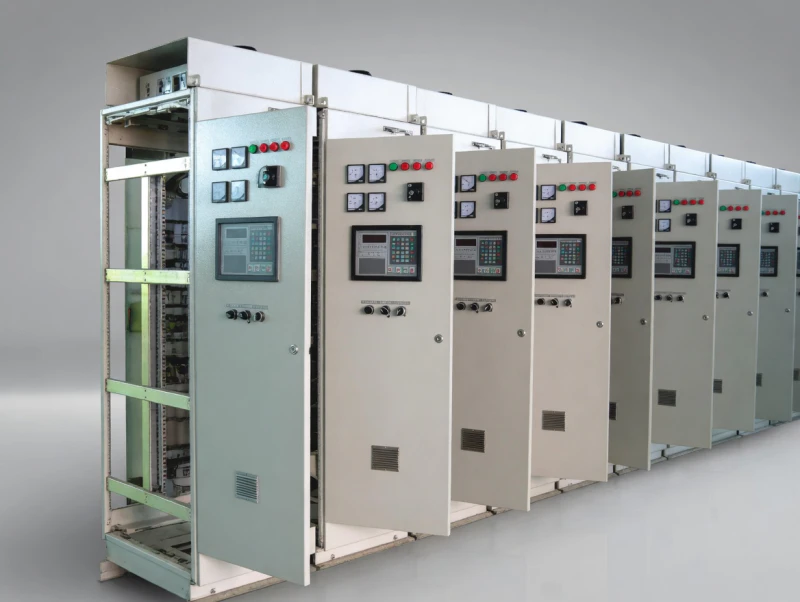
High Voltage Control Cabinet
Functioning as the centralized brain of the operation, the control center of the ionization catcher manages power input, working voltage adjustment and output, operational fault alarm, and automatic cut-off[cite: 52]. In a printing facility, where highly flammable solvent vapors are continuously present, an automated microsecond fault response is paramount. All these operations are completed by components inside the cabinet and knobs and buttons on the panel[cite: 52]. The operating status is displayed by instruments and indicator lights[cite: 53], allowing operators to monitor system health remotely.
High Voltage Electrostatic Silicon Rectifier
To generate the immense electrical field necessary to ionize the gas and capture sub-micron ink droplets, standard alternating grid power must be significantly transformed. The alternating voltage output from the control cabinet is boosted and rectified into high-voltage direct current and supplied to the corona electrode system[cite: 55]. This steady DC voltage provides the highly concentrated, stable corona discharge required to capture airborne chemical impurities without disruptive voltage ripples.
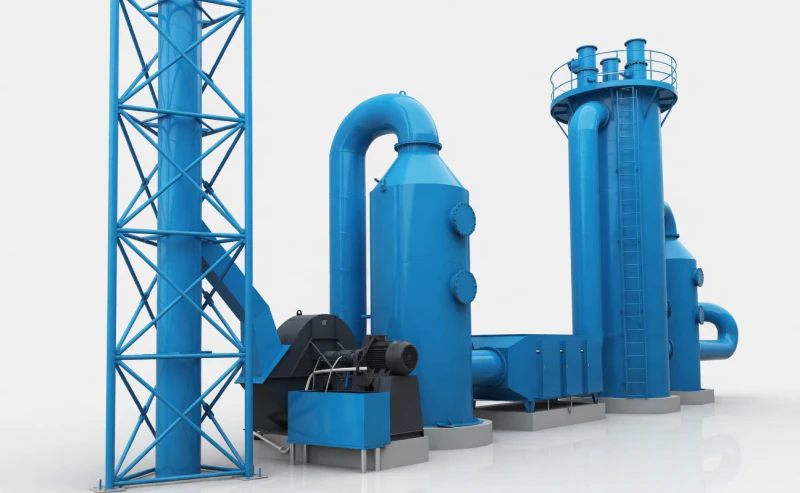
Robust Physical Structure of the Ionization Catcher Equipment
5. System Specifications and World-Class Manufacturing
The Ionization Catcher BLBZQ series is meticulously designed for extreme scalability and profound energy efficiency. Depending on the specific industrial printing requirement, the standard models are engineered to handle gas volumes ranging from a moderate 10000 cubic meters per hour up to a robust 30000 cubic meters per hour per module[cite: 60]. To easily accommodate this massive volumetric flow, the reactor chambers house between 37 and 91 electrode tubes[cite: 60]. The tubes themselves are constructed from highly durable materials, specifically utilizing galvanized round tubes with dimensions of 250 millimeters in diameter by 4000 millimeters in length[cite: 60].
In terms of operational expenditure, these environmental protection systems are highly optimized. Due to the streamlined aerodynamic design of the vertical tubes, the system boasts an incredibly low wind resistance of just 300 Pa[cite: 60]. This prevents unnecessary strain on the facility’s induced draft fans, saving substantial electricity over the plant’s operational lifetime. Direct power consumption of the high-voltage system is also highly economical, ranging from merely 15 KW to 42 KW depending on the exact model scale[cite: 60].
Unrivaled Production Capacity
Such precision engineering demands immense, sophisticated manufacturing capability. Our company is an integrated supplier specializing in the R&D and production of environmental protection system equipment[cite: 63]. With an annual production capacity of over 50,000 tons, we are equipped with specialized production lines for polar plates and discharge electrodes of dust removal equipment, as well as large-scale edge planers and plate bending machines for manufacturing ring girders[cite: 64].
These state-of-the-art facilities fully meet the demanding requirements of mass production. Adhering strictly to the ISO9001 management system, our production quality maintains a leading position in the industry[cite: 65]. Advanced fabrication tools, including CNC cutting machines, robot automatic welding stations, and laser engraving machines[cite: 66, 68, 74], guarantee that every Ionization Catcher delivered to the field operates flawlessly under the harshest printing environments.
Ensure Continuous Process Compliance
For the industrial printing and packaging industries, treating viscous ink aerosols is no longer just a matter of meeting basic environmental regulations. It is a strategic necessity to aggressively protect your downstream exhaust equipment, such as regenerative thermal oxidizers, from catastrophic, sticky failures and fire hazards. Do not allow ink mist to blind your filters and halt your production lines. Contact our expert environmental engineering team today to architect an Ionization Catcher system strictly custom-tailored to your exact exhaust profile.