
In the pursuit of “carbon neutrality” and industrial efficiency, the energy consumption of environmental protection equipment has become a decisive factor for plant profitability. For facilities managing viscous tar, paint mists, and aerosols, the Ionization Catcher stands out as a leading technical solution[cite: 12]. Beyond its high capture efficiency, its most profound economic advantage lies in its remarkably low operational resistance. While traditional filters consume massive amounts of electricity to push air through clogged media, the Ionization Catcher maintains a wind resistance of only 300 Pa across its entire operational range[cite: 59].
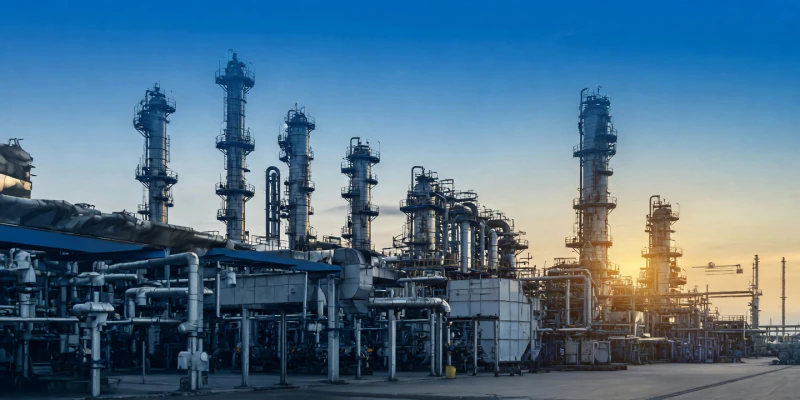
Integrated Emission Control System emphasizing energy efficiency
1. The Physics of Low Resistance
The wind resistance of a purification system is directly proportional to the energy required by the Induced Draft (ID) fans. In traditional baghouses or dry ESPs, air must be forced through dense fabric or around complex internal baffles. However, the Ionization Catcher utilizes a vertical, open-tube structure[cite: 59]. Because the impurities are moved horizontally by the electric field’s Coulomb force rather than being physically blocked by a barrier, the gas stream flows with minimal obstruction[cite: 23].
Across the standard BLBZQ series—ranging from 10,000 to 30,000 cubic meters per hour—this wind resistance is strictly maintained at 300 Pa[cite: 59]. For a facility operating 24/7, reducing system resistance from a typical 1500 Pa (common in fabric filters) to 300 Pa results in energy savings of up to 70% in fan power consumption. This low resistance is maintained even when handling heavy tar or aerosols, as the liquid captured on the precipitation electrode tubes automatically flows down due to gravity, keeping the passage clear[cite: 23, 25].
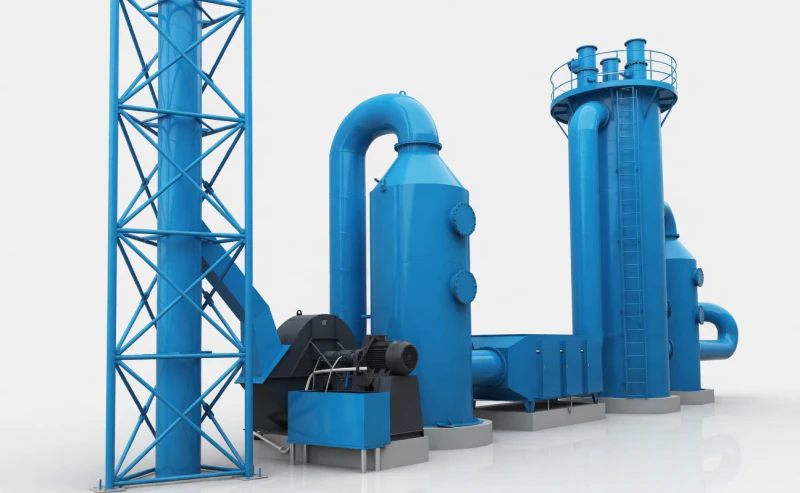
Engineered for minimal pressure drop and maximum flow
2. High-Efficiency Ionization Power Profiles
While the aerodynamic design saves fan energy, the electrical system of the Ionization Catcher is equally optimized for low consumption. By using high-voltage ionization to charge multi-phase contaminants, the system converts raw electrical power into high-efficiency capture strength[cite: 50, 55].
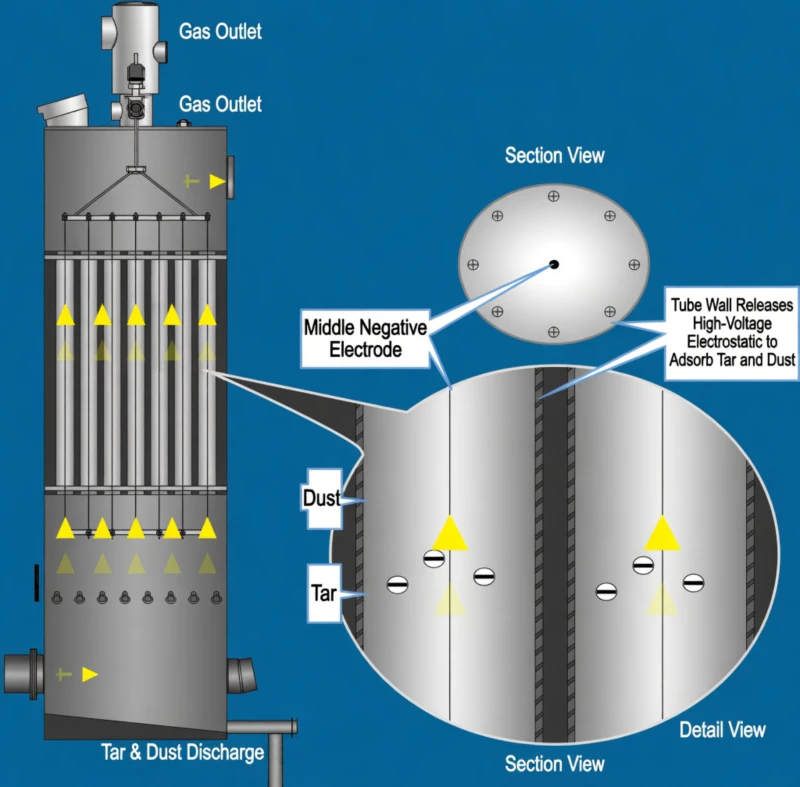
Adsorption of Charged Impurities under Coulomb Force [cite: 23]
Optimized Power Consumption
The power consumption of our BLBZQ units is precisely calibrated to the air volume. For instance, the 10,000 cubic meters per hour model requires only 15 KW of power, while the robust 30,000 model consumes 42 KW[cite: 59]. This direct electrical usage is highly efficient because the system avoids the energy losses associated with traditional mechanical cleaning devices.
Crucially, the High Voltage Control Cabinet manages power input and work voltage adjustment[cite: 52]. This ensures that the high-voltage electrostatic silicon rectifier only delivers the exact energy necessary to maintain the ionization field[cite: 55]. By stabilizing the working voltage, the system prevents electrical waste while guaranteeing that the corona system ionizes the surrounding gas medium effectively[cite: 50].
3. Performance Analysis Across BLBZQ Models
Our specifications highlight a consistent commitment to low-energy operation. Across all major standalone models, the aerodynamic wind resistance remains static, allowing for predictable and stable plant utility costs[cite: 59].
| Model Number | Air Volume (m3/h) | Wind Resistance [cite: 59] | Energy Drain (KW) [cite: 59] |
|---|---|---|---|
| BLBZQ-10000 | 10,000 | 300 Pa | 15 KW |
| BLBZQ-20000 | 20,000 | 300 Pa | 29 KW |
| BLBZQ-30000 | 30,000 | 300 Pa | 42 KW |
4. Supporting Stability: The Control Ecosystem
Low-energy operation requires a system that functions without unplanned downtime. Any instability in the electric field can lead to poor capture, forcing the plant to operate longer or harder to meet standards[cite: 13].
Automation and Protection
The High Voltage Control Cabinet acts as the control center, meticulously managing power input and operational fault alarms[cite: 52]. This intelligent automation includes an automatic cut-off feature that protects the system from energy spikes and electrical failure[cite: 52]. All operations are displayed via precision instruments and indicator lights, allowing for micro-adjustments to work voltage to maintain the optimal balance between capture efficiency and electrical draw[cite: 52, 53].
To maintain this high level of electrical isolation even in the humid environments of the chemical or printing industries, our insulator boxes are equipped with internal heating devices[cite: 35, 57]. This prevents moisture condensation on the porcelain bottles, ensuring that the energy supplied is utilized solely for ionizing the gas medium rather than being lost to tracking or surface short-circuits[cite: 50, 57].
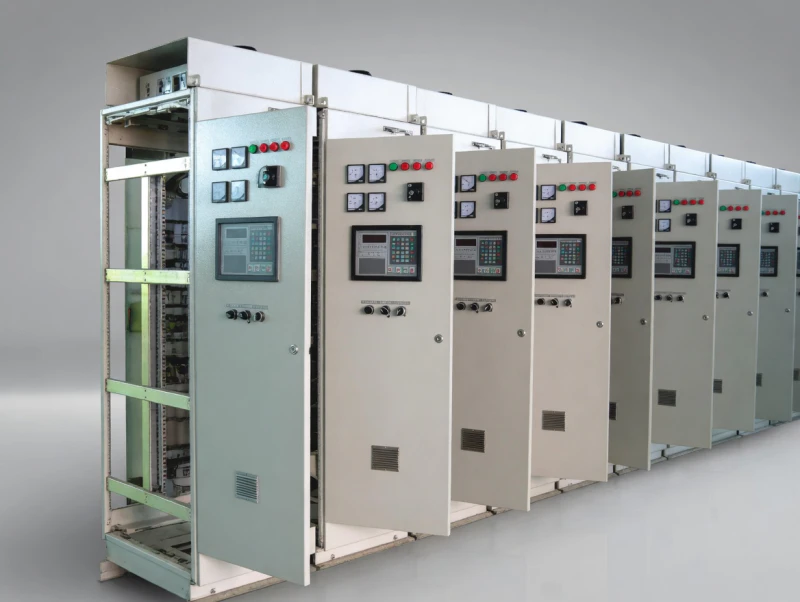
Intelligent Power Supply and Rectification Units [cite: 52]
5. Unrivaled Production Prowess
Supporting energy efficiency requires manufacturing components that match theoretical design with millimetric precision. Our annual production capacity exceeds 50,000 tons, supported by dedicated production lines for polar plates and discharge electrodes[cite: 62, 64]. By utilizing CNC cutting machines and robot automatic welding, we ensure that the internal passages maintain the perfect alignment necessary to guarantee the 300 Pa wind resistance standard[cite: 67, 68, 70].
Adhering strictly to the ISO9001 management system, we provide integrated supply for various engineering projects[cite: 65, 84]. Whether for VOCs treatment or carbon neutrality initiatives, our Ionization Catchers achieve the operational stability and low-energy benchmarks required for long-term industrial viability[cite: 13, 85].
Slash Your Operational Energy Costs Today
Don’t let high wind resistance drain your facility’s resources. Our advanced Ionization Catcher systems achieve leading processing efficiency with a low energy drain. Contact our environmental engineering team today to architect a custom-tailored system with a strictly guaranteed 300 Pa resistance profile.