Food Processing and Catering Solutions
In the diverse landscape of food processing and large-scale catering, managing low-concentration Volatile Organic Compounds (VOCs) and complex odors presents a significant environmental and operational challenge. From industrial snack production to massive commercial kitchens, the exhaust gas generated is often characterized by high air volumes but relatively dilute pollutant concentrations. Standard treatment methods frequently fail due to high energy demands or the risk of fire from oil-laden filters. To address these critical needs, the combined process of zeolite adsorption concentration and catalytic combustion offers a safe, efficient, and resource-oriented solution, ensuring that food processing facilities remain compliant while maximizing production safety.
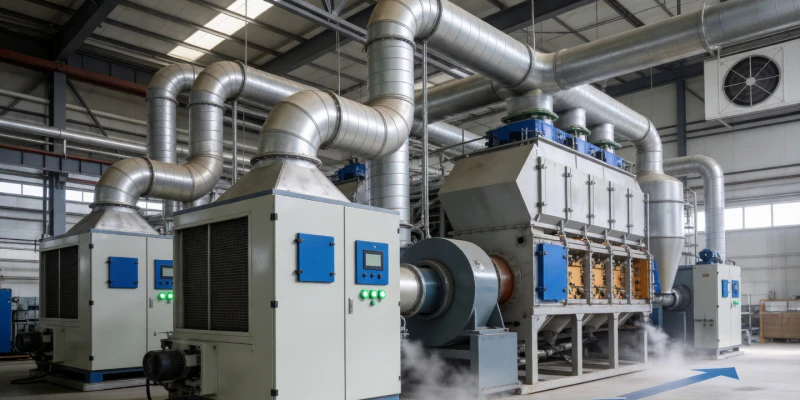
High-Capacity Zeolite Adsorption-Desorption Infrastructure for Industrial Food Plants
Application Context
1. Neutralizing Complex Food Industry Emissions
Food processing operations—ranging from oil refining and coffee roasting to industrial frying and livestock slaughtering—generate continuous streams of low-concentration volatile organic compounds and persistent odors. These emissions are not only a matter of environmental compliance but also a concern for community relations and cleanroom integrity. Because these pollutants are often dilute and mixed with high volumes of ventilation air, traditional direct thermal oxidation is economically prohibitive due to the immense fuel consumption required to reach combustion temperatures.
Versatile Pollutant Management
The zeolite adsorption-desorption catalytic combustion process is meticulously engineered to handle these multi-phase emissions. It is specifically designed to capture complex mixtures found in the food sector, including fatty compounds, aldehydes, alcohols, and various organic solvents used in flavoring and extraction. By concentrating these dilute pollutants, the system turns a waste stream into a sustainble energy source for its own destruction.
Through modular design and precise engineering, the system ensures that massive volumetric airflows from processing lines or large catering halls are scrubbed clean. This integrated technology allows food processing plants to operate at maximum capacity without the risk of atmospheric odor violations or falling short of stringent VOC emission standards.
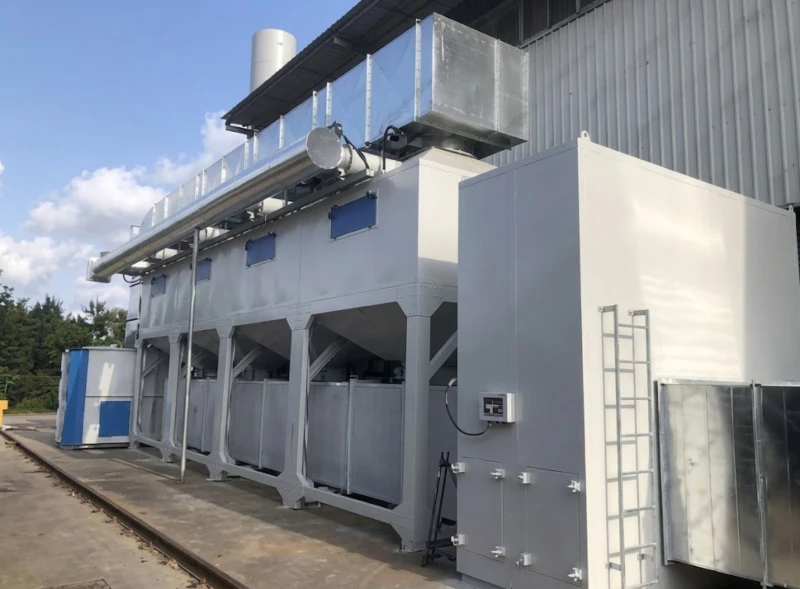
Emission Control Integration in a Commercial Food Facility
The Safety Benchmark
2. Superior Thermal Stability and Fire Safety
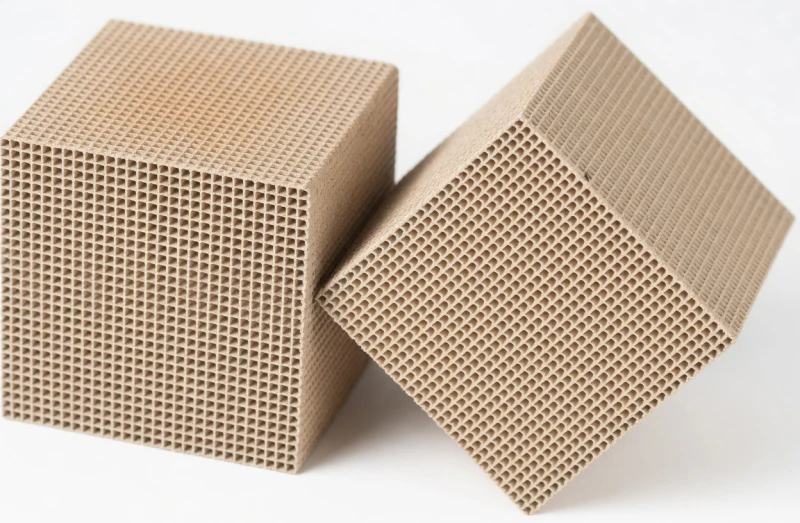
Inorganic Honeycomb Zeolite Molecular Sieves
Why Zeolite Prevents Industrial Fires
The most profound advantage of zeolite molecular sieves, especially in food and catering environments, is their absolute safety profile. In these industries, exhaust gas often contains fats and oils which can accumulate on adsorbent surfaces. Traditional activated carbon is a combustible fuel source. When oils or specific organic chemicals oxidize on a carbon bed, they can create exothermic “hot spots” that lead to spontaneous combustion and catastrophic facility fires.
Zeolite, however, is a completely inorganic microporous material composed of silicon and aluminum oxides. This fundamental chemistry makes it entirely non-flammable. It possesses exceptional high-temperature resistance and thermal stability, meaning even under aggressive desorption conditions or accidental heat spikes, the zeolite bed will not ignite. This provides the “essential safety” required for industrial food processing halls and urban catering centers.
Extended Operational Lifespan
Because zeolite maintains its structural integrity at high temperatures, it allows for more efficient thermal regeneration. High-boiling-point organic compounds—which are common in the catering industry—can be thoroughly purged without damaging the media. This ensures that the system maintains a high purification rate (over 95%) for years, significantly outperforming activated carbon in both safety and maintenance costs.
3. Safeguarding the Process: Multi-Stage Filtration
In the food and catering sector, exhaust gas is uniquely challenged by oil fumes and moisture. These particulates would rapidly clog the microscopic pores of the zeolite molecular sieves if not properly pre-treated. The system employs a rigorous dry filtration protocol to ensure the adsorbent matrix remains clean and effective.
Particulate and Mist Interception
The exhaust is first introduced into the pre-treatment housing where it passes through high-density filter cotton. This layer captures large molecular particles and grease droplets larger than five micrometers. Following this, the gas stream is scrubbed by a sequence of progressive filter bags (G4, F5, F9, and H10). This sophisticated array successfully removes fine dust and aerosols down to one micrometer in size.
Precision differential pressure transmitters monitor each filtration stage. By alerting operators to the exact moment for filter replacement, the system prevents airflow resistance spikes and ensures that the critical zeolite matrix is perpetually shielded from oil fouling.
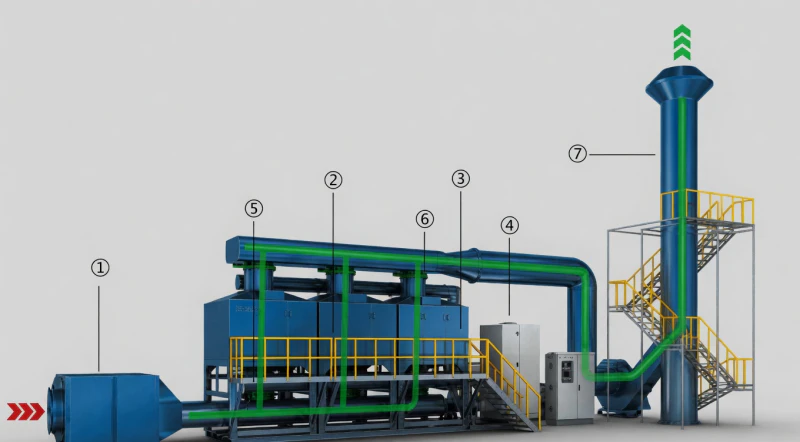
Advanced Multi-Stage Dry Filtration Pre-Treatment Housing
Robust Hardware Design
4. Structural Engineering of the Adsorption Box
Optimized Airflow for Industrial Scale
The physical housing of the zeolite matrix is built from heavy-duty carbon steel and treated with a high-durability anti-rust finish, essential for the humid environments of food processing. Inside the adsorption box, the zeolite is designed in multiple layers to ensure uniform and stable airflow distribution. This geometry maintains an “empty tower” wind speed between 0.8 and 1.5 meters per second, ensuring low operating resistance and maximum capture time.
To simplify maintenance in high-throughput food plants, the box uses a modular installation. Each honeycomb molecular sieve unit can be independently accessed via dedicated maintenance manholes and an integrated operation platform. This safe ergonomic design, complete with ladders and guardrails, ensures that routine inspections do not compromise the facility’s strict safety protocols.
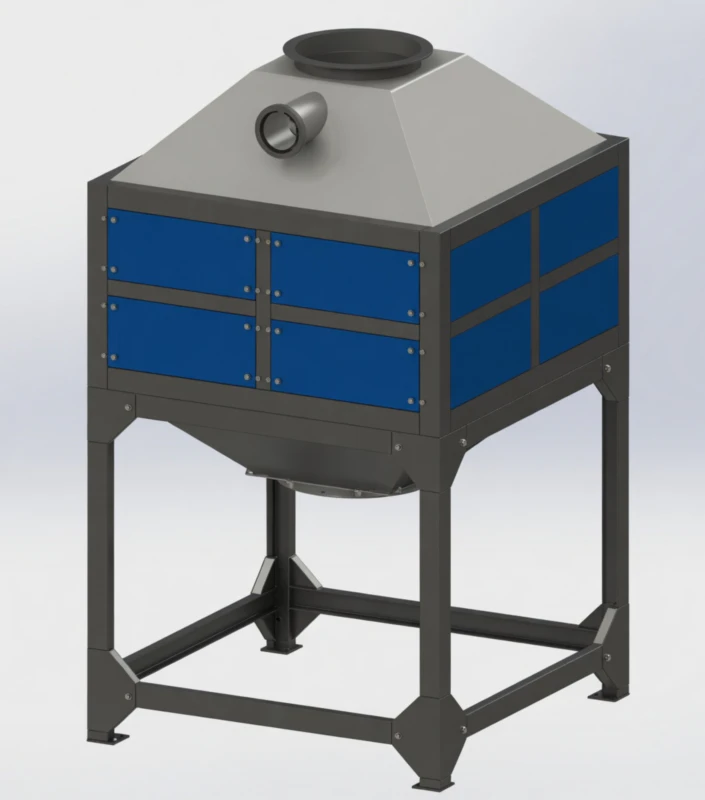
Heavy-Duty Modular Adsorption Box Design
Process Dynamics
5. The Continuous Adsorption-Desorption-Combustion Cycle
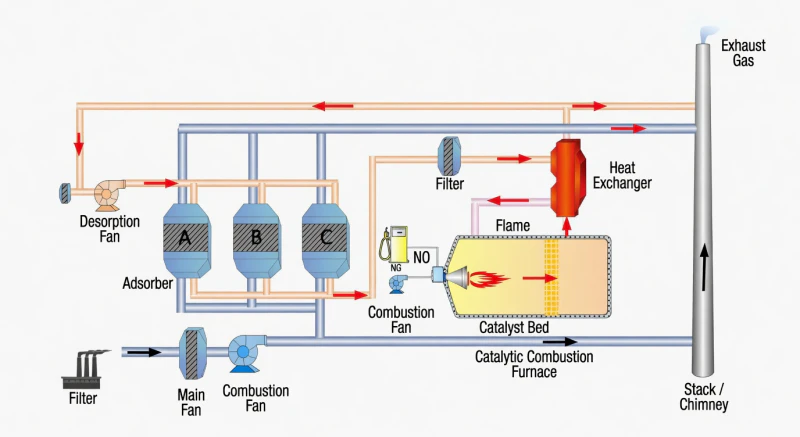
Synergistic Adsorption-Desorption-Combustion Cycle Diagram
Switching and Concentration
The system uses multiple beds to ensure zero downtime. When one zeolite tank reaches its chemical saturation limit, automated valves switch the incoming exhaust to a standby tank. The saturated tank is then regenerated using a hot airflow—sourced entirely from the residual heat of the catalytic combustor. This process concentrates dilute odors and VOCs by up to 20 times, preparing them for highly efficient destruction.
Catalytic Destruction
The concentrated organic gas enters the catalytic oxidizer. At temperatures between 300 and 500 degrees Celsius, the catalyst breaks down the pollutants into harmless CO2 and water vapor. Because the concentrated gas is rich in energy, the destructive reaction releases enough exothermic heat to sustain the entire desorption cycle, making the operation self-sufficient and remarkably low-cost.
Oxidation Core
6. The Catalytic Oxidation Engine
Low-Temperature Destruction Efficiency
Catalytic oxidation is the “terminator” technology for food industry odors. By using high-performance catalysts, the ignition temperature is lowered to only 250-300 degrees Celsius. This significantly reduces energy consumption compared to direct combustion and prevents the formation of secondary pollutants like NOx. Since the catalyst carrier is highly porous, oxygen and organic gases are intimately adsorbed, creating a vigorous chemical reaction that purifies the air with 95%+ efficiency.
For facilities with intermittent production cycles, the system offers a short cold-start time of just 20 to 30 minutes, allowing for maximum flexibility. The resulting products—CO2 and H2O—are released safely, eliminating the persistent odor problems that can plague urban catering or processing hubs.
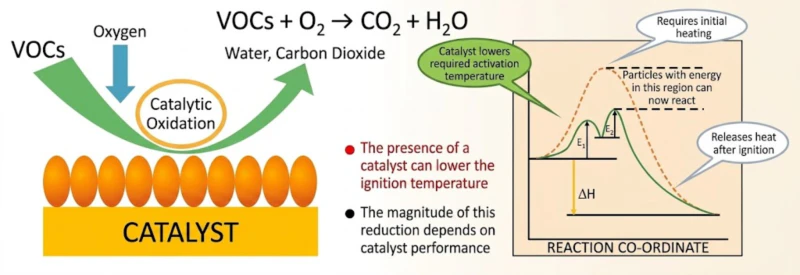
Molecular Decomposition via Catalytic Activation
7. Conquering Ultra-Large Volumes in Modern Processing
Large industrial food complexes generate massive air volumes that require centralized, reliable scrubbing. The BAOLAN Zeolite Adsorption-Desorption system is engineered for this scale, capable of handling design air volumes up to 200,000 cubic meters per hour per single installation. This scalability ensures that even the most expansive livestock processing or industrial catering centers can be serviced by a single, high-efficiency environmental unit.
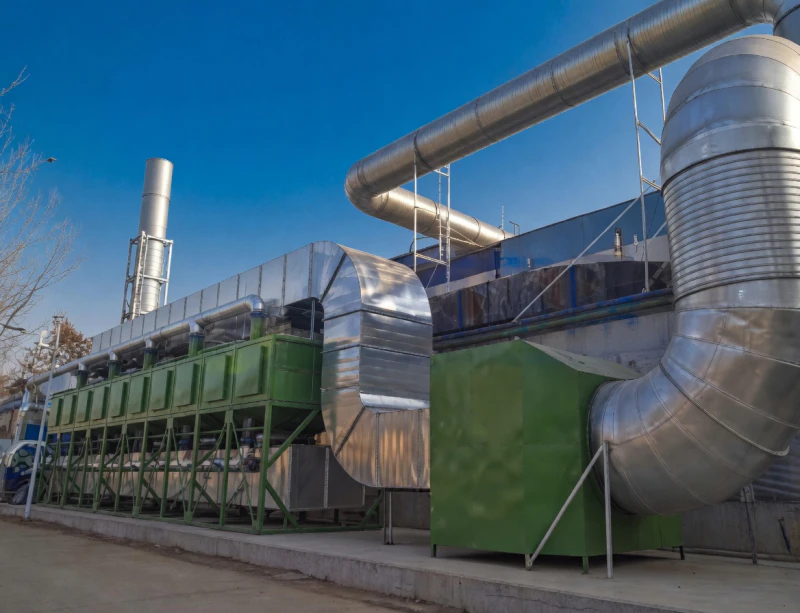
Ultra-Large Scale 200,000 m³/h VOC Purification Deployment
Safeguard Your Plant with Non-Flammable Technology
For the industrial food processing and high-volume catering sectors, fire safety is as critical as environmental compliance. Do not risk your facility with flammable activated carbon beds. Contact our expert environmental engineering team today to architect a non-flammable, thermally stable Zeolite Adsorption-Desorption Catalytic Combustion Process strictly custom-tailored to your facility’s odor and VOC profile.