Surface Treatment Environmental Solutions
In the highly demanding sectors of coating and surface treatment, the management of low-concentration Volatile Organic Compounds presents a profound challenge for environmental compliance. Traditional single technologies, such as direct combustion or basic activated carbon adsorption, have consistently demonstrated critical flaws, including exorbitantly high energy consumption, prohibitive operating costs, poor safety margins, and the persistent threat of secondary pollution. To overcome these industrial bottlenecks, the combined process of zeolite adsorption concentration and catalytic combustion achieves efficient purification and resource utilization of low-concentration exhaust gas through the synergistic effect of adsorption, desorption, and combustion. This integrated approach has become one of the premier mainstream solutions for industrial exhaust gas treatment today.
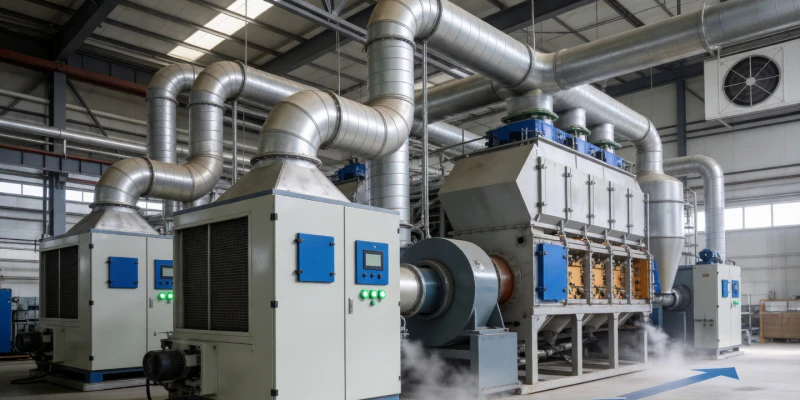
Large-Scale Zeolite System Deployment in a Surface Treatment Facility
Targeted Industrial Applications
1. Solving the Complex Solvent Challenge
The coating and surface treatment industry encompasses a vast array of manufacturing processes, each generating unique, highly volatile emission profiles. The Zeolite Adsorption-Desorption Catalytic Combustion Process is fundamentally engineered to address the specific needs of these sectors. This advanced environmental protection technology is predominantly applied to the treatment of spray paint exhaust in heavy equipment manufacturing, paint exhaust treatment in commercial furniture manufacturing, and baking paint exhaust treatment in automobile dealerships and service centers. Furthermore, it serves as the premier, reliable solution for large-scale automobile parts coating facilities where operational continuity, fire safety, and strict emission limits are absolutely mandatory for continuous plant operation.
Targeted Chemical Components
Surface coating operations rely heavily on diverse solvents, thinners, and curing agents that rapidly vaporize into the exhaust stream during application and drying phases. This advanced zeolite system is meticulously designed and extensively applied to the treatment of volatile organic compounds. It comprehensively captures organic solvents such as the benzene series, ester series, alcohol series, aldehyde series, ether series, alkane series, and their highly complex mixtures.
Unlike basic carbon filtration methods that degrade rapidly when exposed to these aggressive solvent mixtures, or when subjected to high humidity environments, the robust molecular structure of the zeolite allows for continuous, highly selective adsorption. By isolating these specific chemical families from the massive volumetric airflows typical of paint booths, the system ensures that downstream atmospheric discharge remains completely compliant with the most stringent global environmental protection regulations, while simultaneously recovering valuable thermal energy for reuse within the facility.
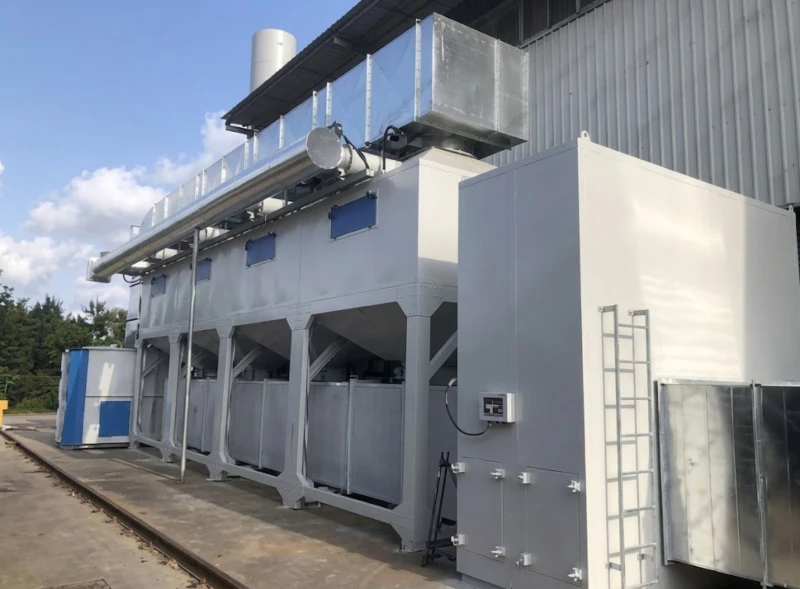
Equipment Integration in a Large-Scale Automobile Coating Line
2. The Critical First Line of Defense: Multi-Stage Dry Filtration
Before the volatile organic compounds can be safely and efficiently adsorbed by the molecular sieves, the raw exhaust gas must be meticulously conditioned. Paint mist contains sticky aerosols, resin particulates, and heavy dust that would instantly blind the microscopic pores of the zeolite if allowed to pass untreated. Therefore, the system utilizes a heavy-duty dry filter to perform pretreatment filtration of particulate matter in the exhaust gas before it ever reaches the core adsorption matrix.
Progressive Particulate Interception
The exhaust gas is introduced into the filter through the main pipeline, passing directly through the primary filter cotton. The exhaust gas fully contacts the filter cotton, and the large molecular particles and dust it carries are intercepted by the filter media and adhere to it, successfully removing dust particles larger than five micrometers from the exhaust stream. Following this initial scrubbing phase, the exhaust gas passes through a highly precise series of filter bags, typically graded as G4, F5, F9, and H10, for secondary and tertiary filtration. This effectively removes fine dust particles larger than one micrometer from the exhaust gas.
The filter media of the bag filter is engineered from high-quality synthetic fibers. This unique synthesis technology enables an incredibly high fiber content to be synthesized within a specific area per square meter, allowing the filter to perform vastly better under humid conditions, high airflow velocities, and the heavy dust loads that are typical of industrial paint booths. The excellent filter bag shape design ensures that when inflated by air, the airflow evenly fills the entire bag, effectively reducing operating resistance and allowing dust to be uniformly captured inside the filter bag without causing premature clogging.
Each filtration stage of the equipment is equipped with a highly sensitive differential pressure transmitter to display the pressure drop, thereby automatically reminding operators of the precise replacement time for the filter material. This continuous monitoring ensures the downstream zeolite is perpetually protected from contamination.
Advanced Multi-Stage Dry Filtration Pre-Treatment Housing
Molecular Engineering
3. The Science of Honeycomb Zeolite Molecular Sieves
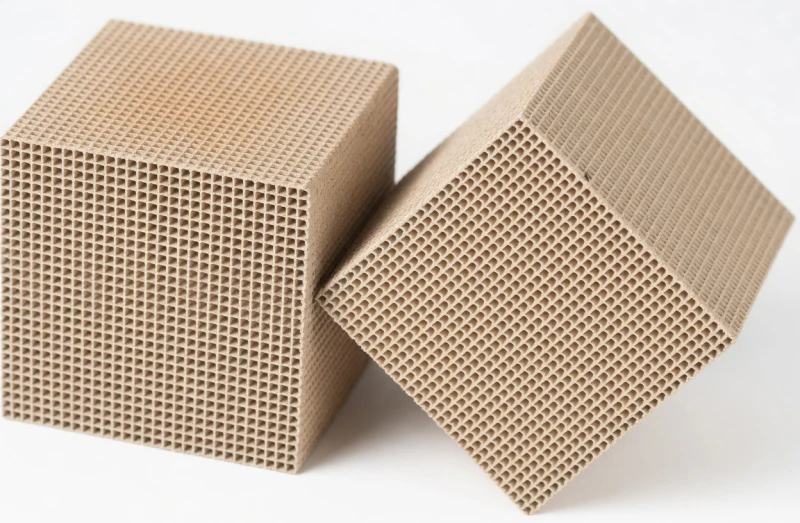
High-Surface-Area Honeycomb Zeolite Molecular Sieves
Composition and Shape-Selective Adsorption
The primary structural material of the honeycomb molecular sieve is natural zeolite, an inorganic microporous material composed predominantly of silicon dioxide, aluminum oxide, and alkali metals or alkaline earth metals. It boasts highly uniform micropores, with pore sizes directly comparable to general molecular sizes. The internal pore volume accounts for an astonishing forty to fifty percent of the total volume, presenting a massive specific surface area ranging from three hundred to one thousand square meters per gram.
Molecular sieves feature a distinct, highly engineered honeycomb structure, with cavity diameters generally designed between zero point six and one point five nanometers, and pore sizes about zero point three to one nanometer, accompanied by uniformly arranged channels within the crystal matrix. The uniform pore size and the regular framework structure of the molecular sieve decisively determine its shape-selective adsorption, allowing it to perfectly trap the specific volatile molecules generated in coating processes while simultaneously letting smaller, harmless atmospheric gases pass through unhindered.
Electrostatic Polarity Capture Mechanisms
Beyond physical size restrictions, the system selectively adsorbs compounds according to the polarity, unsaturation, and polarizability of the target molecule. Since zeolite molecular sieves themselves are inherently polar substances generating a strong internal electrostatic field, solvent molecules with stronger polarity or those that are easier to polarize are much more readily adsorbed. Furthermore, due to the highly uniform pore size distribution and significant variations in structure and composition, it features supreme high temperature resistance, absolute non-flammability, good thermal stability, and exceptional hydrothermal stability, ensuring it never becomes a dangerous fire hazard.
Robust Hardware Design
4. Structural Engineering of the Adsorption Box
Modular Housing and Airflow Optimization
The equipment box is expertly manufactured from heavy-duty carbon steel material, treated comprehensively with an advanced surface anti-rust finish to prevent degradation in humid, corrosive environments. The internal zeolite of the adsorption box is purposefully designed in multiple layers, ensuring uniform and stable airflow distribution and exceptionally good adsorption performance across the entire breadth of the catalyst bed. By utilizing these specialized honeycomb molecular sieves in this specific configuration, the empty tower wind speed is maintained at an optimal zero point eight to one point five meters per second, resulting in crucially low operational resistance and immense energy savings.
Recognizing the realities of long-term, intensive industrial maintenance, the box adopts a highly efficient modular design, with the molecular sieves independently installed for ultimate convenience and ease of maintenance. The equipment maintenance door lock thoughtfully adopts a handwheel pressing structure, which is significantly more conducive to guaranteeing the overall airtight sealing of the equipment under varying pressure loads.
Furthermore, the adsorption device strategically reserves maintenance manholes and is fully equipped with an integrated, heavy-duty operation platform. The inclusion of the platform, ladder, and safety guardrail greatly facilitate routine equipment maintenance and material replacement, making it remarkably convenient to maintain and inspect the equipment while drastically enhancing operational safety and ergonomic access for facility personnel.
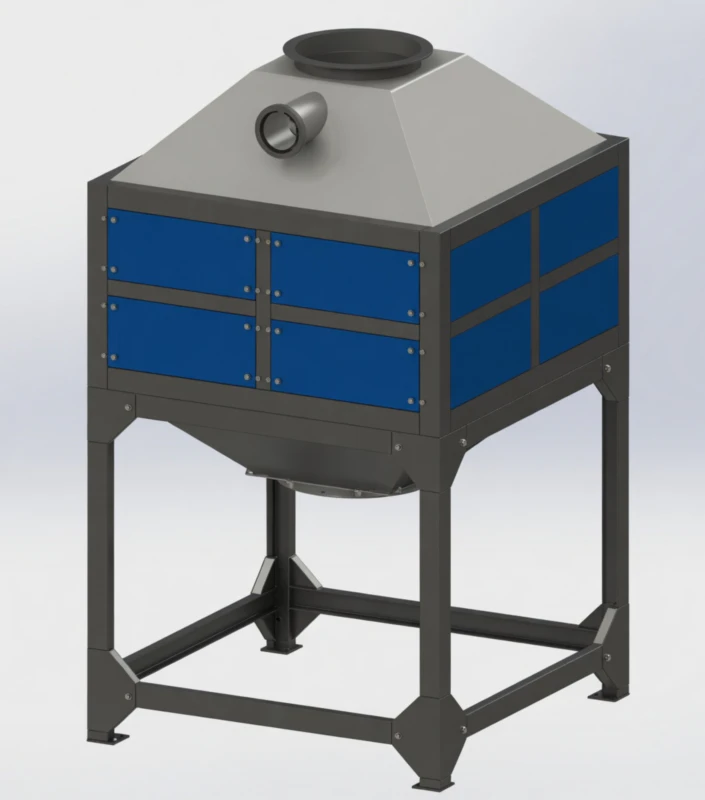
Heavy-Duty Modular Adsorption Box Architecture
Process Dynamics
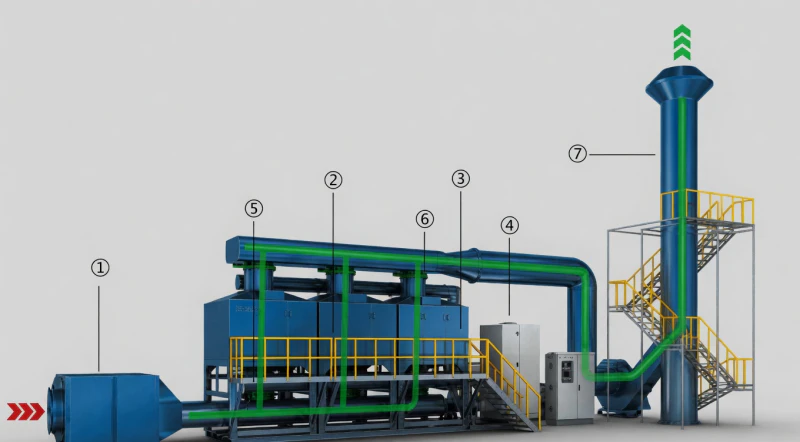
5. The Continuous Adsorption, Desorption, and Combustion Cycle
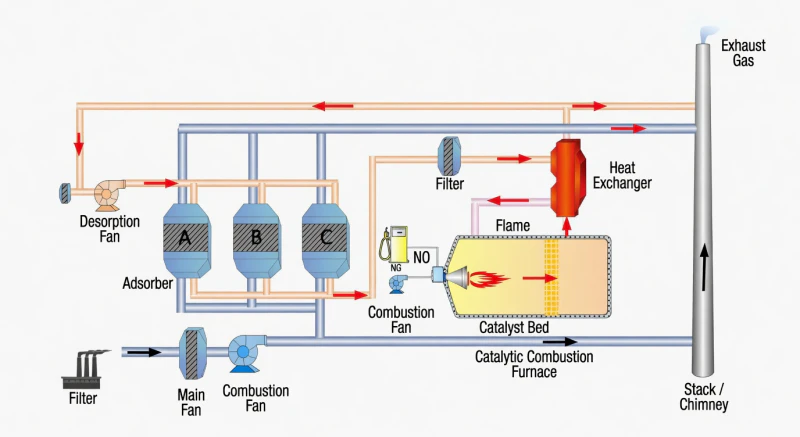
Synergistic Adsorption-Desorption-Combustion Cycle Diagram
The Switching and Desorption Phase
The raw exhaust gas is actively routed into the primary adsorption tanks. When the primary adsorption tank approaches its maximum chemical saturation limit, the automated valving systems seamlessly switch the incoming dirty airflow to the standby adsorption tanks, meaning the saturated tank immediately stops adsorbing. Simultaneously, the system initiates the critical regeneration protocol without interrupting factory workflows. It uses a precisely controlled hot airflow to desorb and detach the trapped volatile molecules from the saturated adsorption tank. This hot airflow comes entirely from the residual heat captured after catalytic combustion occurs within the system. After desorption is fully completed, the regenerated tank enters a standby status, ready to switch back when the currently active tank approaches saturation, thus working in a continuous, uninterrupted cyclic manner.
Catalytic Combustion and Thermal Recovery
The highly concentrated, toxic waste gas generated from the desorption phase is decomposed into harmless CO2 and H2O. The concentrated exhaust gas first enters the heat exchanger under the action of the main fan, where the gas is pre-heated. Advanced catalytic combustion technology can achieve over ninety-five percent removal efficiency at temperatures between three hundred and five hundred degrees Celsius. Under the action of the catalyst, the organic substances are oxidized and decomposed, releasing exothermic heat. This heat enters the hot side of the heat exchanger to continuously heat the incoming exhaust gas. Because the gas enters the catalytic combustor utilizing its own combustion heat, it requires practically no additional external energy during steady-state operation. This makes its energy cost merely a fraction of direct catalytic combustion methods.
6. Conquering Ultra-Large Air Volumes in Auto Coating
A defining characteristic of the modern automobile and heavy machinery surface treatment industry is the sheer, overwhelming volume of exhaust air generated to maintain safe, non-toxic working environments inside expansive spray booths. Small-scale thermal oxidizers are fundamentally incapable of handling this immense volumetric scale economically. The Zeolite Adsorption-Desorption Catalytic Combustion Process is specifically designed to dominate the treatment of these exact low concentration and massively large air volume organic waste gases.
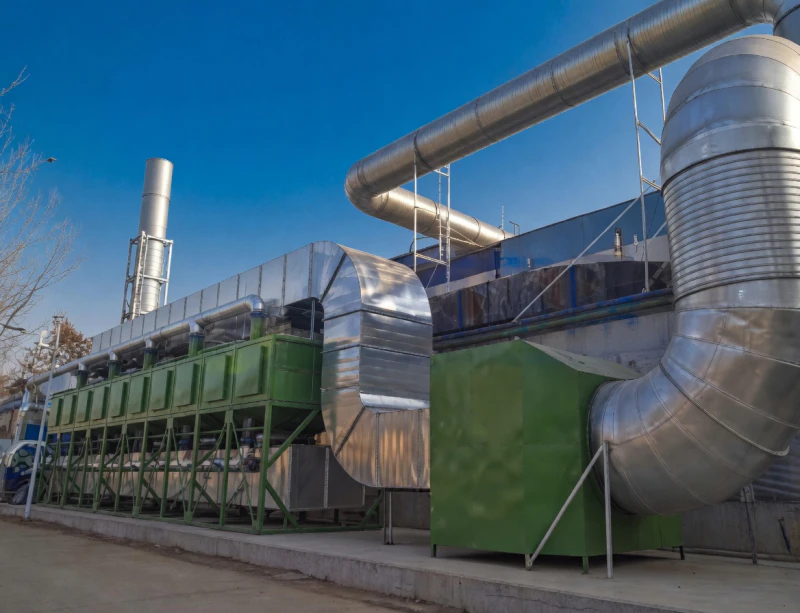
Ultra-Large Scale 200,000 m³/h Installation at an Automobile Manufacturing Facility
Secure Your Facility’s Environmental Future Today
For the heavy equipment coating, spray painting, and advanced surface treatment industries, managing complex solvent mixtures across massive, hundreds of thousands of cubic meters per hour air volumes is no longer a logistical or financial impossibility. Do not let outdated, high-energy, single-technology combustion systems drain your operational profitability and risk your environmental compliance. Contact our expert environmental engineering team today to architect a Zeolite Adsorption-Desorption Catalytic Combustion Process strictly custom-tailored to your exact industrial exhaust profile.