In the specialized domains of environmental remediation and biological chemical production, managing persistent odors and low-concentration volatile emissions is an engineering gauntlet. From the sulfurous reach of sewage treatment stations to the aggressive solvent profiles of pharmaceutical synthesis and rubber processing, traditional filtration often falls short of strict regulatory demands. To systematically conquer these complex emissions, the integrated synergy of zeolite adsorption concentration and catalytic combustion provides a robust, fail-safe pathway. By focusing on molecular-level capture and thermal destruction, this process achieves over 95% purification efficiency while dramatically reducing the energy footprint of large-scale environmental operations.
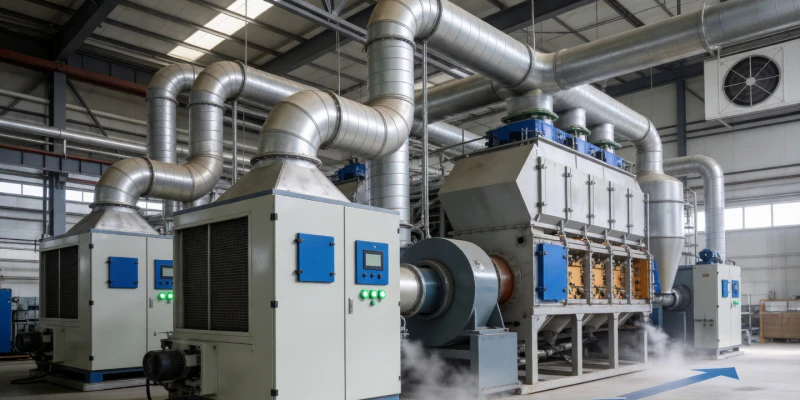
Integrated Zeolite Adsorption-Desorption Infrastructure for Industrial Scale Bio-Purification
1. Neutralizing Bio-Odors and Chemical VOCs
Environmental and biological processing industries deal with a volatile spectrum of pollutants that require absolute containment. Our Zeolite Adsorption-Desorption system is predominantly applied to odor exhaust treatment in sewage treatment plants, livestock and poultry slaughtering enterprises, and the smell-intensive pharmaceutical industry. Additionally, it serves as the frontline defense in the rubber processing and renewable resource recycling sectors, where large volumetric flows are laden with low-concentration but highly persistent organic pollutants.
Targeted Industrial Pollutants
These sectors generate a multi-phase cocktail of compounds, including benzene series solvents in pharmaceutical packaging, fatty acids and mercaptans in slaughtering processes, and complex hydrocarbon mixtures in rubber and plastics recycling. The system’s ability to concentrate these dilute streams by up to twenty times allows for a self-sustaining catalytic reaction, effectively turning a nuisance odor into the fuel required for its own destruction.
Unlike traditional wet scrubbing, which often transfers pollutants from air to water, the zeolite-catalytic combustion process provides a definitive end-of-pipe solution. It ensures that the purified air released into the community is devoid of the tell-tale odors of bio-chemical production, maintaining a pristine environmental profile and fostering positive community relations for industrial operators.
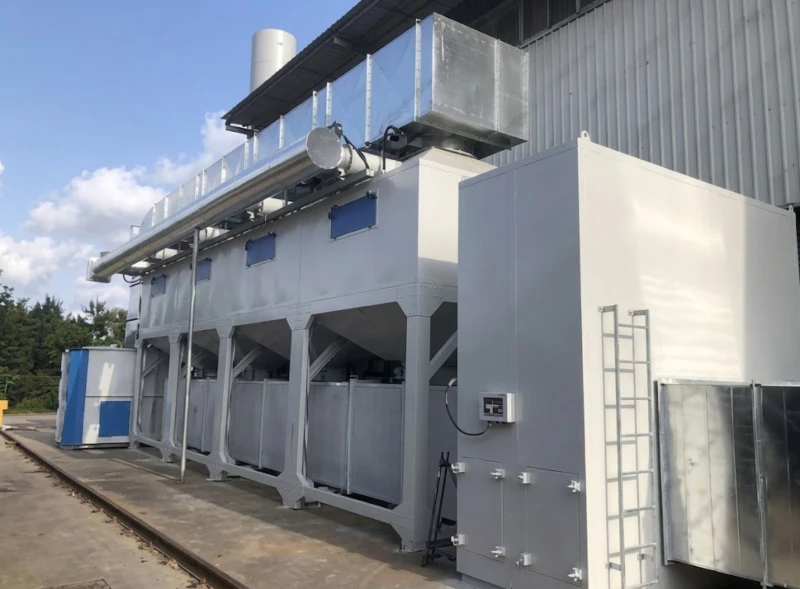
Odor Control Integration in a Regional Sewage Treatment Facility
2. Unmatched Thermal Stability and Fire Safety
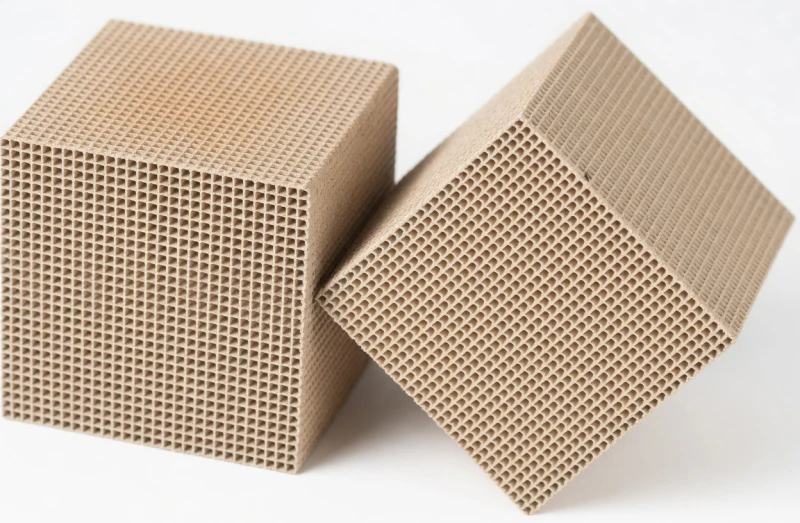
Inorganic Non-Flammable Honeycomb Zeolite Matrix
Superiority Over Activated Carbon
The pharmaceutical and rubber industries present unique fire risks due to the concentration of volatile organic solvents. Historically, activated carbon was the standard adsorbent; however, carbon is combustible and prone to spontaneous ignition when exothermic adsorption occurs in localized “hot spots.” In the rubber processing industry, where fine particulates can accumulate, this fire risk is magnified.
Zeolite molecular sieves provide an uncompromising safety upgrade. Composed of inorganic minerals (silicon and aluminum oxides), zeolite is entirely non-flammable and boasts extraordinarily better thermal stability than any carbon-based media. It maintains its structural integrity and adsorption efficiency at temperatures that would incinerate a carbon bed. This “essential safety” is critical for biological chemical plants that must operate 24/7 without the constant fear of adsorbent fires.
High-Purity Molecular Capture
Beyond safety, zeolite’s strong internal electrostatic field makes it exceptionally efficient at capturing polar molecules commonly found in bio-chemical odors. Mercaptans, amines, and sulfur compounds typical of slaughtering and sewage treatment are polarized and trapped with precision, ensuring that the exhaust leaving the facility is molecularly clean and odor-neutral.
3. Protecting the Core: Multi-Stage Dry Filtration
In biological industries and renewable resources, exhaust gas is rarely “clean.” It contains sticky aerosols, microbial particulates, paper dust, and fine chemical powders. These contaminants would blind the adsorbent zeolite matrix if allowed to bypass the pre-treatment stage.
Progressive Contaminant Removal
The exhaust gas is forcefully introduced into the filter housing through the main industrial pipeline, passing directly through high-density primary filter cotton. This layer removes large molecular particles and biological debris larger than five micrometers. Following this, the gas stream traverses a highly precise series of synthetic fiber filter bags, typically graded progressively as G4, F5, F9, and culminating in H10. This secondary and tertiary filtration array effectively removes ultra-fine dust particles larger than one micrometer from the gas.
Every filtration stage is equipped with sensitive differential pressure transmitters. These display real-time pressure drops and automatically alert operational staff when a filter change is required. This ensures the downstream zeolite framework remains pristine and the entire system maintains a low operational resistance of approximately 300 Pa.
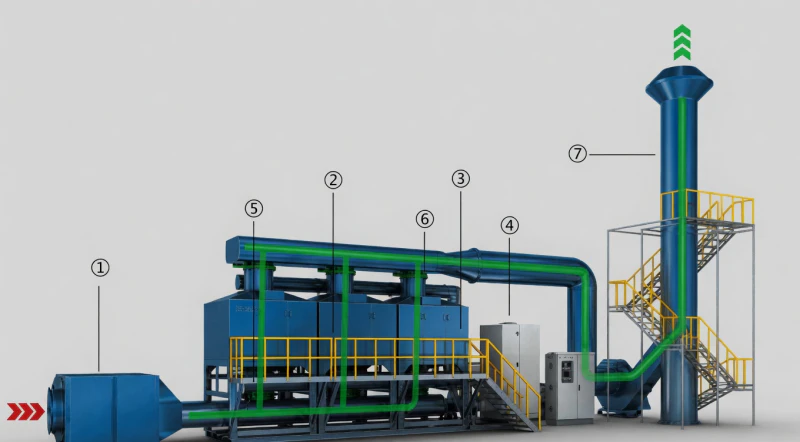
Advanced Multi-Stage Dry Filtration Pre-Treatment Housing
4. Structural Engineering of the Adsorption Box
Modular Housing for Harsh Environments
Environmental treatment facilities must be designed for durability in humid and potentially corrosive atmospheres. Our equipment boxes are constructed from heavy-duty carbon steel material, treated with an advanced surface anti-rust finish to prevent degradation. The internal zeolite beds are arrayed in multiple precision layers, ensuring perfectly stable airflow distribution across the entire breadth of the catalyst bed.
Recognizing the continuous operation needs of bio-chemical plants, the box adopts a highly efficient modular design. The honeycomb molecular sieves are independently installed for ultimate convenience during replacement cycles. Furthermore, the adsorption device strategically incorporates maintenance manholes and an integrated operation platform, comprehensive safety ladders, and rigid guardrails. This design dramatically enhances operational safety and ergonomic access for facility personnel during routine inspections of microchip fabrication halls or waste-to-energy centers.
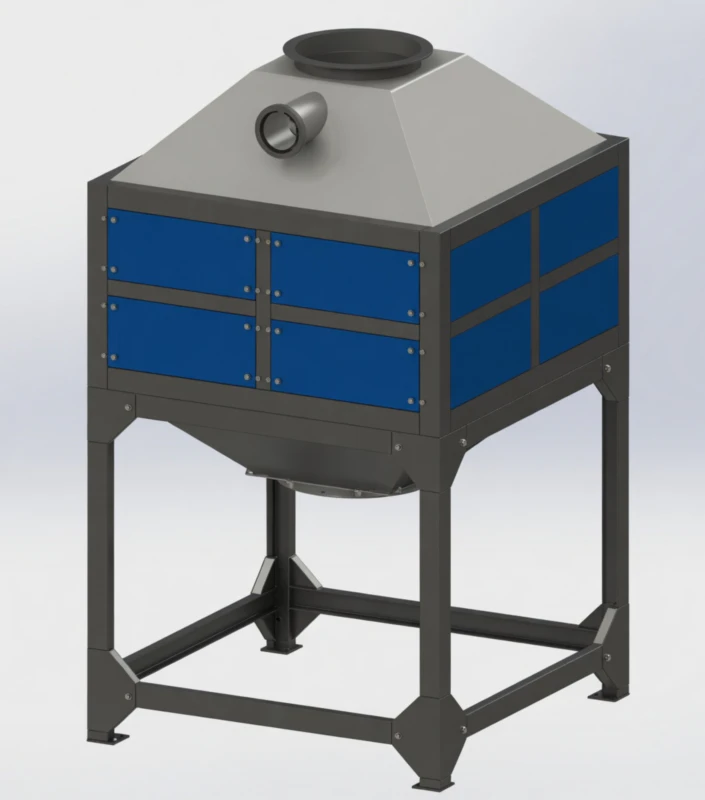
Heavy-Duty Modular Adsorption Box Architecture
5. The Continuous Adsorption-Desorption-Combustion Cycle
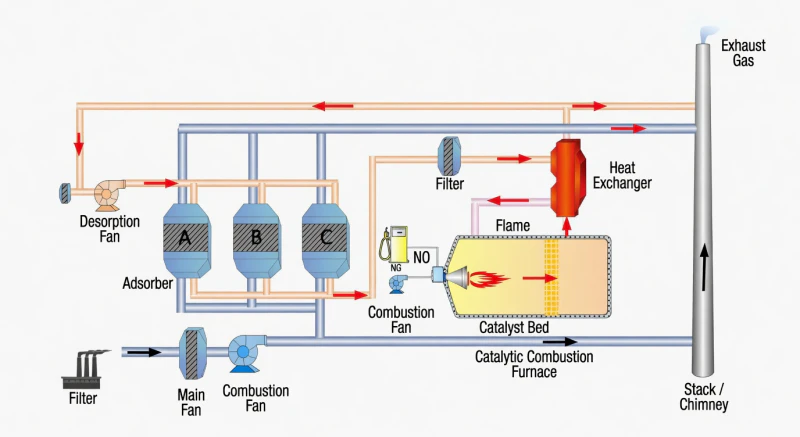
Synergistic Adsorption-Desorption-Combustion Cycle Diagram
The Switching and Desorption Phase
To ensure seamless operation, the system employs multiple beds working in a synchronized, alternating cycle. When the primary adsorption tank approaches its maximum chemical saturation limit, automated valving systems switch the incoming dirty airflow to the standby tanks. Immediately, the system initiates the regeneration protocol. It uses a precisely controlled hot airflow to desorb and forcefully detach the trapped volatile molecules from the zeolite matrix. This hot airflow comes entirely from the residual heat captured after catalytic combustion occurs, slashing energy costs to merely 1/20th of traditional direct combustion methods.
Catalytic Combustion and Thermal Recovery
The concentrated, toxic waste gas generated from desorption is routed directly to the catalytic combustor to be decomposed into entirely harmless carbon dioxide and water vapor. Under the powerful action of a high-activity catalyst, organic substances are oxidized at relatively low temperatures (250-300°C), releasing a massive amount of exothermic heat. This heat is redirected back to the primary heat exchanger to continuously heat the incoming exhaust gas. Utilizing its own combustion heat, the system requires practically no additional external energy during steady-state operation, making it the premier choice for renewable resource sectors.
6. Catalytic Oxidation: The Molecular Terminator
Efficient Destruction of Industrial Biological Odors
The concentrated pollutants entering the catalytic combustor undergo flameless combustion at low ignition temperatures. This specialized method aggressively accelerates the complete oxidation of toxic and harmful organic gases. Since the catalyst carrier is manufactured from porous materials with a massive specific surface area and suitable pore size, oxygen and organic gases are intimately adsorbed, significantly increasing the probability of molecular collision and destruction.
Compared with direct thermal combustion, this technology features a remarkably low ignition temperature, which massively prevents the generation of NOx and avoids secondary air pollution. For slaughtering plants or regional recycling centers with intermittent workflows, the system offers a short cold-start time of just 20 to 30 minutes, allowing for flexible operational responses to fluctuating waste gas volumes while maintaining absolute purification standards.
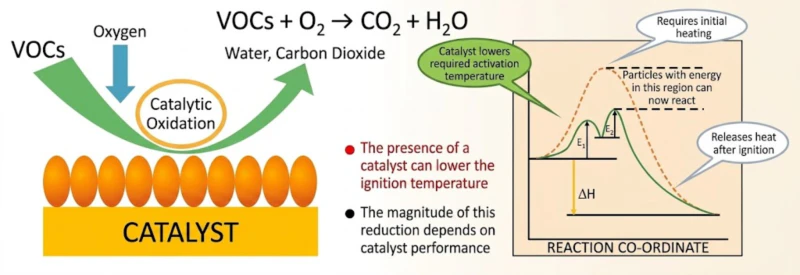
Molecular Decomposition via Catalytic Activation
7. Conquering Massive Volumetric Flows for Environmental Parks
Large industrial environmental parks and centralized renewable resource facilities generate massive, steady airflows that require zero-downtime scrubbing. The BAOLAN Zeolite system is built for this scale, capable of handling design air volumes up to 200,000 cubic meters per hour per installation. This scalability ensures that even the most expansive regional sewage treatment networks or industrial slaughtering halls can be serviced by a single, high-efficiency end-of-pipe purification facility.
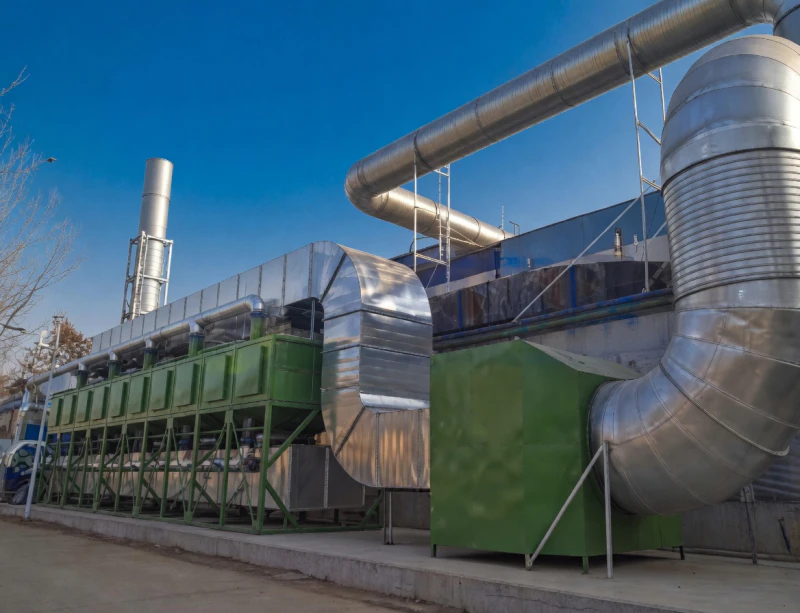
Industrial Scale 200,000 m³/h VOC and Odor Purification Deployment
Future-Proof Your Industrial Compliance Strategy
For the environmental, biological chemical, and recycling sectors, odors and VOCs are no longer a regulatory liability. By implementing advanced non-flammable zeolite concentration technology, you protect your operational profitability while ensuring guaranteed compliance through rigorous destruction of toxic emissions. Contact our expert environmental engineering team today to architect a custom-tailored industrial exhaust purification system for your large-scale facility.