
An Electrostatic Precipitator (ESP) is one of the most powerful and efficient dust removal systems in the global industrial sector[cite: 151]. However, achieving ultra-low emission standards (often < 10 mg/Nm³) is not merely about applying raw electrical power. The true secret to maximizing particle capture lies within the microscopic physics of the active zone—specifically, the highly engineered geometric and electrical relationship between the Discharge Electrode (Cathode) and the Collecting Electrode (Anode)[cite: 152]. In this technical blog, we dissect how optimizing this critical pairing prevents spark-over, maximizes corona generation, and secures long-term compliance.
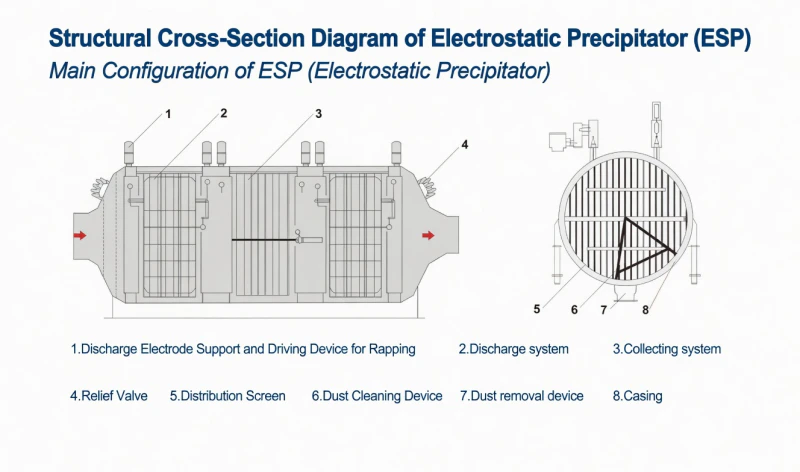
1. The Physics of the Active Zone
The fundamental working principle of an ESP relies on Coulomb force[cite: 151]. When a high direct current (DC) is applied between the discharge electrode (cathode) and the collection plate (anode), an intense electric field is created[cite: 152, 153]. As the field strength exceeds the breakdown voltage of the gas, the gas stream is ionized, generating a massive cloud of free electrons and negative ions (the corona discharge)[cite: 154].
As dust-laden gas flows through this ionized zone, suspended particles collide with these ions, becoming heavily charged. The electric field then forces these charged particles to migrate toward the opposite collecting electrodes, where they adhere and are subsequently removed via mechanical rapping[cite: 154, 155]. The efficiency of this entire process is absolutely dictated by how effectively the cathode generates the corona and how efficiently the anode captures the particles without allowing them to re-entrain into the gas stream.
2. The Anode: Maximizing the Capture Surface
The Advanced ZT24 Collecting Electrode
The Collecting Electrode (CE) is the ultimate destination for the dust. It must provide maximum surface area, maintain structural rigidity under severe thermal stress, and distribute current evenly. Advanced ESP designs have moved away from flat plates toward sophisticated geometries like the ZT24 electrode plate[cite: 160].
The ZT24 plate features specialized aerodynamic baffles and ridges. These serve a dual purpose: first, they create quiescent (still) zones near the plate surface to prevent the scouring gas flow from sweeping collected dust back into the stream (secondary re-entrainment). Second, they dramatically increase the structural stiffness of the plate, allowing it to withstand the severe impacts of the rapping hammers (which operate via a side-driving revolving-arm hammer method) without warping[cite: 181, 182].
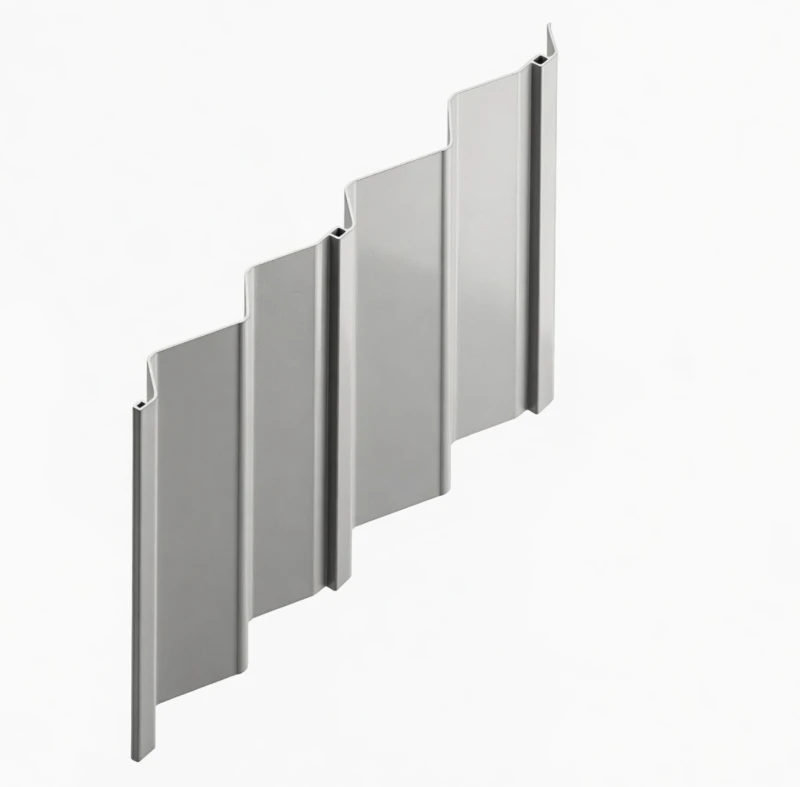
ZT24 Profile Collecting Electrode Plates [cite: 162]
3. The Cathode: Engineering the Corona Discharge
The Discharge Electrode (DE) must reliably generate a powerful corona field without snapping under electrical arcing or mechanical rapping. Early designs used simple smooth wires, which suffered from high onset voltages and frequent breakages. Modern ESPs utilize rigid, highly engineered profiles[cite: 166].
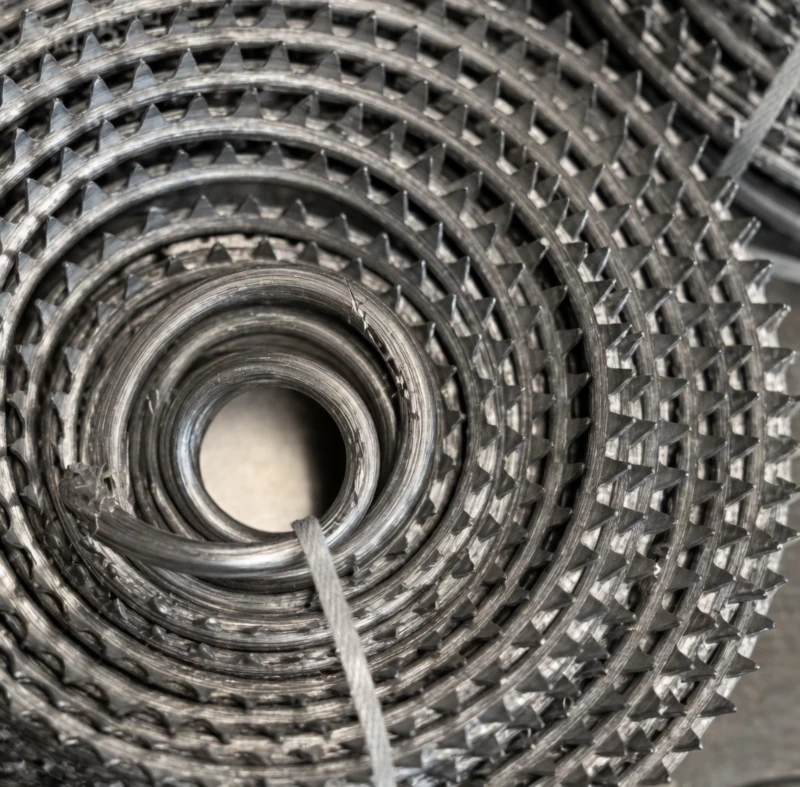
Rigid Cathode Mast Structure
Diverse Electrode Typologies
Depending on the specific flue gas conditions (temperature, moisture, dust resistivity, and chemical composition), different discharge electrodes are selected. Popular profiles include the B-type, V-type, and Fishbone (barbed) wires[cite: 166].
For instance, barbed or fishbone electrodes feature sharp, precisely machined points. These sharp tips create intense localized electrical field concentration, significantly lowering the voltage required to initiate the corona discharge. This ensures a denser, more uniform cloud of electrons. Furthermore, these modern electrodes are rigid and structurally reinforced, adapting them for excellent discharging performance, extreme endurance, and crucial non-breakability during heavy rapping cycles[cite: 166].
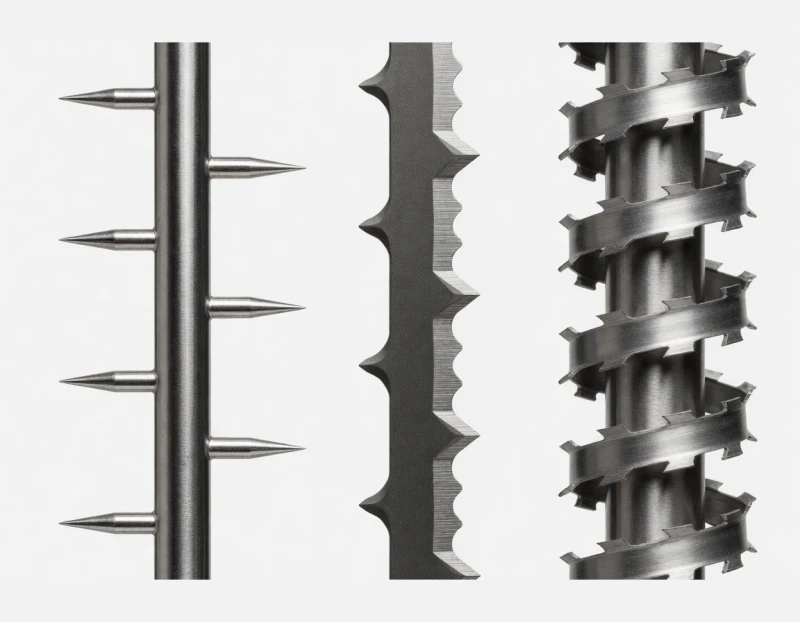
Different Types of Discharging Electrodes [cite: 170]
4. The “Perfect Match”: Synchronizing CE & DE
The ultimate secret to a high-performing ESP is the “Reasonable Matching of CE & DE”[cite: 167]. An excellent plate with the wrong wire, or vice versa, will lead to severe performance degradation.
Optimized Passage Spacing
The distance between the collecting plates (the passage space) must be perfectly calibrated to the voltage output and the specific cathode profile. Modern systems standardly utilize wide passage spacing of 300mm, 400mm, or 450mm[cite: 128]. Wider spacing allows for higher operating voltages, resulting in stronger electric fields and vastly improved capture of highly resistive dust without inducing premature spark-over.
Current Distribution Harmony
When a barbed or fishbone cathode is paired with a ZT24 plate, the corona discharge is directed squarely at the flat surfaces of the plate, avoiding the aerodynamic baffles. This precise geometric alignment ensures a perfectly uniform current distribution across the entire face of the plate, preventing localized “hot spots” of current that could trigger arcing or “back-corona”[cite: 160].
Rapping Dynamics
Both electrodes must remain clean to maintain field strength. The cathode utilizes a top cam lifting mechanism or internal vertical driving device for continuous rapping, while the anode uses a side-driving revolving-arm hammer[cite: 181, 182]. The mechanical stiffness of both matched components ensures that the immense rapping shear forces dislodge the dust without causing the electrodes to sway and short-circuit the field.
5. Global Industrial Application Scenarios
When the internal geometry of the ESP is perfectly matched, the system can reliably process colossal gas volumes (up to 2,500,000 m³/h) under the most severe industrial conditions, guaranteeing outlet emissions below 30 mg/Nm³[cite: 130, 236].
Utility Power Boilers & FGD Systems
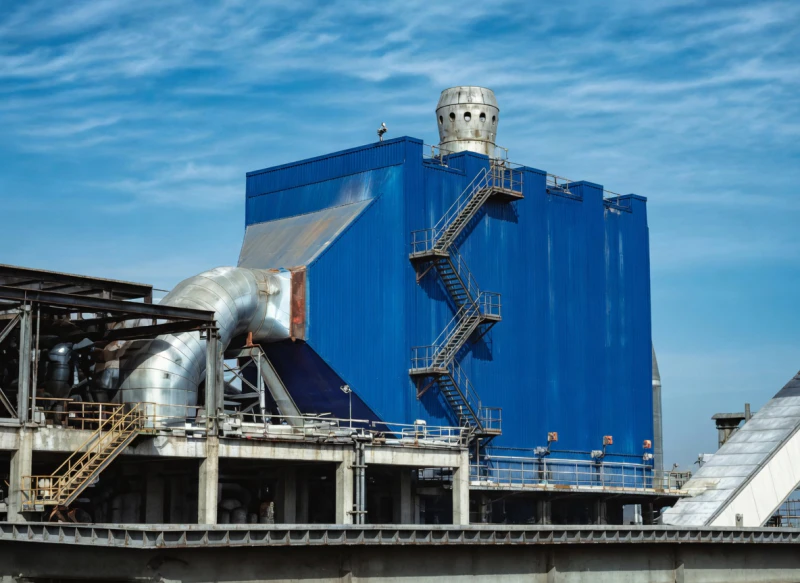
In large-scale power generation (50MW to 1000MW units)[cite: 236], the ESP must handle highly variable fly ash characteristics resulting from different coal grades. The perfect cathode-anode match allows the ESP to maintain corona stability even when dust resistivity spikes, making them critical components preceding Flue Gas Desulfurization (FGD) systems[cite: 238].
Metallurgy, Steel & Cement Kilns
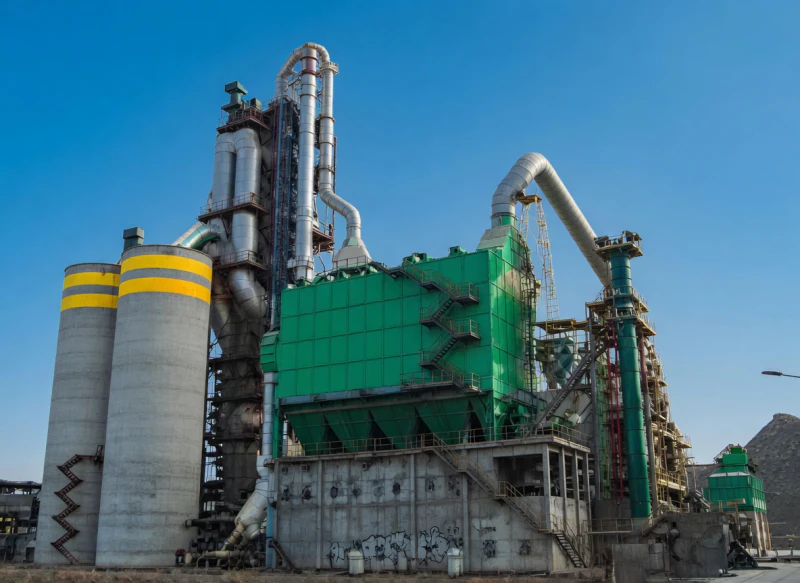
In steel sintering plants and cement kilns, the dust loading is exceptionally heavy and highly abrasive. A mismatched electrode system will suffer from rapid mechanical wear or crippling dust build-up. An optimized ZT24 and barbed-wire configuration ensures that sticky, high-density dust is effectively captured and smoothly rapped down into the hoppers without blinding the system[cite: 203, 258].
Optimize Your ESP Performance Today
Struggling with high emission spikes, frequent spark-overs, or rapid electrode degradation? It’s time to upgrade your internal architecture. Contact our environmental engineering team to redesign and perfectly match your ESP’s cathode and anode systems.