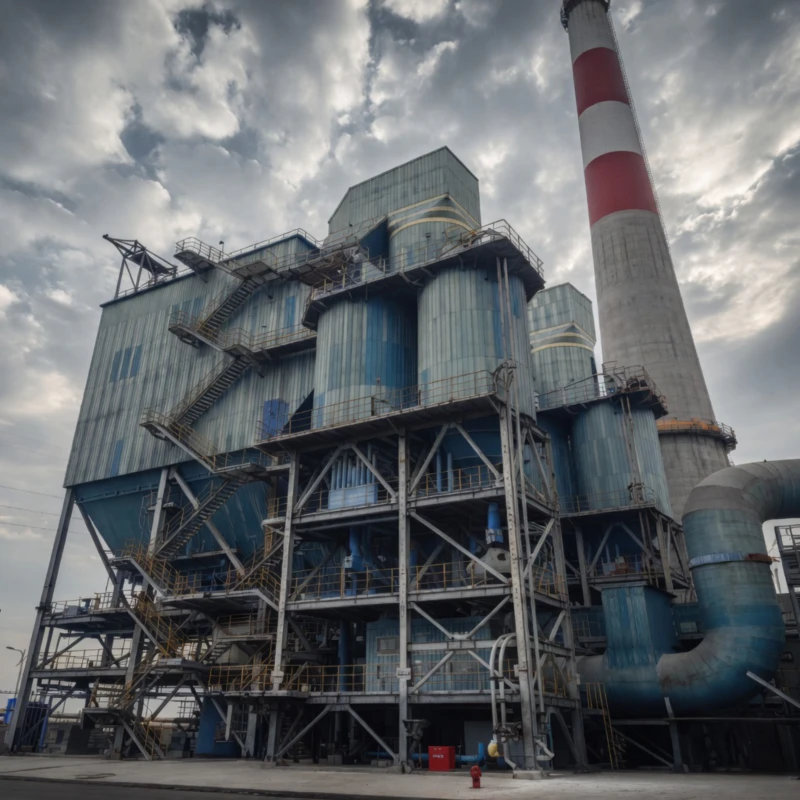
Halbtrockene Entschwefelungssystem der Serie BLSDA1W/230W
Entdecken Sie das halbtrockene Entschwefelungssystem der BLSDA-Serie. Erzielen Sie eine SO₂-Entfernung von über 951 TP³T ohne Abwasser dank fortschrittlicher Sprühtrocknungs-Absorptionstechnologie.
1. Produktübersicht
Fortschrittliche Sprühtrocknungsabsorption (SDA)
Der Halbtrockene Entschwefelungssystem der Serie BLSDA1W/230W ist eine weit verbreitete, hocheffiziente Alternative zu herkömmlichen, energie- und wasserintensiven Nasswäscheverfahren. Sie basiert auf der präzisen Einspritzung einer zerstäubten alkalischen Suspension (typischerweise Kalk) direkt in das Hochtemperatur-Rauchgas.
Diese fortschrittliche Technologie ermöglicht eine schnelle Feuchtigkeitsverdunstung und Trocknung in Kombination mit einer dreiphasigen Säure-Base-Neutralisation (Gas-Flüssigkeit-Feststoff). Saure Schwefeloxide und Halogenide im Rauchgas werden sofort in trockene, feste Salze umgewandelt.
Die BLSDA-Serie wurde als nahtloser Ersatz für hochwertige europäische Modelle (wie die Alstom/GE SDA-Systeme oder Babcock & Wilcox Sprühtrocknungsabsorber) mit hohem ROI entwickelt und erzielt Entschwefelungseffizienzen von über 95%Sein entscheidender Vorteil besteht darin, dass Es ist keine große Abwasserbehandlungsanlage erforderlich.wodurch es wirtschaftlich und ökologisch überlegen ist.
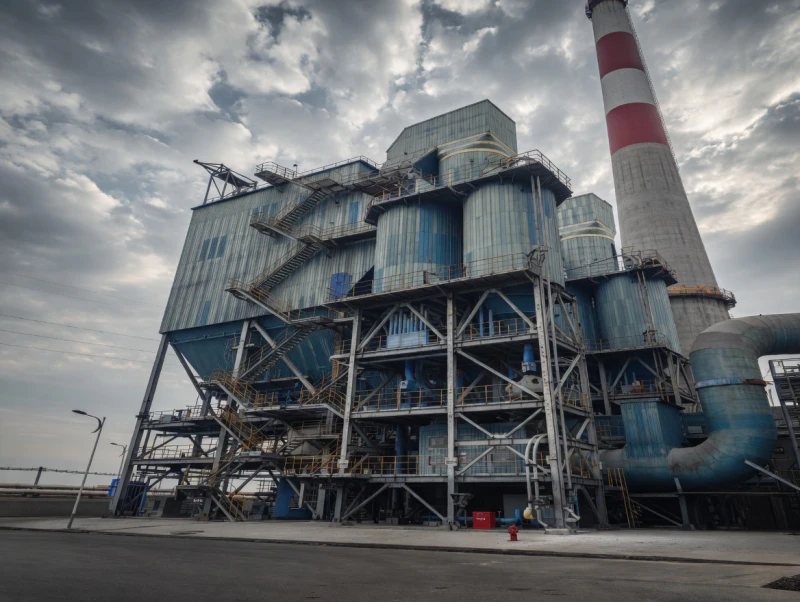
2. Technische Spezifikationen
Wichtigste technische Parameter
Die BLSDA-Serie bietet robuste operative Flexibilität und wurde speziell für den Umgang mit mittleren bis hohen Emissionstemperaturen und unterschiedlichen Staubdichten in Kraftwerkskesseln und Öfen entwickelt.
| Parameterelement | Spezifikationsbereich | Einheit |
|---|---|---|
| Prozessgasvolumen | 10,000 - 2,300,000 | m³/h |
| Zulässige Gastemperatur | 140 - 260 | °C |
| Zulässige Staubdichte am Einlass | 1 - 2,000 | mg/Nm³ |
| Systemauslegungsdruck | -6.000 bis +6.000 | Pa |
| Betriebswiderstand | 800 bis 1.500 | Pa |
| Garantierte Auslassemissionen | < 35 | mg/Nm³ |
3. Reaktionsmechanismus
Dreiphasige synergistische Steuerung
Das Kernprinzip beruht auf dem Kontakt zwischen einer zerstäubten alkalischen Suspension (Kalk) und heißem Rauchgas (140–220 °C). Dabei werden Schwefeloxide neutralisiert und die Reaktionsprodukte vollständig getrocknet, bevor sie auf die Kammerwände treffen können.
Haupt-SO2 Neutralisation
Die Calciumhydroxid-Suspension zerstäubt in Mikrotröpfchen, wodurch eine riesige Oberfläche entsteht, die Schwefeldioxid sofort absorbiert und zu Calciumsulfit neutralisiert.
Ca(OH)2 + SO2 → CaSO3 + H2O
Schwefeltrioxid (SO3) Entfernung
Eine geringe Menge SO3 Gleichzeitig wird der im Rauchgas vorhandene Stoff neutralisiert, wodurch stabiles Calciumsulfat-Dihydrat entsteht und die Bildung von stark korrosivem Säurenebel verhindert wird.
Ca(OH)2 + SO3 + H2O → CaSO4·2H2O↓
Halogenidentfernung (HCl & HF)
Chlorwasserstoff und Fluorwasserstoff, die häufig in Müllverbrennungs- und Ofenabgasen vorkommen, werden absorbiert und in feste Salze umgewandelt, die beim Trocknen der Tropfen erstarren.
Ca(OH)2 + 2HCl → CaCl2 + 2H2O
4. Wichtigste Vorteile
Fünf unübertroffene technische Vorteile
1. Keine Abwasserentsorgung
Der größte Vorteil gegenüber Nasswäschern: Die flüssige Phase verdampft vollständig, sodass nur trockenes Pulver zurückbleibt. Aufwendige Wasseraufbereitungsanlagen sind nicht erforderlich.
2. Außergewöhnliche Effizienz
Hochgeschwindigkeits-Rotationszerstäuber erzeugen 60 μm große Tröpfchen und maximieren so die Gas-Flüssigkeits-Kontaktfläche, wodurch routinemäßig ein SO₂-Gehalt von über 95 Prozent erreicht wird.2 Entfernung.
3. Kontrolle mehrerer Schadstoffe
Fängt synergistisch SO ein2, ALSO3HCl, HF und Schwermetalle werden in einem einzigen Reaktordurchgang entfernt, wodurch die Emissionskontrollstrategie Ihrer Anlage optimiert wird.
4. Keine Rauchfahnenbildung
Da das Abgas bei einer Temperatur weit über dem Taupunkt austritt, arbeitet das System völlig frei von der für Nasssysteme typischen sichtbaren weißen Dampffahne.
5. Geringere Investitions- und Wartungskosten
Es besteht hauptsächlich aus Kohlenstoffstahl (um teure Nickellegierungen zu vermeiden). Dadurch entfällt die Notwendigkeit komplexer Entwässerungsanlagen für Schlämme wie Hydrozyklone.
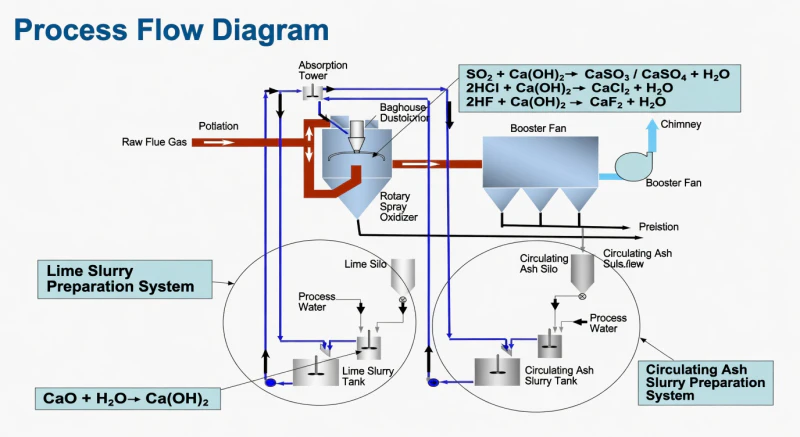
5. Systemarchitektur
Systemzusammensetzung & Prozess
Das BLSDA-System integriert Thermodynamik mit präziser Zerstäubung. Die strukturelle Anordnung gewährleistet, dass nicht umgesetzte Suspensionströpfchen die Innenwände der Kammer nicht berühren.
- 1. Zweipfad-Gaseinspritzung
Das Rauchgas gelangt über zwei präzise definierte obere und untere Pfade in den Absorptionsturm, wodurch Totzonen vermieden werden. - 2. Zerstäubung und Absorption
Heiße Gase verteilen sich in der Kammer und kommen mit fein zerstäubten Kalksuspensionströpfchen in Kontakt. - 3. Bildung von trockenem Pulver
Die Tröpfchen trocknen vollständig, bevor sie die Wand erreichen, und bilden pulverförmige Entschwefelungsprodukte. - 4. Beutelfiltersammlung
Partikel werden abgefangen, und das gereinigte Gas wird vom Boosterlüfter abgesaugt.
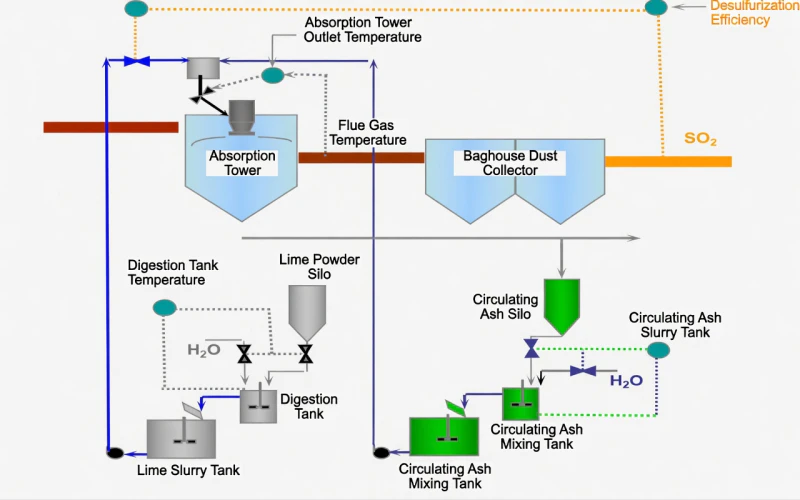
Teilsysteme zur Schlammaufbereitung und -handhabung
Ein hocheffizientes SDA-System ist stark von der Qualität und Konsistenz der Kalksuspension abhängig. Unsere Premium-Aufbereitungsmodule garantieren einen unterbrechungsfreien Betrieb.
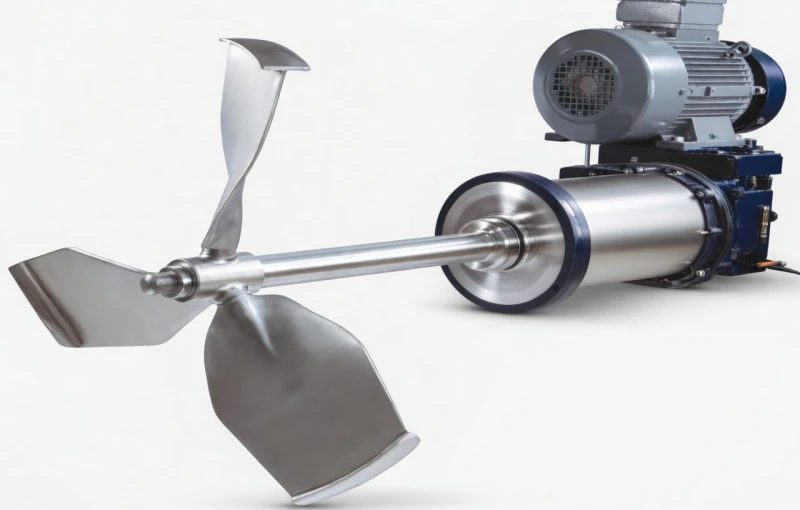
Rührwerk für Schlammtanks
Hochleistungsmischer wurden in den Kalklöschbecken installiert, um die Partikel vollständig in Suspension zu halten und ein Absetzen zu verhindern.
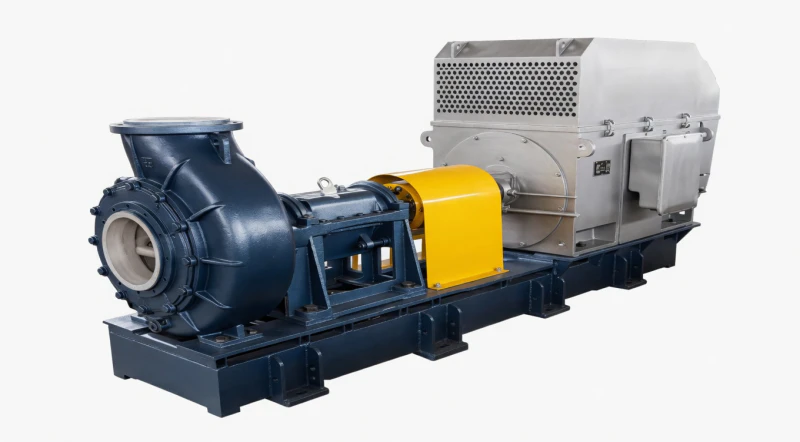
Förder- und Umwälzpumpen
Verschleißfeste Hochdruckpumpen mit Auskleidung aus modernen Polymeren. Fördern die abrasive Kalksuspension präzise zum Zerstäuber.
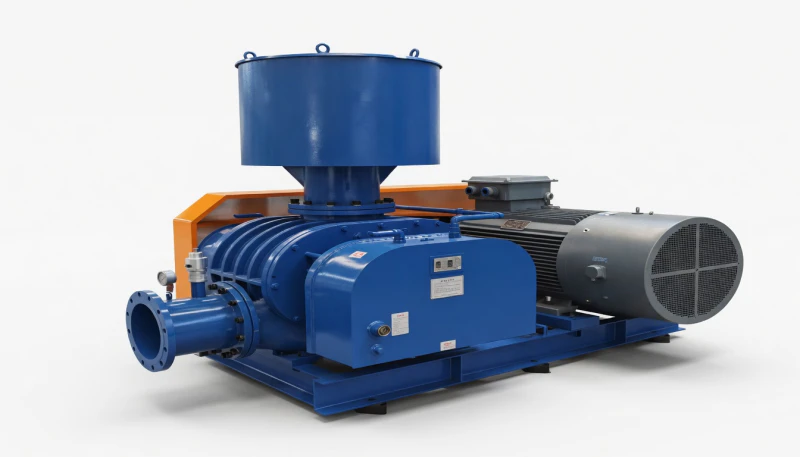
Prozessluftventilator
Hochleistungsfähige Roots-Gebläse, die eine stabile, ölfreie Druckluftversorgung für die pneumatische Hilfsförderung gewährleisten.
6. Anwendungsszenarien
Ideale industrielle Einsätze
Wasserarme Umgebungen
Ideal für Kraftwerke und Industrieanlagen in ariden Regionen oder solche, die strengen Vorschriften zur abwasserfreien Produktion (Zero Liquid Discharge, ZLD) unterliegen.
Müllverbrennung (MTV)
Aufgrund seiner einzigartigen Fähigkeit, gleichzeitig Schwermetalle, HCl und HF abzuscheiden, ist es für Müllverbrennungsanlagen und Anlagen zur Beseitigung gefährlicher Abfälle äußerst effektiv.
Industriekessel und Brennöfen
Geeignet für die Behandlung von Emissionen mittlerer bis hoher Temperatur (140–220 °C). Das behandelte Gas behält seine thermische Auftriebskraft ohne erneute Erwärmung im Schornstein.
7. Wert und ROI
Warum die BLSDA-Serie wählen?
Bekanntmachung zur Auswahl der Ingenieure: Die Nennung globaler Premiummarken (wie Alstom, GE SDA oder B&W Sprühtrockner) dient ausschließlich technischen Vergleichszwecken und soll Ingenieuren als Orientierung dienen. Wir vertreiben keine gefälschten Produkte. Die BLSDA-Serie ist eine eigenständig entwickelte Alternative mit hohem ROI.
| Bewertungsmetrik | Unsere BLSDA-Serie | Premium Western SDA | Standard-Nasswäscher |
|---|---|---|---|
| Entschwefelungseffizienz | ≥ 95% | ≥ 95% | 95% - 98% |
| Abwassermenge | Null (Völlig trocken) | Null | Enorme Mengen |
| Investitionsausgaben | Hochoptimiert | Extrem hohe Prämie | Hohe Anforderungen an den Korrosionsschutz |
| System-Footprint | Mäßig & flexibel | Mäßig | Groß (Tanks + Entwässerung) |
8. Qualitätssicherung
Globale Zertifizierungen & EPC-Kompetenzen
Die Sprühtrocknung ist ein komplexes thermisches und chemisches Verfahren. Wir gewährleisten die strukturelle Integrität und Betriebssicherheit unserer Anlagen durch strenge internationale Fertigungsstandards.
- ISO 9001:2015: Zertifizierte Produktionsstätten. Rotationszerstäuber und Beutelfilter entsprechen den CE-Sicherheitsrichtlinien.
- Komplette EPC-Dienstleistungen: Komplette schlüsselfertige Lieferung: Gasdynamik-CFD-Modellierung, Behälterbau, globale Logistik und SPS-Tuning.
Bereit, Abwasser zu eliminieren?
Teilen Sie unseren Ingenieuren Ihr Gasvolumen und den SO₂-Einlass mit.2 Konzentrieren Sie sich, um eine maßgeschneiderte CFD-Analyse zu erhalten.
9. Wissensdatenbank
Häufig gestellte Fragen
1. Worin besteht der Unterschied zwischen halbtrockener (SDA) und nasser Rauchgasentschwefelung (REA)?
Die Nassentschwefelungsanlage (REA) verwendet große Mengen an Schlamm, wodurch feuchter Gips als Nebenprodukt und schwermetallhaltiges Abwasser entstehen. Die Halbtrockenentschwefelungsanlage (SDA) verwendet einen zerstäubten Schlamm, der vollständig verdampft und ein trockenes Pulver als Nebenprodukt hinterlässt. Es entsteht kein Abwasser.
2. Was geschieht mit dem Nebenproduktpulver?
Die festen Reaktionsprodukte (Calciumsulfit, Calciumsulfat und nicht umgesetzter Kalk) werden in einem nachgeschalteten Schlauchfilter aufgefangen. Sie können zur Landgewinnung, als Straßenunterbau oder zur sicheren Deponierung verwendet werden.
3. Benötigt das System einen Beutelfilter?
Ja. Der Schlauchfilter fängt die Flugasche und den Reaktionsstaub auf. Zusätzlich sorgt das auf den Filterschläuchen zurückgehaltene, nicht umgesetzte Sorptionsmittel für eine zweite Entschwefelungsstufe beim Durchströmen des Gases.
4. Wie wird die Suspension zerstäubt?
Das BLSDA-System nutzt Hochgeschwindigkeits-Rotationszerstäuber oder Hochdruck-Zweistoffdüsen. Diese zerstäuben die Kalksuspension präzise in Mikrotröpfchen (durchschnittlich 60 μm), um eine schnelle Verdunstung vor dem Auftreffen auf die Wände zu gewährleisten.
5. Wie viel Wasser verbraucht dieses System?
Wasser wird nur zur Kühlung des Rauchgases auf die optimale Reaktionstemperatur (nahe der adiabatischen Sättigung) benötigt. Der Gesamtwasserverbrauch ist deutlich geringer als bei Nasswäschern.
6. Was passiert, wenn die Gastemperatur zu niedrig ist?
Fällt die Einlassgastemperatur zu nahe an den Taupunkt (unter 140 °C), verdunstet das Wasser in der Suspension nicht schnell genug. Dies führt zu einem „nassen Boden“ und damit zu starker Ablagerungsbildung.
7. Kann es Chlorwasserstoff (HCl) und Fluorwasserstoff (HF) entfernen?
Ja, außerordentlich gut. Da Calciumhydroxid stark alkalisch ist, neutralisiert es saure Gase wie HCl und HF mit extrem hoher Effizienz. Dies macht SDA zu einer optimalen Wahl für Müllverbrennungsanlagen.
8. Welche Wartungsarbeiten sind für den Rotationszerstäuber erforderlich?
Die Wartung umfasst die regelmäßige Schmierung, die Überprüfung der Vibrationssensoren und den periodischen Austausch der verschleißfesten Zerstäuberräder oder Düsen aufgrund der abrasiven Eigenschaften der Kalksuspension.
9. Sind teure Korrosionsschutzmittel erforderlich?
Im Allgemeinen nein. Da der Prozess „trocken“ ist, bevor das Gas die Wände erreicht, kann für den Behälter und die Rohrleitungen Standard-Kohlenstoffstahl verwendet werden, vorausgesetzt, die Gastemperatur wird über dem Säuretaupunkt gehalten.
10. Wie lange dauern Herstellung und Installation?
Die Konstruktion und Fertigung der Trockenkammer und des Zerstäubersystems dauern in der Regel 3 bis 4 Monate. Die Installation vor Ort, einschließlich des Filterhauses und der Schlammaufbereitungstanks, benötigt weitere 2 bis 3 Monate.
Emissionsbeseitigung. Abwasserbeseitigung.
Arbeiten Sie mit unserem Ingenieurteam zusammen, um eine hocheffiziente, vollständig trockene Rauchgasreinigungsstrategie für Ihre Anlage umzusetzen.