Caso di studio · Controllo delle emissioni industriali
Come un leader mondiale nel settore delle batterie ha raggiunto un'efficienza di denitrificazione combinata SNCR+SCR dell'81,5% e una desolforazione del 97,9% dai gas di scarico della produzione di carbonato di litio da forno rotante con concentrazioni di SO₂ in ingresso fino a 12.000 mg/Nm³ — implementando un sistema a doppia linea SNCR+SCR+FGD a gesso e calcare+trattamento con calce adattato all'estrema variabilità della composizione chimica dei gas di scarico della sinterizzazione del carbonato di litio di grado batteria.
Denitrificazione combinata SNCR+SCR
Desolforazione dei fumi di calcare e gesso
Sinterizzazione del carbonato di litio
Emissioni ultra-basse dell'industria delle batterie
01 — Contesto del settore
Produzione di carbonato di litio per batterie: un settore in rapida espansione con impegnative sfide in materia di emissioni.
Il carbonato di litio è una materia prima fondamentale per la produzione di batterie al litio. La domanda globale è in rapida crescita grazie all'adozione dei veicoli elettrici e all'espansione dei sistemi di accumulo di energia su larga scala, con una produzione che passerà da 4,1 milioni di tonnellate all'anno nel 2014 a 39,5 milioni di tonnellate nel 2022, con un tasso di crescita annuo composto di 281 milioni di tonnellate (TP3T). Le proiezioni indicano una capacità produttiva di 110 milioni di tonnellate entro il 2025 e una produzione effettiva di 51,79 milioni di tonnellate nel 2023 (crescita annua di 31,11 TP3T). Il fabbisogno di capacità produttiva di carbonato di litio per batterie non potrà che aumentare con la continua espansione del mercato dei veicoli elettrici, stimolando ulteriori investimenti in impianti di produzione e nelle relative infrastrutture per la conformità ambientale.
L'azienda oggetto di questo caso di studio è una delle principali aziende produttrici di batterie per veicoli elettrici a livello globale e una delle poche a coprire l'intera filiera produttiva. Quotata in una delle principali borse nazionali nel 2015 e alla Borsa svizzera nel 2022, è stata la prima azienda produttrice di batterie in Svizzera. La sua attività principale comprende batterie al litio per applicazioni di mobilità, sistemi di accumulo di energia e apparecchiature per la distribuzione di energia. Il prodotto "batteria a stato solido" annunciato nel 2024 raggiunge una densità energetica di 3.500 Wh/kg e una densità energetica volumetrica di 800 Wh/L, con una durata di 30.000 cicli e un'autonomia teorica superiore a 300.000 km. L'azienda produce inoltre circa 100.000 unità di distribuzione all'anno.
La produzione di carbonato di litio utilizza la sinterizzazione in forno rotante per convertire le materie prime contenenti litio (principalmente sali di litio derivati dalla mica) in carbonato di litio di grado batteria. Il processo chimico di sinterizzazione prevede una reazione ad alta temperatura tra composti solfati e carbonati che determina il rilascio di SO₂ in concentrazioni di gran lunga superiori a quelle delle caldaie industriali o delle centrali elettriche convenzionali. Con la crescita della domanda di carbonato di litio e l'ampliamento degli impianti di produzione, il sistema di depurazione dei fumi per la sinterizzazione in forno rotante diventa un collo di bottiglia critico per la conformità e l'operatività. Questo progetto impiega un sistema di desolforazione dei fumi a base di calcare e gesso combinato con la denitrificazione SNCR+SCR per raggiungere obiettivi di emissioni estremamente basse e migliorare le credenziali di sviluppo ecocompatibile dell'impianto.
.webp)
02 — Profilo di inquinamento
Gas di scarico dei forni rotanti per carbonato di litio: l'estrema variabilità dell'SO₂ come sfida determinante.
L'impianto gestisce due linee di produzione con forno rotante, ciascuna dotata di ciclone depolveratore + unità di raffreddamento + filtro a maniche depolveratore, per il trattamento dei fumi derivanti dalla sinterizzazione del materiale per batterie al carbonato di litio. Il forno è alimentato a gas naturale. Il volume standard di fumi per linea di produzione è di 120.000 Nm³/h (185.897 Nm³/h in condizioni di processo a 150 °C). Dopo il raffreddamento, i fumi vengono raccolti nell'impianto di desolforazione.
La caratteristica distintiva dei gas di scarico dei forni rotativi per la produzione di carbonato di litio è la straordinaria variabilità della concentrazione di SO₂. Durante il ciclo di reazione di sinterizzazione, i composti di solfato di litio si decompongono rilasciando SO₂: la concentrazione media di SO₂ in ingresso all'assorbitore di desolforazione è di circa 4.645 mg/Nm³, ma le concentrazioni di picco possono raggiungere i 12.000 mg/Nm³, con livelli di base a una concentrazione corretta per l'ossigeno di circa 809 mg/Nm³ di NOx. L'oscillazione della concentrazione di SO₂ di 10:1 tra il livello di base e il picco (da circa 1.200 mg/Nm³ a 12.000 mg/Nm³) richiede che il sistema di desolforazione sia progettato per le condizioni di picco, mantenendo al contempo un funzionamento stabile e una qualità del gesso adeguata durante i periodi di base e intermedi.
| Parametro | Concentrazione iniziale | Aeroporto progettato | Limite UE IED / NER |
|---|---|---|---|
| NOx (come NO₂) | 809 mg/Nm³ (a 12% O₂, contenuto di ammoniaca di base 12%) | ≤150 mg/Nm³ | IED 2010/75/UE: 150 mg/Nm³ |
| SO₂ (media all'ingresso del sistema di desolforazione dei fumi) | 4.645 mg/Nm³ in media; picco 12.000 mg/Nm³ | ≤100 mg/Nm³ | Decreto olandese sulle attività NER |
| Particolato (PM) | 658 mg/Nm³ | ≤30 mg/Nm³ | Decreto olandese sulle attività NER ≤5 mg/Nm³ |
| HCl | 3,7 mg/Nm³ | ≤10 mg/Nm³ | IED BAT ≤10 mg/Nm³ |
| HF | 6,74 mg/Nm³ | ≤6 mg/Nm³ | IED BAT ≤1 mg/Nm³ |
| Nebbia acida | 191 mg/Nm³ | ≤20 mg/Nm³ | IED BAT |
| Gas di combustione standard (per linea) | 120.000 Nm³/h | — | — |
| Gas di combustione del processo (per linea) | 185.897 Nm³/h a 150 °C | — | — |
| volume dei gas di scarico SCR | 273.846 Nm³/h (combinazione di 2 linee) | — | — |
| Temperatura di uscita del forno | 380–420 °C (nel punto di installazione di SCR/SNCR) | — | — |
Principale sfida progettuale: Una concentrazione di SO₂ media di 4.645 mg/Nm³ e un picco di 12.000 mg/Nm³ rappresentano una concentrazione in ingresso circa 3 volte superiore alla concentrazione massima in ingresso di un tipico impianto di desolforazione dei fumi (FGD) di una centrale termoelettrica a carbone. Il picco di 12.000 mg/Nm³, combinato con la necessità di raggiungere una concentrazione in uscita ≤100 mg/Nm³ (efficienza di rimozione del 99,2% al picco), richiede che l'impianto FGD sia progettato per un sovraccarico estremo rispetto alle condizioni operative medie. Ciò comporta la necessità di torri di assorbimento sovradimensionate, elevati rapporti liquido-gas e rapporti stechiometrici calcio-zolfo conservativi nella progettazione del sistema.
03 — Soluzione di trattamento
Architettura di trattamento a doppia linea: SNCR all'uscita del forno + SCR + FGD a gesso e calcare + desolforazione con calce
Il progetto riguarda due linee di produzione con forno rotante. Il sistema di trattamento per ciascuna linea comprende: pre-depolverazione a ciclone → raffreddamento dei gas → rimozione delle polveri tramite filtro a maniche → raccolta dei fumi → denitrificazione SNCR+SCR → desolforazione dei fumi con calcare-gesso → post-desolforazione con calce. Questo ammodernamento è stato implementato sulla linea di produzione esistente con forno rotante, aggiungendo un'unità di denitrificazione SCR e un sistema di desolforazione con calcare-gesso + calcare (calce) per raggiungere la conformità alle emissioni ultra-basse. Per la seconda linea di produzione, situata nella parte posteriore dell'impianto, è stato contemporaneamente installato un sistema di desolforazione con calcare-gesso per garantire emissioni di SO₂ ≤100 mg/Nm³, mentre le medie orarie dei fumi raggiungono la conformità per tutti i parametri.
Denitrificazione SNCR all'uscita del forno (zona 380–420 °C)
La posizione di installazione del sistema SCR è scelta all'uscita del collettore di polveri multitubo del forno rotante, dove la temperatura viene mantenuta tra 380 e 420 °C. A questa temperatura e con un contenuto di SO₂ inferiore a 4.600 mg/Nm³, è possibile utilizzare un catalizzatore SCR a media temperatura. Il catalizzatore interno del reattore SCR è progettato con una configurazione a 2+1 strati (2 strati attivi + 1 strato di riserva). L'agente riducente è acqua ammoniacale e il sistema SNCR a monte utilizza un sistema di spruzzatura a ugello singolo. Il sistema SNCR a monte garantisce che l'efficienza di denitrificazione soddisfi l'obiettivo di denitrificazione. Per gli strati di spruzzatura della torre di desolforazione, la quantità di apertura viene regolata in base ai valori di monitoraggio online, ottenendo uno scarico di gas di combustione stabile a bassissime emissioni.
Parametri chiave del reattore SCR
Volume dei gas di scarico 273.846 m³/h (combinando 2 linee); temperatura dei gas di scarico 350 °C all'SCR; NOx iniziale 809 mg/Nm³; PM iniziale 658 mg/Nm³; O₂ effettivo ≤15,2%; NOx in uscita 150 mg/Nm³; numero di pori del catalizzatore 18; porosità del catalizzatore 72,59%; strati del catalizzatore 2+1 (1 strato di riserva); moduli del catalizzatore per strato 12; volume totale del catalizzatore 31,104 m³; temperatura di progetto 230 °C; temperatura operativa massima 350 °C; temperatura operativa minima 200 °C; velocità di iniezione dell'urea 111,919 kg/h; efficienza di denitrificazione 88%; slittamento di ammoniaca ≤3 ppm; caduta di pressione ≤600 Pa; Metodo di soffiaggio della fuliggine: soffiaggio a getto pulsato.
.webp)
Torre di assorbimento FGD in calcare e gesso (φ4,4 m, 120.000 m³/h)
La torre FGD è l'apparecchiatura più caricata del sistema, ricevendo SO₂ a una media di 4.645 mg/Nm³ e un picco di 12.000 mg/Nm³. Per ottenere un'uscita ≤100 mg/Nm³ sotto carico di picco (efficienza di rimozione 99,2%), la torre è progettata con un rapporto liquido-gas eccezionalmente elevato di 30 e 4 strati di nebulizzazione. Parametri chiave: volume dei gas di scarico 120.000 m³/h per torre; temperatura dei gas di scarico 150 °C; SO₂ in ingresso 4.645 mg/Nm³; SO₂ in uscita 100 mg/Nm³; rapporto calcio-zolfo 1,1; velocità del gas <3,5 m/s; diametro interno della torre φ4,4 m; rapporto liquido-gas 30; 4 strati di nebulizzazione; portata della singola pompa 900 m³/h; Tempo di sedimentazione della sospensione 6 ore; consumo operativo di calcare 718 kg/h (massimo); produzione di gesso 1.488 kg/h (massimo); contenuto di umidità del gesso ≤15%; separatori di nebbia: separatore di nebbia a 2 strati; capacità di stoccaggio intermedio del calcare 50 m³; autonomia di 7 giorni.
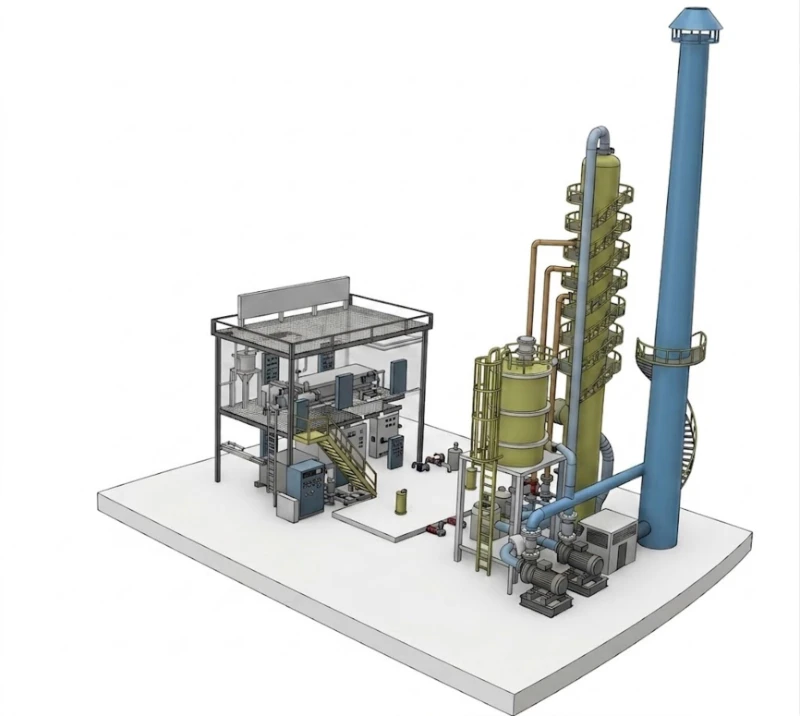
Riepilogo del flusso di processo
380–420 °C
iniezione di NH₃
zona 900°C
Pre-spolveratura
Filtro a sacco
350 °C
2+1 strati
φ4,4 m
97.9% SO₂
Post-FGD
→ Stack
⭐ Attrezzature nuove o aggiornate in questo progetto
Principali parametri delle apparecchiature in sintesi
| Attrezzatura | Specifiche chiave |
|---|---|
| Ventilatore a tiraggio indotto | 220.000 m³/h; 5.000 Pa; 250–300 °C; 335 kW per unità; velocità variabile 50 Hz |
| Reattore SCR | 273.846 m³/h; 350 °C; 2+1 strati di catalizzatore; 31.104 m³ di catalizzatore; efficienza NOx 88%; ≤3 ppm di emissioni di NH₃ |
| Torre di assorbimento FGD | φ4,4 m; 120.000 m³/h; L/G=30; 4 strati di spruzzatura; pompa da 900 m³/h; calcare 718 kg/h; gesso 1.488 kg/h |
| Produzione di gesso (massima) | 1.488 kg/h; contenuto di umidità ≤15%; riutilizzabile commercialmente |
| deposito di calcare | 50 m³; autonomia di 7 giorni al massimo consumo |
| Potenza massima del sistema | 1.047,52 kW effettivi; 1.186,67 kW totali installati |
| Costo annuo dell'elettricità (8.000 ore) | Circa 301,7 decine di migliaia di RMB equivalenti a 0,36 RMB/kWh |
| Costo annuale dell'acqua | Circa 8,8 decine di migliaia di RMB equivalenti (5,5 t/h; 2 RMB/t) |
| Costo annuale del calcare | Circa 172,32 decine di migliaia di RMB equivalenti (718 kg/h; 300 RMB/t) |
04 — Vantaggi principali
Perché la denitrificazione combinata SNCR+SCR e la desolforazione dei fumi di calcare-gesso rappresentano l'architettura ideale per i forni a carbonato di litio ad alto contenuto di SO₂
- ✓
L'utilizzo del sistema SNCR nella zona del forno ad alta temperatura massimizza l'efficienza complessiva della denitrificazione: La posizione di iniezione del SNCR all'uscita del forno rotante (dove è disponibile l'intervallo di temperatura di 850–1.100 °C) consente un'efficiente decomposizione termica degli NOx senza catalizzatore. Il SNCR rimuove una parte del carico di NOx prima che il gas entri nel reattore SCR, riducendo il carico totale di NOx all'ingresso dell'SCR. Questa pre-riduzione del SNCR permette al reattore SCR a valle di raggiungere un'efficienza di denitrificazione combinata complessiva di 81,5% (da 809 mg/Nm³ a ≤150 mg/Nm³) con un volume di catalizzatore e una caduta di pressione che non sarebbero raggiungibili se l'SCR dovesse gestire da solo l'intero carico di NOx in ingresso. - ✓
Il processo SCR a media temperatura a 350 °C è fattibile perché il forno a gas naturale non contiene SO₂ all'ingresso del sistema SCR: Il reattore SCR è posizionato all'uscita del collettore di polveri multitubo, dove la temperatura del gas è di circa 350-380 °C e, aspetto fondamentale, dove l'SO₂ proveniente dalla reazione di sinterizzazione non è ancora completamente entrato nel flusso di gas (o è stato parzialmente rimosso dal collettore di polveri a monte). Poiché il combustibile a gas naturale non contiene zolfo, l'SO₂ è interamente un prodotto della reazione chimica di sinterizzazione. Il posizionamento dell'SCR sfrutta l'intervallo di tempo precedente al picco di rilascio di SO₂ per utilizzare un catalizzatore a temperatura intermedia senza il rischio di avvelenamento da bisolfato di ammonio. Ciò contrasta con l'ingresso del sistema di desolforazione dei fumi (FGD) (dove l'SO₂ è presente alla sua concentrazione media di 4.645 mg/Nm³), che distruggerebbe immediatamente un catalizzatore SCR standard. - ✓
Il rapporto L/G di 30 e 4 strati di spruzzatura raggiunge una rimozione FGD del 97,9% da una media di 4.645 mg/Nm³: I progetti standard di desolforazione dei fumi (FGD) delle centrali elettriche utilizzano rapporti L/G compresi tra 8 e 15 per concentrazioni di SO₂ in ingresso comprese tra 1.000 e 3.000 mg/Nm³. La torre di desolforazione del forno al carbonato di litio opera con un rapporto L/G pari a 30, più del doppio del rapporto standard delle centrali elettriche, con 4 strati di nebulizzazione anziché i tipici 3. Questa combinazione di elevato rapporto liquido-gas e maggiore contatto di nebulizzazione fornisce il tempo di permanenza di assorbimento prolungato necessario per raggiungere una desolforazione di 97,9% a partire da una concentrazione media in ingresso di 4.645 mg/Nm³, mantenendo al contempo un margine di prestazione adeguato per la condizione di picco di 12.000 mg/Nm³, in cui è necessaria una rimozione di 99,2% per rimanere entro il limite di uscita di 100 mg/Nm³. - ✓
Il controllo dello strato di nebulizzazione del sistema FGD basato sul monitoraggio online ottimizza il consumo di reagenti nell'intero intervallo di variabilità dell'SO₂: La quantità di apertura degli strati di nebulizzazione della torre di desolforazione viene regolata in base ai dati di monitoraggio online dell'SO₂ sia all'ingresso che all'uscita del sistema di desolforazione dei fumi (FGD). Durante i periodi di SO₂ di riferimento (quando il valore in ingresso si attesta nella parte inferiore dell'intervallo medio di 4.645 mg/Nm³), vengono attivati meno strati di nebulizzazione, riducendo il consumo energetico delle pompe e la velocità di circolazione della sospensione di calcare. Durante i picchi di SO₂, tutti e 4 gli strati di nebulizzazione vengono attivati simultaneamente. Questa gestione dinamica degli strati di nebulizzazione riduce significativamente i costi annuali di energia e reagenti rispetto al funzionamento continuo di tutti e 4 gli strati alla massima portata, indipendentemente dal carico effettivo di SO₂. - ✓
Il sottoprodotto di gesso, con una portata massima di 1.488 kg/h, ha un valore commerciale diretto: L'eccezionalmente elevata velocità di produzione di gesso (massimo 1.488 kg/h, che riflette la concentrazione media di SO₂ in ingresso di 4.645 mg/Nm³) rende questo sistema FGD un importante produttore di gesso. Con un contenuto di umidità ≤15%, il gesso soddisfa le specifiche di qualità per il riutilizzo dei materiali da costruzione (substrato per cartongesso, additivo per cemento) se il contenuto di cloruri rientra nei limiti specificati dalla norma EN 13279-1. Ciò posiziona il sistema FGD come un processo di sottoprodotto che genera valore, piuttosto che come un semplice centro di costo per la conformità, compensando parzialmente il costo del reagente calcareo di 718 kg/h attraverso i ricavi derivanti dalla vendita del gesso. - ✓
Principi di progettazione per sistemi di desolforazione dei fumi a base di calcare e gesso: sette vantaggi per le applicazioni del carbonato di litio. Il processo calcare-gesso è stato scelto per questa applicazione in base agli stessi sette principi validati nelle applicazioni per centrali elettriche: (1) basso consumo energetico e costi operativi ridotti; (2) gestione del sottoprodotto gesso senza inquinamento secondario; (3) ingombro ridotto e progettazione razionale del flusso; (4) progettazione ottimizzata tramite simulazione computerizzata; (5) velocità del gas ottimizzata per un assorbimento uniforme; (6) la materia prima calcarea è ampiamente disponibile e a basso costo; (7) interni della torre con spruzzatura in controcorrente e separatori di nebbia per ridurre la deposizione sulle pareti della torre. Questi principi sono direttamente applicabili ai sistemi di desolforazione dei fumi (FGD) a forno rotante per carbonato di litio, e l'esperienza operativa maturata con migliaia di impianti FGD per centrali elettriche fornisce una solida base di conoscenze per la progettazione e la risoluzione dei problemi del sistema.
05 — Risultati operativi
Dati di conformità verificati e riepilogo dei costi annuali
.webp)
Potenza massima di esercizio del sistema: 1.047,52 kW (effettiva). Con 8.000 ore annue e un costo equivalente a 0,36 RMB/kWh, il costo annuo dell'elettricità è di circa 301,7 decine di migliaia di RMB. Costo annuo dell'acqua: circa 8,8 decine di migliaia di RMB (5,5 t/h, 2 RMB/t). Costo annuo del calcare: circa 172,32 decine di migliaia di RMB (718 kg/h a 300 RMB/t). I ricavi derivanti dal gesso, sottoprodotto della lavorazione, con una produzione massima di 1.488 kg/h, compensano parzialmente questi costi dei reagenti.
06 — Avvertenze sull'implementazione
Considerazioni ingegneristiche critiche per il trattamento dei gas di scarico dei forni rotanti per la produzione di carbonato di litio.
- ⚠️
Le fluttuazioni della concentrazione di SO₂ a monte (derivanti dalle condizioni di processo della linea di produzione) causano il sovraccarico del sistema FGD e influiscono sull'efficienza della desolforazione: questo rappresenta il rischio principale. Il principale rischio operativo documentato è che le fluttuazioni del processo a monte causino oscillazioni della concentrazione di SO₂ che portano il sistema FGD a un funzionamento sovraccarico, causando instabilità dello scarico del sistema. Con concentrazioni di picco di SO₂ pari a 12.000 mg/Nm³ e una media di 4.645 mg/Nm³, il sistema FGD è già dimensionato per un sovraccarico estremo rispetto alle condizioni tipiche di una centrale elettrica. Qualsiasi ulteriore picco di SO₂ al di sopra del valore di progetto di 12.000 mg/Nm³ può portare il sistema a una reale non conformità. Implementare il monitoraggio di SO₂ sia all'ingresso del sistema FGD (prima dell'assorbimento) che all'uscita (dopo l'assorbimento) con feedback in tempo reale al controllo dello strato di spruzzatura e stabilire un protocollo per la notifica preventiva da parte del team di produzione prima di qualsiasi modifica operativa che influisca sulla chimica di sinterizzazione e sulla velocità di rilascio di SO₂. - ⚠️
Il posizionamento dell'ugello SNCR nel forno rotante richiede particolare attenzione: la parete del forno è soggetta principalmente ad evaporazione ad alta temperatura e i fumi contengono un'elevata quantità di polvere che può facilmente causare l'intasamento del catalizzatore. L'esperienza del progetto identifica esplicitamente due rischi specifici del SNCR: (1) la tubazione di iniezione nella sezione rotante del forno rotante deve essere maneggiata con cura: l'adesione alla parete del forno è causata principalmente da processi di evaporazione ad alta temperatura, che richiedono materiali per gli ugelli e metodi di installazione in grado di resistere ai cicli termici; (2) poiché i gas di combustione nel punto di iniezione del SNCR contengono un'elevata concentrazione di polveri, il catalizzatore SCR a valle è soggetto a ostruzioni da particolato. Il sistema di soffiaggio della fuliggine SCR (a getto pulsato) deve essere azionato alla frequenza calibrata fin dal giorno della messa in servizio e la prima ispezione del catalizzatore a 6 mesi dovrebbe includere una misurazione completa della caduta di pressione attraverso tutti gli strati del catalizzatore per verificare che il tasso di ostruzione rientri nei limiti accettabili. - ⚠️
La temperatura di denitrificazione SNCR è fondamentale: solo all'interno dell'intervallo di temperatura appropriato è possibile raggiungere un'efficienza di denitrificazione ottimale. Il punto di iniezione del sistema SNCR deve mantenere la temperatura del gas nell'intervallo 850-1100 °C per un'efficace decomposizione termica degli NOx. Al di sotto di 850 °C, la reazione termica NOx-NH₃ è troppo lenta per una riduzione efficace; al di sopra di 1100 °C, l'ammoniaca si ossida formando ulteriore NOx anziché ridurlo. La temperatura del punto di iniezione del sistema SNCR deve essere monitorata continuamente e la portata dell'acqua ammoniacale deve essere regolata in tempo reale per compensare le variazioni di temperatura nella zona di iniezione. Una distribuzione non uniforme della temperatura nella sezione trasversale del forno (comune nei forni rotativi con portate di alimentazione variabili) può creare simultaneamente zone di sovratemperatura e zone di sottotemperatura, riducendo l'efficienza di rimozione del sistema SNCR. - ⚠️
L'elevatissimo tasso di consumo di calcare FGD (massimo 718 kg/h) richiede una gestione affidabile della catena di approvvigionamento e un adeguato stoccaggio in loco: Con un consumo massimo di calcare di 718 kg/h e una capacità di stoccaggio in loco di 50 m³ (autonomia di 7 giorni), la catena di approvvigionamento del calcare deve garantire una fornitura settimanale affidabile. Qualsiasi interruzione della fornitura che riduca la capacità di stoccaggio del calcare al di sotto del livello minimo operativo comporterà una riduzione della capacità di trattamento dell'SO₂, creando un rischio di non conformità entro poche ore. È necessario implementare clausole contrattuali che garantiscano la frequenza di consegna, mantenere un livello minimo di scorte (ad esempio, scorte residue per 3 giorni) che attivi un ordine di acquisto automatico e documentare la procedura di emergenza per la riduzione temporanea del tasso di desolforazione dei fumi (FGD) durante gli eventi di interruzione della fornitura. - ⚠️
Il pH della sospensione di FGD e l'ossidazione del solfito di calcio devono essere gestiti attivamente per prevenire la formazione di incrostazioni e mantenere la qualità del gesso: Alle elevate concentrazioni di SO₂ in ingresso tipiche di questa applicazione, il circuito di fanghi del sistema FGD accumula solfito e solfato a velocità di gran lunga superiori a quelle praticate negli impianti FGD delle centrali elettriche. Le finestre di gestione del pH sono critiche: quando il pH del circuito di circolazione dello scrubber primario scende al di sotto di 4,5, aggiungere fanghi e mantenere il pH tra 4,5 e 5,5; quando il pH del circuito di circolazione dello scrubber secondario scende al di sotto di 5,5, aggiungere fanghi e mantenere il pH tra 5,5 e 6,5. Il ventilatore di ossidazione deve funzionare continuamente per garantire un'adeguata fornitura d'aria per l'ossidazione del solfito di calcio a gesso: un'ossidazione incompleta produce incrostazioni di solfito di calcio nell'assorbitore anziché i cristalli di gesso filtrabili che possono essere disidratati fino a un contenuto di umidità ≤15%. - ⚠️
I gas di scarico che entrano nel sistema di desolforazione con un'elevata concentrazione di SO₂ possono causare un sovraccarico del sistema FGD: adottare un reagente di desolforazione a base di calcio ad alta efficienza e migliorare l'efficienza di desolforazione. In base alla sintesi dell'esperienza documentata, il punto critico di questo processo è il seguente: quando la concentrazione di SO₂ a monte raggiunge un picco di 12.000 mg/Nm³, il sistema FGD può trovarsi vicino al limite della sua capacità di assorbimento anche con L/G=30 e 4 strati di nebulizzazione. A questo punto, la sospensione di calcare deve avere un pH ottimale con ossidazione completamente attivata e tutti e 4 gli strati di nebulizzazione devono funzionare alla massima portata. Se la qualità del calcare si degrada (minore purezza del CaCO₃), o se un'ostruzione degli ugelli di nebulizzazione riduce la copertura effettiva, o se il pH della sospensione si abbassa, il sistema non riuscirà a raggiungere il valore di ≤100 mg/Nm³ in uscita durante il picco. È necessaria un'ispezione regolare (settimanale) degli ugelli di nebulizzazione per garantire il mantenimento di una copertura completa in ogni momento.
07 — Considerazioni ingegneristiche
Quattro lezioni da questo progetto di trattamento dei gas di scarico dei forni a carbonato di litio per batterie.
- 1
La combinazione SNCR+SCR è essenziale quando la concentrazione di NOx in ingresso è superiore a 600 mg/Nm³ e la concentrazione target in uscita è ≤150 mg/Nm³: nessuna delle due tecnologie da sola è in grado di fornire l'efficienza di rimozione richiesta di 81,5% in queste condizioni di ingresso del sistema di desolforazione dei fumi. Il solo processo SNCR consente una rimozione di NOx pari a 30–50%, ma con selettività limitata e sensibilità alle variazioni di temperatura. Il solo processo SCR, con una portata di 273.846 m³/h, richiederebbe un volume di catalizzatore impraticabilmente grande per ottenere una rimozione di 81,5% da 809 mg/Nm³. La pre-riduzione SNCR riduce la concentrazione di NOx in ingresso al processo SCR a un livello gestibile, mentre il processo SCR fornisce la riduzione precisa ed efficiente necessaria per rispettare in modo affidabile il limite di ≤150 mg/Nm³. L'architettura combinata SNCR+SCR è la soluzione standard raccomandata per qualsiasi applicazione in cui la concentrazione di NOx in ingresso superi i 600 mg/Nm³ e quella in uscita debba essere inferiore a 200 mg/Nm³. - 2
Progettare il sistema di desolforazione dei fumi (FGD) per le condizioni di picco di SO₂, non per la media: per un rapporto di variabilità di 10:1, la differenza nel dimensionamento del sistema è sostanziale. La concentrazione media di SO₂ di 4.645 mg/Nm³ e il picco di 12.000 mg/Nm³ richiedono lo stesso valore target in uscita di ≤100 mg/Nm³. All'ingresso medio, l'efficienza di rimozione è del 97,8%; all'ingresso di picco, è richiesto il 99,2%. Progettare per condizioni medie (rimozione del 97,8%) e dimensionare il sistema di conseguenza comporterebbe il superamento dei limiti di conformità durante ogni evento di picco di SO₂. Il sistema di desolforazione dei fumi (FGD) deve essere dimensionato per un'efficienza di rimozione del 99,2% in condizioni di picco di 12.000 mg/Nm³, il che determina la specifica L/G=30 e la progettazione a 4 strati di nebulizzazione. Il margine di conformità durante le condizioni medie (uscita ben al di sotto di 100 mg/Nm³) è il risultato naturale di un sistema correttamente dimensionato per il picco. - 3
Il controllo dinamico dello strato di nebulizzazione basato sul monitoraggio online trasforma il carico variabile di SO₂ da un problema operativo in un vantaggio operativo. Il controllo dell'attivazione dello strato di nebulizzazione basato sul monitoraggio online di SO₂ trasforma la variabilità di SO₂ con un rapporto di 10:1 da fattore di stress per il sistema in un'opportunità di ottimizzazione dell'energia e dei reagenti. Durante i periodi di SO₂ di base, sono sufficienti 1-2 strati di nebulizzazione; durante i periodi di picco, vengono attivati tutti e 4. Questa gestione dinamica riduce il consumo di energia elettrica delle pompe e la circolazione della sospensione di calcare durante i periodi di bassa SO₂ del 50-75% rispetto al funzionamento continuo di tutti e 4 gli strati, garantendo un significativo risparmio annuo sui costi operativi (OPEX) e mantenendo la piena conformità in tutte le condizioni di SO₂. - 4
La produzione di gesso pari a 1.488 kg/h da un impianto di desolforazione dei fumi di carbonato di litio ad alto contenuto di SO₂ è sufficientemente elevata da richiedere una strategia attiva di commercializzazione del gesso, e non solo un piano di smaltimento. Alla massima capacità produttiva, questo impianto di desolforazione dei fumi (FGD) genera circa 35,7 tonnellate di gesso al giorno, nell'arco di 24 ore. Si tratta di un volume commercialmente significativo che giustifica la stipula di un accordo di fornitura con un impianto di lavorazione del gesso per l'edilizia prima della messa in funzione, anziché considerare lo smaltimento del gesso come un aspetto secondario. Se la qualità del gesso (contenuto di cloruri, umidità, contenuto di metalli pesanti) soddisfa gli standard applicabili per il riutilizzo dei materiali da costruzione, i ricavi derivanti dalla vendita del gesso possono compensare in modo significativo il costo del reagente calcareo, pari a 718 kg/h.
08 — Domande frequenti
Trattamento dei gas di scarico dei forni rotanti a carbonato di litio per batterie di potenza: dieci domande con relative risposte.
Domande da parte di responsabili delle autorizzazioni ambientali, ingegneri di processo e team di sostenibilità presso impianti di produzione di materiali per batterie elettriche che pianificano la denitrificazione SCR e l'ammodernamento dei sistemi FGD ad alto contenuto di SO₂ in conformità con i requisiti del Decreto europeo sulle attività (IED) e del Decreto olandese sulle attività.
Pronti a raggiungere la conformità alle normative sulle emissioni ultra-basse per il vostro forno per materiali per batterie?
Scopri la gamma completa di soluzioni per il controllo delle emissioni industriali.
Dalla denitrificazione SNCR+SCR e FGD calcare-gesso ad alto SO₂ per forni rotanti di carbonato di litio a sistemi di ossidazione termica rigenerativa per l'abbattimento dei VOC industrialiIl nostro team di ingegneri fornisce soluzioni conformi alle normative IED dell'UE per i requisiti più esigenti in materia di controllo delle emissioni dei materiali per batterie di nuova generazione.