مطالعه موردی · کنترل انتشار گازهای صنعتی
چگونه یک شرکت پیشرو در زمینه باتریهای قدرت جهانی به راندمان ترکیبی نیتراتزدایی SNCR+SCR با میانگین ۸۱.۵۱TP3T و گوگردزدایی ۹۷.۹۱TP3T از گاز خروجی تولید کربنات لیتیوم کوره دوار با غلظت SO₂ ورودی به ۱۲۰۰۰ میلیگرم بر نیوتن متر مکعب دست یافت - با استفاده از یک سیستم تصفیه دوخطه SNCR+SCR+سنگ آهک-گچ FGD+آهک که برای تغییرات شدید شیمی گاز خروجی پخت کربنات لیتیوم درجه باتری سازگار شده است.
نیتراتزدایی ترکیبی SNCR+SCR
سنگ آهک-گچ FGD
پخت کربنات لیتیوم
انتشار گازهای گلخانهای بسیار کم در صنعت باتری
۰۱ — پیشینه صنعت
تولید کربنات لیتیوم باتریهای قدرت: بخشی به سرعت در حال گسترش با چالشهای جدی در زمینه انتشار گازهای گلخانهای
کربنات لیتیوم یک ماده اولیه اساسی برای تولید باتری لیتیومی است. تقاضای جهانی به دلیل پذیرش خودروهای الکتریکی و گسترش ذخیرهسازی انرژی در مقیاس شبکه، به سرعت در حال افزایش است، به طوری که تولید از ۴.۱ تن در سال ۲۰۱۴ به ۳۹.۵ میلیون تن در سال ۲۰۲۲ با نرخ رشد مرکب سالانه ۲۸۱TP3T افزایش یافته است و پیشبینیها حاکی از ظرفیت ۱۱۰ میلیون تنی تا سال ۲۰۲۵ و تولید واقعی ۵۱.۷۹ میلیون تن در سال ۲۰۲۳ (رشد سالانه ۳۱.۱۱TP3T) است. با افزایش مقیاس بازارهای خودروهای برقی، نیاز به ظرفیت تولید کربنات لیتیوم درجه باتری تنها افزایش خواهد یافت و این امر منجر به سرمایهگذاری بیشتر در تأسیسات تولید و زیرساختهای مرتبط با انطباق با محیط زیست آنها میشود.
شرکت مورد مطالعه در این مطالعه موردی، یکی از شرکتهای پیشرو در زمینه باتریهای برق در سطح جهان و یکی از معدود شرکتهایی است که زنجیره کامل صنعت باتری برق را پوشش میدهد. این شرکت که در سال ۲۰۱۵ در یک بورس داخلی بزرگ و در سال ۲۰۲۲ در بورس اوراق بهادار سوئیس به عنوان اولین شرکت باتری برق در سوئیس ثبت شده است، فعالیت اصلی خود را در زمینه باتریهای لیتیومی برای کاربردهای حمل و نقل، سیستمهای ذخیره انرژی و تجهیزات توزیع برق انجام میدهد. محصول «باتری حالت جامد» که در سال ۲۰۲۴ معرفی شد، به چگالی انرژی ۳۵۰۰ وات ساعت بر کیلوگرم و چگالی انرژی حجمی ۸۰۰ وات ساعت بر لیتر، با طول عمر ۳۰۰۰۰ سیکل و برد تئوری بیش از ۳۰۰۰۰۰ کیلومتر دست مییابد. این شرکت همچنین سالانه تقریباً ۱۰۰۰۰۰ واحد توزیع تولید میکند.
تولید کربنات لیتیوم از پخت کوره دوار برای تبدیل مواد خام حاوی لیتیوم (عمدتاً نمکهای لیتیوم مشتق شده از میکا) به کربنات لیتیوم با درجه باتری استفاده میکند. شیمی پخت شامل واکنش دمای بالای ترکیبات سولفات و کربنات است که باعث آزاد شدن SO₂ در غلظتهایی بسیار بیشتر از دیگهای بخار صنعتی یا نیروگاههای معمولی میشود. با افزایش تقاضای بازار برای کربنات لیتیوم و گسترش تأسیسات تولید، سیستم تصفیه گاز دودکش برای پخت کوره دوار به یک گلوگاه عملیاتی و انطباق حیاتی تبدیل میشود. این پروژه از FGD سنگ آهک-گچ همراه با نیتراتزدایی SNCR+SCR برای دستیابی به اهداف انتشار بسیار کم و پیشبرد اعتبار توسعه سبز تأسیسات استفاده میکند.
.webp)
۰۲ — مشخصات آلودگی
گاز خروجی کوره دوار کربنات لیتیوم: تغییرپذیری شدید SO₂ به عنوان چالش تعیینکننده
این تأسیسات دو خط تولید کوره دوار را اداره میکند که هر کدام مجهز به یک جمعآوریکننده گرد و غبار سیکلون + واحد خنککننده + جمعآوریکننده گرد و غبار فیلتر کیسهای هستند و گاز دودکش حاصل از پخت مواد باتری کربنات لیتیوم را پردازش میکنند. کوره با گاز طبیعی کار میکند. حجم استاندارد گاز دودکش در هر خط تولید ۱۲۰۰۰۰ نیوتن متر مکعب در ساعت (۱۸۵۸۹۷ نیوتن متر مکعب در ساعت در شرایط فرآیند، ۱۵۰ درجه سانتیگراد) است. پس از خنک شدن، گاز دودکش در سیستم FGD جمعآوری میشود.
ویژگی بارز گاز خروجی کوره دوار کربنات لیتیوم، تغییرپذیری فوقالعاده غلظت SO₂ است. در طول چرخه واکنش پخت، ترکیبات سولفات لیتیوم تجزیه شده و SO₂ آزاد میکنند: غلظت متوسط SO₂ ورودی به جاذب گوگردزدایی تقریباً ۴۶۴۵ میلیگرم بر نیوتن متر مکعب است، اما غلظتهای اوج میتوانند به ۱۲۰۰۰ میلیگرم بر نیوتن متر مکعب برسند، و سطوح پایه در غلظت تصحیحشده اکسیژن تقریباً ۱۲۱TP3T حدود ۸۰۹ میلیگرم بر نیوتن متر مکعب NOx است. نوسان غلظت SO₂ با نسبت ۱۰:۱ بین سطح پایه و اوج (از تقریباً ۱۲۰۰ میلیگرم بر نیوتن متر مکعب تا ۱۲۰۰۰ میلیگرم بر نیوتن متر مکعب) ایجاب میکند که سیستم FGD برای شرایط اوج طراحی شود و در عین حال عملکرد پایدار و کیفیت گچ را در طول دورههای پایه و میانی حفظ کند.
| پارامتر | غلظت اولیه | فروشگاه طراحی شده | محدودیت EU IED / NER |
|---|---|---|---|
| NOx (به صورت NO₂) | ۸۰۹ میلیگرم بر نیوتن متر مکعب (در ۱۲۱TP3T O₂، محتوای آمونیاک پایه ۱۲۱TP3T) | ≤150 میلیگرم بر نیوتن متر مکعب | مواد منفجره دستساز ۲۰۱۰/۷۵/EU: ۱۵۰ میلیگرم بر نیوتن متر مکعب |
| SO₂ (میانگین در ورودی FGD) | میانگین ۴۶۴۵ میلیگرم بر نیوتن متر مکعب؛ پیک ۱۲۰۰۰ میلیگرم بر نیوتن متر مکعب | ≤100 میلیگرم بر نیوتن متر مکعب | فرمان فعالیتهای هلندی NER |
| ذرات معلق (PM) | ۶۵۸ میلیگرم بر نیوتن متر مکعب | ≤30 میلیگرم بر نیوتن متر مکعب | فرمان فعالیتهای هلندی NER ≤5 میلیگرم بر نیوتن متر مکعب |
| هیدروکلراید | ۳.۷ میلیگرم بر نیوتن متر مکعب | ≤10 میلیگرم بر نیوتن متر مکعب | بمب دستساز (IED BAT) ≤10 میلیگرم بر نیوتنمتر مکعب |
| اچ اف | ۶.۷۴ میلیگرم بر نیوتن متر مکعب | ≤6 میلیگرم بر نیوتن متر مکعب | بمب دستساز (IED BAT) ≤1 میلیگرم بر نیوتن متر مکعب |
| مه اسیدی (مه غلیظ) | ۱۹۱ میلیگرم بر نیوتن متر مکعب | ≤20 میلیگرم بر نیوتن متر مکعب | بمب دستساز |
| گاز دودکش استاندارد (در هر خط) | ۱۲۰،۰۰۰ نیوتن متر مکعب بر ساعت | — | — |
| گاز دودکش فرآیند (به ازای هر خط) | ۱۸۵۸۹۷ نیوتن متر مکعب بر ساعت در دمای ۱۵۰ درجه سانتیگراد | — | — |
| حجم گاز دودکش SCR | ۲۷۳,۸۴۶ نیوتن متر مکعب بر ساعت (ترکیبی از دو خط) | — | — |
| دمای خروجی کوره | ۳۸۰–۴۲۰ درجه سانتیگراد (در محل نصب SCR/SNCR) | — | — |
چالش کلیدی طراحی: SO₂ با میانگین ۴۶۴۵ میلیگرم بر نیوتن متر مکعب و پیک ۱۲۰۰۰ میلیگرم بر نیوتن متر مکعب، غلظت ورودی تقریباً ۳ برابر حداکثر غلظت ورودی یک FGD نیروگاه زغال سنگ معمولی را نشان میدهد. پیک ۱۲۰۰۰ میلیگرم بر نیوتن متر مکعب همراه با نیاز به دستیابی به خروجی ≤۱۰۰ میلیگرم بر نیوتن متر مکعب (راندمان حذف ۹۹.۲۱TP3T در پیک) ایجاب میکند که FGD برای بارگذاری بیش از حد بیش از حد متوسط شرایط عملیاتی طراحی شود. این امر نیاز به برجهای جاذب بزرگ، نسبتهای مایع به گاز بالا و نسبتهای استوکیومتری کلسیم به گوگرد محافظهکارانه در طراحی سیستم را ایجاد میکند.
۰۳ — راهکار درمانی
معماری تصفیه دو خطه: SNCR در خروجی کوره + SCR + FGD سنگ آهک-گچ + گوگردزدایی با آهک
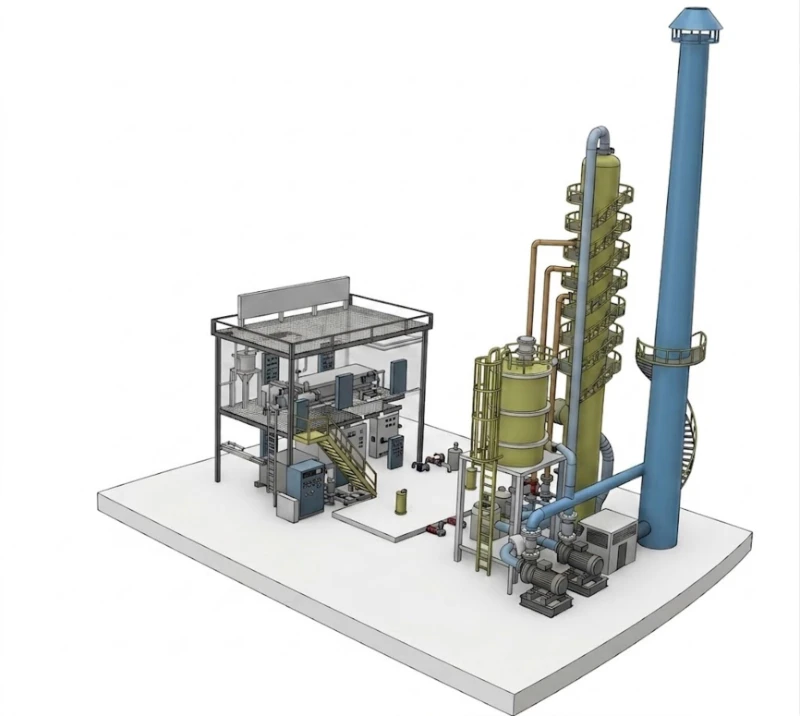
این پروژه دو خط تولید کوره دوار را پوشش میدهد. سیستم تصفیه برای هر خط شامل موارد زیر است: پیش غبارگیری با سیکلون → خنککننده گاز → حذف گرد و غبار با فیلتر کیسهای → جمعآوری گاز دودکش → نیتراتزدایی SNCR+SCR → سنگ آهک-گچ FGD → گوگردزدایی پس از آهک. این ارتقاء با اضافه کردن یک واحد نیتراتزدایی SCR و یک سیستم گوگردزدایی سنگ آهک-گچ + سنگ آهک (آهک) برای دستیابی به انطباق با انتشار بسیار کم، بر روی خط تولید کوره دوار موجود اجرا شد. برای خط تولید دوم در پشت تأسیسات، یک سیستم گوگردزدایی سنگ آهک-گچ به طور همزمان مستقر شده است تا خروجی SO₂ ≤100 میلیگرم بر نیوتن متر مکعب تضمین شود، در حالی که میانگینهای ساعتی گاز دودکش در تمام پارامترها به انطباق دست مییابند.
نیتراتزدایی SNCR در خروجی کوره (منطقه ۳۸۰-۴۲۰ درجه سانتیگراد)
محل نصب سیستم SCR در خروجی چند لولهای جمعآوری گرد و غبار خروجی کوره دوار انتخاب میشود، جایی که دما در محدوده ۳۸۰ تا ۴۲۰ درجه سانتیگراد حفظ میشود. در این دما و با محتوای SO₂ کمتر از ۴۶۰۰ میلیگرم بر نیوتن متر مکعب، میتوان از یک کاتالیزور SCR با دمای متوسط استفاده کرد. کاتالیزور داخلی راکتور SCR با پیکربندی ۲+۱ لایه (۲ لایه فعال + ۱ لایه یدکی) طراحی شده است. عامل کاهنده، آب آمونیاک است و SNCR جلویی از یک سیستم اسپری تک نازله استفاده میکند. SNCR جلویی میتواند تضمین کند که راندمان نیتراتزدایی، هدف نیتراتزدایی را برآورده میکند. برای لایههای اسپری برج گوگردزدایی، مقدار باز شدن آنها بر اساس مقادیر نظارت آنلاین تنظیم میشود و به تخلیه پایدار گاز دودکش با انتشار بسیار کم دست مییابد.
پارامترهای کلیدی راکتور SCR
حجم گاز دودکش ۲۷۳,۸۴۶ متر مکعب بر ساعت (ترکیبی از ۲ خط)؛ دمای گاز دودکش ۳۵۰ درجه سانتیگراد در SCR؛ NOx اولیه ۸۰۹ میلیگرم بر نیوتن متر مکعب؛ PM اولیه ۶۵۸ میلیگرم بر نیوتن متر مکعب؛ O₂ واقعی ≤۱۵.۲۱TP3T؛ NOx خروجی ۱۵۰ میلیگرم بر نیوتن متر مکعب؛ تعداد منافذ کاتالیزور ۱۸؛ تخلخل کاتالیزور ۷۲.۵۹۱TP3T؛ لایههای کاتالیزور ۲+۱ (۱ لایه یدکی)؛ ماژولهای کاتالیزور در هر لایه ۱۲؛ حجم کل کاتالیزور ۳۱.۱۰۴ متر مکعب؛ دمای طراحی ۲۳۰ درجه سانتیگراد؛ حداکثر دمای عملیاتی ۳۵۰ درجه سانتیگراد؛ حداقل دمای عملیاتی ۲۰۰ درجه سانتیگراد؛ نرخ تزریق اوره ۱۱۱.۹۱۹ کیلوگرم بر ساعت؛ راندمان نیتراتزدایی ۸۸۱TP3T؛ لغزش آمونیاک ≤۳ ppm؛ افت فشار ≤۶۰۰ پاسکال؛ روش دمش دوده: دمش پالس-جت.
.webp)
برج جاذب FGD سنگ آهک-گچ (φ4.4 متر، 120,000 متر مکعب در ساعت)
برج FGD سنگینترین قطعه تجهیزات در سیستم است که SO₂ را با میانگین ۴۶۴۵ میلیگرم بر نیوتن متر مکعب و حداکثر ۱۲۰۰۰ میلیگرم بر نیوتن متر مکعب دریافت میکند. برای دستیابی به خروجی ≤۱۰۰ میلیگرم بر نیوتن متر مکعب در بارگذاری حداکثر (راندمان حذف ۹۹.۲۱TP3T)، برج با نسبت مایع به گاز فوقالعاده بالا ۳۰ و ۴ لایه اسپری مشخص شده است. پارامترهای کلیدی: حجم گاز دودکش ۱۲۰۰۰۰ متر مکعب بر ساعت در هر برج؛ دمای گاز دودکش ۱۵۰ درجه سانتیگراد؛ ورودی SO₂ ۴۶۴۵ میلیگرم بر نیوتن متر مکعب؛ خروجی SO₂ ۱۰۰ میلیگرم بر نیوتن متر مکعب؛ نسبت کلسیم به گوگرد ۱.۱؛ سرعت گاز <۳.۵ متر بر ثانیه؛ قطر داخلی برج φ۴.۴ متر؛ نسبت مایع به گاز ۳۰؛ ۴ لایه اسپری؛ جریان تک پمپ ۹۰۰ متر مکعب بر ساعت؛ زمان تهنشینی دوغاب ۶ ساعت؛ مصرف عملیاتی سنگ آهک ۷۱۸ کیلوگرم بر ساعت (حداکثر)؛ تولید گچ ۱۴۸۸ کیلوگرم بر ساعت (حداکثر)؛ رطوبت گچ ≤۱۵۱TP3T؛ غبارگیر: غبارگیر توری دو لایه؛ ظرفیت ذخیرهسازی سنگ آهک متوسط ۵۰ متر مکعب؛ ۷ روز کارکرد مستقل.
خلاصه جریان فرآیند
۳۸۰–۴۲۰ درجه سانتیگراد
تزریق NH₃
منطقه ۹۰۰ درجه سانتیگراد
پیش غبارزدایی
فیلتر کیسهای
۳۵۰ درجه سانتیگراد
۲+۱ لایه
φ4.4 متر
۹۷.۹۱TP3T SO₂
پس از بحث گروهی متمرکز
→ پشته
⭐ تجهیزات جدید یا ارتقا یافته در این پروژه
پارامترهای کلیدی تجهیزات در یک نگاه
| تجهیزات | مشخصات کلیدی |
|---|---|
| فن القایی | ۲۲۰۰۰۰ متر مکعب بر ساعت؛ ۵۰۰۰ پاسکال؛ ۲۵۰-۳۰۰ درجه سانتیگراد؛ ۳۳۵ کیلووات در هر واحد؛ سرعت متغیر ۵۰ هرتز |
| راکتور SCR | ۲۷۳,۸۴۶ متر مکعب بر ساعت؛ ۳۵۰ درجه سانتیگراد؛ ۲+۱ لایه کاتالیزور؛ ۳۱.۱۰۴ متر مکعب کاتالیزور؛ راندمان NOx 88%؛ لغزش NH₃ ≤۳ ppm |
| برج جاذب FGD | ۴.۴ متر مکعب؛ ۱۲۰۰۰۰ متر مکعب بر ساعت؛ نسبت طول به قطر داخلی ۳۰؛ ۴ لایه پاشش؛ پمپ ۹۰۰ متر مکعب بر ساعت؛ ۷۱۸ کیلوگرم سنگ آهک بر ساعت؛ ۱۴۸۸ کیلوگرم گچ بر ساعت |
| تولید گچ (حداکثر) | ۱۴۸۸ کیلوگرم بر ساعت؛ رطوبت ≤۱۵۱TP3T؛ قابل استفاده مجدد تجاری |
| ذخیره سنگ آهک | ۵۰ متر مکعب؛ ۷ روز کارکرد مستقل در حداکثر مصرف |
| حداکثر توان سیستم | ۱,۰۴۷.۵۲ کیلووات واقعی؛ ۱,۱۸۶.۶۷ کیلووات کل نصب شده |
| هزینه برق سالانه (۸۰۰۰ ساعت) | تقریباً 301.7 معادل ده هزار RMB در 0.36 RMB/kWh |
| هزینه آب سالانه | تقریباً معادل ۸.۸ ده هزار یوان (۵.۵ تن در ساعت؛ ۲ یوان در تن) |
| هزینه سالانه سنگ آهک | تقریباً ۱۷۲.۳۲ معادل ده هزار یوان (۷۱۸ کیلوگرم در ساعت؛ ۳۰۰ یوان در تن) |
04 — مزایای اصلی
چرا دنیتریفیکاسیون ترکیبی SNCR+SCR و FGD سنگ آهک-گچ، معماری مناسبی برای کورههای کربنات لیتیوم با SO₂ بالا است؟
- ✓
SNCR در منطقه کوره با دمای بالا، راندمان ترکیبی نیتراتزدایی را به حداکثر میرساند: موقعیت تزریق SNCR در خروجی کوره دوار (جایی که پنجره دمایی ۸۵۰ تا ۱۱۰۰ درجه سانتیگراد در دسترس است) تجزیه حرارتی کارآمد NOx را بدون کاتالیزور امکانپذیر میکند. SNCR بخشی از بار NOx را قبل از ورود گاز به راکتور SCR حذف میکند و کل بار NOx را در ورودی SCR کاهش میدهد. این پیشکاهش SNCR به راکتور SCR پاییندست اجازه میدهد تا به راندمان کلی نیتراتزدایی ترکیبی ۸۱.۵۱TP3T (از ۸۰۹ میلیگرم بر نیوتنمتر مکعب به ≤۱۵۰ میلیگرم بر نیوتنمتر مکعب) با حجم کاتالیزور و افت فشاری که اگر SCR مجبور بود به تنهایی کل بار NOx ورودی را مدیریت کند، قابل دستیابی نبود، دست یابد. - ✓
SCR با دمای متوسط در دمای ۳۵۰ درجه سانتیگراد قابل اجرا است زیرا کوره گاز طبیعی حاوی SO₂ در ورودی SCR نیست: راکتور SCR در خروجی جمعکننده غبار چند لولهای قرار دارد، جایی که دمای گاز تقریباً ۳۵۰ تا ۳۸۰ درجه سانتیگراد است و - به طور بحرانی - جایی که SO₂ حاصل از واکنش پخت هنوز به طور کامل وارد جریان گاز نشده است (یا تا حدی توسط جمعکننده غبار بالادست حذف شده است). از آنجایی که سوخت گاز طبیعی حاوی گوگرد نیست، SO₂ کاملاً یک محصول شیمیایی پخت است. قرار دادن SCR از پنجره قبل از نقطه اوج آزادسازی SO₂ برای استفاده از کاتالیزور با دمای متوسط بدون مسمومیت با بیسولفات آمونیوم استفاده میکند. این در تضاد با ورودی FGD (جایی که SO₂ با غلظت متوسط کامل ۴۶۴۵ میلیگرم بر نیوتن متر مکعب است) است که بلافاصله یک کاتالیزور استاندارد SCR را از بین میبرد. - ✓
نسبت L/G برای ۳۰ و ۴ لایه اسپری، حذف ۹۷.۹۱TP3T FGD را از میانگین ۴۶۴۵ میلیگرم بر نیوتن متر مکعب به دست میآورد: طرحهای استاندارد FGD نیروگاههای برق از نسبتهای L/G برابر با ۸ تا ۱۵ برای غلظتهای ورودی SO₂ بین ۱۰۰۰ تا ۳۰۰۰ میلیگرم بر نیوتن متر مکعب استفاده میکنند. برج FGD کوره کربنات لیتیوم با نسبت L/G=30 - بیش از دو برابر نسبت استاندارد نیروگاه - با ۴ لایه اسپری به جای ۳ لایه معمول کار میکند. این ترکیب نسبت بالای مایع به گاز و تماس اسپری اضافی، زمان ماندگاری جذب طولانیتری را برای دستیابی به گوگردزدایی ۹۷.۹۱TP3T از میانگین ورودی ۴۶۴۵ میلیگرم بر نیوتن متر مکعب فراهم میکند، در حالی که حاشیه عملکرد کافی را برای شرایط اوج ۱۲۰۰۰ میلیگرم بر نیوتن متر مکعب حفظ میکند، جایی که حذف ۹۹.۲۱TP3T برای ماندن در محدوده خروجی ۱۰۰ میلیگرم بر نیوتن متر مکعب مورد نیاز است. - ✓
کنترل لایه اسپری FGD مبتنی بر پایش آنلاین، مصرف معرف را در کل محدوده تغییرات SO₂ بهینه میکند: مقدار باز شدن لایه اسپری برج گوگردزدایی بر اساس دادههای پایش آنلاین SO₂ از ورودی و خروجی FGD تنظیم میشود. در طول دورههای SO₂ پایه (زمانی که ورودی در محدوده پایینتر از میانگین ۴۶۴۵ میلیگرم بر نیوتن متر مکعب است)، لایههای اسپری کمتری فعال میشوند که باعث کاهش مصرف انرژی پمپ و سرعت گردش دوغاب سنگ آهک میشود. در طول اوج SO₂، هر ۴ لایه اسپری به طور همزمان فعال میشوند. این مدیریت پویای لایه اسپری، در مقایسه با اجرای مداوم هر ۴ لایه با حداکثر سرعت جریان صرف نظر از بار واقعی SO₂، به طور قابل توجهی هزینه انرژی و معرف سالانه را کاهش میدهد. - ✓
محصول جانبی گچ با نرخ حداکثر ۱۴۸۸ کیلوگرم بر ساعت، ارزش تجاری مستقیم دارد: نرخ تولید گچ فوقالعاده بالا (حداکثر ۱۴۸۸ کیلوگرم در ساعت، که منعکس کننده غلظت ورودی SO₂ به طور متوسط ۴۶۴۵ میلیگرم بر نیوتن متر مکعب است) این سیستم FGD را به یک تولیدکننده قابل توجه گچ تبدیل میکند. با رطوبت ≤۱۵۱TP3T، گچ تولید شده در صورتی که محتوای کلرید در محدوده مشخصات EN 13279-1 باشد، مطابق با مشخصات کیفی برای استفاده مجدد از مصالح ساختمانی (زیرلایه دیوارپوش، افزودنی سیمان) است. این امر سیستم FGD را به عنوان یک فرآیند جانبی ارزشآفرین به جای صرفاً یک مرکز هزینه انطباق قرار میدهد و تا حدی هزینه ۷۱۸ کیلوگرم در ساعت معرف سنگ آهک را از طریق درآمد فروش گچ جبران میکند. - ✓
اصول طراحی FGD سنگ آهک-گچ کاربردی: هفت مزیت برای کاربردهای کربنات لیتیوم: فرآیند سنگ آهک-گچ برای این کاربرد به دلیل همان هفت اصل اعتبارسنجی شده در کاربردهای نیروگاهی انتخاب شد: (1) مصرف انرژی و هزینه عملیاتی پایین؛ (2) محصول جانبی گچ قابل مدیریت بدون آلودگی ثانویه؛ (3) فضای اشغالی کم و طراحی جریان منطقی؛ (4) طراحی بهینه شده با شبیهسازی کامپیوتری؛ (5) سرعت گاز بهینه برای جذب یکنواخت؛ (6) مواد اولیه سنگ آهک به طور گسترده تهیه میشوند و کم هزینه هستند؛ (7) اجزای داخلی برج با استفاده از اسپری جریان مخالف و حذف کنندههای مه برای کاهش رسوب دیواره برج. این اصول به طور مستقیم برای کوره دوار کربنات لیتیوم FGD قابل اجرا هستند و تجربه عملیاتی از هزاران نصب FGD نیروگاه، پایگاه دانش قوی برای طراحی و عیبیابی سیستم فراهم میکند.
۰۵ — نتایج عملیاتی
دادههای انطباق تأیید شده و خلاصه هزینههای سالانه
.webp)
حداکثر توان عملیاتی سیستم: ۱۰۴۷.۵۲ کیلووات (واقعی). با ۸۰۰۰ ساعت کار سالانه و معادل ۰.۳۶ یوان بر کیلووات ساعت، هزینه برق سالانه تقریباً ۳۰۱.۷ ده هزار یوان معادل است. هزینه آب سالانه: تقریباً ۸.۸ ده هزار یوان معادل (۵.۵ تن بر ساعت، ۲ یوان بر تن). هزینه سنگ آهک سالانه: تقریباً ۱۷۲.۳۲ ده هزار یوان معادل (۷۱۸ کیلوگرم بر ساعت با ۳۰۰ یوان بر تن). درآمد حاصل از محصول جانبی گچ با حداکثر تولید ۱۴۸۸ کیلوگرم بر ساعت، تا حدی این هزینههای واکنشگر را جبران میکند.
06 — هشدارهای اجرایی
ملاحظات مهندسی حیاتی برای تصفیه گازهای خروجی کوره دوار کربنات لیتیوم
- ⚠️
نوسانات غلظت SO₂ بالادست (ناشی از شرایط پردازش خط تولید) باعث اضافه بار سیستم FGD شده و بر راندمان گوگردزدایی تأثیر میگذارد - خطر اصلی: ریسک عملیاتی مستند اولیه این است که نوسانات فرآیند بالادستی باعث نوسانات غلظت SO₂ میشود که سیستم FGD را به سمت عملکرد بیش از حد سوق میدهد و باعث ناپایداری تخلیه سیستم میشود. با غلظتهای اوج SO₂ در ۱۲۰۰۰ میلیگرم بر نیوتن متر مکعب و میانگین ۴۶۴۵ میلیگرم بر نیوتن متر مکعب، FGD از قبل برای بارگذاری بیش از حد بیش از حد معمول در شرایط نیروگاهی طراحی شده است. هرگونه افزایش SO₂ اضافی بالاتر از اوج طراحی ۱۲۰۰۰ میلیگرم بر نیوتن متر مکعب میتواند سیستم را به سمت عدم انطباق واقعی سوق دهد. نظارت بر SO₂ را هم در ورودی FGD (قبل از جذب) و هم در خروجی (پس از جذب) با بازخورد بلادرنگ به کنترل لایه اسپری اجرا کنید و پروتکلی برای اطلاعرسانی قبلی از تیم تولید قبل از هرگونه تغییر عملیاتی که بر شیمی پخت و میزان انتشار SO₂ تأثیر میگذارد، ایجاد کنید. - ⚠️
قرار دادن نازل SNCR در کوره دوار نیاز به توجه دقیق دارد - دیواره کوره عمدتاً در اثر تبخیر در دمای بالا ایجاد میشود و گاز دودکش حاوی گرد و غبار زیادی است که به راحتی باعث انسداد کاتالیزور میشود: تجربه پروژه به صراحت دو ریسک خاص SNCR را مشخص میکند: (1) خط لوله تزریق در بخش چرخشی کوره دوار باید با دقت مدیریت شود - چسبندگی دیواره کوره در درجه اول ناشی از فرآیندهای تبخیر با دمای بالا است که به مواد نازل و روشهای نصبی نیاز دارد که بتوانند چرخه حرارتی را تحمل کنند؛ (2) از آنجایی که گاز دودکش در نقطه تزریق SNCR حاوی بار گرد و غبار بالایی است، کاتالیزور SCR در پایین دست مستعد انسداد توسط ذرات است. سیستم دمش دوده SCR (دمش جت پالسی) باید از روز راهاندازی با فرکانس کالیبره شده کار کند و اولین بازرسی کاتالیزور در 6 ماهگی باید شامل اندازهگیری جامع افت فشار در تمام لایههای کاتالیزور باشد تا تأیید شود که نرخ انسداد در محدوده قابل قبول است. - ⚠️
دمای نیتراتزدایی SNCR بسیار مهم است - تنها در محدوده دمایی مناسب میتوان به راندمان نیتراتزدایی ایدهآل دست یافت: نقطه تزریق SNCR باید دمای گاز را در بازه ۸۵۰ تا ۱۱۰۰ درجه سانتیگراد برای تجزیه حرارتی مؤثر NOx حفظ کند. در دمای کمتر از ۸۵۰ درجه سانتیگراد، واکنش حرارتی NOx-NH₃ برای کاهش مؤثر بسیار کند است؛ در دمای بالاتر از ۱۱۰۰ درجه سانتیگراد، آمونیاک اکسید میشود و NOx بیشتری تشکیل میدهد، نه اینکه آن را کاهش دهد. دمای نقطه تزریق SNCR باید به طور مداوم پایش شود و سرعت جریان آب آمونیاک باید به صورت بلادرنگ تنظیم شود تا تغییرات دما در سراسر ناحیه تزریق جبران شود. توزیع غیر یکنواخت دما در سراسر مقطع کوره (که در کورههای دوار با نرخ تغذیه متغیر رایج است) میتواند به طور همزمان مناطق با دمای بیش از حد و مناطق با دمای کمتر از حد معمول ایجاد کند و راندمان حذف مؤثر SNCR را کاهش دهد. - ⚠️
نرخ مصرف بالای سنگ آهک FGD (حداکثر ۷۱۸ کیلوگرم در ساعت) نیازمند مدیریت زنجیره تأمین قابل اعتماد و ذخیرهسازی کافی در محل است: با حداکثر مصرف سنگ آهک ۷۱۸ کیلوگرم در ساعت و ذخیرهسازی در محل ۵۰ متر مکعب (خودمختاری ۷ روزه)، زنجیره تأمین سنگ آهک باید یک منبع هفتگی قابل اعتماد ارائه دهد. هرگونه وقفه در تأمین که باعث کاهش ذخیرهسازی سنگ آهک به زیر حداقل سطح عملیاتی شود، منجر به کاهش ظرفیت تصفیه SO₂ شده و در عرض چند ساعت خطر انطباق را ایجاد میکند. مفاد قرارداد تأمین را که مستلزم تضمین تناوب تحویل است، اجرا کنید، حداقل سطح موجودی (مثلاً ۳ روز موجودی باقیمانده) را حفظ کنید که باعث سفارش خرید خودکار شود، و رویه احتمالی برای کاهش موقت نرخ FGD در طول رویدادهای وقفه در تأمین را مستند کنید. - ⚠️
pH دوغاب FGD و اکسیداسیون سولفیت کلسیم باید به طور فعال مدیریت شوند تا از پوسته پوسته شدن جلوگیری شده و کیفیت گچ حفظ شود: در غلظتهای بالای ورودی SO₂ در این کاربرد، حلقه دوغاب FGD سولفیت و سولفات را با سرعتی بسیار بالاتر از روش FGD نیروگاه جمعآوری میکند. بازههای مدیریت pH بسیار مهم هستند: وقتی pH حلقه گردش اسکرابر اولیه به زیر ۴.۵ میرسد، دوغاب اضافه کنید و pH را در ۴.۵-۵.۵ نگه دارید؛ وقتی pH حلقه گردش اسکرابر ثانویه به زیر ۵.۵ میرسد، دوغاب اضافه کنید و pH را در ۵.۵-۶.۵ نگه دارید. فن اکسیداسیون باید به طور مداوم کار کند تا از تأمین هوای کافی برای اکسیداسیون سولفیت کلسیم به گچ اطمینان حاصل شود - اکسیداسیون ناقص باعث ایجاد رسوب سولفیت کلسیم در جاذب میشود، نه کریستالهای گچ قابل فیلتر شدن که میتوانند تا رطوبت ≤۱۵۱TP۳T آبگیری شوند. - ⚠️
ورود گاز دودکش به سیستم گوگردزدایی با غلظت بالای SO₂ ممکن است باعث افزایش بار عملیاتی FGD شود - از معرف گوگردزدایی مبتنی بر کلسیم با راندمان بالا استفاده کنید و راندمان گوگردزدایی را بهبود بخشید: بر اساس خلاصه تجربیات مستند، نقطه بحرانی این فرآیند این است: وقتی SO₂ بالادست به ۱۲۰۰۰ میلیگرم بر نیوتن متر مکعب میرسد، سیستم FGD میتواند حتی با نسبت L/G=30 و ۴ لایه اسپری، نزدیک به حد ظرفیت جذب خود باشد. در این مرحله، دوغاب سنگ آهک باید در pH بهینه با اکسیداسیون کاملاً فعال باشد و هر ۴ لایه اسپری باید با حداکثر جریان کار کنند. اگر کیفیت سنگ آهک کاهش یابد (خلوص CaCO₃ کمتر شود)، یا اگر هرگونه انسداد نازل اسپری پوشش مؤثر را کاهش دهد، یا اگر pH دوغاب به پایینترین حد خود رسیده باشد، سیستم در طول رویداد پیک نمیتواند به خروجی ≤۱۰۰ میلیگرم بر نیوتن متر مکعب برسد. بازرسی منظم (هفتگی) نازل اسپری برای اطمینان از حفظ پوشش کامل در همه زمانها ضروری است.
07 - نکات مهندسی
چهار درس از این پروژه کوره لیتیوم کربنات باتری قدرتی
- 1
ترکیب SNCR+SCR زمانی ضروری است که ورودی NOx بالای ۶۰۰ میلیگرم بر نیوتنمتر مکعب و خروجی هدف ≤۱۵۰ میلیگرم بر نیوتنمتر مکعب باشد - هیچکدام از این فناوریها به تنهایی نمیتوانند راندمان حذف مورد نیاز ۸۱.۵۱TP3T را در این شرایط ورودی FGD ارائه دهند. SNCR به تنهایی به حذف 30-50% NOx دست مییابد، اما با گزینشپذیری و حساسیت محدود به تغییرات دما. SCR به تنهایی با سرعت 273,846 متر مکعب در ساعت، برای دستیابی به حذف 81.5% از 809 میلیگرم بر نیوتن متر مکعب، به حجم کاتالیزوری غیرعملی زیادی نیاز دارد. پیشاحیای SNCR، NOx ورودی SCR را به سطح قابل کنترلی کاهش میدهد، در حالی که SCR کاهش دقیق و با راندمان بالای مورد نیاز برای رسیدن به حد ≤150 میلیگرم بر نیوتن متر مکعب را به طور قابل اعتمادی فراهم میکند. معماری ترکیبی SNCR+SCR، توصیه استاندارد برای هر کاربردی است که در آن NOx ورودی بیش از 600 میلیگرم بر نیوتن متر مکعب و خروجی باید کمتر از 200 میلیگرم بر نیوتن متر مکعب باشد. - 2
FGD را برای شرایط پیک SO₂ طراحی کنید، نه برای میانگین - برای نسبت تغییرپذیری ۱۰:۱، تفاوت در اندازه سیستم قابل توجه است. میانگین SO₂ برابر با ۴۶۴۵ میلیگرم بر نیوتن متر مکعب و پیک ۱۲۰۰۰ میلیگرم بر نیوتن متر مکعب، به همان خروجی هدف ۱۰۰ میلیگرم بر نیوتن متر مکعب نیاز دارد. در ورودی میانگین، راندمان حذف ۹۷.۸۱TP3T است؛ در ورودی پیک، ۹۹.۲۱TP3T مورد نیاز است. طراحی برای شرایط میانگین (حذف ۹۷.۸۱TP3T) و مقیاسبندی سیستم بر این اساس، منجر به تجاوز از انطباق در هر رویداد پیک SO₂ خواهد شد. FGD باید برای راندمان حذف ۹۹.۲۱TP3T تحت شرایط پیک ۱۲۰۰۰ میلیگرم بر نیوتن متر مکعب اندازهگیری شود، که مشخصات L/G=30 و طراحی ۴ لایه اسپری را هدایت میکند. حاشیه انطباق در شرایط میانگین (خروجی بسیار کمتر از ۱۰۰ میلیگرم بر نیوتن متر مکعب) نتیجه طبیعی یک سیستم با اندازه پیک صحیح است. - 3
کنترل لایه اسپری پویا مبتنی بر نظارت آنلاین، بار متغیر SO₂ را از یک مشکل عملیاتی به یک مزیت عملیاتی تبدیل میکند. کنترل فعالسازی لایه اسپری بر اساس پایش آنلاین SO₂، تغییرپذیری 10:1 SO₂ را از یک عامل تنش سیستم به یک فرصت بهینهسازی انرژی و معرف تبدیل میکند. در دورههای پایه SO₂، 1 تا 2 لایه اسپری کافی است؛ در دورههای اوج، هر 4 لایه فعال میشوند. این مدیریت پویا، مصرف برق پمپ و گردش دوغاب سنگ آهک را در دورههای کم SO₂ به میزان 50 تا 75 درصد در مقایسه با اجرای همیشگی هر 4 لایه کاهش میدهد و صرفهجویی قابل توجهی در هزینههای عملیاتی سالانه ایجاد میکند و در عین حال انطباق کامل را در تمام شرایط SO₂ حفظ میکند. - 4
تولید گچ با نرخ ۱۴۸۸ کیلوگرم در ساعت از کربنات لیتیوم با SO₂ بالا به روش FGD به اندازهای زیاد است که به یک استراتژی فعال بازاریابی گچ نیاز دارد، نه فقط یک طرح دفع. با حداکثر نرخ تولید، این FGD تقریباً 35.7 تن گچ در هر روز کاری 24 ساعته تولید میکند. این حجم قابل توجه تجاری، تضمین میکند که قبل از راهاندازی، یک قرارداد تأمین با یک مرکز فرآوری گچ ساختمانی منعقد شود، نه اینکه دفع گچ به عنوان یک اقدام بعدی در نظر گرفته شود. اگر کیفیت گچ (میزان کلرید، رطوبت، میزان فلزات سنگین) مطابق با استانداردهای قابل اجرا برای استفاده مجدد از مصالح ساختمانی باشد، درآمد حاصل از فروش گچ میتواند به طور معناداری هزینه 718 کیلوگرم در ساعت معرف سنگ آهک را جبران کند.
08 — سوالات متداول
تصفیه گازهای خروجی کوره دوار کربنات لیتیوم باتری قدرت: پاسخ به ده سوال
سوالاتی از مدیران مجوزهای زیستمحیطی، مهندسان فرآیند و تیمهای پایداری در تأسیسات تولید مواد باتریهای برق که در حال برنامهریزی برای نیتراتزدایی SCR و ارتقاء FGD با SO₂ بالا تحت الزامات EU IED / Dutch Activities Command هستند.
آمادهاید تا به استاندارد انتشار بسیار کم برای کوره مواد باتری خود دست یابید؟
طیف کاملی از راهکارهای کنترل انتشار گازهای صنعتی را بررسی کنید
از دنیتریفیکاسیون SNCR+SCR و FGD سنگ آهک-گچ با SO₂ بالا برای کورههای دوار کربنات لیتیوم گرفته تا سیستمهای اکسیداسیون حرارتی احیاکننده برای کاهش VOC صنعتیتیم مهندسی ما، راهکارهای منطبق با استانداردهای اتحادیه اروپا در زمینه مواد باتریهای انرژی نو برای کنترل انتشار گازهای گلخانهای ارائه میدهد.